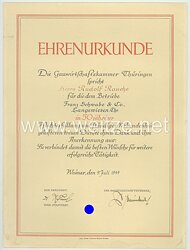
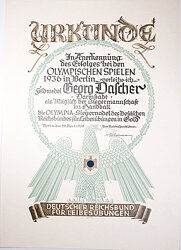
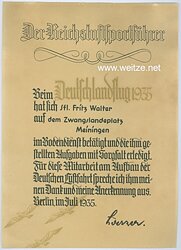
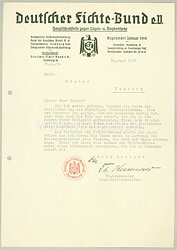
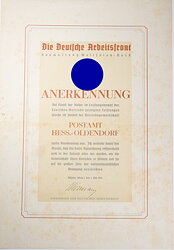
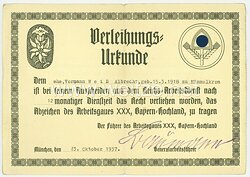
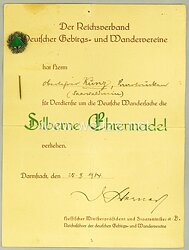
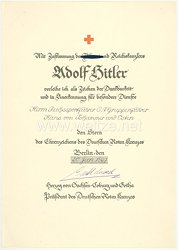
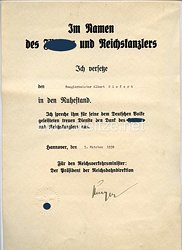
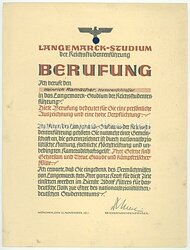
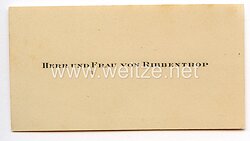
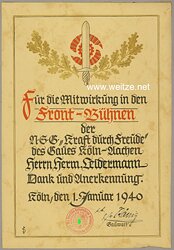
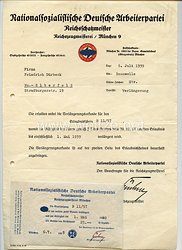
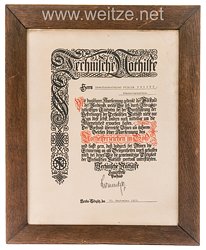
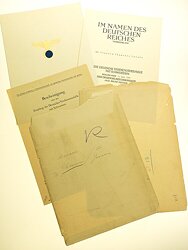
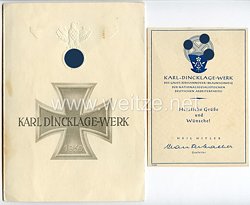
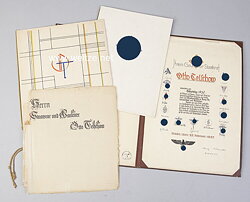
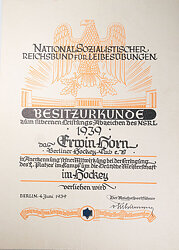
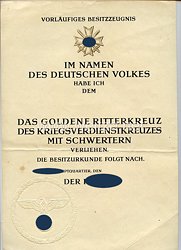
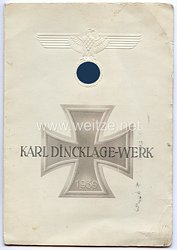
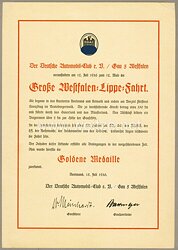
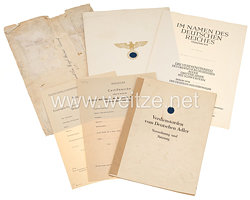
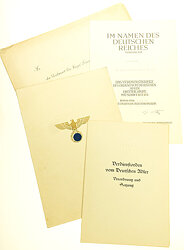
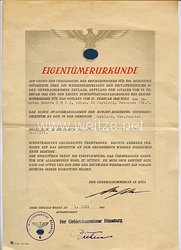
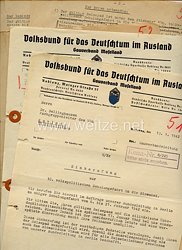
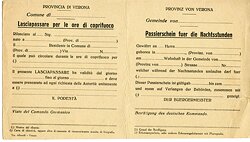
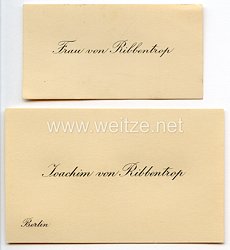
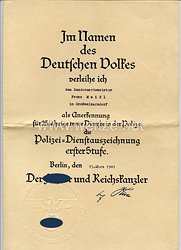
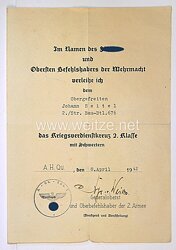
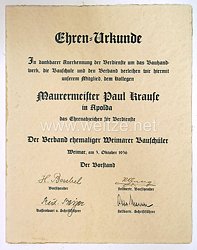
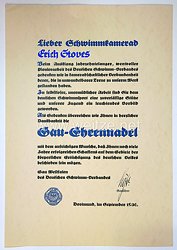
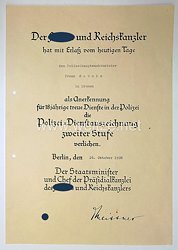
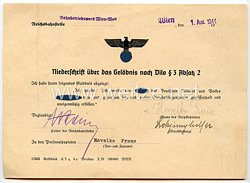
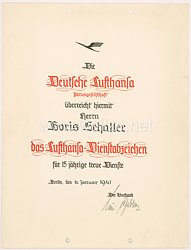
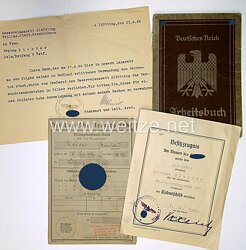
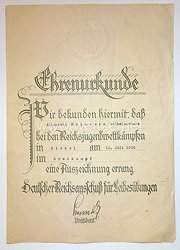
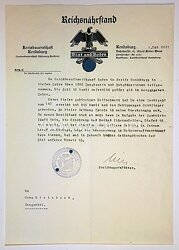
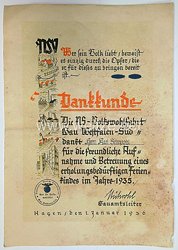
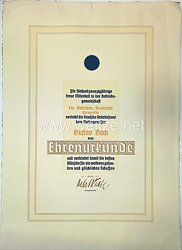
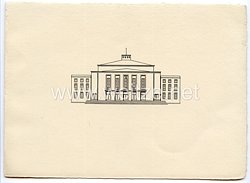
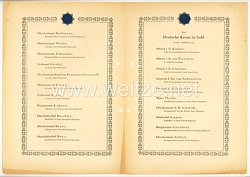
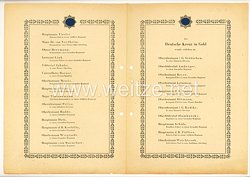
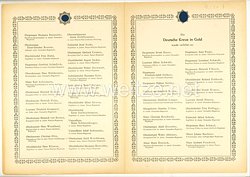
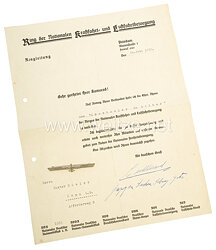
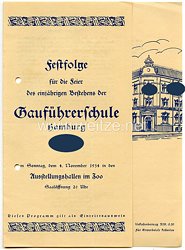
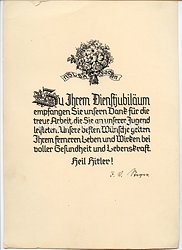
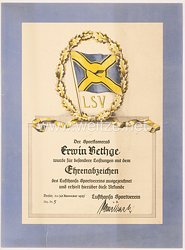
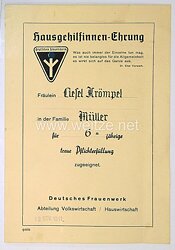
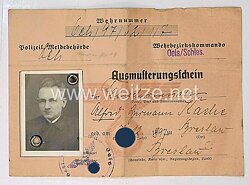
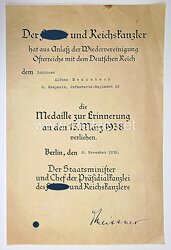
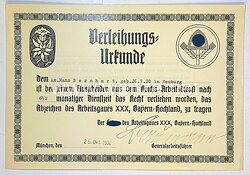
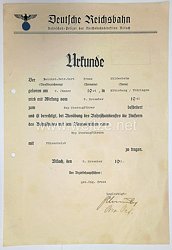
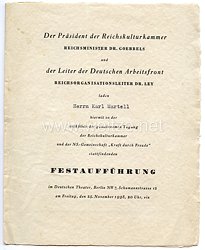
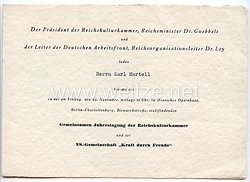
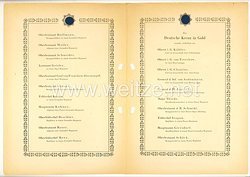
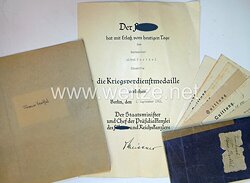
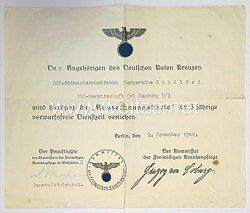
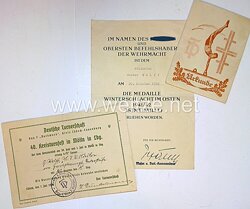
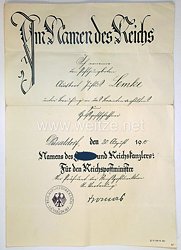
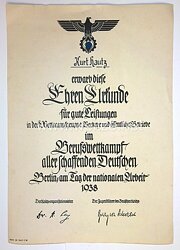
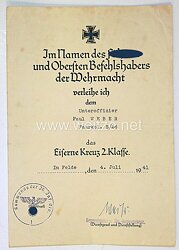
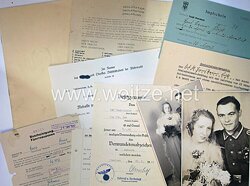
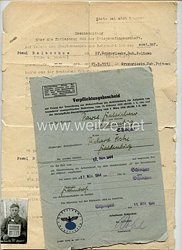
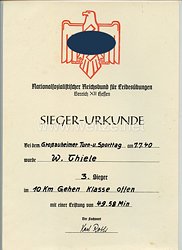
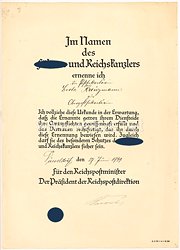
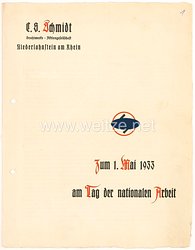
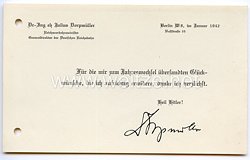
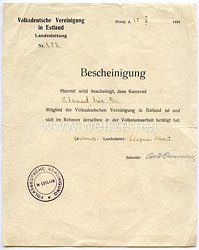
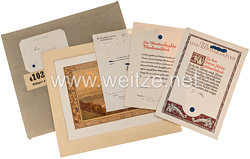
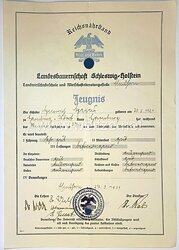
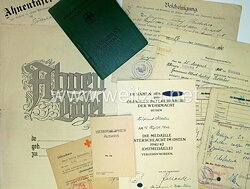
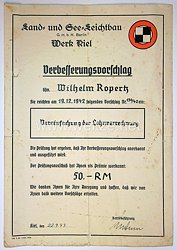
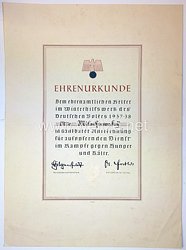
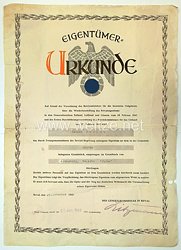
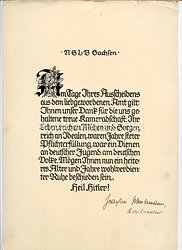
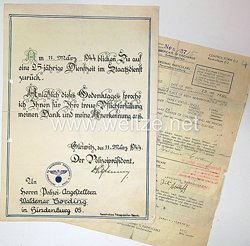
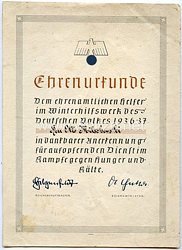
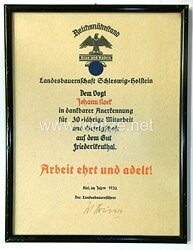
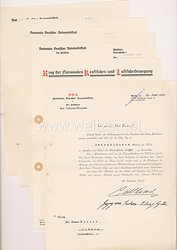
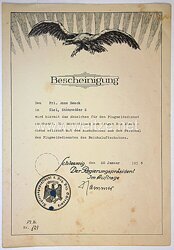
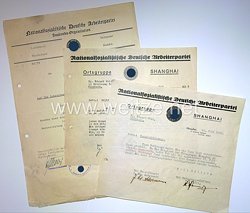
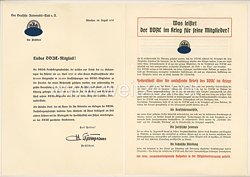
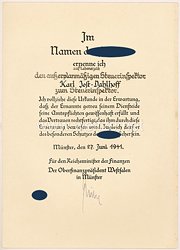
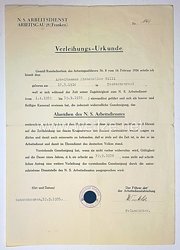
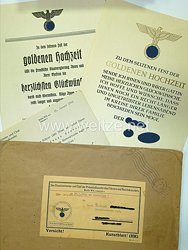
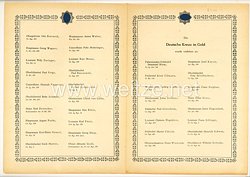
Award certificate for the NSDAP Long Service Decoration in Bronze as Party Comrade for 10 years of active service in the NSDAP, issued in München on January 30, 1940, stamped on reverse “NSDAP Gauleitung Hamburg Gaupersonalamt”, folded in center, otherwise good condition.
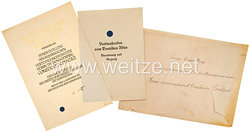
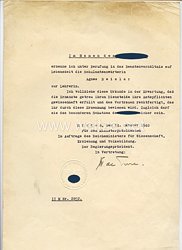
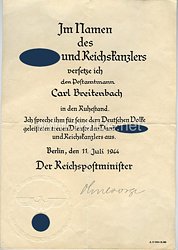
Acceptance authorization for the Grand Cross of the Order of the Finnish Lion, issued Berlin, May 21, 1943, with facsimile signature “Adolf Hitler”, original signature “Meissner”. Letter from the Consulate General of Chile to Senator Georg Ahrens, dated Hamburg, August 6, 1936, announcing the award of the Commander's Cross of the Order of Merit of the Republic of Chile. Together with the original award certificate, dated June 5, 1936.
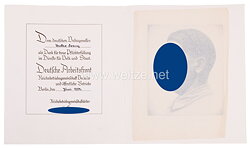
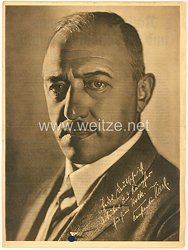
Also included is a large portrait photograph as SA-Obergruppenführer, in a large folding card on passe-partout with photographer's signature, dimensions 26 x 38 cm.
Enclosed in photocopy are various research documents, excerpt from the SS Seniority List 1944, etc.
Georg Ahrens (born April 29, 1896 in Delmenhorst; died October 22, 1974 in Hamburg) was a Hamburg Senator, SS-Gruppenführer and SA-Obergruppenführer.
After completing commercial training, Ahrens served as a soldier in World War I. After the war, he continued working in the commercial sector and managed the Hamburg branch of a company. On December 1, 1930, he joined the NSDAP (membership number 402,019), was elected to the Hamburg Bürgerschaft in 1931, where he served as deputy faction leader to Wilhelm von Allwörden and as business manager of the faction. He led the negotiations in February and March 1933 that resulted in the election of the NSDAP-led coalition Senate on March 8, 1933. Ahrens initially joined the Senate elected on March 8, 1933 as Senate Councillor; on March 28, 1933, he was promoted by the Senate to State Councillor.
Ahrens was a confidant of Gauleiter and Reich Governor Karl Kaufmann. As Kaufmann's powers expanded, Ahrens' position became increasingly important. On May 18, 1933, Reich Governor Kaufmann conferred upon him the title of State Secretary; Ahrens actually attained this position on July 6, 1933, upon proposal of the Senate, when he became head of the newly created Hamburg State Office. In this position, he was responsible for general administration, civil service personnel, and Hamburg's external representation.
On November 7, 1934, Ahrens was appointed by Reich Governor Kaufmann as Senator and Deputy Mayor. Ahrens was, alongside Kaufmann, the most influential figure in Hamburg during the National Socialist period; he directed the Hamburg administration until 1945 and negotiated the Greater Hamburg Act. In 1938, Ahrens rose as State Secretary to Deputy Reich Governor under Kaufmann and bore the official title of President. He also assumed responsibility for administration in Military District X under Kaufmann, who was appointed Reich Defense Commissioner in 1939.
In 1935, Georg Ahrens was a member of the supervisory board of HAPAG.
Ahrens was admitted to the SS as an Honorary Leader on December 1, 1933 (SS number 36,226) and attained the rank of SS-Gruppenführer in November 1942. From 1943, Ahrens personally announced air raid situation reports for Hamburg on the radio. Due to his calming deep voice, he was nicknamed “Uncle Valerian” by the populace.
Not until late June 1945 was Ahrens removed from office by the government of the British Occupation Zone and interned in Bielefeld. He offered his services as an “expert” to the first post-war Senate, but it rejected Ahrens as a “gray eminence” and “Nazi terrorist of leading rank.” At the proceedings before the denazification tribunal, Ahrens was initially sentenced to six years imprisonment by the Bielefeld tribunal on July 5, 1948. In the appeal proceedings before the Bergedorf tribunal, the sentence was reduced on February 19, 1949 to four and a half years, with three years and nine months credited for internment and pre-trial detention. A property that Ahrens had acquired far below value through “Aryanization” was confiscated.