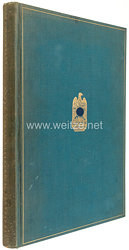
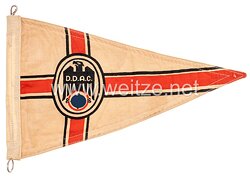
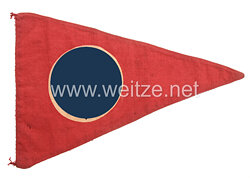
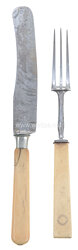
III. Reich 1933 - 1945

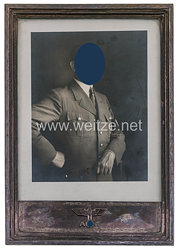
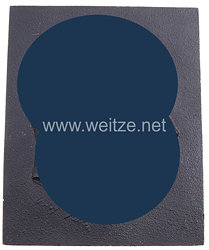
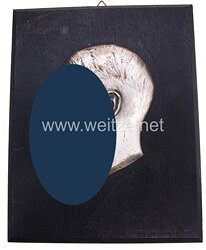
III. Reich - Wandplakette mit Bildnis von Adolf Hitler und Sinnspruch

" Ich glaube an Deutschland und kämpfe dafür heute und morgen und in der Zukunft bis unser der Sieg ist ", am Hals mit Künstlersignatur " W. Wolff 33 " und rückseitig " ges. gesch. C. LH. ", geschwärztes eisernes Relief, 21,5 x 32 cm, Gewicht 2 Kg, mit Wandaufhängung, Zustand 2.


516462
750,00

III. Reich - Dienststempel " Reichskanzlei "

Prägesiegel mit Randmarkierung. Zustand 2.
510203
750,00

Hitlerjugend HJ Gefolgschaftsfahne der Gefolgschaft 24 im Bann 344 St. Ingbert, Gebiet Westmark

Standort St. Ingbert, Gebiet Westmark, hergestellt um 1936/37 . Beidseitig genähte Ausführung, oben mit den weißen Spiegeln mit schwarz gestickter Bezeichnung der Gefolgschaft "24/344". Maße 115 x 170 cm. Seitlich mit original 7 eingenähten Ringen für die Fahnenstange, Fertigung aus Aluminium, innen nicht gestempelt. Nur leichte Gebrauchsspuren, Zustand 2.
512480
2.500,00

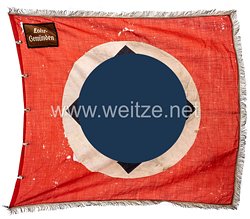
Nationalsozialistische Betriebszellenorganisation ( NSBO ) Ortsgruppenfahne der Ortsgruppe "Oelde in Westfalen"

Genähte Fahne mit umlaufenden Silberfransen und 6 Fahnenringen aus Aluminium. Die beidseitigen Spiegel "N.S.B.O. Ortsgruppe Oelde i/W." in weißer Stickerei auf schwarzem Tuch mit silber/schwarzer Umrandung. Maße ca. 140 x 110 cm. Leichte Trage- und Altersspuren, Zustand 2.
515628
1.500,00

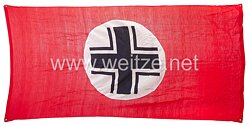
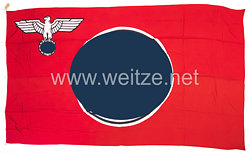
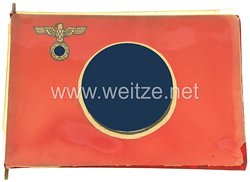
Wehrmacht Fliegererkennungstuch

Fliegererkennungsfahne, Maße ca. 72 x 96 cm, roter Stoff mit aufgenähtem Hakenkreuz (einseitig), mit Ösen zur Befestigung auf Fahrzeugen. Zustand 2.
513942
750,00

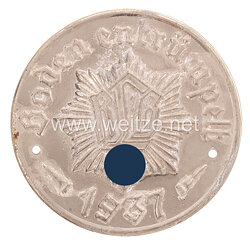
III. Reich - Wandplakette " Westwall 1939 - 40 "

Aus Aluminium, farbig lackiert, oben in den Ecken mit kleinen Bohrungen, Maße ca. 10,5 x 15 cm. Zustand 2.
511276
180,00

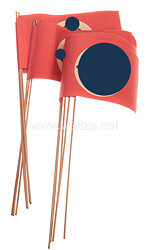
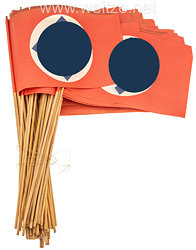
III. Reich - Kleines Hakenkreuz-Papierfähnchen

beidseitig bedrucktes Papier, Maße ca. 14,5 x 23,5 cm, Holzstab Gesamtlänge ca. 40 cm. Zustand 2.

Der Zustand kann variieren.

Alter Lagerbestand, je Stück EUR 30,-- .


511180
30,00

III. Reich Reichsdienstflagge

Beidseitig bedruckte Ausführung auf Baumwolltuch mit eingenähtem Liek, Maße ca. 56 x 95 cm. Fleckig, Zustand 2.
510049
500,00

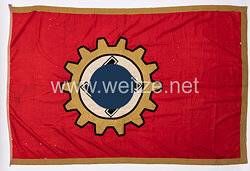
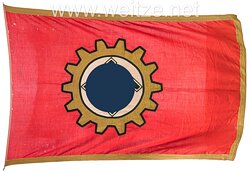
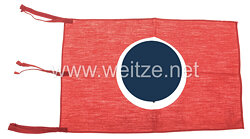
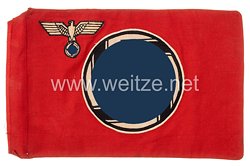
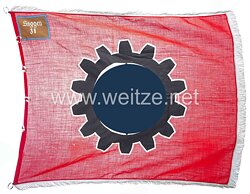
III. Reich Deutsche Arbeitsfront ( DAF ) Fahne

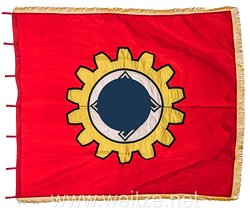
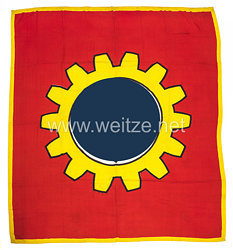
Aus roten Tuch, im Zentrum das DAF Rad beidseitig vernäht, Maße ca. 74 x 110 cm. Fleckig, ein paar Löcher, Zustand 2-.
502636
480,00

III. Reich Fahne des NSRL ( Nationalsozialistischer Reichsbund für Leibesübungen ) Gau XVI Bayern Sportgemeinschaft S.S.e.V. Tölz

Fertigung aus Fahnentuch, beidseitig bedruckt, oben schwarzer Spiegel mit Aufschrift "Gau XVI Bayern Sportgemeinsch. S.S.e.V. Tölz", Maße ca. 140 x 126 cm. Mottenschäden, Zustand 2-.
499705
800,00

HJ - Hitlerjugend Fahne

Beidseitig genähte Ausführung, Maße ca. 96 x 150 cm. Zustand 2.
488064
850,00

III. Reich - Geschenk-Taschenuhr der Preußischen Saargruben AG 1938

Silberne Taschenuhr, mit Rotgold Auflage. Innen im Deckel punziert 900 Halbmond Krone, der Werkdeckel mit Gravur "Für langjährige treue Mitarbeit - Saargruben Aktiengesellschaft" und weiteren Silberpunzen. Das Werk vergoldet. Auf dem Zifferblatt mit dem Emblem der Saargruben: der preußische Adler mit Hakenkreuz über dem Schriftzug "Saargruben" und gekreuztem Hammer und Schlegel. Die Uhr ist voll funktionstüchtig, in gutem Zustand. 
516166
600,00

Hitlerjugend - Fahnenspitze mit Fahnenstange für HJ-Gefolgschaften

um 1937. Fertigung aus Aluminium, Hersteller "RZM M3/27". Komplett montiert auf der original Fahnenstange, teilbar, Gesamthöhe ca. 3,10 m.
Leichte Altersspuren, Zustand 2. 
504530
1.500,00

III. Reich komplette Fahne des NSRL ( Nationalsozialistischer Reichsbund für Leibesübungen ) Gau VIII M.T.V. Eltze von 1909

um 1938. Die Fahne aus Fahnentuch, beidseitig bedruckt, oben beidseitig mit schwarzem gestickten Spiegeln "Gau VIII M.T.V. Eltze von 1909". Komplett mit Stoffschlaufen, die Fahnenspitze aus Aluminium. Teilbare Stange mit Bajonettverschluß, Gesamtlänge mit Fahnenspitze ca. 3m.

Leichte Gebrauchs- und Altersspuren, Zustand 2.

Eltze ist eine Ortschaft der Gemeinde Uetze in der niedersächsischen Region Hannover.
504526
1.250,00

Third Reich DDAC - Der Deutsche Automobil Club Vehicle Logbook

DDAC vehicle logbook 1940. Blank, condition 2.
509704
40,00

Third Reich / DAF - Commemorative Plaque "Honor the Work and Respect the Worker"

The cast iron plaque measures 26.5 x 16.5 cm, without maker marking, weight 1.65 kg. Condition 2
495684
450,00

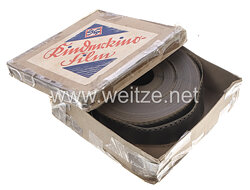
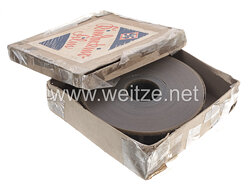
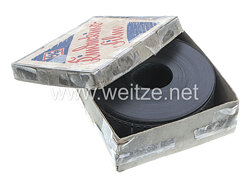
Third Reich Film Reel - Infantry in Attack

Short documentary film, UFA film company, 35mm film, box damaged, used condition.
479855
170,00

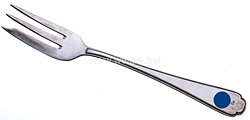
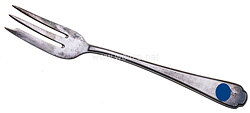
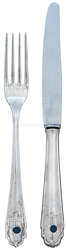
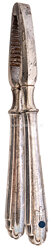
Third Reich Adolf Hitler: Fish Serving Fork from the Silverware of the Old Reich Chancellery

Circa 1935. From the Old Reich Chancellery. The handle features a relief national eagle with decorative border. Reverse stamped “Bruckmann” and “90” for the fine silver plating, length 22.5 cm. Light signs of use, condition 2.
This silverware was in use in the Old Reich Chancellery, as well as in German embassies abroad.

We were able to acquire a small remaining stock from US war booty

The canteen of the Reich Chancellery was under the direction of Arthur Kannenberg (* February 23, 1896 in Charlottenburg; † January 26, 1963 in Düsseldorf). Kannenberg was Adolf Hitler's house steward. Kannenberg graduated from the Werdersche Oberrealschule in Berlin with a secondary school diploma and began an apprenticeship in 1912 in his father Oskar Kannenberg's restaurant business. From 1915 he served in Telegraph Battalion I and was discharged in 1918 as a private first class. From 1924 he managed his father's establishments, the Restaurant Kannenberg, Hotel Stadt Berlin and the excursion restaurant Onkel Toms Hütte located in Grunewald, which went bankrupt in 1930. As manager of Pfuhl's Wine and Beer Taverns, where well-known Nazi leaders such as Joseph Goebbels and Hermann Göring frequented, he met Hitler, who offered him the management of the casino of the party headquarters Braunes Haus in Munich. He took up this position in 1931. Subsequently, he was also entrusted with the management of the canteen of the NSDAP Reich Leadership School on Schwanthalerstraße. After Hitler became Reich Chancellor in 1933, Kannenberg became house steward in the Reich Chancellery. In this capacity he organized the running of the Führer's household. This included in particular the hiring of staff, the procurement of food and beverages and the preparation of menus, but also the organization of catering at state receptions both in the Reich Chancellery and occasionally at the Berghof; during the war he was then active at the Führer headquarters in the Wolfsschanze and finally in the bunker of the Reich Chancellery in Berlin. In May 1945 he was interned by the Americans and released on July 25, 1946.
Many pieces from the Reich Chancellery were popular souvenirs of the occupation troops after the war's end, but many Berliners also refurnished their often bombed-out households with the remains of the Reich Chancellery.
471468
1.200,00

Third Reich - Westwall Ring

Made of wire, condition 2.
463120
85,00

Third Reich Film Reel - U-Boat on War Patrol in the Atlantic

Documentary short film, UFA film production company, 35mm film, cardboard damaged, used condition.
459981
400,00

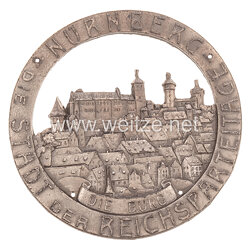
Third Reich - “Nürnberg - Stadt der Reichsparteitage” - Cake Server

circa 1936/38. Silver-plated cake server with embossed Nürnberg city coat of arms and inscription, condition 2. A typical souvenir from the City of the Reich Party Rallies.
459369
150,00

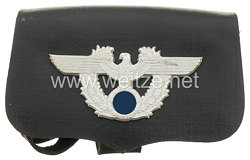
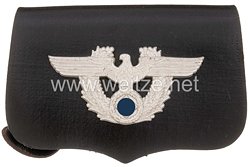
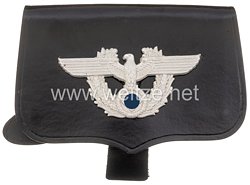
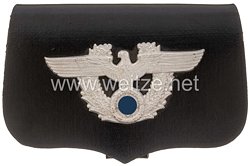
Third Reich - Cartridge Box for Enlisted Men of the Schutzpolizei

interior marked by manufacturer A.Fischer Berlin 1937, chamber stamp Po, with applied police eagle made of aluminum, the substitute material is hardened, condition 2
415029
450,00

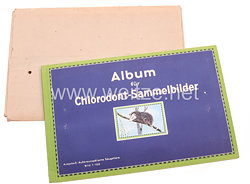
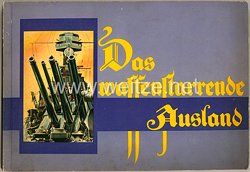
Third Reich - “Das waffenstarrende Ausland” - Cigarette Card Collectors Album

Bremen, Brinkmann A.G., cardboard binding, oblong format, complete with 300 cards, condition 2.
400507
125,00

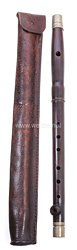
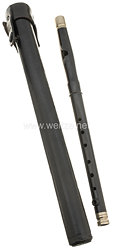
Third Reich Flute with Carrying Case for Members of a Military Band

The flute made of black ebony with nickel silver fittings, manufacturer “Sonora”. Carrying case of linen, button by “Prym”. Condition 2.
387552
300,00

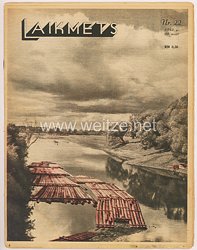
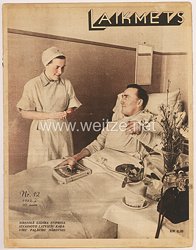
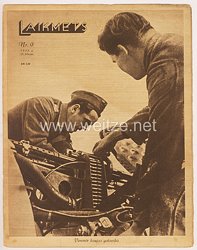
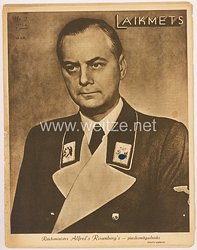
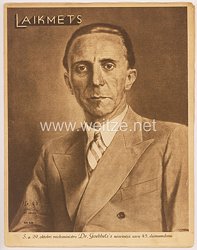
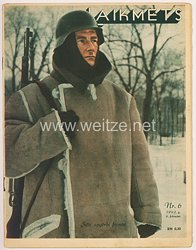
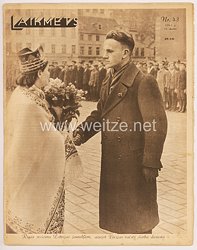
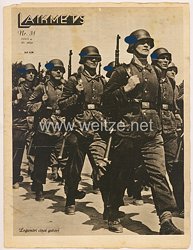
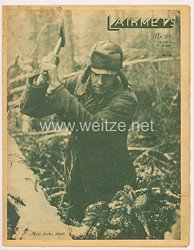
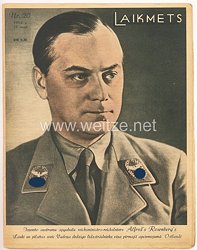
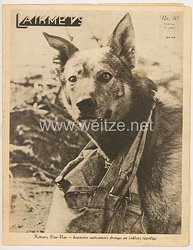
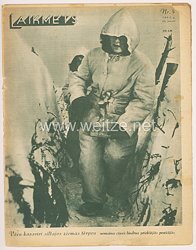
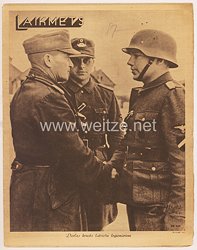
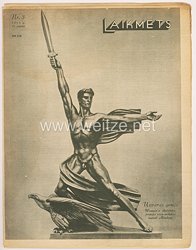
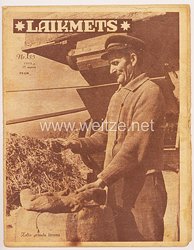
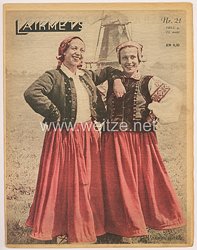
Third Reich / Estonia - Magazine "Laikmets" - Volume 1943 No. 51

Deutsche Verlags- und Druckerei-Ges. im Ostland m.b.H. Riga, condition 2-.
377332
35,00

Third Reich / Estonia - Magazine "Laikmets" - Volume 1943 No. 12

Deutsche Verlags- und Druckerei-Ges. im Ostland m.b.H. Riga, condition 2-.
377305
60,00

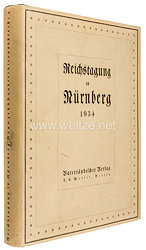
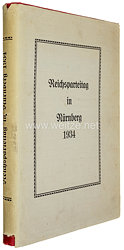
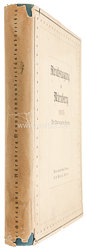
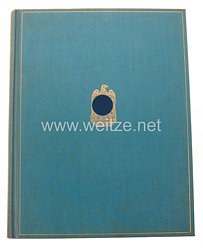
Julius Streicher - Reich Rally in Nuremberg 1934 (Reich Party Congress 1934)

Berlin, Verlag Weller, 1934, full linen binding, large format, 410 pages, with illustrations, condition 2.
373868
200,00

Third Reich Flag Mirror /VI B 80

single-sided mirror, black with white chain stitch embroidery "3/VI B80", 19 x 16 cm, condition 2
347137
150,00

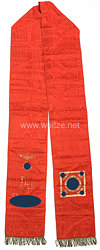
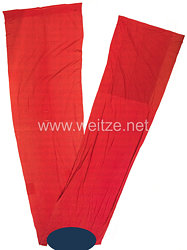
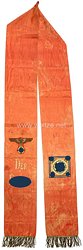
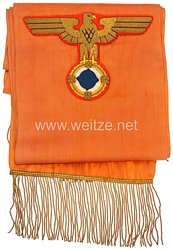
Adolf Hitler - Personal Wreath Ribbon

Watered red silk with gold fringe trim and gold printing, dimensions approximately 26 x 340 cm. The gold printing is faded. Used condition.
312106
1.500,00

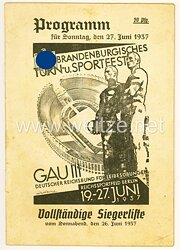
Third Reich - NSRL - 1st Brandenburg Gymnastics and Sports Festival on June 27, 1937 - Program Booklet

32-page DIN A5 booklet containing the program schedule and extensive information along with the complete list of winners from June 26, 1937; Condition 2.
280898
35,00

Deutsches Jungvolk DJ große Fahne des Fähnlein 16/281 Paderborn, Gebiet Westfalen

um 1937. Beidseitig genähte Fähnleinfahne. Schwarzes Tuch aus Leinen, beidseitig aufgenähte Sig-Rune und Fahnenspiegel "16/281" schwarz gestickt auf weißem Feld. KOmplett mit allen 7 Befestigungsschlaufen sowie den RZM-Fahnenringen vorhanden, innen gestempelt "RZM M 3/40/37". Leichte Gebrauchsspuren, Zustand 2. Sehr selten.
515624
2.500,00

Stunde Null Deutschland Ehemaliges Hoheitszeichen für ein Gebäude

Eichenlaubkranz im Zentrum mit Hakenkreuz, getrennt vom Reichsadler, mittig mit Durchschuss, sehr wahrscheinlich nach 1945 vergraben, mit Oxidationsspuren, ca. 23 x 22 cm, verbeult, Kommt aus einer US Sammlung, Zustand 4  
511805
300,00
80,00

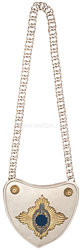
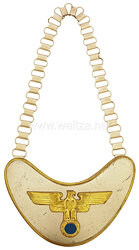
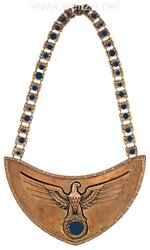
NSDAP Gorget for Flag Bearer

Bronzed aluminum, with large applied national eagle. Reverse with somewhat damaged brown felt backing, marked “RZM M 7/8” on the tab, the neck suspension chain marked “RZM M 1/14”. Worn condition, the right retaining tab on reverse is broken off, included loose. Condition 2.
503287
1.700,00

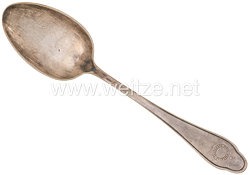
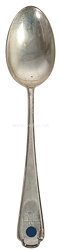
Third Reich Adolf Hitler: Dinner Spoon from the Formal Silver Service of the Old Reich Chancellery

circa 1935. Silver flatware from the formal silver service of the Old Reich Chancellery. Small dinner knife, on the handle pieces embossed national eagle above three curved arches, fineness hallmark "925" silver with crescent moon, crown and circular mark of the jewelers "Bruckmann". Length 18 cm. Light signs of use, condition 2.
This silver service was in use in the Old Reich Chancellery.
476429
750,00

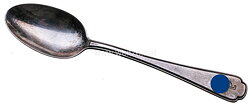
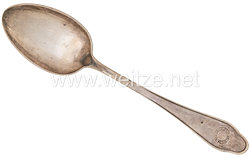
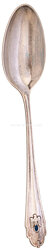
Third Reich Adolf Hitler: Teaspoon from the Canteen Flatware of the Old Reich Chancellery

circa 1935. Silver-plated flatware from the canteen service for the staff of the Old Reich Chancellery. Teaspoon, with relief national eagle on the handle and surrounding decorative border. Reverse stamped “Bruckmann” and “90” for the fine silver plating, length 14.5 cm. Light signs of use, condition 2.
This silverware was in use at the Old Reich Chancellery.

The canteen of the Reich Chancellery was under the direction of Arthur Kannenberg (born February 23, 1896 in Charlottenburg; died January 26, 1963 in Düsseldorf). Kannenberg was Adolf Hitler's House Intendant.
Kannenberg graduated from the Werdersche Oberrealschule in Berlin with a middle school diploma and began an apprenticeship in 1912 in his father Oskar Kannenberg's gastronomic business. From 1915 he served in Telegraph Battalion I and was discharged in 1918 as a Gefreiter (lance corporal). From 1924 he managed his father's establishments, the Restaurant Kannenberg, Hotel Stadt Berlin, and the excursion inn Onkel Toms Hütte located in Grunewald, which went bankrupt in 1930.

As manager of Pfuhl's Wine and Beer Taverns, where prominent Nazi figures such as Joseph Goebbels and Hermann Göring also frequented, he met Hitler, who offered him the directorship of the casino at the party headquarters Braunes Haus in Munich. He assumed this position in 1931. Subsequently, he was also entrusted with the management of the canteen of the NSDAP Reich Leadership School on Schwanthalerstraße.

After Hitler became Reich Chancellor in 1933, Kannenberg became House Intendant at the Reich Chancellery. In this capacity, he organized the operations of the Führer's household. This included in particular the hiring of personnel, the procurement of food and beverages, and the preparation of menus, as well as the organization of catering at state receptions both at the Reich Chancellery and occasionally at the Berghof; during the war he served at the Führer Headquarters in the Wolfsschanze and finally in the bunker of the Reich Chancellery in Berlin.

In May 1945 he was interned by the Americans and released on July 25, 1946.
Many pieces from the Reich Chancellery were popular souvenirs for occupation troops after the war's end, but many Berliners also restocked their often bombed-out households with the remnants of the Reich Chancellery.
476428
750,00

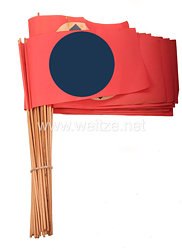
Third Reich - Small Swastika Paper Flag

double-sided printed paper 12 x 22 cm on wooden stick, length 32 cm. Still unused, condition 2.
Old warehouse stock, EUR 30,-- per piece.


433229
30,00

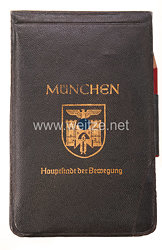
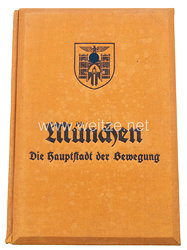
Third Reich - Munich - The Capital of the Movement - Stereoview Album

Diessen, Raumbild Verlag Schönstein, 1937, hardcover edition, full cloth binding, 100 stereoviews, without viewing glasses, heavily used condition 
416599
600,00

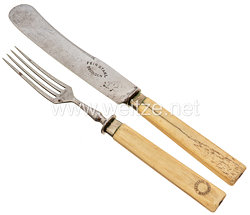
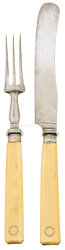
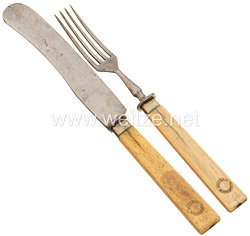
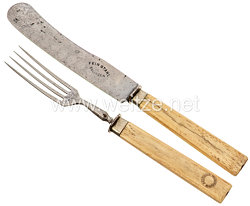
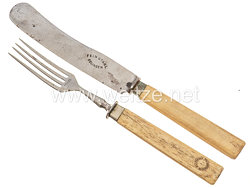
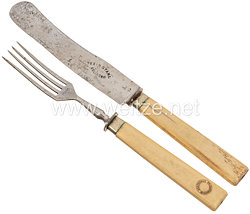
NSDAP Large Knife and Fork from the Cutlery Set of the Guesthouse Reichsparteitag in Nürnberg

circa 1936. The blade and fork made of fine steel, the handles made of white plastic in ivory appearance, bottom with round mark “Gästehaus Reichsparteitag”. With signs of use. Very rare.

The guesthouse for the Reichsparteitage was built in the years 1935/36 and was located directly next to the Grand Hotel at Bahnhofsplatz in Nürnberg and is today used as a hotel (Hotel Park Plaza). It hosted the high-ranking invited guests of the Party from home and abroad during the Nürnberg Party rallies until 1938; among others, Göring had a suite here.
409157
600,00

NSDAP Large Knife and Fork from the Cutlery Set of the Guesthouse Reichsparteitag in Nuremberg

circa 1936. The blade and fork of fine steel, the handles of white plastic in ivory appearance, bottom with round mark “Guesthouse Reichsparteitag”. With signs of use. Very rare.

The guesthouse for the Reich Party Rallies was built in the years 1935/36 and was located directly next to the Grand Hotel at Bahnhofsplatz in Nuremberg and is today used as a hotel (Hotel Park Plaza). It hosted high-ranking invited guests of the Party from home and abroad during the Nuremberg Party Rallies until 1938; among others, Göring had a suite here.
408720
550,00

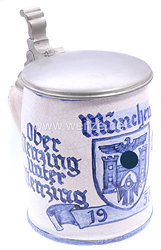
Third Reich - Commemorative Stein for München 1938 and Obermenzing, Untermenzing, Allach, Ludwigsfeld, Solln

0.5 liter, glazed stoneware with blue decoration, München coat of arms with swastika, complete with pewter lid marked by maker: L.Mory München, minor interior chips otherwise condition 2.
401581
650,00

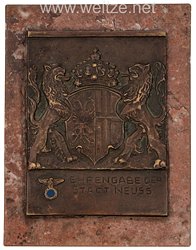
Third Reich - Non-Wearable Honorary Gift from the City of Neuss

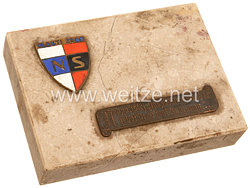
Bronze plaque 80 x 105 mm with coat of arms of the city and NSDAP national eagle, mounted on marble plate 105 x 140 x 20 mm; Condition 2.
386310
650,00

Third Reich / Estonia - Magazine "Laikmets" - Volume 1944 No. 24

Deutsche Verlags- und Druckerei-Ges. im Ostland m.b.H. Riga, condition 2-.
377330
35,00

Third Reich / Estonia - Magazine "Laikmets" - Volume 1943 No. 25

Deutsche Verlags- und Druckerei-Ges. im Ostland m.b.H. Riga, condition 2-.
377316
35,00

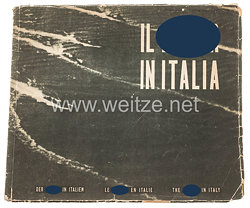
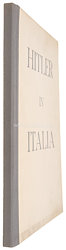
Third Reich - Hitler in Italia / Hitler in Italy

printed in the workshops of Verlagsgesellschaft Novissima in Rome, half-linen binding, 120 pages, illustrated volume, condition 2.
367070
350,00

Julius Streicher - Reich Rally in Nuremberg 1933 (Reich Party Congress 1933)

Berlin, Verlag Weller, 1933, full cloth binding, large format, 260 pages, illustrated, condition 2.
353544
200,00

Deutsche Zeppelinreederei: Large Serving Bowl from the Service of a Zeppelin

circa 1936. Manufactured from aluminum. Large round bowl for bread or fruit, diameter 23 cm. Stamped on reverse with Zeppelin and inscription “Zeppelin”. Light signs of use, condition 2.
278186
350,00

Deutsche Zeppelinreederei: Small Serving Dish from the Tableware Service of an Airship, e.g., “LZ Hindenburg”

Circa 1936. Aluminum construction. Small round dish for nuts or an underplate for a glass or bottle. Diameter 85 mm. Reverse stamped with Zeppelin and inscription “Zeppelin” as well as article number. Light signs of use, Condition 2.
255234
120,00

Mein Kampf - Wedding Edition as War Edition from 1943, 733rd - 737th Printing in Roman Type

Munich, Zentralverlag der NSDAP, half leather binding, 781 pages, dedication page from the City of Marl, with city coat of arms on front cover, condition 2+. In gray cardboard slipcase
515906
370,00

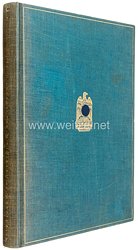
Mein Kampf - People's Edition from 1934

Munich, Verlag Franz Eher Nachfolger, 97th - 101st edition, blue cloth binding, 781 pages, dedication on front endpaper, condition 2.
515902
240,00

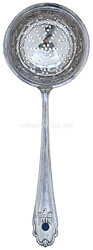
Third Reich Adolf Hitler: Vegetable Spoon from the Silverware of the Old Reich Chancellery

circa 1935. From the Old Reich Chancellery. The handle features a relief national eagle with decorative border. Reverse stamped “Bruckmann” and “90” indicating fine silver plating, length 26.3 cm. Light signs of use, condition 2.
This silverware was in use in the Old Reich Chancellery as well as in German embassies abroad.

We were able to acquire a small remaining stock from U.S. war booty.

The canteen of the Reich Chancellery was under the direction of Arthur Kannenberg (born February 23, 1896 in Charlottenburg; died January 26, 1963 in Düsseldorf). Kannenberg was Adolf Hitler's house steward.
Kannenberg completed the Werdersche Oberrealschule in Berlin with a secondary school diploma and began an apprenticeship in 1912 in his father Oskar Kannenberg's gastronomic establishment. From 1915 he served in Telegraph Battalion I and was discharged in 1918 as a Gefreiter (lance corporal). From 1924 he managed his father's establishments, the Restaurant Kannenberg, Hotel Stadt Berlin, and the excursion restaurant Onkel Toms Hütte located in the Grunewald, which went bankrupt in 1930.

As manager of Pfuhl's wine and beer taverns, where prominent Nazi figures such as Joseph Goebbels and Hermann Göring frequented, he met Hitler, who offered him the management of the casino of the party headquarters Braunes Haus in Munich. He took up this position in 1931. Subsequently, he was also given management of the canteen of the NSDAP Reich Leadership School on Schwanthalerstraße.

After Hitler became Reich Chancellor in 1933, Kannenberg became house steward in the Reich Chancellery. He organized the operations of the Führer's household. This included in particular the hiring of personnel, procurement of food and beverages and preparation of menus, as well as organizing catering at state receptions both in the Reich Chancellery and occasionally at the Berghof; during the war he worked at the Führer Headquarters in the Wolfsschanze and finally in the bunker of the Reich Chancellery in Berlin.

In May 1945 he was interned by the Americans and released on July 25, 1946.
Many pieces from the Reich Chancellery were popular souvenirs of the occupation forces after the war, but many Berliners also restocked their often bombed-out households with the remains of the Reich Chancellery.
457303
950,00

III. Reich Ordensburg Vogelsang: große Vorlegegabel aus dem formellen Tafelsilber um 1938.

Große Vorlagegabel für Gemüse oder Salat . Schwere versilberte Ausführung, Länge 22 cm, rückseitig mit beriebener Markierung BMF 90 und Bezeichnung "Burg Vogelsang". Gebrauchsspuren, Zustand 2. 
515013
250,00

III. Reich Ordensburg Vogelsang: Große Speisegabel aus dem formellen Tafelsilber um 1938.

Große Speisegabel . Schwere versilberte Ausführung, Länge 21,5 cm, rückseitig mit beriebener Markierung BMF 90 und Bezeichnung "Burg Vogelsang". Gebrauchsspuren, Zustand 2. 
515011
250,00

Third Reich Ordensburg Vogelsang: Large Dinner Fork from the Formal Silverware circa 1938

Large dinner fork. Heavy silver-plated execution, length 21.5 cm, verso with worn marking BMF 90 and designation “Burg Vogelsang”. Signs of use, condition 2. 
515010
250,00

III. Reich Ordensburg Vogelsang: Große Speisegabel aus dem formellen Tafelsilber um 1938.

Große Speisegabel . Schwere versilberte Ausführung, Länge 21,5 cm, rückseitig mit beriebener Markierung BMF 90 und Bezeichnung "Burg Vogelsang". Gebrauchsspuren, Zustand 2. 
515009
250,00

III. Reich Ordensburg Vogelsang: Große Speisegabel aus dem formellen Tafelsilber um 1938.

Große Speisegabel . Schwere versilberte Ausführung, Länge 21,5 cm, rückseitig mit beriebener Markierung BMF 90 und Bezeichnung "Burg Vogelsang". Gebrauchsspuren, Zustand 2. 
515008
250,00

III. Reich Ordensburg Vogelsang: großer Vorlagelöffel aus dem formellen Tafelsilber um 1938.

Schwere versilberte Ausführung, Länge 25 cm, rückseitig mit Bezeichnung BSF 90 und "Burg Vogelsang", leichte Gebrauchsspuren. Zustand 2
515006
250,00

III. Reich Ordensburg Vogelsang: großer Vorlagelöffel aus dem formellen Tafelsilber um 1938.

Schwere versilberte Ausführung, Länge 25 cm, rückseitig mit Bezeichnung BSF 90 und "Burg Vogelsang", leichte Gebrauchsspuren. Zustand 2
515005
250,00

III. Reich - 2 Emailleschilder "NS Reichskriegerbund - Verkehrslokal"

Das große Schild mit dem Emblem des NS Reichskriegerbund, Höhe 19,5 cm, in den 3 Ecken Bohrungen zum Anbringen an das Gebäude, leicht gewölbt, mehrere Emailleausbesserungen an den Rändern. Dazu ein rechteckiges Schild "Verkehrslokal - Nationalsozialistischer Reichskriegerbund", seitlich mit 2 Bohrungen zum Befestigen. Ebenfalls mit Emailleausbesserungen an den Rändern sowie ein größerer Emailleschaden auf der linken Seite. Zustand 2-3.
Die Beiden Schilder wurden übereinander angebracht.
515733
750,00

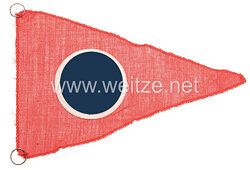
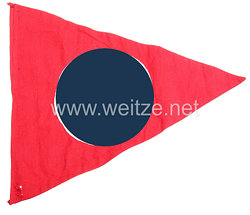
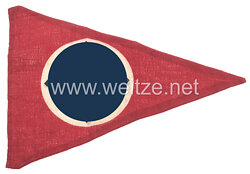
Third Reich Pennant for a Service Vehicle, Automobile or Motorcycle

Single-sided printed blank, dimensions 24.5 x 17.5 cm. Condition 2.
Price per piece:
Condition may vary 
502425
100,00

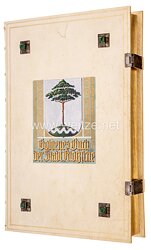
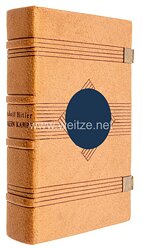
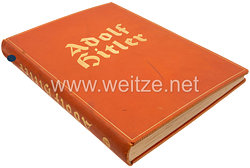
Mein Kampf - Deluxe Leather-Bound Edition in Special Format

Munich, Zentralverlag der NSDAP Franz Eher Nachfolger, 4th edition 1939. White pigskin leather binding reminiscent of an early medieval book, front cover bearing only facsimile signature “Adolf Hitler”, spine unlabeled, interior with handmade white laid paper. Dimensions 16 x 22.5 cm. Light signs of age, condition 2.
Extremely rare version, in over 35 years of business this is the first example we have been able to offer.
498589
5.500,00

Merchant Marine Sextant

Drum sextant with brass frame, engraved degree scale and manufacturer “C.Plath Hamburg”, wooden handle, comes in the original storage case lined with green felt, one of 4 telescopes missing, in the lid the inspection certificate from the Seewarte Hamburg dated “April 1933”, normal signs of age and use. Condition 2
491696
1.200,00

Mein Kampf - Anniversary Edition commemorating the Führer's 50th Birthday in 1939

Munich, Zentralverlag der NSDAP, full leather binding, 705 pages with supplements, gilt top edge, foxing present, condition 2/2-. Small defect to the left of the sword tip
491555
550,00

Third Reich Adolf Hitler: Compote Spoon from the Silverware of the Old Reich Chancellery

circa 1935. From the Old Reich Chancellery. The handle features a relief national eagle with decorative border. Reverse stamped "Bruckmann" and "90" for the fine silver plating, length 19.0 cm. Light signs of use, condition 2.
This silverware was in use in the Old Reich Chancellery as well as in German embassies abroad.

We were able to acquire a small remaining stock from U.S. war trophy items.

The canteen of the Reich Chancellery was under the direction of Arthur Kannenberg (* February 23, 1896 in Charlottenburg; † January 26, 1963 in Düsseldorf). Kannenberg was Adolf Hitler's House Intendant.
Kannenberg graduated from the Werdersche Oberrealschule in Berlin with a secondary school diploma and began an apprenticeship in 1912 in his father Oskar Kannenberg's gastronomic establishment. From 1915 he served in Telegraph Battalion I and was discharged in 1918 as a Private First Class. From 1924 he managed his father's establishments, the Restaurant Kannenberg, Hotel Stadt Berlin, and the excursion restaurant Onkel Toms Hütte located in Grunewald, which went bankrupt in 1930.

As manager of Pfuhl's Wine and Beer Taverns, where prominent Nazi figures such as Joseph Goebbels and Hermann Göring also frequented, he met Hitler, who offered him the management of the casino of the party headquarters Braunes Haus in Munich. He took up this position in 1931. Subsequently, he was also entrusted with managing the canteen of the NSDAP Reich Leadership School on Schwanthalerstraße.

After Hitler became Reich Chancellor in 1933, Kannenberg became House Intendant in the Reich Chancellery. In this role, he organized the operations of the Führer's household. This included particularly the hiring of personnel, the procurement of food and beverages, and the preparation of menus, but also the organization of catering at state receptions both in the Reich Chancellery and occasionally at the Berghof; during the war he was then active at the Führer Headquarters in the Wolfsschanze and finally in the bunker of the Reich Chancellery in Berlin.

In May 1945 he was interned by the Americans and released on July 25, 1946.
Many pieces from the Reich Chancellery were popular souvenirs of the occupation troops after the war's end, but many Berliners also restocked their often bombed-out households with the remains of the Reich Chancellery.
485639
1.200,00

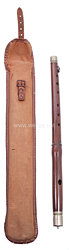
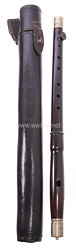
Third Reich Transverse Flute with Leather Case for Members of a Military Band

The transverse flute made of black ebony with nickel silver fittings, maker's mark “Oswald Lederer JR. .... 1939”. Complete in black leather case with belt carrying loop. Condition 2.
480099
320,00

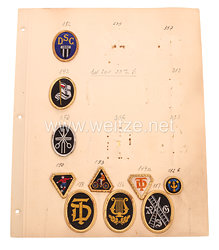
Third Reich Sample Board of Various Sports Clubs and Associations

glued but easy to remove, 10 pieces, condition 2.
445261
150,00

Third Reich - Swastika Paper Flag

double-sided printed paper, dimensions approx. 20 x 30 cm, on wooden stick, length approx. 51.5 cm. Still unused, partially with color variations, with storage traces, condition 2.

Old stock, EUR 35,- per piece.


433525
35,00

Mein Kampf - Wedding Edition from 1938, 494th - 498th Printing with Gilt Edges

Munich, Zentralverlag der NSDAP, half-leather binding, 781 pages, dedication page missing, spine slightly rubbed, book condition 2
426695
220,00

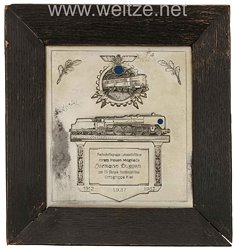
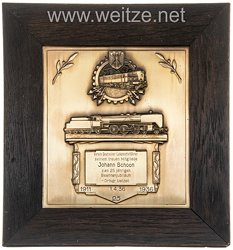
Deutsche Reichsbahn - Large Commemorative Plaque for 25 Years of Service 1911 - 1936

Toned metal plaque. Design: Eagle above electric railcar, below a large locomotive. Engraving “Verein Deutscher Lokomotivführer seinem treuen Mitgliede Johann Schoon zum 25. jährigen Beamtenjubiläum Ortsgruppe Uelzen” (Association of German Locomotive Engineers to its loyal member Johann Schoon on his 25th civil service anniversary, Local Group Uelzen). In original black wooden frame approx. 27 x 29 cm, with wall hanging fixture on reverse, manufacturer “Richard Münchberg Plaketten Berlin”. Condition 2.
399439
250,00

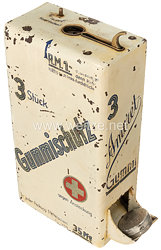
Third Reich / World War II Original Condom Vending Machine

circa 1940. Heavy metal construction, height 28.5 cm, width 15.5 cm, depth 8 cm. Cream white with colored advertising print “3 pieces rubber protection against infection - R.M. 1,- insert at top then push lever firmly to the left - In every package 1 value coupon of 35 Pfg”, on the side “Amoret Gummi” as well as “Deutscher Gesundheits-Automaten-Dienst Sozietät zur Bekämpfung der Gechlechtskrankheiten Berlin W. Nürnberger Str. 53-55”. Top with coin slot and operating lever, on the right side the dispensing slot for the condoms. Includes an original condom package: round metal tin with embossed print “Hygienischer Gummischutz” with Red Cross, inside with the remains of 3 condoms - no longer functional :-). The vending machine was obviously in daily use throughout the war years and shows corresponding signs of age. Rear with wall mounting bracket, weight approximately 3.94 kg.
These condom vending machines were installed among other places in front of Wehrmacht brothels and similar establishments.

Extremely rare, in over 30 years this is the first condom vending machine we have been able to offer.
397881
2.200,00

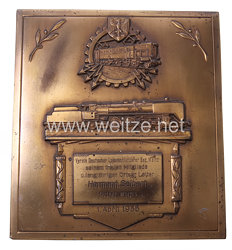
Deutsche Reichsbahn - Large Presentation Plaque

Metal plaque 18.5 x 20.5 cm, gold-plated and toned. Design: Eagle (without swastika) above electric railcar, below large locomotive, dedication plaque "Verein Deutscher Lokomotivführer Bez. Mainz seinem treuen Mitgliede u. langjährigen Ortsgr. Leiter Hermann Seibert Ortsgr. Worms 1. April 1935" (Association of German Locomotive Engineers District Mainz to its loyal member and long-serving local group leader Hermann Seibert Local Group Worms April 1, 1935), Condition 2.
390163
130,00
150,00

Third Reich - Pair of Wall Plaques with Portraits of Reich President von Hindenburg and Reich Chancellor Adolf Hitler

circa 1933. The relief of Hindenburg in civilian dress, Hitler wearing a brown shirt, below an early national eagle (Hoheitsadler). Both copper-plated, mounted on octagonal wooden plaques, dimensions approximately 16.5 x 22.5 cm, reverse with wall mounting hardware. Unused in mint condition.

First time offered by us in this variant.
515340
750,00

Mein Kampf - Hochzeitsausgabe  von 1938 mit Schuber

München, Verlag Franz Eher Nachfolger, 360 - 364. Auflage Halbledereinband, 781 Seiten,  Zustand 2- Mit Widmungsseite zur Hochzeit Januar 1939 der Stadt Hannover
513376
370,00

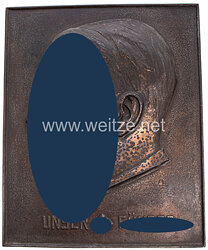
Third Reich - Arno Breker, Large Wall Plaque of Adolf Hitler “Our Führer” for a Building

36 x 44 cm, heavy construction of bronzed iron, marked “1933” at the neck, slightly further right artist's initials of Arno Breker “AB”, in the lower left corner “REICHSANERKANNT”. Weight 6.3 kg. Reverse with 4 threads for mounting, lower right with foundry mark “Aug. Engels G.m.b.H. Velbert, Rhld.”. Condition 2-
461955
4.500,00

Third Reich - Impressive Presentation Book for the German Delegation during the Visit to Italy "Welcome to Italy!" Dedicated by the Minister of Popular Culture (Alessandro Pavolini) in Year XVI of the Empire (1938)

Large leather-bound deluxe volume 29 x 33.5 x 6.5 cm, front cover with copper fittings and iron rivets, endpapers covered with silk fabric, 28 double pages of parchment, 18 copper engravings, 10 color prints on silver paper and one black-and-white print of Benito Mussolini, published by Ente Nazionale Industrie Turistiche. The work is housed in a gray fabric-covered hardboard case. Condition 2.
The copper engravings depict the most famous cities of Italy with brief descriptions of their history, such as Bolzano, Trento, Venezia, Torino, Bologna, Napoli.
The color prints show antique paintings, such as Visitation of the Holy Virgin, Florentine School - Portrait of a Noblewoman, The Holy Virgin with Child and Saints.
Very elaborately produced and intended only for special dignitaries.
371553
3.200,00

Deutsche Reichsbahn - Large Presentation Plaque for 40 Years of Service Anniversary 29.2.40

Large metal plaque, gilt zinc. Design: National eagle above electric railcar, below large locomotive with swastika, dedication plaque “To our Professional Comrade Locomotive Engineer Richard Reuter on his 40th Railway Service Anniversary, dedicated by the Locomotive Personnel of the Reichsbahn Depot Güsten 1900-1940”. In original black wooden frame 29.5 x 27.5 cm, with wall hanging attachment on reverse, condition 2.
507512
450,00

Third Reich Printing Plate "P NSDAP"

Made of solid wood, dimensions approximately 29 x 20.5 cm, lettering in fine zinc. Condition 2.
503005
150,00

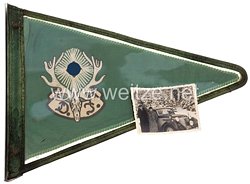
Third Reich - V.D.A. (Verein für das Deutschtum im Ausland) Pennant

Printed execution in blue cloth with white imprint “V.D.A.”, dimensions approximately 70 x 40 cm. Various holes, condition 2-.
501838
380,00

Weimar Republic Hand Mirror Rot Front

Diameter approx. 5 cm, with depiction of head wearing visor cap, gloves, belt and bayonet, maker: Ludwig Kübler Göppingen, condition 2.
478154
250,00

Third Reich Adolf Hitler: Fruit Knife from the Silverware Service of the Old Reich Chancellery

circa 1935. From the Old Reich Chancellery. Relief national eagle emblem on the handle with decorative border edge. Reverse stamped "Bruckmann" and "90" for the fine silver plating, knife length: 17 cm, minor signs of use, condition 1-
This silverware was used in the Old Reich Chancellery as well as in German embassies abroad.

We were able to acquire a small remaining stock from U.S. war booty.

The Reich Chancellery canteen was under the direction of Arthur Kannenberg (* February 23, 1896 in Charlottenburg; † January 26, 1963 in Düsseldorf). Kannenberg was Adolf Hitler's house intendant. Kannenberg completed the Werdersche Oberrealschule in Berlin with his intermediate school certificate and began an apprenticeship in 1912 in his father Oskar Kannenberg's gastronomy business. From 1915 he served in Telegraph Battalion I and was discharged as a Private First Class in 1918. From 1924 he managed his father's establishments, the Restaurant Kannenberg, Hotel Stadt Berlin, and the excursion restaurant Onkel Toms Hütte located in the Grunewald, which went bankrupt in 1930. As manager of Pfuhl's Wine and Beer Taverns, where well-known Nazi leaders such as Joseph Goebbels and Hermann Göring also frequented, he met Hitler, who offered him the directorship of the casino of the party headquarters Braunes Haus in Munich. He took up this position in 1931. Subsequently, he was also entrusted with managing the canteen of the NSDAP Reich Leadership School on Schwanthaler Street. After Hitler became Reich Chancellor in 1933, Kannenberg became house intendant at the Reich Chancellery. In this role, he organized the operations of the Führer's household. This included particularly the hiring of personnel, the procurement of food and beverages, and the preparation of menus, but also the organization of catering for state receptions both in the Reich Chancellery and occasionally at the Berghof; during the war he was then active at the Führer Headquarters in the Wolfsschanze and finally in the bunker of the Reich Chancellery in Berlin. In May 1945 he was interned by the Americans and released on July 25, 1946.
Many pieces from the Reich Chancellery were popular souvenirs of the occupation troops after the war's end, but many Berliners also re-equipped their often bombed-out households with the remains of the Reich Chancellery.
476419
600,00

Third Reich - Mining Operations Regulations of Bruchstrasse Colliery

16 pages, Bochum dated September 25, 1934, Condition 2
473276
50,00

Third Reich Adolf Hitler: Asparagus Server from the Silverware of the Old Reich Chancellery

circa 1935. From the Old Reich Chancellery. The handle features a relief national eagle with surrounding decorative border. Reverse stamped "Bruckmann" and "90" for the fine silver plating, length: 23.5 cm, slight signs of use, condition 1-
This silverware was in use in the Old Reich Chancellery, as well as in German embassies abroad.

We were able to acquire a small remaining stock from US war booty.

The canteen of the Reich Chancellery was under the direction of Arthur Kannenberg (* February 23, 1896 in Charlottenburg; † January 26, 1963 in Düsseldorf). Kannenberg was Adolf Hitler's house intendant. Kannenberg graduated from the Werdersche Oberrealschule in Berlin with intermediate school diploma and began an apprenticeship in 1912 in his father Oskar Kannenberg's gastronomic business. From 1915 he served in Telegraph Battalion I and was discharged in 1918 as a private first class. From 1924 he managed his father's establishments, the Restaurant Kannenberg, Hotel Stadt Berlin and the excursion restaurant Onkel Toms Hütte located in Grunewald, which went bankrupt in 1930.

As manager of Pfuhl's Wine and Beer Taverns, where well-known Nazi leaders such as Joseph Goebbels and Hermann Göring also frequented, he met Hitler, who offered him the management of the canteen at the party headquarters Braunes Haus in Munich. He took up this position in 1931. Subsequently, he was also given management of the canteen of the NSDAP Reichsführerschule on Schwanthalerstraße.

After Hitler became Reich Chancellor in 1933, Kannenberg became house intendant in the Reich Chancellery. In this role, he organized the operations of the Führer's household. This included particularly the hiring of staff, procurement of food and beverages and preparation of menus, but also the organization of catering at state receptions both in the Reich Chancellery and occasionally at the Berghof; during the war he was then active at the Führer Headquarters in the Wolfsschanze and finally in the bunker of the Reich Chancellery in Berlin.

In May 1945 he was interned by the Americans and released on July 25, 1946.
Many pieces from the Reich Chancellery were popular souvenirs of the occupation troops after the war's end, but many Berliners also restocked their often bombed-out households with the remains of the Reich Chancellery.
471458
950,00

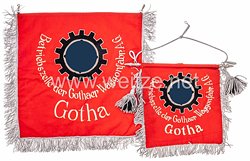
Third Reich German Labor Front DAF Fanfare Banner and Jingling Johnny Flag of the DAF Musical Corps “Factory Cell of Gothaer Waggonfabrik A.G. Gotha”

circa 1936/38. The fanfare banner and jingling johnny flag from the same production. Both pieces made of red cloth, on the front side each bearing the DAF emblem “Factory Cell of Gothaer Waggonfabr. A.G. Gotha”, on the reverse side “Die Gothas”. Both pieces with surrounding silver fringe. The fanfare banner at top with 2 sewn-in carabiner hooks for attachment to the fanfare trumpet, dimensions with fringe approx. 53 x 56 cm. The jingling johnny flag with sewn-in crossbar, silver cord with carabiner hook for attachment to the jingling johnny, on sides with 2 silver tassels, dimensions with fringe approx. 35 x 41 cm. Only slight traces of use and age, in each case in the white field of the DAF emblem a few small insignificant pinholes, condition 2.

Extremely rare ensemble, we are not aware of any other example.

Gothaer Waggonfabrik was a significant metal construction company for aircraft and streetcar manufacturing in Gotha. The company premises were located at Gotha Ostbahnhof. In World War I, numerous military aircraft were built, including the heavy bomber Gotha G IV. The aircraft of the Waggonfabrik became quickly known generally as “Die Gothas” and achieved in the First World War the dubious fame of having been the “terror of the enemy”.
After the end of the war in 1918, aircraft production had to be discontinued due to the Treaty of Versailles. In 1933, aircraft production began again in Gotha, also for the newly formed Luftwaffe. After the outbreak of war in 1939, cargo gliders were essentially developed and manufactured in Gotha, including the cargo glider Gotha Go 242 and Go 244. In 1944, the plant was 80% destroyed by an air raid. Nevertheless, pre-production of the revolutionary flying wing jet fighter Ho 229 (Ho IX) by the Horten brothers began in Friedrichroda at war's end.


424971
5.800,00

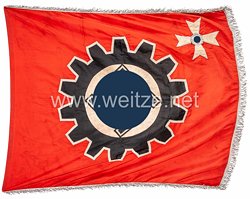
Third Reich Deutsche Arbeitsfront DAF Factory Flag for a Kriegsmusterbetrieb (War Model Factory)

circa 1943. Large silk flag in sewn construction, silver bullion trim around perimeter, dimensions approximately 120 x 135 cm, with embroidered War Merit Cross in the upper right corner. The flag has one hole and is stained, condition 2-.

Award jointly instituted in April 1940 by Dr. Ley and Speer in recognition of outstanding commitment and exemplary performance of the factory workforce in the context of German war production. With the presentation of a corresponding certificate, the factory workforce received the right to display the War Merit Cross on its flag.
422219
7.500,00

Third Reich / Estonia - Magazine "Laikmets" - Volume 1943 No. 32

Deutsche Verlags- und Druckerei-Ges. im Ostland m.b.H. Riga, condition 2-.
377326
35,00

Third Reich / Estonia - Magazine  Laikmets  - Volume 1942 No. 20

Deutsche Verlags- und Druckerei-Ges. im Ostland m.b.H. Riga, condition 2-.
377288
60,00

NSKOV Nationalsozialistische Kriegsopferversorgung Gorget for Flag Bearer

Heavy execution in nickel with clipped-on star and large NSKOV emblem. Reverse with wearing clip, somewhat loose blue fabric backing, on original neck chain. Worn in good condition.
291809
1.200,00

III. Reich - Fahnenspitze des NS-Reichskriegerbund 

Fertigung aus Messing, farbig lackiert, ohne Tülle für die Fahnenspitze,  Länge ca. 26,5 cm. Zustand 2.
514316
250,00

Third Reich - Flag Finial of the National Socialist War Victims Care Organization (NSKOV)

Constructed of non-ferrous metal, maker’s mark “Ges. Gesch. Otto Gahr”, the colored lacquer finish is no longer present, height approximately 37.5 cm. Complete with socket for flag pole. Condition 2-.
514308
320,00

III. Reich - Fahnenspitze des NS-Reichskriegerbund 

Fertigung aus Messing, farbig lackiert, mit Tülle für die Fahnenspitze,  Länge ca. 32,5 cm, Zustand 2-.
514307
320,00

Mein Kampf - Wedding Edition from 1940 without Dedication Page

München, Zentralverlag der NSDAP, 494th - 498th edition, half leather binding, 781 pages, cover with coat of arms, gilt top edge, condition 2.
505145
280,00

Third Reich - WHW Collection Box of the NSV Kreis Arnsberg

originally red tin donation box with embossed inscription "Kreis Arnsberg", repainted after the war, with DRK paper label. Condition 2.
502724
150,00

NSDAP Reichsparteitag 1936 Pennant

Double-sided sewn pennant for bicycle, motorcycle, etc. Dimensions approximately 24 x 16 cm, woven emblem of the Reichsparteitag 1936 on the obverse, reverse with woven city view of Nürnberg. Condition 2+.
500424
550,00

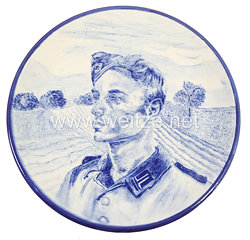
Waffen-SS - Large Commemorative Plate

Large hand-carved wooden plate, decorated around the rim with ears of grain and the motto “Meine Ehre Heisst Treue” (My Honor is Loyalty), diameter 32 cm.

488918
650,00

NSKOV Nationalsozialistische Kriegsopferversorgung Ring Collar for Flag Bearer

Heavy pattern construction in nickel with clipped-on star and large NSKOV emblem. Reverse with wear clip, somewhat loose blue fabric backing, on original neck chain. Worn condition, good state.
486813
1.100,00

Cigarette Case of a Prisoner of War

Aluminum, approx. 7.5 x 10 cm, lid hand-engraved with the Hamburg coat of arms, condition 2.
485158
250,00

Third Reich Adolf Hitler: Fish Serving Knife from the Silverware of the Old Reich Chancellery

Circa 1935. From the Old Reich Chancellery. The handle features a relief national eagle with decorative border. Reverse stamped “Bruckmann” and “90” for the fine silver overlay, length 27.9 cm. Minor signs of use, condition 2.
This tableware was in use in the Old Reich Chancellery as well as in German embassies abroad.

We were able to acquire a small remaining stock from U.S. war spoils.

The canteen of the Reich Chancellery was under the direction of Arthur Kannenberg (born February 23, 1896 in Charlottenburg; died January 26, 1963 in Düsseldorf). Kannenberg was Adolf Hitler's house intendant. Kannenberg completed the Werdersche Oberrealschule in Berlin with a secondary school certificate and began an apprenticeship in 1912 in his father Oskar Kannenberg's gastronomic establishment. From 1915 he served in Telegraph Battalion I and was discharged in 1918 as a Gefreiter (lance corporal). From 1924 he managed his father's establishments, the Restaurant Kannenberg, Hotel Stadt Berlin, and the excursion restaurant Onkel Toms Hütte located in Grunewald, which went bankrupt in 1930.

As manager of Pfuhl's wine and beer taverns, where prominent Nazi figures such as Joseph Goebbels and Hermann Göring also frequented, he met Hitler, who offered him the management of the casino of the party headquarters Braunes Haus in Munich. He took up this position in 1931. Subsequently, he was also assigned management of the canteen of the NSDAP Reich Leadership School on Schwanthaler Strasse.

After Hitler became Reich Chancellor in 1933, Kannenberg became house intendant in the Reich Chancellery. He organized the operations of the Führer's household. This included particularly the hiring of personnel, procurement of food and beverages, and preparation of menus, but also the organization of catering at state receptions both in the Reich Chancellery and occasionally at the Berghof; during the war he then served at the Führer Headquarters in the Wolfsschanze and finally in the bunker of the Reich Chancellery in Berlin.

In May 1945 he was interned by the Americans and released on July 25, 1946.
Many pieces from the Reich Chancellery were popular souvenirs of the occupation troops after the war, but many Berliners also restocked their often bombed-out households with the remains of the Reich Chancellery.
471450
1.200,00

Third Reich Adolf Hitler: Fish Knife from the Silverware Service of the Old Reich Chancellery

Circa 1935. From the Old Reich Chancellery. The handle features a relief Reich Eagle with decorative border. Reverse stamped “Bruckmann” and “90” for the fine silver plating, length 25.5 cm. Minor signs of use, condition 2.
This silverware was in use in the Old Reich Chancellery as well as in German embassies abroad.

We were able to acquire a small remaining stock from U.S. war booty

The canteen of the Reich Chancellery was under the direction of Arthur Kannenberg (born February 23, 1896 in Charlottenburg; died January 26, 1963 in Düsseldorf). Kannenberg was Adolf Hitler's chief steward.
Kannenberg completed the Werdersche Oberrealschule in Berlin with a secondary school certificate and began an apprenticeship in 1912 in his father Oskar Kannenberg's gastronomic establishment. From 1915 he served in Telegraph Battalion I and was discharged in 1918 as a Gefreiter (Lance Corporal). From 1924 he managed his father's businesses, the Restaurant Kannenberg, Hotel Stadt Berlin and the excursion restaurant Onkel Toms Hütte located in Grunewald, which went bankrupt in 1930.

As manager of Pfuhl's Wine and Beer Taverns, where well-known Nazi leaders such as Joseph Goebbels and Hermann Göring also frequented, he met Hitler, who offered him the management of the casino at the party headquarters Braunes Haus in Munich. He took up this position in 1931. Subsequently, he was also assigned the management of the canteen of the Reich Leadership School of the NSDAP on Schwanthalerstraße.

After Hitler became Reich Chancellor in 1933, Kannenberg became chief steward in the Reich Chancellery. In this role he organized the operations of the Führer's household. This included particularly the hiring of personnel, the procurement of food and beverages and the preparation of menus, but also the organization of hospitality at state receptions both in the Reich Chancellery and occasionally at the Berghof; during the war he then served at the Führer Headquarters in the Wolfsschanze and finally in the bunker of the Reich Chancellery in Berlin.

In May 1945 he was interned by the Americans and released on July 25, 1946.
Many pieces from the Reich Chancellery were popular souvenirs of the occupation troops after the war's end, but many Berliners also re-equipped their often bombed-out households with the remnants of the Reich Chancellery.
471448
750,00

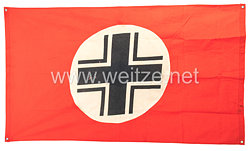
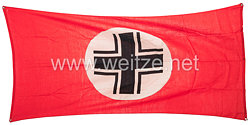
Wehrmacht Aircraft Recognition Panel for Vehicles

Aircraft recognition panel, dimensions approximately 99 x 192 cm, red fabric with sewn-on Balkenkreuz (one side), with grommets for mounting on vehicles. Condition 2.
468624
750,00

Third Reich Film Reel - Supply Columns

Short documentary film, UFA film company, 35mm film, box damaged, used condition.
459957
170,00

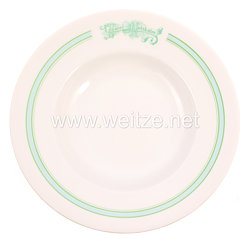
Hotel Netzkater - Porcelain Plate

White glazed porcelain, approx. 23 cm diameter, with continuous green border decoration.

Netzkater is a former villa resort near Ilfeld. After the partial destruction of the rocket development center at Peenemünde, in autumn 1943 the director of the V-weapons development office Wernher von Braun, as well as the directors of the Mittelwerk facility Rickhey and Sawatzki with their staffs, resided at the Hotel Netzkater.
445807
350,00

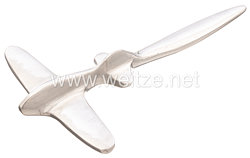
Third Reich - Shoehorn in the Form of an Aircraft as Journeyman's Piece

Aluminum, dimensions approximately 18 x 10 cm. Condition 2.
439211
140,00

Third Reich Fire Protection Police: Desk Decoration

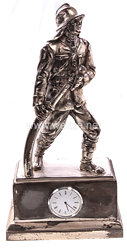
circa 1938. Large desk decoration depicting a fireman with fire hose, the helmet bearing a swastika, a clock was subsequently installed in the base, not tested for functionality. Height 27.5 cm. Condition 2.
420855
480,00

Third Reich / Estonia - Magazine "Laikmets" - Volume 1943 No. 9

Deutsche Verlags- und Druckerei-Ges. im Ostland m.b.H. Riga, condition 2-.
377303
35,00

Third Reich / Estonia - Magazine "Laikmets" - Volume 1943 No. 4

Deutsche Verlags- und Druckerei-Ges. im Ostland m.b.H. Riga, condition 2-.
377299
35,00

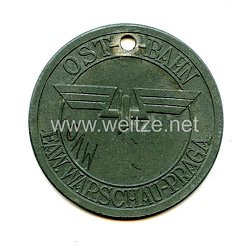
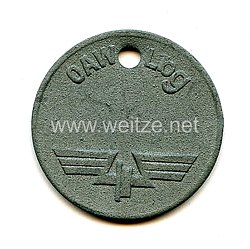
Blank Badge by Deumer Company for Members of the OAW Ostbahn - Railway Repair Works Warsaw - Praga

Reverse side inscribed in felt-tip pen, from sample board 17820 of Deumer Company Lüdenscheid, diameter approximately 3.8 cm, condition 2+
from the former collection of Peter Groch, Berlin
373949
200,00

German Reichsbahn - Large Presentation Plaque for 25 Years of Service

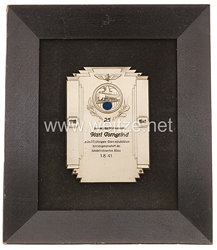
Toned metal plaque. Design: National eagle over electric railcar, below large locomotive with swastika. Inscription “Unserem lieben Berufskamerade Karl Torngind zum 25. jährigen Dienstjubiläum Betriebsgemeinschaft des Bahnbetriebswerkes Altona 1.8.1941”. In original black wooden frame approx. 29 x 34 cm, with wall hanging fixture on reverse, maker “Richard Münchberg Plaketten Berlin”. Condition 2.
367291
380,00

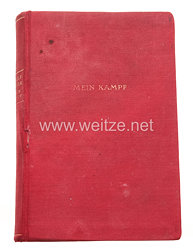
Mein Kampf - Thin Paper Edition or Field Post Edition from 1940

München, Zentralverlag der NSDAP, red full cloth binding, 781 pages, condition 2.
362864
200,00

Third Reich Reichsverband der Deutschen Flughäfen - Pennant

printed in color on both sides, made of gabardine, 17.5 x 34 cm, complete with snap hook and retaining cord, used condition.
334014
850,00

Third Reich Partial Wreath Ribbon of Arado Flugzeugwerke G.m.b.H

Red artificial silk with fringe, sewn-on swastika at center, printed “Arado Flugzeugwerke G.m.b.H.”. Dimensions: Length approx. 59 and 65 cm. Used condition.
313969
300,00

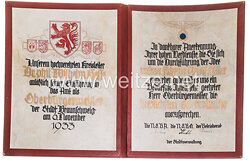
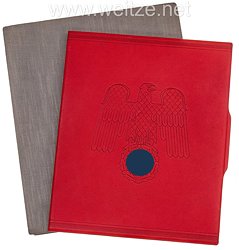
NSDAP Large Certificate of Honor from Gauverlag Schlesien for the Editor of the “Schlesischer Beobachter”

circa 1940. Large red leather portfolio, front cover with large embossed national eagle, reverse with artist signature “H.F. Wagner”. The inside of the cover with light brown, gold-bordered leather inlay, center with embossed Iron Cross before swastika, below the years “1930 - 1940”. On the right side inserted the large certificate on parchment, hand-lettered with calligraphic text: “As editor of the National Socialist campaign newspaper of Gau Schlesien ‘Schlesischer Beobachter’, Party Comrade ERICH GOEBEL entered into service 10 years ago today, on 15 Feb. 1930, for the dissemination of our Führer’s idea in Schlesien.
In recognition of his many years of commitment to the Schlesische Gau press, this commemorative document is presented to him today. Breslau 15 February 1940. - Gauverlag NS-Schlesien G.m.b.H.” with original signature of the Gau publishing director. Dimensions 38.5 x 31.5 cm. Complete in the linen-covered protective case.
In mint condition. A rare individual piece.
312600
3.500,00

Third Reich: Patriotic Patches

machine embroidered, approx. 5 x 5 cm, condition 2-
500464
50,00

Third Reich Ordensburg Vogelsang: Paper Coaster “Burgschänke Ordensburg Vogelsang”

printed tissue paper, diameter 90 mm, with advertising imprint of Herm. Otto Ceasar Kaffee-Großrösterei Köln.
45 Euro each

483888
45,00

Third Reich Enameled Sign “Reichsbahn-Kraftverkehr”

“Güterannahme Güterausgabe” (Freight Acceptance Freight Dispatch), slightly curved, 40 x 60 cm, with mounting holes in all 4 corners for building attachment, only minimal signs of age, manufacturer marking at bottom “Ernst Heene Emailschildderfabrik Germersheim a./Rh.” Condition 2.
Extremely rare.
512548
1.950,00

German Reichsbahn Small Estate of District Locomotive Engineer Schmitz, Reichsbahndirektion Posen, 1939

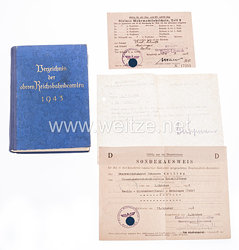
Large commemorative plaque, approx. 18 cm, “Kriegsweihnacht 1939 - Reichsbahndirektion Posen” (War Christmas 1939 - Reich Railway Directorate Posen), oval brass casting, probably manufactured directly at the Reichsbahndirektion Posen, mounted on black wooden board approx. 24 x 16 cm, with dedication plaque “Bez. Lokf. J. Schmitz” (District Locomotive Engineer J. Schmitz), dimensions 16.5 x 24 cm. Included is the membership book “Verein Deutscher Lokomotivführer” (Association of German Locomotive Engineers) as well as 5 photographs of Locomotive Engineer Schmitz in front of his locomotives “Deutsch PM 36” and “Deutsch Pt 31”, in old glass frame, 26 x 32.5 cm.

The PKP Class Pt31 were express passenger tender locomotives of the Polish State Railways (PKP), which were taken over by the Deutsche Reichsbahn after the Polish Campaign of 1939. Comparable to the development of standard locomotives in Germany, specifications for standard locomotives were also established in Poland. A total of 98 locomotives were manufactured between 1932 and 1939 by Fablok in Chrzanów. After the occupation of Poland in 1939, 54 Pt31 locomotives came into German possession and 36 into Soviet possession.
505019
500,00

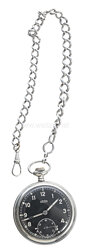
Wehrmacht Service Pocket Watch “Langeau”

Nickel-plated case, reverse with chamber number D11481266H, black dial with subsidiary seconds, Arabic numerals and seconds display. Screw-down case back, in working order, condition 2.
513279
450,00

NS-Reichskriegerbund - Flag Finial of the Veterans' Comradeship "46th Reserve Division Flensburg" "1940 - Symbol Becomes Weapon"

Plastic, complete with socket for flagpole, with additional engraving "46 Res Div Felsburg", four drill holes for attachment, overall height approx. 24.5 cm, condition 2.

These flag finials were the replacement for the German veterans' associations, which donated their finials in 1940 as a metal donation for the German war economy. The flag finials were then replaced with the plastic finials "1940 - Symbol Becomes Weapon".
510269
380,00
504536
450,00

Third Reich - Flag Finial of the NS-Kyffhäuserbund

Brass construction, color lacquered, length approximately 25.5 cm, condition 2.
502306
360,00

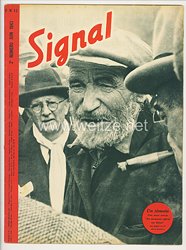
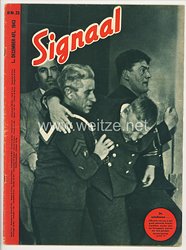
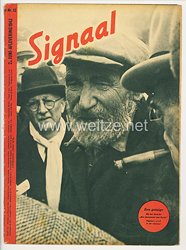
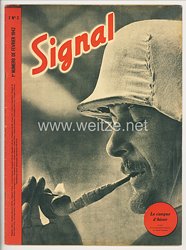
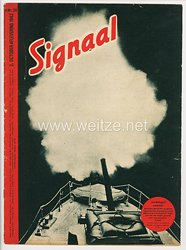
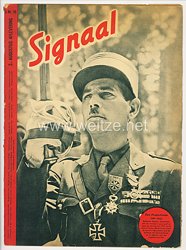
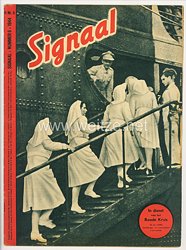
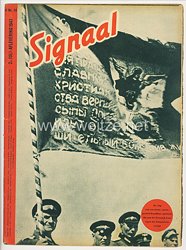
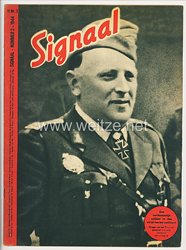
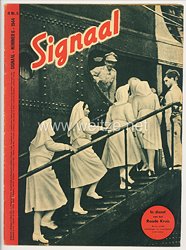
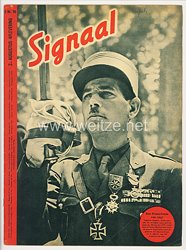
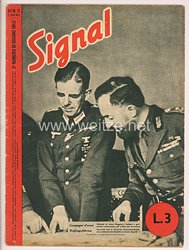
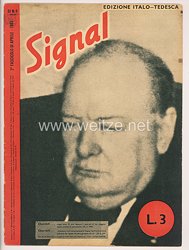
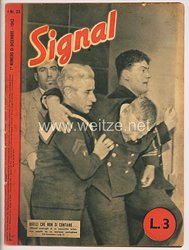
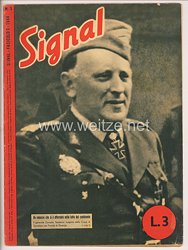
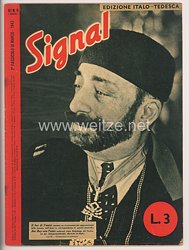
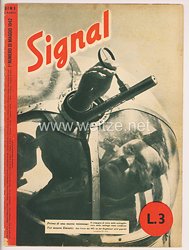
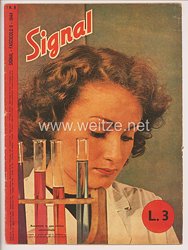
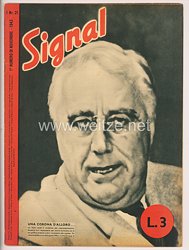
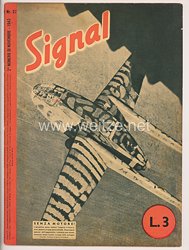
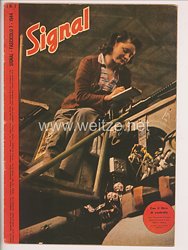
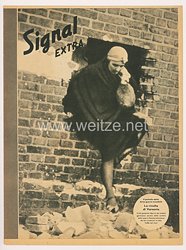
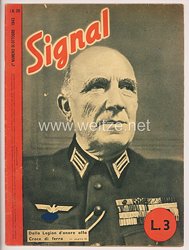
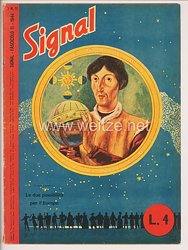
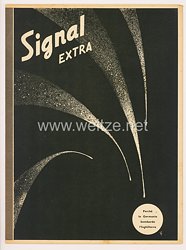
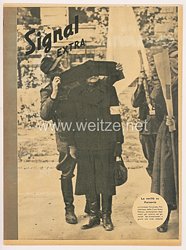
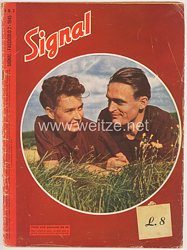
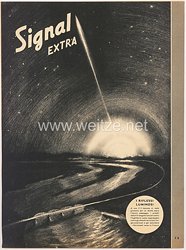
Signal - Dossier (Italian) The only work published to date

Only 500 copies were published in a small print run, magazine size 36 x 27 cm
478097
100,00

Third Reich Adolf Hitler: Cake Fork from Canteen Silverware of the Old Reich Chancellery

circa 1935. Silver-plated silverware from the canteen for employees of the Old Reich Chancellery. Cake fork, with relief national eagle on the handle and decorative border. Stamped on reverse “Bruckmann” and “90” for the fine silver plating, length 15.5 cm. Minor signs of use, condition 2.
This silverware was in use at the Old Reich Chancellery.

The Reich Chancellery canteen was under the direction of Arthur Kannenberg (born February 23, 1896 in Charlottenburg; died January 26, 1963 in Düsseldorf). Kannenberg was Adolf Hitler's house steward. Kannenberg completed his education at the Werdersche Oberrealschule in Berlin with intermediate school certificate and began an apprenticeship in 1912 at his father Oskar Kannenberg's gastronomy business. From 1915 he served in Telegraph Battalion I and was discharged in 1918 as a Gefreiter (lance corporal). From 1924 he managed his father's businesses, the Restaurant Kannenberg, Hotel Stadt Berlin, and the excursion restaurant Onkel Toms Hütte located in Grunewald, which went bankrupt in 1930. As manager of Pfuhl's Wine and Beer Taverns, where prominent Nazi figures such as Joseph Goebbels and Hermann Göring also frequented, he met Hitler, who offered him the management of the casino of the party headquarters Braunes Haus in Munich. He took up this position in 1931. Subsequently, he was also assigned management of the canteen of the NSDAP Reich Leadership School on Schwanthalerstraße. After Hitler became Reich Chancellor in 1933, Kannenberg became house steward at the Reich Chancellery. He organized the operation of the Führer's household, which included hiring staff, procurement of food and beverages, and preparation of menus, as well as organizing hospitality at state receptions both at the Reich Chancellery and occasionally at the Berghof; during the war he was then active at the Führer Headquarters in the Wolfsschanze and finally in the bunker of the Reich Chancellery in Berlin. In May 1945 he was interned by the Americans and released on July 25, 1946.
Many pieces from the Reich Chancellery were popular souvenirs of the occupation troops after the war's end, but many Berliners also refurnished their often bombed-out households with remnants from the Reich Chancellery.
476425
750,00

Wehrmacht Aircraft Recognition Panel

Aircraft recognition panel, dimensions approx. 95 x 190 cm, red fabric with sewn-on Balkenkreuz (one side), with grommets for mounting on vehicles. A few holes, slightly stained, condition 2.
465806
700,00

Third Reich Film Reel - Air Raid

Short documentary film, UFA film company, 35 mm film, box damaged, used condition.
459956
200,00

Hitler Youth HJ Unit Flag of Gefolgschaft 28 in Bann 564 Villach, Gau Kärnten

Location Villach, Gau Kärnten, circa 1938. Double-sided sewn construction, aluminum rings marked "RZM M3/40/37", top with white tabs and black embroidered numbers "28/564". Dimensions 117 x 170 cm. Stained, condition 2.
Very rare.

457907
2.500,00

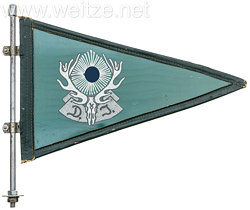
Third Reich Vehicle Pennant for State Officials of the German Reich

circa 1936. Vehicle pennant in the form of the Reich Service Flag. Double-sided sewn construction, the national eagle and large swastika in the center in chain stitch embroidery. Complete with metal frame and damaged celluloid protective cover. Dimensions 20 x 30 cm. Light signs of use, condition 2.
447392
1.200,00

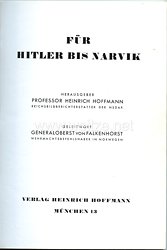
Third Reich - Heinrich Hoffmann - For Hitler to Narvik

Berlin, Heinrich Hoffmann Verlag, 1941, softcover, without dust jacket, unpaginated, illustrated volume, condition 2.
387537
60,00

Third Reich / Estonia - Magazine "Laikmets" - Volume 1944 No. 7

Deutsche Verlags- und Druckerei-Ges. im Ostland m.b.H. Riga, condition 2-.
377328
35,00

Third Reich / Estonia - Magazine "Laikmets" - Volume 1943 No. 31

Deutsche Verlags- und Druckerei-Ges. im Ostland m.b.H. Riga, condition 2-.
377325
60,00

Third Reich / Estonia - Magazine "Laikmets" - Volume 1943 No. 30

Deutsche Verlags- und Druckerei-Ges. im Ostland m.b.H. Riga, condition 2-.
377322
35,00

Third Reich / Estonia - Magazine "Laikmets" - Volume 1942 No. 22

Deutsche Verlags- und Druckerei-Ges. im Ostland m.b.H. Riga, condition 2-.
377291
35,00

Third Reich / Estonia - Magazine "Laikmets" - Volume 1942 No. 21

Deutsche Verlags- und Druckerei-Ges. im Ostland m.b.H. Riga, condition 2-.
377289
35,00

Third Reich - German Gau Regions - Stereo Image Album

Diessen, Raumbildverlag Schönstein, 1938, bound edition, half-linen binding, 191 pages, 200 stereo images, complete with viewing glasses, foil cover, lightly rubbed with minor adhesions on reverse, Condition 2.
353542
300,00

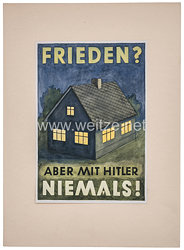
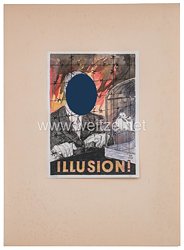
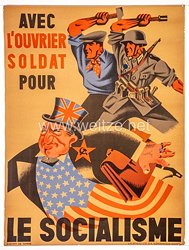
Third Reich Resistance: Poster Design by an Anti-Fascist “Peace? But Never with Hitler!”, dated 1943

Pencil and watercolor on cardboard, signed at right with artist's monogram “HF 1943”, mounted on cardboard. Dimensions 47.5 x 34 cm. Condition 2.
This work was created by a Hamburg anti-fascist who worked in England as an émigré. The poster designs were never published.
328047
300,00

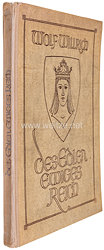
Third Reich - Wolfgang Willrich - Des Edlen ewiges Reich

Berlin, Verlag Grenze und Ausland, 1941 2nd edition, half-linen binding, 40 pages + 48 partially colored plates (Blood and Soil motifs), condition 2.
312647
100,00

NSKOV Nationalsozialistische Kriegsopferversorgung Gorget for Standard Bearer

Heavy-duty execution in nickel with applied star and large NSKOV emblem. Reverse with 2 suspension clips, blue cloth backing. Complete with original neck chain. Worn in good condition.
241057
1.150,00

Third Reich - Austria / NSDAP-Hitler Movement before 1938: Donation Badge for 1 Schilling

Aluminum, 22 mm, “Toward Freedom - Help the Released Comrades”, Condition 2.
221979
50,00

Third Reich Representative Signature/Document Portfolio for a Political Leader

circa 1936/38, elaborately crafted folding leather portfolio, dimensions (closed) 36 x 27 cm, interior with various compartment inserts, front embossed with large national eagle, only very slight signs of use.
499245
900,00

Third Reich Sample Board of Association Badges for Visor Caps

partially glued, but easy to remove, 10 pieces, condition 2.
445259
165,00
75,00

Mein Kampf - People's Edition from 1938

Munich, Verlag Franz Eher Nachfolger, 349th - 351st edition, blue full cloth binding, 781 pages, Condition 2- Text block exterior slightly foxed
513371
280,00

Mein Kampf - People's Edition from 1938

Munich, Verlag Franz Eher Nachfolger, 360-364th edition, blue full cloth binding, 781 pages, Condition 2-, book block exterior slightly foxed
513367
240,00

Mein Kampf - People's Edition from 1934

Munich, Verlag Franz Eher Nachfolger, 102 - 106 edition, blue full cloth binding, 781 pages, dedication and bookplate on front endpaper, condition 2.
513360
250,00

Mein Kampf - People's Edition from 1941 - Printed Text

Munich, Zentralverlag der NSDAP Franz Eher Nachfolger, 641 - 645 edition, blue full cloth binding, 781 pages, condition 2
513355
270,00

Mein Kampf - Wedding Edition from 1938

München, Zentralverlag der NSDAP, 286th - 290th edition, half-leather binding, 781 pages, dedication page and Hitler portrait page removed, gilt top edge, spine slightly stained, condition 2-.
513226
220,00

Mein Kampf - Wedding Edition from 1939

Munich, Zentralverlag der NSDAP, 390th - 394th edition, half-leather binding, 781 pages, dedication page removed, gilt top edge, cover with coat of arms of the city of Düsseldorf, condition 2-.
513225
220,00

SA / SS Gorget for Standard Bearer

circa 1934. Heavy nickel construction with applied gilt star and medallion 1st Model, the Party eagle with sun wheel, 2 applied decorative rosettes, reverse with dark blue felt backing and RZM plaque, felt backing with adhesive residue, on long heavy nickel chain. Overall surface tarnished and oxidized. Condition 2-.
512791
900,00

Mein Kampf - Wedding Edition as War Edition from 1943, 785th - 789th Printing in Print Script

Munich, Zentralverlag der NSDAP, half-leather binding, 781 pages, dedication page not filled in, without city coat of arms on title cover. Condition 2+.
512974
350,00

Third Reich - NS Soldatenbund Flag

Double-sided printed execution on cotton cloth, dimensions approximately 120 x 135 cm. Marking “ges. gesch.” (registered trademark). A few holes, used condition.
476920
650,00

Third Reich Reichsverband der Deutschen Flughäfen - Table Pennant

printed in color on both sides on fine silk, 15 x 25 cm, used condition.
504777
450,00

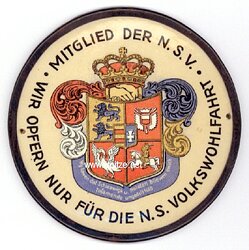
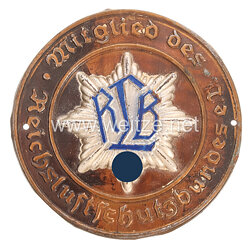
Third Reich - Reichsluftschutzbund (RLB) - Door Plaque - “Member of the Reich Air Protection League - Regional Group Wttbg./Hohenz.”

72 mm, embossed aluminum, center color lacquered, condition 2-.
Ldsgr. Wttbg./Hohenz. = Landesgruppe Württemberg-Hohenzollern (Regional Group Württemberg-Hohenzollern)
487220
160,00

Third Reich Adolf Hitler: Fruit Knife from the Tableware of the Old Reich Chancellery

circa 1935. From the Old Reich Chancellery. Relief national eagle on the handle with decorative border running around. Stamped on reverse "Bruckmann" and "90" for the fine silver plating, knife length: 17 cm, slight signs of use, condition 1-
This tableware was in use in the Old Reich Chancellery, as well as in German embassies abroad.

We were able to acquire a small remaining stock from US war trophy materials.

The canteen of the Reich Chancellery was under the direction of Arthur Kannenberg (* February 23, 1896 in Charlottenburg; † January 26, 1963 in Düsseldorf). Kannenberg was Adolf Hitler's household intendant. Kannenberg graduated from the Werdersche Oberrealschule in Berlin with his intermediate school certificate and began an apprenticeship in 1912 in his father Oskar Kannenberg's gastronomy business. From 1915 he served in Telegraph Battalion I and was discharged in 1918 as a Gefreiter (lance corporal). From 1924 he managed his father's establishments, the Restaurant Kannenberg, Hotel Stadt Berlin and the excursion restaurant Onkel Toms Hütte located in Grunewald, which went bankrupt in 1930. As manager of Pfuhl's Wine and Beer Taverns, which was also frequented by prominent Nazi figures such as Joseph Goebbels and Hermann Göring, he met Hitler, who offered him the management of the casino of the party headquarters Braunes Haus in Munich. He took up this position in 1931. Subsequently, he was also given management of the canteen of the NSDAP Reich Leadership School on Schwanthalerstraße. After Hitler became Reich Chancellor in 1933, Kannenberg became household intendant in the Reich Chancellery. In this capacity he organized the operation of the Führer's household. This included in particular the hiring of staff, procurement of food and beverages and preparation of menus, but also the organization of catering at state receptions both in the Reich Chancellery and occasionally at the Berghof; during the war he then worked at the Führer Headquarters in the Wolfsschanze and finally in the bunker of the Reich Chancellery in Berlin. In May 1945 he was interned by the Americans and released on July 25, 1946.
Many pieces from the Reich Chancellery were popular souvenirs of the occupation forces after the war's end, but many Berliners also restocked their often bombed-out households with the remains of the Reich Chancellery.
485629
600,00

Third Reich Adolf Hitler: Table Knife from the Silverware of the Old Reich Chancellery

Circa 1935. From the Old Reich Chancellery. The handle features a relief national eagle with surrounding decorative edge. Reverse stamped “Bruckmann” and “90” for the fine silver overlay, length 21 cm. Light signs of use, condition 2.
This silverware was in use in the Old Reich Chancellery as well as in German embassies abroad.

We were able to acquire a small remaining stock from U.S. war trophy material.

The canteen of the Reich Chancellery was under the direction of Arthur Kannenberg (born February 23, 1896 in Charlottenburg; died January 26, 1963 in Düsseldorf). Kannenberg was Adolf Hitler's house steward.
Kannenberg graduated from the Werdersche Oberrealschule in Berlin with intermediate school-leaving certificate and began an apprenticeship in 1912 in his father Oskar Kannenberg's gastronomic business. From 1915 he served in Telegraph Battalion I and was discharged in 1918 as a Gefreiter (lance corporal). From 1924 he managed his father's establishments, the Restaurant Kannenberg, Hotel Stadt Berlin, and the excursion restaurant Onkel Toms Hütte located in Grunewald, which went bankrupt in 1930.

As manager of Pfuhl's Wine and Beer Taverns, which were also frequented by prominent Nazi leaders such as Joseph Goebbels and Hermann Göring, he met Hitler, who offered him the directorship of the casino of the party headquarters Braunes Haus in Munich. He took up this position in 1931. Subsequently, he was also given management of the canteen of the NSDAP Reich Leadership School on Schwanthalerstraße.

After Hitler became Reich Chancellor in 1933, Kannenberg became house steward in the Reich Chancellery. In this capacity he organized the operations of the Führer's household. This included particularly the hiring of personnel, procurement of food and beverages, and preparation of menus, but also the organization of catering at state receptions both in the Reich Chancellery and occasionally at the Berghof; during the war he was then active at the Führer Headquarters in the Wolfsschanze and finally in the bunker of the Reich Chancellery in Berlin.

In May 1945 he was interned by the Americans and released on July 25, 1946.
Many pieces from the Reich Chancellery were popular souvenirs of the occupation troops after the war's end, but many Berliners also restocked their often bombed-out households with the remains of the Reich Chancellery.
485627
750,00

WHW - V.D.A. - Pedestal Glass with Lion 1938 - “You Gave Us Bread in Great Need”

Pedestal beaker of colorless glass, partially overlaid with honey-yellow on the exterior. Inscriptions and emblems on the glass are hand-engraved. Manufacturing Gau: Sudetenland. In the center of the glass is a hand-engraved lion on a yellow background; height 11.5 cm, condition 2.
474647
150,00

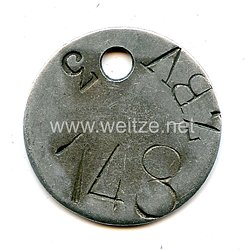
Tool Tag Gästehaus Reichswerke

Diameter approx. 39 cm, Condition 2+

470343
35,00

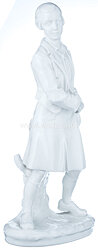
Art in the Third Reich: Large Meissen Figure of a BDM Girl

circa 1938. Large expressive and very detailed porcelain figure of a BDM (Bund Deutscher Mädel) girl with open climbing vest, bread bag and canteen, ready to march out. Signed on reverse “Erich Oehme 1938”, above it the crossed swords mark with designation “weiß”. On underside crossed swords mark in blue, incised mark and factory number “0.294 43.” Height approx. 32 cm. Undamaged, condition 2+. Very rare.
468698
6.500,00

Third Reich Car Pennant Reichsdienstflagge

Double-sided sewn construction on cotton fabric with sewn-in elements. Dimensions: approx. 28.5 x 20 cm. Condition 2-3.
443911
800,00

Third Reich - Day of German Art 1933/1937 - Stereoview Album

Diessen, Raumbild-Verlag Schönstein, 1937, hardbound edition, full cloth binding, 100 images, without viewer, used condition
416595
900,00

NSDAP Large Knife and Fork from the Cutlery Service of the Guesthouse Reichsparteitag in Nuremberg

circa 1936. The blade and fork of fine steel, the handles of white plastic in ivory appearance, bottom marked with round stamp “Guesthouse Reichsparteitag”. With signs of use. Very rare.

The guesthouse for the Reich Party Rallies was built in 1935/36 and was located directly next to the Grand Hotel at Bahnhofsplatz in Nuremberg and is today used as a hotel (Hotel Park Plaza). It accommodated high-ranking invited guests of the Party from Germany and abroad during the Nuremberg Party Rallies until 1938; among others, Göring had a suite here.
409159
600,00

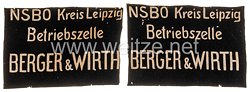
NSBO - Pair of Flag Mirrors for a Factory Flag

“NSBO Kreis Leipzig Betriebszelle - Berger & Wirth”, circa 1934. White chain stitch embroidery on black felt cloth, dimensions approximately 23 x 34 cm. Cut from the flag after 1945, condition 2.
385912
250,00

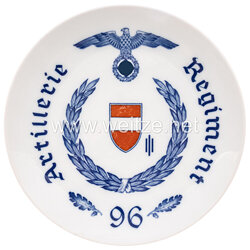
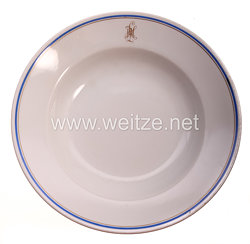
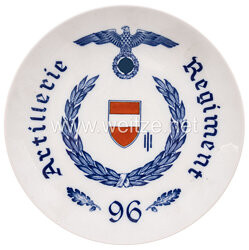
Meissen Regimental Plate Wehrmacht “Artillerie-Regiment 195”

blue decoration under glaze, crossed swords mark on reverse. Undamaged, condition 2+.
385235
550,00

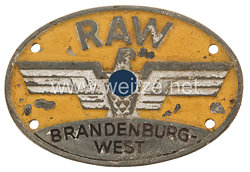
Third Reich Reichsbahn Railway Repair Works Service Badge “RAW Brandenburg West”

Fine zinc, partially lacquered, reverse with pin back and manufacturer marking of Hermann Aurich in Dresden, somewhat corroded, condition 2-3

The Plaue powder factory was transferred to the Reich Railway Administration in 1919 and operated under the name Railway Works Brandenburg-West. A facility for the maintenance of locomotives was established, which commenced operations in 1924. In addition, a maintenance works, a switch workshop, a chemical testing facility, and other workshops were established on the extensive grounds. From 1926, the facility was called Reichsbahn Railway Repair Works Brandenburg-West. 2,500 employees were employed here. Locomotives and railroad cars were maintained and repaired here using the most modern methods, partially on assembly lines. Significant changes occurred in 1942. The locomotive works were completely dismantled and transported on 276 railroad cars toward Ukraine. However, it was never rebuilt there. The Brandenburger Eisenwerke GmbH took over the remaining facilities. Prisoners of war and forced laborers were employed here for the production of tank components and tanks. The production facilities of the tank works were dismantled immediately after the war's end and transferred to the USSR. The Soviet occupation forces then established a tank repair works on the grounds.

Parallel to this, the Reichsbahn resumed work in the remnants of the former works. 
378980
590,00

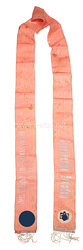
Third Reich Winner's Ribbon for the Final Race in Sports District Dresden 5.10.1941

Red rayon with fringe, silver print, sewn-on, dimensions approximately 5.5 x 140 cm, printed with “Dem Sieger im Schlussrennen 5.10.41” and “Sportbezirk Dresden”. Used condition.
367261
190,00

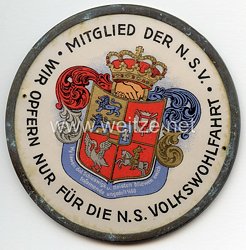
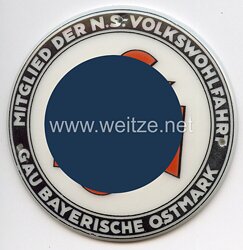
Third Reich - Door Plaque - "Member of the NS-Volkswohlfahrt Gau Bayerische Ostmark"

glazed porcelain plaque, 75 mm, with 3 holes, manufactured in the distressed area of Bayerische Ostmark 1, condition 2.
355990
160,00

Wehrmacht Filmrolle "Der Feldzug in Jugoslawien" 

8 mm Film, mit Blechrolle, und Pappbehälter, Zustand 2
316671
90,00

Third Reich - Door Plaque - Volkssozialistische Selbsthilfe (VS) Rheinpfalz, 1933/34

Non-ferrous metal, dimensions 58 x 55 mm, reverse side with manufacturer marking "FMK", condition 2.

Volkssozialistische Selbsthilfe Rheinpfalz, 1933/34. The Socialist Self-Help organization was established as a social policy project by Palatinate Gauleiter Josef Bürckel in the summer of 1933. The Volkssozialistische Selbsthilfe obligated every Palatinate resident to donate a fixed sum of money monthly for state measures in the labor market, housing construction, for the needy, and similar purposes. Due to fierce resistance from Munich and Berlin, Bürckel had to discontinue his project in the summer of 1934.
186136
150,00

Third Reich Colored Watercolor Painting "The Newspaper Vendor" by Peter Kraemer the Younger

circa 1934/35. A very fine genre painting of a well-known Munich newspaper vendor, holding in his hand the Münchner Illustrierte Presse with portrait "Reichspräsident v. Hindenburg," color postcard of Adolf Hitler, tucked under his arm the "Münchner Neueste Nachrichten" with headline ".. Printing of the Chancellor's Speech" (by Adolf Hitler), signed lower right "Peter Kraemer München," complete in the original frame. Dimensions of the painting approximately 18 x 21 cm, with frame 39 x 42 cm. Condition 2.

Peter Kraemer (Philadelphia 1857 - München 1941), figure and history painter. K. studied from 1871 at the Stuttgart Academy under C. Neher, from 1874 in München under A. Straehuber and O. Seitz. Reference: Thieme-Becker. Kraemer was known as a Munich genre painter; the painting "The Newspaper Vendor" was painted by him several times over the years, already in World War I, then each time with the current newspapers of the period. In his painting of the same name from 1916, for example, Generalfeldmarschall von Mackensen appears on the newspaper. His last painting was auctioned at "Van Ham" for EUR 2,300.
512607
1.650,00

Third Reich - Flag Finial of the NS-Kyffhäuserbund

Manufactured from aluminum, color painted, length approx. 26.5 cm. Denazified, swastikas were removed bilaterally from the upper sovereignty badge of the NS-Kyffhäuserbund, condition 2-.
502307
300,00

Third Reich Pennant

Double-sided appliquéd center with printed swastika, dimensions 17 x 128 cm. Moth damage, staining, condition 2.
499509
250,00

Reichswehr / Wehrmacht - Harmonica

Manufactured by M. Hohner. Harmonica with inscription "Wenn wir marschieren, M. Hohner" (When We March). Original cardboard box with image of marching soldiers, interior with manufacturer's marking "Hohner Harmonikas...", dimensions: 14.8 x 3.7 cm, height approx. 2.8 cm. Condition 2.
483486
250,00

NSDAP Fork from the Dining Cutlery of the Guesthouse Reichsparteitag in Nuremberg

circa 1936. Fine steel, the handle made of white plastic in ivory appearance, bottom with round mark “Gästehaus Reichsparteitag”. With signs of use. 

The guesthouse for the Reichsparteitage (Nazi Party rallies) was built in the years 1935/36 and was located directly next to the Grand Hotel at Bahnhofsplatz in Nuremberg and is today used as a hotel (Hotel Park Plaza). High-ranking invited guests of the Party from home and abroad frequented it during the Nuremberg Party rallies until 1938; among others, Göring had a suite here.
471236
200,00

Third Reich Adolf Hitler: Fish Knife from the Canteen Flatware of the Old Reich Chancellery

circa 1935. Silver-plated flatware from the canteen service for staff of the Old Reich Chancellery. Fish knife, the handle featuring relief eagle with national emblem and decorative border. Reverse stamped “Bruckmann” and “90” indicating fine silver plating, length 21 cm. Light signs of use, condition 2.
This silverware was in use at the Old Reich Chancellery.

The Reich Chancellery canteen was under the direction of Arthur Kannenberg (born February 23, 1896 in Charlottenburg; died January 26, 1963 in Düsseldorf). Kannenberg was Adolf Hitler's house steward.
Kannenberg completed his secondary education at the Werdersche Oberrealschule in Berlin and began an apprenticeship in 1912 at his father Oskar Kannenberg's restaurant business. From 1915 he served in Telegraph Battalion I and was discharged in 1918 as a Private First Class. From 1924 he managed his father's establishments, the Restaurant Kannenberg, Hotel Stadt Berlin, and the Grunewald excursion restaurant Onkel Toms Hütte, which went bankrupt in 1930.

As manager of Pfuhl's Wine and Beer Taverns, frequented by prominent Nazi figures such as Joseph Goebbels and Hermann Göring, he met Hitler, who offered him the management of the casino at the party headquarters Braunes Haus in Munich. He assumed this position in 1931. Subsequently, he was also given management of the canteen at the NSDAP Reich Leadership School on Schwanthalerstraße.

After Hitler became Reich Chancellor in 1933, Kannenberg became house steward at the Reich Chancellery. He organized the operations of the Führer's household, including staff recruitment, food and beverage procurement, menu planning, and organizing hospitality at state receptions both at the Reich Chancellery and occasionally at the Berghof; during the war he served at the Führer Headquarters at Wolfsschanze and finally in the bunker of the Reich Chancellery in Berlin.

In May 1945 he was interned by the Americans and released on July 25, 1946.
Many pieces from the Reich Chancellery were popular souvenirs for occupation troops after the war, and many Berliners also restocked their often bombed-out households with remnants from the Reich Chancellery.
443941
750,00

Third Reich Package of “School Erasers”

30 erasers, manufacturer “J.H.F.”, in cardboard box. Box damaged, condition 2.

437719
300,00

World War II Recruitment Poster for Belgian Volunteer Workers for the German Reich "With the Worker-Soldier for Socialism"

Color poster, dimensions approximately 61 x 81 cm, imprint "Avec L'ouvrier Soldat Pour Le Socialisme", Wieland G 251, manufacturer "O. Platteau & Co. 3 - 5, Vleminckveld - Antwerpen.". Edges slightly damaged, condition 2.

For deliveries to non-European countries, increased shipping costs may apply. We ask for a consultation.
Pour les livraisons dans des pays non européens, des frais d'expédition plus élevés peuvent s'appliquer. Nous demandons une consultation.

426922
1.500,00

Mein Kampf - India Paper Edition or Field Post Edition from 1943

München, Zentralverlag der NSDAP, red full cloth binding, 781 pages, condition 2-.
416286
180,00

Third Reich Flottmann Works Service Badge 116

Fine zinc, partially lacquered, reverse with pin attachment and manufacturer marking J.Preissler Pforzheim, somewhat corroded, condition 2-3

The company founder was Friedrich Heinrich Flottmann (1844–1899), who in 1872 acquired an existing brass foundry and metal turning shop in Bochum and continued it under the firm name Metallgießerei H. Flottmann.[1] After his death, his widow Emilie Flottmann (1852–1933) continued the business. The eldest son Otto Heinrich Flottmann (1875–1944) received the Reich patent in 1904 for the “compressed air hammer drill with ball control and automatic conversion,” which among other things revolutionized Ruhr mining. Otto Heinrich Flottmann relocated the works to Herne due to lack of expansion possibilities at the original location.
411664
200,00

Hitler Youth - Flag Finial for HJ-Gefolgschaften

Manufactured from aluminum, maker “RZM 3/46/3”. Some dents and signs of use, condition 3. Very rare.
396633
950,00

Third Reich / Estonia - Magazine "Laikmets" - Volume 1944 No. 35

Deutsche Verlags- und Druckerei-Ges. im Ostland m.b.H. Riga, condition 2-.
377331
35,00

Third Reich / Estonia - Magazine "Laikmets" - Volume 1942 No. 44

Deutsche Verlags- und Druckerei-Ges. im Ostland m.b.H. Riga, condition 2-.
377295
60,00

Third Reich / Estonia - Magazine "Laikmets" - Volume 1942 No. 12

Deutsche Verlags- und Druckerei-Ges. im Ostland m.b.H. Riga, condition 2-.
377287
35,00

Third Reich / Latvia - Magazine "Laikmets" - Volume 1942 No. 3

Deutsche Verlags- und Druckerei-Ges. im Ostland m.b.H. Riga, condition 2-.
377283
35,00

Third Reich Radio Pouch

Waterproof pouch, snap fasteners present, reverse with 2 leather straps, the pouch is very fragile, front snaps should not be operated as there is risk of further damaging the pouch, with manufacturer “Funk Hülle DRGM Berlin Schöneberg....”, Condition 3.
368610
125,00

Third Reich Resistance: Poster Design by an Anti-Fascist “Life Goes On”, dated 1943

Pencil and watercolor on cardboard, signed at right with artist's monogram “HF 1943”. Depiction of steel helmet and barbed wire, overgrown by nature, mounted on cardboard. Dimensions 47.5 x 34 cm. Condition 2.
This work was created by a Hamburg anti-fascist who worked in emigration in England. The poster designs were never published.
328041
300,00

Third Reich - German Theater Calendar 1937

Memorial days from theater life, compiled by Ludwig Brauner, Publisher: Fachschaft Bühne in der Reichstheaterkammer Berlin W 62, weekly sheets, complete, condition 2/2-.
326620
100,00

Adolf Hitler - Large Honorary Citizenship Certificate from the Municipality of Kembach in Baden

, 50.5 x 68 cm including fabric-covered mat, without picture frame. The certificate itself is a black and white print: “The Municipal Council of the Municipality of Kembach, Administrative District of Wertheim am Main (Baden) hereby appoints Mr. Reich Chancellor Adolf Hitler as Honorary Citizen for his services to the salvation of the German people and Fatherland. Kembach, March 21, 1933 The Municipal Council”. Condition 2.
Kembach is a municipality in the third-largest German federal state of Baden-Württemberg. Kembach is located in the Main-Tauber-Kreis district.
286573
2.500,00

Adolf Hitler - Personal Wreath Ribbon as Führer of the NSDAP

circa 1934. Watered red silk with terminating gold bullion trim. Left side with applied gold embroidered national eagle on red cloth. On the right side a window with cellophane and portrait photo of the deceased Political Leader in uniform. Tied into a bow at top. Overall length of wreath ribbon approximately 55 cm, width 14 cm. Minor signs of age, in good condition. In modern glass frame, dimensions 57 x 70 cm. Condition 2.
The wreath ribbons were used only for funerals of Political Leaders as well as high-ranking personalities. Very rare.
255530
2.800,00

Deutsche Zeppelinreederei: Small Serving Dish from the Service of an Airship, e.g. “LZ Hindenburg”

circa 1936. Manufactured from aluminum. Small round dish for nuts, or an underplate for a glass or bottle. Diameter 85 mm. Stamped on reverse with Zeppelin and inscription “Zeppelin” as well as article number. Light signs of use, condition 2.
255236
120,00

HJ/BDM Silver Finger Ring

circa 1938. Elegant silver finger ring with enameled HJ emblem at center. Worn condition, enamel damaged, Condition 2-.
495317
250,00

Third Reich - Civilian Stopwatch by Hanhart

Manufacturer “Hanhart Anker 11 Steine”, functional, case worn, with case, condition 2-.
503090
250,00

Sturmabteilung (SA) Drum Carrier Hook for SA Musicians, so-called Drum Scissors

Solid brass construction with national eagle, 3rd model with upright swastika, without belt carrying loop, 1 hook missing, worn. Condition 2
502462
125,00

Hitler Youth (HJ) - Flag Finial for HJ-Gefolgschaften

Aluminum construction, manufacturer “RZM 3/27”. Only light signs of use, condition 2. Very rare.
502299
1.250,00

German Air Sports Association Gorget “Reichs-Luft-Aufsicht” 2nd Model in Aluminum

Exceptional aluminum construction. Unlike the 1st Model, the 2nd Model features decorative side buttons. Reverse with green “Kaliko” linen backing, suspension clip marked with maker “C.E. Juncker Berlin”, complete with original suspension chain. Unworn, in mint condition!

Extremely rare, in over 35 years of business this is the first example we have offered, only very few examples are known worldwide.
497300
3.500,00

Third Reich - Shellac Record "Wir Fahren Gegend Engeland" and "Heut stechen wir ins blaue Meer"

Performed by the Music Corps of Infanterie Regiment Großdeutschland, the record is housed in a private protective sleeve and is in good condition.
492651
140,00

NS Reichskriegerbund/Kyffhäuser Gorget for Flag Bearer with Jubilee Number 50

Manufactured from aluminum, gilt overlay with enameled center and jubilee number, on gilt suspension chain, reverse with blue cloth, worn, with light signs of age. Condition 2
480530
950,00

Third Reich: Silver Presentation Casket from Daimler-Benz Aktiengesellschaft to the Lord Mayor of the City of Stuttgart, Dr. Karl Strölin on his 50th Birthday, 1940

This is a unique piece created by the Munich master goldsmith Max Olofs, circa 1940. The casket is made of heavy hand-raised and hammered silver with gilded inner edges and border decorations as well as precious amber inlays. The lid is stepped in three levels, with a centerpiece depicting a national eagle with swastika and the initials “K S” (Karl Strölin), composed of various amber plates. The individual amber pieces were cut so that when assembled they form the eagle and the initials. Additionally, in the four corners are four round amber “buttons” in the same technique, where the assembled amber pieces each form a swastika. The four amber “buttons” are also found on the underside of the casket; the eight “buttons” on the front and back serve as feet and to protect the casket when it is opened. On the underside at the right edge of the base plate, hallmarked with the city mark of Munich and the artist's signature of the goldsmith Max Olofs.
The inner lid of the casket is gilded and fastened with screws engraved with swastikas. In the corners are gilded oak leaf decorations.
Inside the casket is an inset certificate of parchment,
with a golden Mercedes star, the emblem of Daimler Benz AG
and dedication text in black and red ink as well as gold lettering (similar to Knight's Cross presentation folders):
To the highly meritorious Lord Mayor of the City
of Germans Abroad and Home of the Automobile
Dr. Karl Strölin on his 50th Birthday
dedicated with the most cordial congratulations.
May you as a loyal fighter and pathfinder
of the Führer be granted many more years of health and
strength to continue working for a long time
on the construction of Greater Germany.
Stuttgart, October 21, 1940.
Management and Workforce of Daimler-Benz Aktiengesellschaft

With the original signatures of the Chairman of the Board Wilhelm Kissel and the Board Member and General Inspector of the Führer for Motor Vehicle Affairs Jakob Werlin. The certificate is signed at the bottom by the artist “Leonhard”.
Weight 6.2 kg. Only slight signs of age, in very good condition. Impressive presentation casket of outstanding silversmith and jeweler quality. One of the very few large-format works by Max Olofs, most of his works are in museum or state collections.
Included are two contemporary photographs of the casket (as reproduction photos) as well as a contemporary report about the artist Max Olofs.

Karl Emil Julius Strölin (born October 21, 1890 in Berlin; died January 21, 1963 in Stuttgart) was a German National Socialist politician and Lord Mayor of Stuttgart from 1933 to 1945.
Karl Strölin was born in 1890. As the son of a later general, he received a place in the Prussian Cadet Corps and entered the officer career path. Promoted to the rank of Hauptmann (captain), he participated in the First World War. In 1923 he joined the NSDAP for the first time and then again in 1931. After the National Socialist “seizure of power,” the Württemberg Reichsstatthalter Wilhelm Murr appointed him on March 16, 1933 as State Commissioner for the administration of the city of Stuttgart. On July 1, 1933, he was appointed by Murr as Lord Mayor of Stuttgart for life. Strölin rose to the Reich leadership of the NSDAP.
Strölin had contact with the former Leipzig Lord Mayor Carl Friedrich Goerdeler, who was significantly involved in the assassination attempt on Adolf Hitler on July 20, 1944. On behalf of Goerdeler, Strölin transmitted on April 14, 1944 to Generalfeldmarschall Erwin Rommel an inquiry about a meeting between Rommel and the former Reich Foreign Minister Konstantin von Neurath for a discussion about a political overthrow in Germany. Rommel, out of political caution, did not come himself but sent his Chief of Staff, Hans Speidel, to the meeting with Neurath and Strölin on May 27, 1944 in Freudenstadt. Speidel on Strölin's statements at the meeting: “Lord Mayor Dr. Strölin pointed out above all the central problem of the person Adolf Hitler, with whom foreign countries would not make political agreements. Only his elimination would enable a new creative policy.” – “Both men [Neurath and Strölin] asked to transmit, intended for the Field Marshal, the urgent appeal to make himself available for the salvation of the Reich, whether as Commander-in-Chief of the Wehrmacht or as interim Head of State.”

After the attack of July 20, there was also a house search at Strölin's residence, which however produced nothing incriminating against him. Nevertheless, he was dismissed from the NSDAP Reich leadership in 1944 with revocation of his party rank. However, he remained Lord Mayor of Stuttgart.
Shortly before the end of the war:
When French and American troops advanced on Stuttgart in April 1945, the National Socialists declared the city a fortress and demanded that it be defended with all available means.

Strölin therefore secretly made contact with the French Army and offered the peaceful surrender of his hometown. In doing so, he consciously risked his life, as he was defying the express order to hold out from the NS leadership. In fact, the Geheime Staatspolizei learned of Strölin's contacts with the enemy army and obtained an arrest warrant against him. However, the radio operator who received the telegraphically transmitted arrest warrant in Stuttgart made it disappear. Thus he saved not only Strölin from summary execution, but also the city from destruction. On April 21, 1945, French troops were able to occupy the Stuttgart inner city areas largely without combat. One day later, Strölin officially handed over the city to a French general.
477978

Third Reich Adolf Hitler: Cold Cuts Fork from the Silverware of the Old Reich Chancellery

Circa 1935. From the Old Reich Chancellery. Relief national eagle on the handle with decorative border. Reverse stamped “Bruckmann” and “90” for fine silver plating, length 26.5 cm. Light signs of use, condition 2.
This tableware was in use in the Old Reich Chancellery as well as in German embassies abroad.

We were able to acquire a small remaining stock from U.S. war booty

The canteen of the Reich Chancellery was under the direction of Arthur Kannenberg (born February 23, 1896 in Charlottenburg; died January 26, 1963 in Düsseldorf). Kannenberg was Adolf Hitler's house steward. Kannenberg graduated from the Werdersche Oberrealschule in Berlin with intermediate school certification and began an apprenticeship in 1912 in his father Oskar Kannenberg's restaurant business. From 1915 he served in Telegraph Battalion I and was discharged as a Private First Class in 1918. From 1924 he managed his father's businesses, the Restaurant Kannenberg, Hotel Stadt Berlin and the excursion restaurant Onkel Toms Hütte located in Grunewald, which went bankrupt in 1930. As manager of Pfuhl's Wine and Beer Taverns, where prominent Nazi figures such as Joseph Goebbels and Hermann Göring frequented, he met Hitler, who offered him the management of the casino at the party headquarters Braunes Haus in Munich. He took up this position in 1931. Subsequently, he was also given management of the canteen of the NSDAP Reich Leadership School on Schwanthaler Strasse. After Hitler became Reich Chancellor in 1933, Kannenberg became house steward in the Reich Chancellery. He organized the operation of the Führer's household. This included in particular the hiring of personnel, procurement of food and beverages, and preparation of menus, but also organizing catering at state receptions both in the Reich Chancellery and occasionally at the Berghof; during the war he then worked at the Führer Headquarters in the Wolfsschanze and finally in the bunker of the Reich Chancellery in Berlin. In May 1945 he was interned by the Americans and released on July 25, 1946.
Many pieces from the Reich Chancellery were popular souvenirs of the occupation troops after the war's end, but many Berliners also restocked their often bombed-out households with the remains of the Reich Chancellery.
471453
900,00

Third Reich - Flip Book "The Führer Speaks"

4 x 6 cm, with illustrations of Adolf Hitler giving a speech; Condition 2 - title page missing, first page worn
Manufacturer Erich Bethe, Filmblockverlag, Hamburg 23 D.R.G.M.
In the series "Leading Men of the Third Reich" the following were published: 
"The Führer Speaks"
"The Führer Salutes"
"Dr. Goebbels"
"Hermann Göring"
"Dr. Ley"
468553
100,00

SA Gorget for Members of SA-Standarte “Feldherrnhalle”

Sheet metal construction, gilt eagle on silver field, gilt rim. Reverse with dark blue felt backing, stamped “RZM 87” (= Karoline Gahr Company, München). Complete with original nickel-plated suspension chain. Only lightly worn, condition 2. Very rare.
458773
7.500,00

Third Reich - Gift Leather Cigar Case of the Preußische Saargruben AG 1938

Leather approximately 130x100x20 mm, the closure flap with embossed emblem of the Saargruben: the Prussian eagle with swastika above the inscription “Saargruben” and crossed hammer and pick surrounded by the designation Saargruben-Verwaltung Saarbrücken.
456436
450,00

Third Reich Large Flag of the NSRL (Nationalsozialistischer Reichsbund für Leibesübungen)

circa 1936. Flag made of red linen with double-sided sewn center featuring the black NSRL eagle. Complete with attachment hooks. Dimensions approximately 220 x 370 cm. Stained, small patched area, condition 2-.
431239
950,00

NSDAP Large Knife and Fork from the Cutlery Set of the Guesthouse Reichsparteitag in Nuremberg

circa 1936. The blade and fork made of fine steel, the handles made of white plastic in ivory appearance, bottom with round mark “Guesthouse Reichsparteitag”. With signs of use. Very rare.

The guesthouse for the Reich Party Rallies was built in the years 1935/36 and was located directly next to the Grand Hotel at Bahnhofsplatz in Nuremberg and is today used as a hotel (Hotel Park Plaza). It hosted high-ranking invited guests of the Party from home and abroad during the Nuremberg Party Rallies until 1938; among others, Göring had a suite here.
409161
600,00

Third Reich Flute with Leather Case for Members of a Music Corps

The flute made of black ebony with nickel silver fittings. Complete in black leather case with belt carrying loop. The bottom of the case has a hole, condition 2.
397106
320,00
450,00

Third Reich / Estonia - Magazine "Laikmets" - Volume 1943 No. 2

Deutsche Verlags- und Druckerei-Ges. im Ostland m.b.H. Riga, condition 2-.
377297
60,00

Third Reich / Estonia - Magazine "Laikmets" - Volume 1942 No. 4

Deutsche Verlags- und Druckerei-Ges. im Ostland m.b.H. Riga, condition 2-.
377285
35,00

Blank Tool Tag by Deumer for Ostbahn - Railway Repair Works Lemberg “Ukraine”

Reverse side written with felt-tip pen, from sample board 17888 of Deumer Lüdenscheid, diameter approx. 3.4 cm, condition 2+
from the former collection of Peter Groch, Berlin
373952
75,00

Julius Streicher - Reich Rally in Nuremberg 1933 (Reich Party Rally 1933)

Berlin, Verlag Weller, 1933, full cloth binding, large format, 262 pages, with illustrations, condition 2.
373866
200,00

Third Reich Werkschutz Collar Disc / Guard Badge

circa 1942. Fine zinc, painted red/silver, reverse with horizontal pin, maker marked “H. Aurich Dresden”, with stamped number 7288. Worn condition, Grade 2. Rare.
360903
650,00

Adolf Hitler - Personal Wreath Sash as Supreme Commander of the Wehrmacht

Watered red silk with gold fringe trim. On the right side with applied hand-embroidered gold national eagle on red cloth over gold print “Der Führer”. On the left side the applied standard of the Führer and Supreme Commander of the Wehrmacht in gold embroidery on silk rep. Total length of the wreath sash approximately 400 cm, width 27 cm. Minor signs of age, in good condition.
The large wreath sashes were only used at funerals of high-ranking personalities and war heroes such as Werner Mölders or Generalfeldmarschall Rommel. Very rare.
353186
6.000,00

Third Reich Resistance: Poster Design by an Anti-Fascist “Nazi Germany - an SS Prison”, dated 1943

Pencil and watercolor on cardboard, signed at right with artist's monogram “HF 1943”, depicting Germany as one single prison, above it swastika and SS flags, flanked by gallows and guillotine, mounted on cardboard. Dimensions 47.5 x 34 cm. Condition 2.
This represents the work of a Hamburg anti-fascist who worked in England in emigration. The poster designs were never published.
328044
450,00

Third Reich Resistance: Poster Design by an Anti-Fascist “First Guns Instead of Butter, Then Ruins Instead of Peace”, dated 1943

Pencil and watercolor on cardboard, signed at right with artist's monogram “HF 1943”, mounted on cardboard. Dimensions 47.5 x 34 cm. Condition 2.
These are the works of a Hamburg anti-fascist who worked in emigration in England. The poster designs were not published.
328043
300,00
311664
40,00

Third Reich Reichsleiter Dr. Robert Ley: Large Tablecloth from His Personal Household

Large tablecloth made of white linen with surrounding red decorative lines and border, embroidered in one corner with Robert Ley's personal coat of arms: the KdF sun wheel above the initial “L”.
Dimensions 125 x 125 cm. Minor signs of use, condition 2.
We were able to acquire several items from the estate of Dr. Robert Ley directly from the family. To this day, very few items belonging to Robert Ley have surfaced. Very rare.

Dr. Robert Ley (born February 15, 1890 in Niederbreidenbach, Rhine Province; died October 25, 1945 in Nürnberg) was, in his positions as Reichsleiter of the NSDAP and head of the unified organization Deutsche Arbeitsfront, one of the leading politicians of the Third Reich.

The Ley-Haus, the Ley-Siedlung settlement type, and the KdF passenger ship Robert Ley were named after him. He was among the 24 persons indicted in the Nuremberg Trial against the major war criminals before the International Military Tribunal and took his own life before the trial began.
294577
650,00

Third Reich Reichsleiter Dr. Robert Ley: Cutlery from his Personal Table Silver

Cake fork. Silver, obverse with Ley's personal coat of arms: the KdF sun wheel above the initial “L”. Reverse stamped “Bruckmann” crescent moon, crown “800” the Reichsadler. Length 15.5 cm. Minor signs of use, condition 2.
We were able to acquire several pieces from the estate of Dr. Robert Ley directly from the family. To this day, only very few pieces belonging to Robert Ley have surfaced. Very rare.

Dr. Robert Ley (born February 15, 1890 in Niederbreidenbach, Rhine Province; died October 25, 1945 in Nürnberg) was, in his positions as Reichsleiter of the NSDAP and head of the unified organization Deutsche Arbeitsfront, one of the leading politicians of the Third Reich.

The Ley-Haus, the Ley-Siedlung settlement type, and the KdF passenger ship Robert Ley were named after him. He was among the 24 persons indicted in the Nuremberg Trial against the major war criminals before the International Military Tribunal and killed himself before the trial began.
294564
750,00

Third Reich - The Gau Westfalen-Nord

Detmold, Lippische Staatszeitung/NS.-Verlag, undated 1939, full cloth binding, large format, 386 pages, with numerous illustrations, with mounted dedication page “In Remembrance of the Reich Journey of the Alte Garde in Gau Westfalen-Nord”. Minor signs of aging. Condition 2.
289997
160,00

Deutsche Zeppelinreederei: Small Serving Dish from the Service of an Airship, e.g. “LZ Hindenburg”

circa 1936. Manufactured from aluminum. Small round dish for nuts, or a saucer for a glass or bottle. Diameter 85 mm. Reverse stamped with Zeppelin and inscription “Zeppelin” as well as article number. Light signs of use, condition 2.
255241
120,00

NSDAP Commemorative Stein of the Alte Garde of the NSDAP "Reichsfahrt der Alten Garde Münster, Westf. 1939"

Ceramic stein approx. 19 cm high, with blue decoration under glaze, ceramic lid with cork seal, maker's mark on base, condition 2
245228
550,00

Art in the Third Reich: Original Drawing by War Correspondent Hans Liska “After the Clearing of the Coast”

circa 1940. Charcoal on illustration board. Scene from the end of the French Campaign of 1940: an artillery fire direction center in a deceptively peaceful atmosphere with a family of geese waddling around the position. Against the backdrop of the French coast with fishing boat, canteens and mess kits hanging above, beside the gun a Landser sunbathing in a deck chair. Lower right the signature “Liska”. Inscribed below by the artist “Shortly after the clearing of the coast, makeshift coastal defense is established - and remains idle”. The picture slightly spotted, modernly framed. Dimensions 67 x 52 cm.
Hans Liska, student of Emil Pretorias, Walter Teutsch and Bertholf Löffler, was a propaganda painter during the Second World War.
172469
1.100,00

Third Reich - Flag Finial of the Nationalsozialistischen Beamtenfachschaft

Made of nickel, partially blackened, without the sleeve for the flagpole, height 13 cm, with the mounting screw 18.5 cm. On the reverse side with heavier signs of age, condition 2-3.
511853
450,00

Third Reich - Cartridge Box for Enlisted Men of the Gendarmerie

Interior marked by manufacturer "A.Fischer Berlin 1938", with applied aluminum police eagle. The material is hardened, lid broken off, condition 3-.
496433
275,00

Third Reich - Wall Plaque with Portrait of Adolf Hitler and Motto

“I believe in Germany and fight for it today and tomorrow and in the future until victory is ours”, at the neck with artist's signature “W. Wolff 33” and on reverse very faint “ges. gesch.” (legally protected), blackened iron relief, 21.5 x 32 cm, weight 1.7 kg, with wall hanger, condition 2.
512025
750,00

Third Reich Rosenthal Large Porcelain Plaque “Generalfeldmarschall Göring”

Colored depiction of the well-known painting of Hermann Göring as Generalfeldmarschall on a white porcelain plaque, inscribed on the reverse “Generalfeldmarschall Hermann Göring” along with the Rosenthal factory mark. Dimensions without frame 24 x 30 cm. Complete in the original gilt wooden frame by Rosenthal 36 x 42 cm. Undamaged, condition 2.
The porcelain plaque is still mounted in the frame on the reverse with the original paper backing, which has become somewhat brittle. We recommend additionally securing the plaque with adhesive tape.

The Rosenthal company created colored porcelain plaques featuring paintings of important historical figures in the 1930s: Frederick the Great, Generalfeldmarschall Hermann Göring, and Adolf Hitler. The plaques were available in 2 different sizes, 20 x 25 cm and 24 x 30 cm, each with silver-plated or gilt frames respectively.
511421
1.650,00

Commemorative Gift from the City of Fürth in Bavaria for the 800th Anniversary of the Battle of Alte Veste, August 26, 1932

In memory of the Swedish King Gustav Adolf. Oval medal made of cast iron, in beige case with imprint on the lid and green lining.
498143
250,00

Third Reich - Vacuum Tube Radio

Bakelite housing, manufacturer "Philips", function not tested, power cord missing, dial plate is loose. In damaged transport case, condition 2-.
477437
170,00

NSDAP Fork from the Guesthouse Cutlery Set of the Reich Party Rally in Nuremberg

circa 1936. Fine steel, the handle made of white plastic in ivory appearance, marked at the bottom with round stamp “Guesthouse Reich Party Rally” (Gästehaus Reichsparteitag). Shows signs of use. 

The guesthouse for the Reich Party Rallies was constructed in 1935/36 and was located directly next to the Grand Hotel at Bahnhofsplatz in Nuremberg and is today used as a hotel (Hotel Park Plaza). It accommodated high-ranking invited guests of the Party from domestic and foreign countries during the Nuremberg Party Rallies until 1938; among others, Göring maintained a suite here.
471235
200,00

Third Reich Adolf Hitler: Fish Knife from the Silverware Service of the Old Reich Chancellery

Circa 1935. From the Old Reich Chancellery. The handle features a relief Reich Eagle with decorative border. Reverse stamped “Bruckmann” and “90” for the fine silver plating, length 25.5 cm. Light signs of use, condition 2.
This silverware was in use in the Old Reich Chancellery, as well as in German embassies abroad.

We were able to acquire a small remaining stock from US war booty

The canteen of the Reich Chancellery was under the direction of Arthur Kannenberg (* February 23, 1896 in Charlottenburg; † January 26, 1963 in Düsseldorf). Kannenberg was Adolf Hitler's House Intendant. Kannenberg graduated from the Werdersche Oberrealschule in Berlin with a secondary school diploma and began an apprenticeship in 1912 in his father Oskar Kannenberg's gastronomic business. From 1915 he served in Telegraph Battalion I and was discharged in 1918 as a Gefreiter (lance corporal). From 1924 he ran his father's establishments, the Restaurant Kannenberg, Hotel Stadt Berlin and the excursion restaurant Onkel Toms Hütte located in Grunewald, which went bankrupt in 1930.

As manager of Pfuhl's Wine and Beer Taverns, where well-known Nazi leaders such as Joseph Goebbels and Hermann Göring also frequented, he met Hitler, who offered him the management of the casino of the party headquarters Braunes Haus in Munich. He took up this position in 1931. Subsequently, he was also given management of the canteen of the NSDAP Reich Leadership School on Schwanthalerstraße.

After Hitler became Reich Chancellor in 1933, Kannenberg became House Intendant in the Reich Chancellery. In this role, he organized the operations of the Führer's household. This included in particular the hiring of personnel, procurement of food and beverages and preparation of menus, but also the organization of catering at state receptions both in the Reich Chancellery and occasionally at the Berghof; during the war he was then active at the Führer Headquarters in the Wolfsschanze and finally in the bunker of the Reich Chancellery in Berlin.

In May 1945 he was interned by the Americans and released on July 25, 1946.
Many pieces from the Reich Chancellery were popular souvenirs of the occupation troops after the war's end, but many Berliners also restocked their often bombed-out households with the remains of the Reich Chancellery.
464999
800,00

Third Reich - The Campaign in the West - Stereoview Album

Munich, Raumbild-Verlag Schönstein, 1940, bound edition, full cloth binding, complete with 100 images, with viewing glasses,
Book block nearly detached from front cover, otherwise minor signs of use.
Condition 3

459246
150,00

Wehrmacht Aircraft Recognition Panel

Aircraft recognition panel, dimensions approximately 92 x 156 cm, red fabric with sewn-on Balkenkreuz (single-sided), with grommets for mounting on vehicles. Small holes, stained, condition 2-.
435904
700,00

Third Reich National Socialist German Students' League (NSDStB) Flag

Circa 1939, large sewn flag with silver fringe around the perimeter. Center is appliquéd on both sides, complete with 6 sewn-in flag rings. Dimensions: approximately 122 x 135 cm. Only minor signs of age, in good condition, very rare.
Only the 2nd time offered by us in over 30 years.
431222
2.650,00

Third Reich - Cartridge Pouch for Enlisted Personnel of the Schutzpolizei

interior marked with manufacturer A.Fischer Berlin 1937, chamber stamp Po, with applied aluminum police eagle, the substitute material is hardened, condition 2
415027
450,00

Reference Literature - The Service Daggers of the SS (Die Dienstdolche der Schutzstaffel SS) - Deluxe English Edition

The standard reference work for collectors of German edged weapons by R. Siegert in A4 format (landscape), hardbound, 1st limited edition No. 13 of 30 from 2014 with 420 pages, several hundred photographs in color and b/w, complete with slipcase; Condition 2.
405629
450,00

Third Reich Flute with Carrying Case for Members of a Military Band

The flute made of black ebony wood with nickel silver fittings. Carrying case of brown leather. One fitting is damaged and loose, condition 2.
397110
280,00

Third Reich - Personal Gift Plaque from Reich Master of the Hunt Hermann Göring to Reich Farmers Leader Darré for the New Year 1934

Rectangular plaque of bronzed non-ferrous metal, 50 x 60 mm. Depiction: sun wheel, handshake over slain boar, with inscription “Mit frischem Mut ins neue Jahr 1934” (With Fresh Courage into the New Year 1934), on side with maker: B.H. Mayer´s Hof-Kunst-Präge Anst. Pforzheim, reverse with very fine gift engraving “Dem Reichsbauernführer R. Walter Darré zum neuen Jahr 1934 - Faksimile Unterschrift - Göring” (To Reich Farmers Leader R. Walter Darré for the New Year 1934 - Facsimile Signature - Göring). Condition 2. 
392531
1.150,00

Third Reich / Estonia - Magazine "Laikmets" - Volume 1943 No. 3

Deutsche Verlags- und Druckerei-Ges. im Ostland m.b.H. Riga, condition 2-.
377298
35,00

Third Reich - The City of a Hundred Spires Prague - The Old Imperial City on the Vltava - Stereoscopic View Album

Munich, Raumbild-Verlag Schönstein, 1943, bound edition, half-linen binding, 115 pages, 100 stereoscopic views, with viewing glasses, condition 2.
373865
300,00

Third Reich Adolf Hitler: Fruit Fork from the Silverware of the Old Reich Chancellery

circa 1935. From the Old Reich Chancellery. The handle features a relief eagle and swastika emblem with decorative border. Reverse stamped "Bruckmann" and "90" for the fine silver plating, fork length: 14.3 cm, minor signs of use, condition 1-
This silverware was used in the Old Reich Chancellery as well as in German embassies abroad.

We were able to acquire a small remaining stock from US war trophy items.

The canteen of the Reich Chancellery was under the direction of Arthur Kannenberg (* February 23, 1896 in Charlottenburg; † January 26, 1963 in Düsseldorf). Kannenberg was Adolf Hitler's house intendant. Kannenberg graduated from the Werdersche Oberrealschule in Berlin with the intermediate diploma and began an apprenticeship in 1912 in his father Oskar Kannenberg's gastronomic business. From 1915 he served in Telegraph Battalion I and was discharged in 1918 as a Gefreiter (Lance Corporal). From 1924 he managed his father's establishments, the Restaurant Kannenberg, Hotel Stadt Berlin and the excursion restaurant Onkel Toms Hütte located in Grunewald, which went bankrupt in 1930.

As manager of Pfuhl's Wine and Beer Taverns, which was also frequented by well-known Nazi leaders such as Joseph Goebbels and Hermann Göring, he met Hitler, who offered him the management of the casino at the party headquarters Braunes Haus in Munich. He took up this position in 1931. Subsequently, he was also given the management of the canteen of the NSDAP Reich Leadership School on Schwanthalerstraße.

After Hitler became Reich Chancellor in 1933, Kannenberg became house intendant in the Reich Chancellery. In this role, he organized the operations of the Führer's household. This included in particular the hiring of staff, the procurement of food and beverages and the preparation of menus, but also the organization of catering at state receptions both in the Reich Chancellery and occasionally at the Berghof; during the war he then worked at the Führer Headquarters in the Wolfsschanze and finally in the bunker of the Reich Chancellery in Berlin.

In May 1945 he was interned by the Americans and released on July 25, 1946.
Many items from the Reich Chancellery were popular souvenirs of the occupation troops after the war, but many Berliners also restocked their often bombed-out households with the remains of the Reich Chancellery.
485631
600,00

Third Reich Adolf Hitler: Cake Fork from the Canteen Service of the Old Reich Chancellery

circa 1935. Silver-plated flatware from the canteen service for the staff of the Old Reich Chancellery. Cake fork, with relief national eagle on the handle and surrounding decorative border. Reverse stamped “Bruckmann” and “90” for the fine silver plating, length 15.5 cm. Minor signs of use, condition 2.
This silverware was in use at the Old Reich Chancellery.

The Reich Chancellery canteen was under the direction of Arthur Kannenberg (born February 23, 1896 in Charlottenburg; died January 26, 1963 in Düsseldorf). Kannenberg was Adolf Hitler's house intendant.
Kannenberg completed secondary school at the Werdersche Oberrealschule in Berlin and began an apprenticeship in 1912 in his father Oskar Kannenberg's restaurant business. From 1915 he served in Telegraph Battalion I and was discharged in 1918 as a Gefreiter (lance corporal). From 1924 he operated his father's establishments, the Restaurant Kannenberg, Hotel Stadt Berlin, and the excursion restaurant Onkel Toms Hütte located in Grunewald, which went bankrupt in 1930.

As manager of Pfuhl's Wine and Beer Taverns, where prominent Nazi figures such as Joseph Goebbels and Hermann Göring also frequented, he met Hitler, who offered him the management of the casino at the party headquarters Brown House in Munich. He took up this position in 1931. Subsequently, he was also given management of the canteen of the NSDAP Reich Leadership School on Schwanthalerstraße.

After Hitler became Reich Chancellor in 1933, Kannenberg became house intendant at the Reich Chancellery. He organized the operations of the Führer's household, which included staff hiring, procurement of food and beverages, and preparation of menus, as well as organizing catering for state receptions both at the Reich Chancellery and occasionally at the Berghof; during the war he worked at the Führer Headquarters at the Wolf's Lair and finally in the bunker of the Reich Chancellery in Berlin.

In May 1945 he was interned by the Americans and released on July 25, 1946.
Many pieces from the Reich Chancellery were popular souvenirs of the occupation troops after the war, and many Berlin residents also restocked their often bombed-out households with remnants from the Reich Chancellery.
485625
750,00

Third Reich Adolf Hitler: Cold Cuts Fork from the Silverware of the Old Reich Chancellery

Circa 1935. From the Old Reich Chancellery. The handle features a relief Reich Eagle with decorative border. Reverse stamped “Bruckmann” and “90” indicating fine silver plating, length 26.5 cm. Light signs of use, condition 2.
This silverware was in use in the Old Reich Chancellery as well as in German embassies abroad.

We were able to acquire a small remaining stock from U.S. war booty.

The canteen of the Reich Chancellery was under the direction of Arthur Kannenberg (born February 23, 1896 in Charlottenburg; died January 26, 1963 in Düsseldorf). Kannenberg was Adolf Hitler's house intendant.
Kannenberg graduated from the Werdersche Oberrealschule in Berlin with intermediate school certificate and began an apprenticeship in 1912 in his father Oskar Kannenberg's gastronomic establishment. From 1915 he served in Telegraph Battalion I and was discharged in 1918 as a private first class. From 1924 he managed his father's establishments, the Restaurant Kannenberg, Hotel Stadt Berlin, and the excursion restaurant Onkel Toms Hütte located in Grunewald, which went bankrupt in 1930.

As manager of Pfuhl's Wine and Beer Taverns, where well-known Nazi leaders such as Joseph Goebbels and Hermann Göring also frequented, he met Hitler, who offered him the management of the casino of the party headquarters Braunes Haus in Munich. He took up this position in 1931. Subsequently, he was also assigned management of the canteen of the NSDAP Reich Leadership School on Schwanthaler Strasse.

After Hitler became Reich Chancellor in 1933, Kannenberg became house intendant in the Reich Chancellery. In this capacity he organized the operations of the Führer household. This included in particular the hiring of personnel, procurement of food and beverages, and preparation of menus, but also the organization of catering at state receptions both in the Reich Chancellery and occasionally at the Berghof; during the war he was then active at the Führer Headquarters in the Wolfsschanze and finally in the bunker of the Reich Chancellery in Berlin.

In May 1945 he was interned by the Americans and released on July 25, 1946.
Many pieces from the Reich Chancellery were popular souvenirs of the occupation troops after the war's end, but many Berliners also restocked their often bombed-out households with the remains of the Reich Chancellery.
485624
900,00

Third Reich Film Reel - Boxing Matches

Short documentary film, length 30 meters, 35 mm film, box damaged, used condition.
480871
130,00

SA / SS Gorget for Standard Bearer

circa 1934. Heavy nickel construction with applied star and medallion with party eagle, reverse with dark blue felt backing, marked on the brackets RZM 230 and the RZM plaque.

The shield is impacted and somewhat scratched on the front, between 11 and 12 o'clock.
477287
1.700,00

Third Reich - Plate of the Hamburg-Amerika-Linie

white glazed porcelain plate, diameter approx. 23.5 cm, with gold imprint “HAL”, manufacturer marking “Bauscher Weiden”. Condition 2.
432615
180,00

Third Reich Deutsche Arbeitsfront DAF Large Factory Flag for a Model Plant

Large format for company premises. Double-sided printed execution with golden border trim, complete with sewn-in hoist rope. Dimensions approximately 2.70 x 2.50 meters. Only slight signs of use, stained, condition 2.
432474
1.400,00

Mein Kampf - Thin Paper Edition or Feldpost Edition from 1940

München, Zentralverlag der NSDAP, red full cloth binding, 781 pages, with dedication on endpaper, Condition 2.
414757
250,00

Third Reich - History in Pictures - Volumes 1-3 (compiled and illustrated by K.A.Mayer)

Stuttgart, Verlag für Volksgesundung, undated (1939), bound edition, half-linen portfolio, large format-landscape, with illustrations of German history, nobility, political and military leaders, battles, etc.
Volume 1: Foreword, table of contents and 79 of 80 sheets (missing No. 57)
Volume 2: Endpaper and 66 of 70 sheets (missing Nos. 52, 56, 57, 58 and the table of contents)
Volume 3: Endpaper, table of contents and 70 of 71 sheets (missing No. 12)
The portfolios and sheets are in good condition.
404578
100,00

Third Reich / Estonia - Magazine  Latvju Jaunatne - 2 Issues from 1944 No. 3 and 4

Deutsche Verlags- und Druckerei-Ges. im Ostland m.b.H. Riga, condition 2-.
377281
200,00

German State Railway - Large Commemorative Plaque for 25 Years of Service

Large metal plaque, silver-plated and toned. Design: National eagle above electric railcar, below large locomotive with swastika, dedication plaque “Fachschaftsgruppe Lokomotivführer ihrem treuen Mitgliede Hermann Duggen zum 25 jährigen Beamtenjubiläum Ortsgruppe Kiel 1912-1937 1.9.39” (Professional Group of Locomotive Engineers to their loyal member Hermann Duggen for his 25th civil service anniversary Local Group Kiel 1912-1937 1.9.39). In original black wooden frame 27.5 x 29.5 cm, wall hanger on reverse, condition 2.
357335
350,00

Third Reich / DLV - Black and White Poster - “Segelflugtag” (Glider Flight Day)

84 x 118 cm, artist Grundemann, with marginal tears otherwise in fine condition.
311230
420,00

Third Reich Police Drum Carrier Hook for Musicians, so-called Drum Scissors

Solid aluminum construction with national eagle, reverse marked with manufacturer "Juncker Berlin", the belt carrying loop made of white patent leather, reverse stamped "Juncker Berlin". Condition 2.
502469
700,00

Third Reich NSDAP - Enamel Sign "Authorized Sales Point for Clothing, Equipment and Insignia by the Reichszeugmeisterei of the N.S.D.A.P."

circa 1935. Dimensions 40 x 65 cm. Upper section with National Eagle 1st Pattern, lower section with round seal "Nationalsoz. Deutsche Arbeiterpartei - Reichsleitung". Some chipping and age wear. Condition 2-. Very rare.
496753
1.250,00

Third Reich Adolf Hitler: Fish Knife from the Canteen Flatware of the Old Reich Chancellery

circa 1935. Silver-plated flatware from the canteen for the staff of the Old Reich Chancellery. Fish knife, with relief national eagle on the handle and decorative border. Reverse stamped “Bruckmann” and “90” for the fine silver plating, length 21 cm. Minor signs of use, condition 1-
This silverware was in use at the Old Reich Chancellery.

The canteen of the Reich Chancellery was under the management of Arthur Kannenberg (* February 23, 1896 in Charlottenburg; † January 26, 1963 in Düsseldorf). Kannenberg was Adolf Hitler's house steward. Kannenberg graduated from the Werdersche Oberrealschule in Berlin with the Mittlere Reife and began an apprenticeship in 1912 in his father Oskar Kannenberg's restaurant business. From 1915 he served in Telegrafen-Bataillon I. and was discharged in 1918 as a Gefreiter. From 1924 he managed his father's establishments, the Restaurant Kannenberg, Hotel Stadt Berlin, and the Grunewald excursion restaurant Onkel Toms Hütte, which went bankrupt in 1930. As manager of Pfuhl's wine and beer taverns, where well-known Nazi leaders such as Joseph Goebbels and Hermann Göring also frequented, he met Hitler, who offered him the management of the casino at the party headquarters Braunes Haus in Munich. He took up this position in 1931. Subsequently, he was also assigned management of the canteen of the NSDAP Reichsführerschule on Schwanthalerstraße. After Hitler became Reich Chancellor in 1933, Kannenberg became house steward at the Reich Chancellery. He organized the operations of the Führer's household, which included hiring staff, procuring food and beverages, and preparing menus, as well as organizing catering for state receptions both at the Reich Chancellery and occasionally at the Berghof; during the war he served at the Führer headquarters in the Wolfsschanze and finally in the bunker of the Reich Chancellery in Berlin. In May 1945 he was interned by the Americans and released on July 25, 1946.
Many pieces from the Reich Chancellery were popular souvenirs for occupation troops after the war, but many Berliners also restocked their often bombed-out households with remnants from the Reich Chancellery.
485633
750,00

Third Reich Adolf Hitler: Large Dinner Spoon from the Formal Table Silver of the Old Reich Chancellery

circa 1935. Silver flatware from the table silver of the Old Reich Chancellery. Small dinner knife, on the handle sections embossed national eagle above three curved arches, fineness hallmarks “925” silver with crescent moon, crown and circular mark of the jewelers “Bruckmann”. Length 21 cm. Light signs of use, condition 2.
This table silver was in use in the Old Reich Chancellery.

The canteen of the Reich Chancellery was under the direction of Arthur Kannenberg (born February 23, 1896 in Charlottenburg; died January 26, 1963 in Düsseldorf). Kannenberg was Adolf Hitler's House Intendant. Kannenberg graduated from the Werdersche Oberrealschule in Berlin with intermediate school certificate and began an apprenticeship in 1912 in his father Oskar Kannenberg's restaurant business. From 1915 he served in Telegraph Battalion I and was discharged in 1918 as a Gefreiter (Private First Class). From 1924 he operated his father's establishments, the Restaurant Kannenberg, Hotel Stadt Berlin and the excursion restaurant Onkel Toms Hütte located in Grunewald, which went bankrupt in 1930. As manager of Pfuhl's Wine and Beer Taverns, where well-known Nazi leaders such as Joseph Goebbels and Hermann Göring also frequented, he met Hitler, who offered him the management of the casino of the party headquarters Braunes Haus in Munich. He took up this position in 1931. Subsequently, he was also assigned the management of the canteen of the NSDAP Reich Leadership School on Schwanthalerstraße. After Hitler became Reich Chancellor in 1933, Kannenberg became House Intendant in the Reich Chancellery. In this capacity, he organized the operations of the Führer's household. This included in particular the hiring of personnel, the procurement of food and beverages and the preparation of menus, but also the organization of catering at state receptions both in the Reich Chancellery and occasionally at the Berghof; during the war he was then active at the Führer Headquarters in the Wolfsschanze and finally in the bunker of the Reich Chancellery in Berlin. In May 1945 he was interned by the Americans and released on July 25, 1946.
Many pieces from the Reich Chancellery were popular souvenirs of the occupation troops after the war's end, but many Berliners also refurnished their often bombed-out households with the remains of the Reich Chancellery.
485617
750,00

Hermann and Emmy Göring: Large Porcelain Platter from the KPM Gift Service, Wedding Gift 1935

circa 1935. Large porcelain serving platter for meat or roast. White glazed porcelain with surrounding blue decorative band with gold rim, on the upper surface the coats of arms of Göring and Emmy Sonnemann applied in gold, width 43.5 cm, on the underside with porcelain mark of KPM and serial number "1/41". Only slight signs of use, undamaged, condition 2.

Emmy Göring (born March 24, 1893 in Hamburg; died June 8, 1973 in Munich, née Emma Johanna Henny Sonnemann) grew up as the daughter of a wealthy manufacturer couple and received training as an actress under Leopold Jessner in Hamburg. From 1910 onwards, engagements followed in Hamburg, Munich, Vienna, Stuttgart, and Weimar.
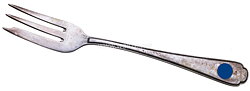
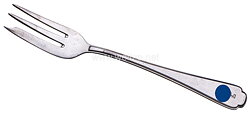
In 1932 she made the acquaintance of Hermann Göring, who had been widowed in 1931. In his capacity as Prussian Minister President, he bestowed upon her in autumn 1934 the title of Prussian State Actress and secured her an engagement at the Prussian State Theater Berlin. As Minna von Barnhelm, she took her leave from the Berlin State Theater in 1935.
With great pomp, the wedding of Hermann and Emmy Göring was celebrated on April 10, 1935. Emmy Göring served, because Adolf Hitler was unmarried, as “First Lady” of the German Reich, often in competition with Magda Goebbels.
468714
1.850,00

Third Reich - Small Swastika Paper Flag

double-sided printed paper, dimensions approx. 12 x 22 cm, wooden staff total length approx. 40 cm. Condition 2.

Condition may vary.

Old warehouse stock, EUR 30,-- per piece.


467642
30,00

Third Reich Table Decoration Hitler Youth Boy as Bronzed Figure

This is a very high-quality work, circa 1933. The figure is made of zinc die-cast with bronzed finish, partially painted in color, depicting a Hitler Youth boy in the early uniform from the Kampfzeit (Time of Struggle) before 1933, saluting with visor cap and armband. The original marble base has been replaced with a simple wooden plate, height 23 cm, condition 2.
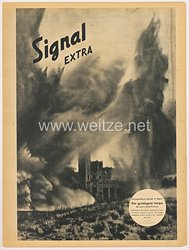
There are numerous desk decorations from the Third Reich, but this is the first figure of this type that we have been able to offer.
453617
1.850,00

Third Reich - D.D.A.C. (Der Deutsche Automobil-Club) - Large Automobile Plaque

Nickel-plated finish, height 85 mm, with 2 holes on each side for mounting on the radiator grille. Condition 2.
450589
240,00

Third Reich - The World's Fair - Exposition internationale - Exhibition international Paris 1937 - Stereo View Album

Diessen, Raumbild-Verlag Schönstein, 1937, hardcover edition, full cloth binding, 100 images, without viewing glasses, text: German - French - English, used condition
416597
650,00

Third Reich - Cartridge Pouch for Enlisted Men of the Schutzpolizei

with applied police eagle made of aluminum, the substitute material is hardened, condition 2
415030
450,00

Third Reich Cigarette Trading Card Album - Album for Chlorodont Trading Cards

Issue II: Non-European Mammals Images 1-120, Publisher Leo-Werke G.m.b.H., Dresden-N-6, 90 pages, complete with 283 images, protective cardboard box with printed text “1 Animal Picture Album Issue II, Non-European Mammals”. Box damaged. Collectible album condition 2+ and box condition 2-.
413600
70,00

Third Reich Flottmann-Werke Service Badge 134

Fine zinc, partially lacquered, reverse with pin attachment and manufacturer's marking J.Preissler Pforzheim, somewhat corroded, condition 2-3

The company founder was Friedrich Heinrich Flottmann (1844–1899), who in 1872 acquired an existing brass foundry and metal turning shop in Bochum and continued it under the firm name Metallgießerei H. Flottmann.[1] After his death, his widow Emilie Flottmann (1852–1933) continued the business. The eldest son Otto Heinrich Flottmann (1875–1944) received in 1904 the Reich patent for the “pneumatic rotary hammer with ball control and automatic rotation”, which among other things revolutionized Ruhr mining. Otto Heinrich Flottmann relocated the plant to Herne due to lack of expansion possibilities at the original location.
411663
200,00

NSDAP Large Knife and Fork from the Cutlery Set of the Guest House Reichsparteitag in Nürnberg

circa 1936. The blade and fork made of fine steel, the handles made of white plastic in ivory appearance, bottom marked with round stamp “Gästehaus Reichsparteitag”. With signs of use. Very rare.

The guest house for the Reich Party Rallies was constructed in 1935/36 and was located directly next to the Grand Hotel at Bahnhofsplatz in Nürnberg and is today used as a hotel (Hotel Park Plaza). It accommodated high-ranking invited guests of the Party from domestic and foreign locations during the Nürnberg Party Rallies until 1938; among others, Göring had a suite here.
409158
600,00

Third Reich - Wall Plaque - “NSV - Wir sind Sozialisten der Tat”

Glazed gray-blue ceramic plaque, diameter 105 mm, with mounting holes on right and left sides for attachment to door or wall, Condition 2.
392426
180,00

Third Reich / Estonia - Magazine "Laikmets" - Volume 1943 No. 8

Deutsche Verlags- und Druckerei-Ges. im Ostland m.b.H. Riga, condition 2-.
377302
35,00

Third Reich / Estonia - Magazine "Laikmets" - Volume 1942 No. 43

Deutsche Verlags- und Druckerei-Ges. im Ostland m.b.H. Riga, condition 2-.
377292
35,00

Third Reich / Estonia - Magazine “Laikmets” - Volume 1942 No. 6

Deutsche Verlags- und Druckerei-Ges. im Ostland m.b.H. Riga, condition 2-.
377286
35,00

Mein Kampf - Thin Paper Edition or Field Post Edition from 1941

Munich, Zentralverlag der NSDAP, red full cloth binding, 781 pages, condition 2.
367383
200,00

Signal - Special Edition of the “Berliner Illustrierte Zeitung” - Complete 1942 Volume Bound in Original Red Binding

all issues complete with covers and color pages, binding slightly worn at lower spine, otherwise condition 2
367040
350,00

Third Reich - Austria / NSDAP-Hitler Movement before 1938: Donation Badge of 50 Groschen

Aluminum, 24mm, “Toward Freedom - Help the Released Comrades”, Condition 2.
221981
75,00

Third Reich - Flagpole Finial for Flags of the National Socialist Craft, Trade and Commerce Organizations (NS-HAGO)

Nickel-plated, without the socket for the flagpole, height 12 cm, condition 2.
On modern wooden base.
510261
350,00

Third Reich - NSV - Door Plaque - “Member of the N.S.V. - We Sacrifice for the N.S. People's Welfare (Schleswig-Holstein)”

Sheet iron with celluloid, manufacturer: Paulmann & Crone Lüdenscheid, condition 2.
311663
80,00

Third Reich / DLV - Door Plaque "Rosenheim den Deutschlandfliegern 1934"

Embossed sheet metal, gold-plated, 70 mm diameter, Condition 2
211379
130,00

SA / SS Gorget for Standard Bearer

circa 1937. Heavy nickel construction with applied gilt star and medallion 2nd model, the Party eagle with swastika standing on its point, 2 pinned decorative rosettes, reverse with dark blue felt backing, on long heavy nickel chain. Only lightly used condition 2.
497848
1.700,00

German Automobile Club D.D.A.C. Pennant for an Official Vehicle, Automobile or Motorcycle

circa 1936. Double-sided woven construction, featuring the large DDAC eagle in the center, with sewn-in snap hook for attachment. Dimensions approximately 38 x 19.5 cm. Condition 2.
496286
350,00

Third Reich Adolf Hitler: Vegetable Spoon from the Silverware of the Old Reich Chancellery

circa 1935. From the Old Reich Chancellery. The handle features a relief national eagle with decorative border. Reverse stamped “Bruckmann” and “90” for the fine silver plating, length 26.3 cm. Minor signs of use, condition 2.
This silverware was in use in the Old Reich Chancellery as well as in German embassies abroad.

We were able to acquire a small remaining stock from U.S. war booty.

The canteen of the Reich Chancellery was under the direction of Arthur Kannenberg (* February 23, 1896 in Charlottenburg; † January 26, 1963 in Düsseldorf). Kannenberg was Adolf Hitler's house intendant.
Kannenberg graduated from the Werdersche Oberrealschule in Berlin with a certificate of secondary education and began an apprenticeship in 1912 in his father Oskar Kannenberg's gastronomic establishment. From 1915 he served in Telegraph Battalion I and was discharged in 1918 as a Private First Class. From 1924 he managed his father's establishments, the Restaurant Kannenberg, Hotel Stadt Berlin, and the excursion tavern Onkel Toms Hütte located in Grunewald, which went bankrupt in 1930.

As manager of Pfuhl's wine and beer taverns, where well-known Nazi figures such as Joseph Goebbels and Hermann Göring also frequented, he met Hitler, who offered him the directorship of the casino of the party headquarters Braunes Haus in Munich. He took up this position in 1931. Subsequently, he was also assigned the management of the canteen of the NSDAP Reich Leadership School on Schwanthalerstraße.

After Hitler became Reich Chancellor in 1933, Kannenberg became house intendant in the Reich Chancellery. In this capacity, he organized the operation of the Führer's household. This included in particular the hiring of personnel, the procurement of food and beverages, and the preparation of menus, but also the organization of catering at state receptions both in the Reich Chancellery and occasionally at the Berghof; during the war he was then active at the Führer Headquarters in the Wolfsschanze and finally in the bunker of the Reich Chancellery in Berlin.

In May 1945 he was interned by the Americans and released on July 25, 1946.
Many pieces from the Reich Chancellery were popular souvenirs of the occupation troops after the war's end, but many Berliners also restocked their often bombed-out households with the remains of the Reich Chancellery.
485643
950,00

Third Reich - Amtlicher Anzeiger, Supplement to the Hamburgerisches Verordnungsblatt

No. 107, June 5, 1973, double sheet, punched holes on left side and stained, used condition
483399
25,00

Third Reich Flottmann-Werke Service Badge Herne In Westphalen

Fine zinc, reverse numbered 188, condition 2-3

The company founder was Friedrich Heinrich Flottmann (1844–1899), who in 1872 acquired an existing brass foundry and metal turning shop in Bochum and continued it under the firm name MetallgieÃerei H. Flottmann.[1] After his death, his widow Emilie Flottmann (1852–1933) continued the business. The eldest son Otto Heinrich Flottmann (1875–1944) received the Imperial Patent in 1904 for the “compressed air percussion drill with ball control and automatic conversion,” which among other things revolutionized Ruhr coal mining. Otto Heinrich Flottmann relocated the plant to Herne due to lack of expansion possibilities at the original location.
411665
125,00

Third Reich - Large Original Etching “Reichskanzler Adolf Hitler”

The very fine and detailed etching depicts the subject in brown shirt and tie with swastika badge, measuring 19 x 30 cm, with artist's signature below: “Werner E.A.Hoffmann”, on heavy laid paper sheet measuring 37.5 x 54.5 cm; edges partially bumped, otherwise in good condition.
369346
450,00

Third Reich Badge "148 ZBV"

Made of aluminum. Used condition.
368634
25,00

Third Reich Reichsleiter Dr. Robert Ley: Large Tablecloth from his Personal Household

Large tablecloth made of white linen with surrounding red decorative lines and border, embroidered in one corner with Robert Ley's personal coat of arms: the KdF sun wheel above the initial “L”.
Dimensions 125 x 125 cm. Minor signs of use, condition 2.
We were able to acquire several items from the estate of Dr. Robert Ley directly from the family. To this day, very few items belonging to Robert Ley have surfaced. Very rare.

Dr. Robert Ley (born February 15, 1890 in Niederbreidenbach, Rhine Province; died October 25, 1945 in Nürnberg) was one of the leading politicians of the Third Reich in his positions as Reichsleiter of the NSDAP and head of the unified organization Deutsche Arbeitsfront.

The Ley-Haus, the Ley-Siedlung settlement type, and the KdF passenger ship Robert Ley were named after him. He was among the 24 persons indicted in the Nuremberg Trial against the major war criminals before the International Military Tribunal and took his own life before the trial began.
294578
650,00

Hitler Youth - Flag Finial for HJ-Gefolgschaften

circa 1937. Manufactured from aluminum, maker “RZM 13/46/37”, some light signs of age, condition 2-. 
292353
850,00

Third Reich: Flag Finial of the DAOV = Deutsche Arbeitsopfer Versorgung (German Work Victims Welfare)

circa 1938. Cleaned attic find, without socket for flagpole. Height 17 cm. On modern marble base, condition 2-3.
510265
450,00

Third Reich - German Gaus - Stereoscopic Image Album

Diessen, Raumbildverlag Schönstein, 1938, bound edition, half-linen binding, 191 pages, 200 stereoscopic images, complete with viewing glasses and instructions, condition 2.
509692
250,00

Third Reich - From the Living Community of the Forest - Stereoview Album

Munich, Raumbild-Verlag Schönstein, 1939, hardbound edition, full cloth binding, 119 pages, 150 stereoviews, with viewing glasses, condition 2.
509691
200,00

Third Reich - The Campaign in the West - Stereoscopic Photo Album

Munich, Raumbild-Verlag Schönstein, 1940, bound edition, full cloth binding with dust jacket. Shows heavy wear, complete with 100 images, with viewer, otherwise minor signs of use.
Condition -

503121
120,00

NSDAP Fork from the Guesthouse Dinnerware Service of the Reichsparteitag in Nürnberg

circa 1936. Fine steel, handle of white plastic in ivory appearance, bottom with round mark “Gästehaus Reichsparteitag”. With signs of use. 

The guesthouse for the Reichsparteitage (Reich Party Rallies) was constructed in 1935/36 and was located directly next to the Grand Hotel at Bahnhofsplatz in Nürnberg and is currently used as a hotel (Hotel Park Plaza). It accommodated high-ranking invited guests of the Party from domestic and foreign countries during the Nürnberg Party Rallies until 1938; among others, Göring had a suite here.
471237
220,00

Third Reich - Cake Fork from Dining Flatware from the Canteen of the “Chancellery of the Führer”

Cake fork, silver-plated, length 15.25 cm. Obverse with embossed national eagle (Hoheitsadler), reverse marked “Kanzlei des Führers” (Chancellery of the Führer), with manufacturer mark “Bruckmann”, “90” (silver plating). Light signs of use, condition 2.
467255
600,00

Commemorative Plate for Honorary Guests of the “75th Anniversary German School Istanbul 1943”

Presented by the German Consulate General Istanbul, No. 49 of 50 issued examples, marked on reverse with KPM and KPM, diameter 23 cm.
460409
950,00

NSDAP Large Kreis Flag of the Kreis "Lohr-Gemünden"

circa 1934. Large sewn flag made of red bunting with continuous silver fringe. The double-sided panels for the Kreis made of brown velvet with black border, the inscription "Lohr-Gemünden" in white chain-stitch embroidery. The color of the panel and the black border corresponds to the period of 1934-1936. 6 sewn-in nickel-plated flag rings (one ring missing at the very top). Evident signs of age and use, some moth holes and minor damage, dimensions approximately 118 x 135 cm, condition 2-3.
While Ortsgruppen flags appear regularly, Kreis flags are very rare, probably they were only issued until 1936. The first piece we have been able to offer. 

Gemünden am Main is a town in the Lower Franconian district of Main-Spessart.
414307
2.500,00

Wehrmacht Flag of a Turkestani Field Battalion of the 162nd Turkestani Infantry Division

circa 1943. Color-printed flag cloth depicting bow and arrow on a red/light blue background, dimensions 75 x 120 cm. Side hem for attachment to a flagpole. Light signs of use and age, condition 2.

On November 15, 1941, Eduard Wagner, Quartermaster General at the High Command of the Army, issued an order “concerning the establishment of a military unit from prisoners of war from Turkestan and Caucasian nationalities.” According to this directive, a Turkestani regiment under the command of Oberleutnant Taube was created within the German 444th Security Division.

In May 1942, the first “Turkestani Legion” was established; it initially consisted of only a single battalion. By the end of 1943, a total of 16 battalions were formed with an aggregate strength of approximately 16,000 soldiers. The troops were integrated into the 162nd Infantry Division. In mid-June 1943, Ernst-August Köstring was appointed Inspector of the Turkestani Legion and on January 1, 1944, was promoted to General of the Eastern Legions in the High Command of the Army. To preclude possible capture by the “Red Army,” the Turkestani Legion was transferred to France and Northern Italy. In 1945, the greater part of the Legion was taken prisoner by the British Army.

According to the agreement concluded at the Yalta Conference, the members of the Legion were repatriated to the Soviet Union, where they suffered the same fate as the other so-called “Eastern peoples” who had changed sides.
404779
6.500,00

Third Reich - Photograph Personally Dedicated by Adolf Hitler to Erich Raeder as Commander-in-Chief of the Kriegsmarine

Large photograph 22 x 29 cm mounted on cardboard showing both men on a ship in harbor (the photograph was taken by Heinrich Hoffmann and was also published on postcards), with lengthy ink dedication “To the Commander-in-Chief of the Kriegsmarine Dr.phil.h.c. E.Raeder with kind remembrance Christmas 1935 Adolf Hitler”. The signature is difficult to read in the dark areas. Complete in silver-plated picture frame measuring 26 x 33 cm, with hinged opening on reverse and wall hanging fixture. Condition 2.
In November 1919 he became Kapitän zur See. As early as 1922 Raeder was appointed Rear Admiral and Inspector of the Education and Training System of the Navy. In 1925 he was promoted to Vice Admiral. Just 3 years later he received command of the Naval High Command. At that time the University of Kiel awarded him an honorary doctorate as an outstanding historian of the German cruiser warfare. On June 1, 1935, Erich Raeder became Commander-in-Chief of the German Kriegsmarine.
371532
8.500,00

Third Reich - The German Leaders' Directory 1934/1935 (1700 Biographies)

Berlin, Verlagsanstalt Stollberg, 1934, bound edition, full cloth binding, 552 + 148 + 7 pages, with illustrations, binding split in places along spine, used condition with interior pages unmarked and in good condition.
319219
650,00

Third Reich - Large Original Pencil/Charcoal Drawing “Der Führer und Reichskanzler Adolf Hitler”

81 x 120 cm, very impressive and detailed work, signed by artist at bottom and dated 1937; rolled, shows signs of use but otherwise in good condition.
311451
2.000,00

Third Reich - Honor Portfolio for the Lord Mayor of the City of Braunschweig Dr.phil. Wilhelm Hesse

Large-format double-sided certificate, handcrafted and calligraphically executed in black and gold with the text “To our highly esteemed Kreisleiter Dr.phil. Wilhelm Hesse on the occasion of his installation into office as Lord Mayor of the City of Braunschweig on November 6, 1933. In grateful recognition of your great merits, which you have acquired in the implementation of the idea of our Führer Adolf Hitler, it is our need to express to you, esteemed Lord Mayor, our most cordial congratulations. The N.S.B.A., the N.S.B.O., the Works Council of the City Administration”. The red leather portfolio measuring 31 x 41 cm, with embossed swastika on the front, shows signs of use but is otherwise in good condition.
The visual design is similar to that of Knight's Cross portfolios.
278188
3.500,00
509451
120,00

Third Reich - Reichsluftschutzbund (RLB) - Door Plaque - “Member of the Reichsluftschutzbund”

75 mm, embossed sheet iron, center color lacquered, condition 2.
455564
120,00

NSDAP Bandolier for Flag Bearer of Local Chapter Flags

circa 1939. Large heavy brown leather bandolier. Front with woven gold braiding on party brown velvet, sides with blue leather piping for the local chapters. Interior on the leather tongue with fine chamber stamp “RZM L2/371/39”. Complete with the leather socket for holding the flagpole. Worn, condition 2. Very rare.

507001
2.000,00

Third Reich Adolf Hitler Personal “Ex-libris” for His Personal Library

Original “Ex Libris Adolf Hitler”. Woodcut featuring national eagle before oak leaves with inscription “Ex libris - Adolf Hitler” printed on laid paper, dimensions 8 x 7.5 cm. Unused, condition 2

This item represents U.S. war trophy material; after the end of the war in 1945, a substantial number of Hitler's “Ex libris” bookplates were found in the Reich Chancellery and taken as souvenirs by U.S. soldiers.
501648
750,00

Third Reich: Patriotic Commemorative Glass Marking the Anschluss of Austria to the German Reich, March 13, 1938

circa 1938. Large 0.5 liter beer glass with photo of Reich Chancellor Adolf Hitler in uniform during a speech, the glass is encased in a papier-mâché coating in “tree bark décor,” height 17.5 cm. Undamaged, condition 2. Very rare.
Very rare, as from May 19, 1933 onward, all types of “Nazi kitsch” were prohibited by the Law for the Protection of National Symbols. During the period of the Anschluss in March 1938, however, several such patriotic commemorative items were produced in Austria, but production was immediately discontinued after a short time.

467849
650,00

Third Reich - 1936 Nuremberg Rally - Rally of Honor - Stereoview Album

Diessen, Raumbild Verlag Schönstein, 1936, hardbound edition, red full cloth binding, 61 pages, 100 stereoviews, with viewing glasses, condition 2.
462263
750,00

NSDAP Gorget for Standard Bearer

Bronzed aluminum, with large applied national eagle, toned. Reverse with green felt backing, maker “RZM M 1/14”, with neck suspension chain with maker “RZM M 1/14”. One solder joint of the applied eagle loose, however the eagle is not loose. Worn, condition 2.
454691
1.850,00

Third Reich Adolf Hitler: Fruit Knife from the Canteen Flatware of the Old Reich Chancellery

circa 1935. Silver-plated flatware from the canteen service for the staff of the Old Reich Chancellery. Fruit knife, with relief national eagle on the handle and surrounding decorative border. Reverse stamped “Bruckmann” and “90” for the fine silver plating, length 16.5 cm. Minor signs of use, condition 2.
This silverware was in use in the Old Reich Chancellery as well as in German embassies abroad.

We were able to acquire a small remaining stock from U.S. war booty.

The canteen of the Reich Chancellery was under the direction of Arthur Kannenberg (born February 23, 1896 in Charlottenburg; died January 26, 1963 in Düsseldorf). Kannenberg was Adolf Hitler's house steward.
Kannenberg graduated from the Werdersche Oberrealschule in Berlin with a secondary school certificate and began an apprenticeship in 1912 in his father Oskar Kannenberg's restaurant business. From 1915 he served in Telegraph Battalion I and was discharged as a Gefreiter in 1918. From 1924 he managed his father's establishments, the Restaurant Kannenberg, Hotel Stadt Berlin, and the excursion restaurant Onkel Toms Hütte located in Grunewald, which went bankrupt in 1930.

As manager of Pfuhl's wine and beer taverns, where well-known Nazi figures such as Joseph Goebbels and Hermann Göring also frequented, he met Hitler, who offered him the management of the casino at the party headquarters Braunes Haus in Munich. He took up this position in 1931. Subsequently, he was also assigned management of the canteen at the NSDAP Reich Leadership School on Schwanthalerstraße.

After Hitler became Reich Chancellor in 1933, Kannenberg became house steward in the Reich Chancellery. In this capacity he organized the operation of the Führer's household. This included in particular the hiring of personnel, procurement of food and beverages, and preparation of menus, as well as organizing catering for state receptions both in the Reich Chancellery and occasionally at the Berghof; during the war he was active at the Führer Headquarters in the Wolfsschanze and finally in the bunker of the Reich Chancellery in Berlin.

In May 1945 he was interned by the Americans and released on July 25, 1946.
Many pieces from the Reich Chancellery were popular souvenirs of the occupation troops after the war's end, but many Berliners also restocked their often bombed-out households with the remains of the Reich Chancellery.
443945
750,00

Third Reich Adolf Hitler - Personal Wreath Ribbon of the “Führer” and Reich Chancellor

circa 1938. Watered red silk with gold fringe trim. Right side with applied hand-embroidered gold national eagle (Hoheitsadler) on red cloth, left side with large gold print “Adolf Hitler”. Overall length of wreath ribbon approximately 400 cm, width 27 cm. Minor signs of age, in good condition.
Large wreath ribbons were only used for funerals of high-ranking dignitaries. Very rare.
435153
4.500,00

Third Reich National Service Flag (Reichsdienstflagge)

Double-sided printed execution on cotton fabric, dimensions: approximately 2.40 x 4.0 meters, with sales label "Reichdienstfl. 240 / 400 Woll.-Lso. 52,- Rm". Stained, condition 2.
426913
1.300,00

Third Reich Large Commemorative Tile for Participants “München Capital of the Movement Flower Decoration Competition 1941”

Large glazed ceramic tile, dimensions 23.5 x 26 cm, reverse side with manufacturer’s mark “Ernst Königbauer Keramik München”, two drill holes at top for hanging. Undamaged, condition 2.
378740
650,00

Reichsarbeitsdienst (RAD) - Large Commemorative Plate of a Labor Service Man

30 cm, blue and white painted glazed ceramic, obverse depicting a labor service man in a landscape, manufacturer: Ostmark-Keramik Wilhelmsburg, reverse with wall hanger, undamaged, condition 2.
375934
480,00

German Red Cross - Walking Aid (Underarm Crutch)

Constructed of wood, height adjustable. Used condition.
342436
80,00

Third Reich - Der Deutsche Automobil-Club (DDAC) - Commemorative Stein from “1st DDAC Reichstreffen Freiburg im Breisgau 1937”

Ceramic, polychrome glazed, height 12 cm, maker’s mark on base, undamaged, condition 2.
321978
350,00

Third Reich - Posted Notice - Planning for the Discharge of Wehrmacht Personnel in the Area of 1st Army

for discharge are those whose homes are in the territories occupied by the 3rd and 7th US Armies, 30 x 43 cm, folded twice.
173741
50,00

Third Reich - Cartridge Box for Enlisted Men of the Schutzpolizei

interior marked by manufacturer A.Fischer Berlin 1938, chamber stamp Po, with applied aluminum police eagle, the substitute material is hardened, condition 2
415028
450,00

Third Reich Deutsche Arbeitsfront DAF Large Flag for a National Socialist Model Factory

Large silk-sewn execution, with yellow bullion trim around the perimeter. Dimensions approximately 136 x 120 cm. The flag rings are missing, condition 2.
307140
2.500,00

Third Reich Resistance: Poster Design by an Anti-Fascist “We Thank Our Führer!! Still?”, dated 1943

Pencil and watercolor on cardboard, signed lower right with artist's monogram “HF 1943”, depiction: bombed house ruins with Führer slogans, in foreground a matchbox “NSDAP 1933-1943”.., mounted on cardboard. Dimensions 47.5 x 34 cm. Condition 2.
These are works by a Hamburg anti-fascist who worked in England during his emigration. The poster designs were never published.
328048
350,00

Third Reich: Silver Presentation Plate from the Personal Property of Reich Foreign Minister Joachim von Ribbentrop

Silver plate, finely engraved. At center the national eagle over the globe with oak leaf wreath - the personal emblem of the Reich Foreign Minister, surrounded by decorative border. Diameter 29 cm. Reverse stamped with silver hallmark “Crescent Moon Crown 925 Swastika”, jeweler's mark “H.J. Wilm Berlin, Handarbeit”. Still uncleaned in good untouched original condition.

281292
4.500,00

Third Reich D.D.A.C. Large Membership Badge for Automobile

approx. 80 x 100 mm, silver-plated non-ferrous metal and enameled, reverse marked “ges. geschützt” (legally protected), two mounting holes on sides, condition 2+.
507787
350,00