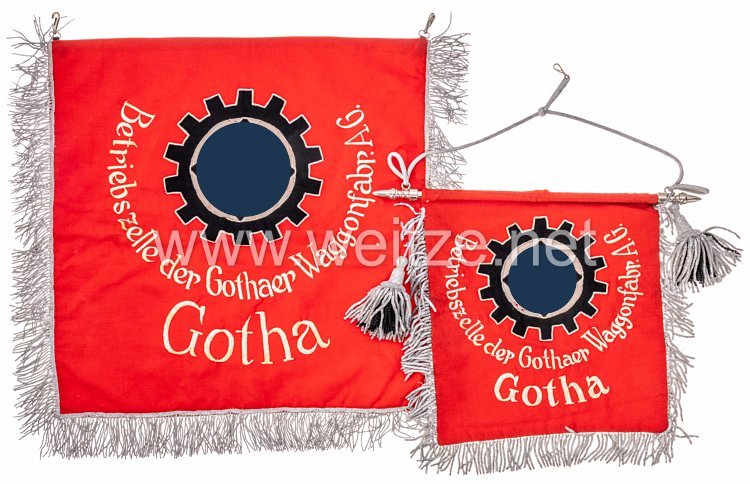
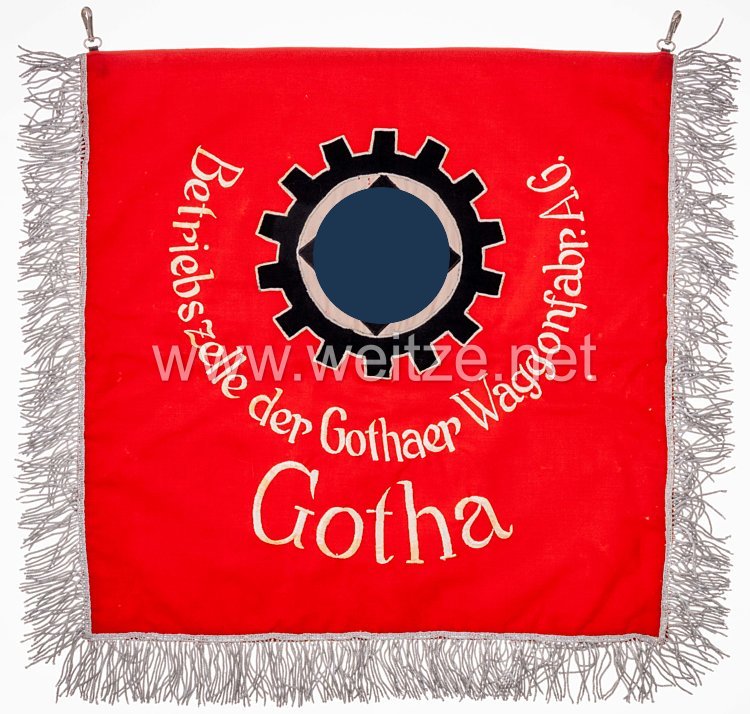
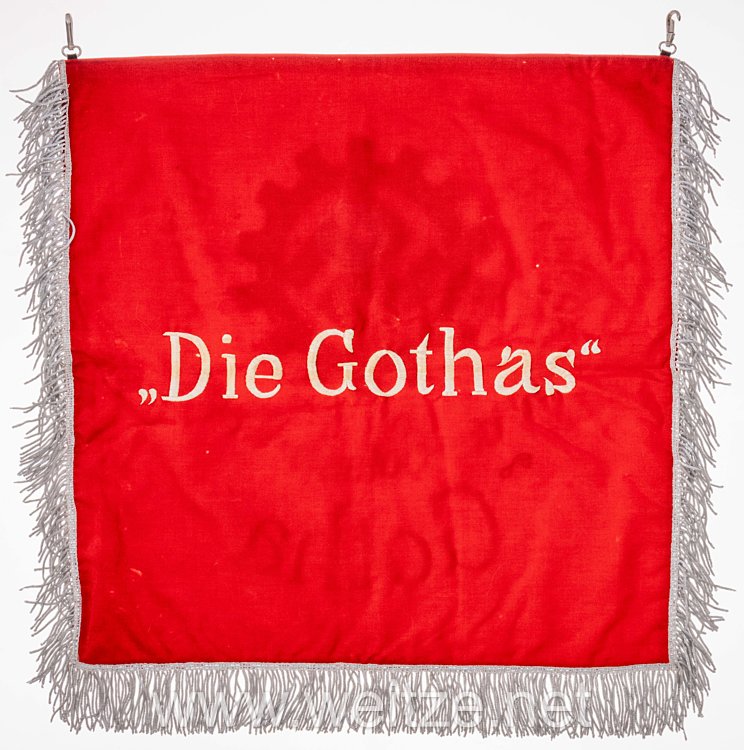
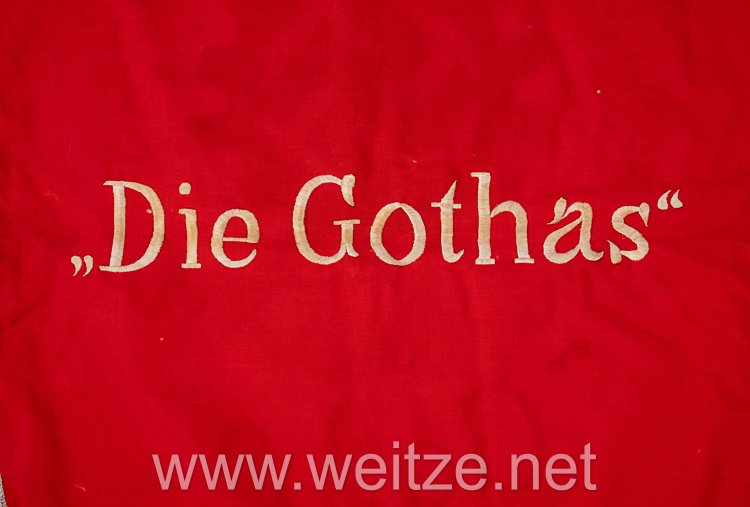
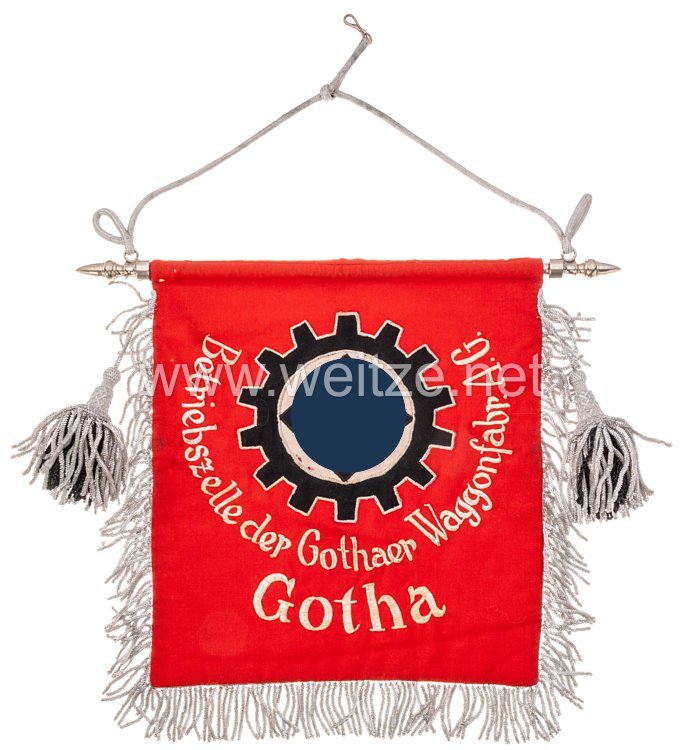
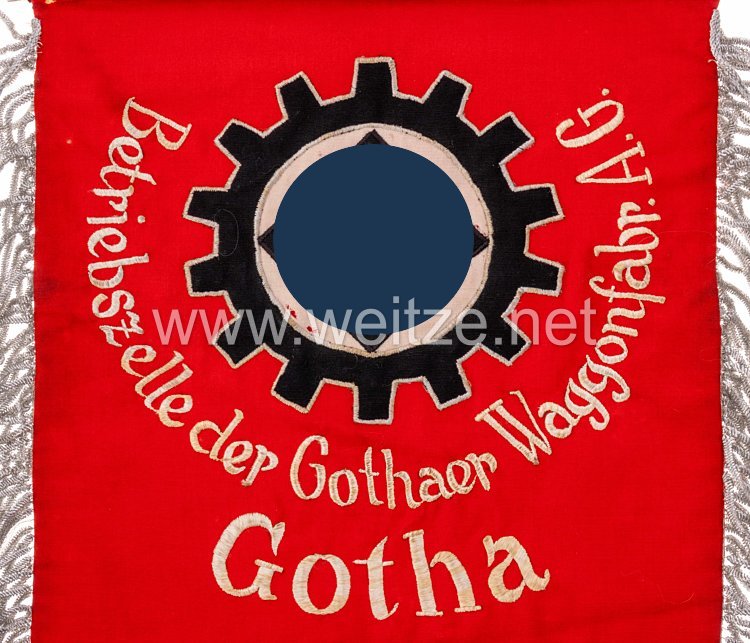
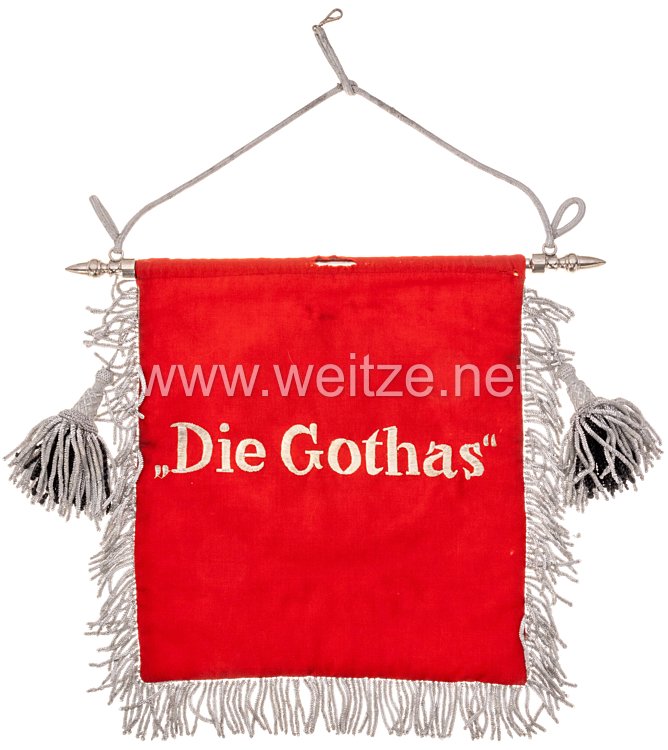
III. Reich Deutsche Arbeitsfront DAF Fanfarentuch und Fahne für den Schellenbaum des DAF Musikzuges "Betriebszelle der Gothaer Waggonfabrik A.G. Gotha"
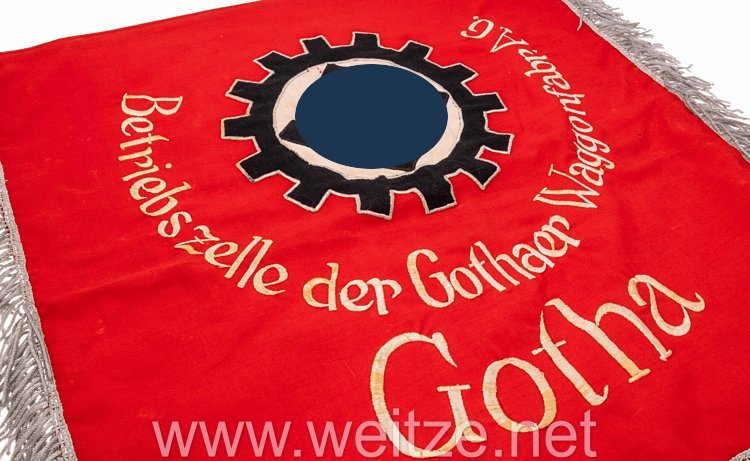
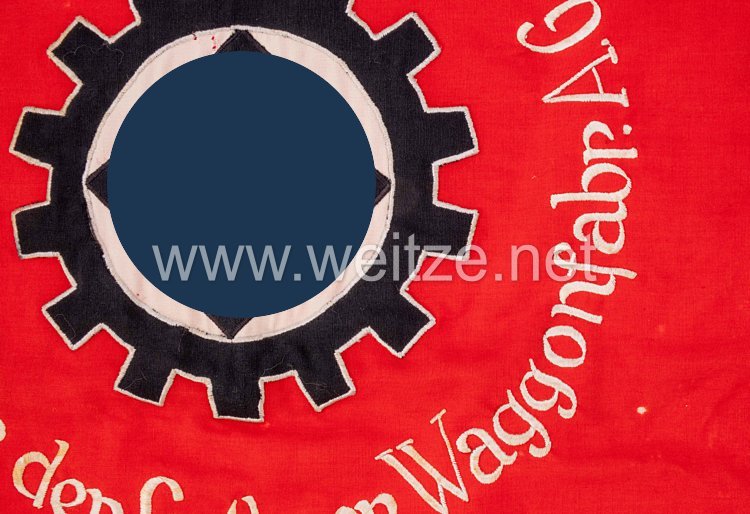
um 1936/38. Das Fanfarentuch und die Schellenbaumfahne aus der gleichen Fertigung. Beide Stücke aus rotem Tuch, auf der Vorderseite jeweils das DAF Emblem "Betriebszelle der Gothaer Waggonfabr. A.G. Gotha", auf der Rückseite "Die Gothas". Beide Stücke mit umlaufenden Silberfransen. Das Fanfarentuch oben mit 2 eingenähten Karabinerhaken zum befestigen an der Fanfare, Maße mit Fransen ca. 53 x 56 cm. Das Schellenbaumtuch mit eingenähter Querstange, silberne Kordel mit Karabinerhaken zum befestigen am Schellenbaum, seitlich mit 2 silbernen Quasten, Maße mit Fransen ca. 35 x 41 cm. Nur leicht Gebrauchs- und Altersspuren, jeweils im weißen Feld des DAF Emblems ein paar kleine unbedeutende Löchlein, Zustand 2.
Extrem seltenes Ensemble, uns ist kein weiteres bekannt.
Die Gothaer Waggonfabrik war ein bedeutendes Metallbauunternehmen für den Flugzeug- und Straßenbahnwagenbau in Gotha. Das Firmengelände befand sich am Gothaer Ostbahnhof. Im 1. Weltkrieg wurden zahlreiche Kriegsflugzeuge gebaut, darunter auch den Großbomber Gotha G IV. Die Flugzeuge der Waggonfabrik wurden als „Die Gothas“ schnell allgemein bekannt und erlangten im Ersten Weltkrieg den zweifelhaften Ruhm, die „Schrecken der Feinde“ gewesen zu sein.
Nach dem Kriegsende 1918 musste der Flugzeugbau wegen des Versailler Vertrags eingestellt werden. 1933 begann in Gotha wieder der Flugzeugbau, auch für die neu entstandene Luftwaffe. Nach Kriegsbeginn 1939 wurden in Gotha im Wesentlichen Lastensegler entwickelt und gefertigt, darunter den Lastensegler Gotha Go 242 und Go 244. Im Jahr 1944 wurde das Werk durch einen Luftangriff zu 80 % zerstört. Trotzdem begann in Friedrichroda bei Kriegsende die Vorserienfertigung des revolutionären Nurflügel-Strahljägers Ho 229 (Ho IX) der Brüder Horten.
Extrem seltenes Ensemble, uns ist kein weiteres bekannt.
Die Gothaer Waggonfabrik war ein bedeutendes Metallbauunternehmen für den Flugzeug- und Straßenbahnwagenbau in Gotha. Das Firmengelände befand sich am Gothaer Ostbahnhof. Im 1. Weltkrieg wurden zahlreiche Kriegsflugzeuge gebaut, darunter auch den Großbomber Gotha G IV. Die Flugzeuge der Waggonfabrik wurden als „Die Gothas“ schnell allgemein bekannt und erlangten im Ersten Weltkrieg den zweifelhaften Ruhm, die „Schrecken der Feinde“ gewesen zu sein.
Nach dem Kriegsende 1918 musste der Flugzeugbau wegen des Versailler Vertrags eingestellt werden. 1933 begann in Gotha wieder der Flugzeugbau, auch für die neu entstandene Luftwaffe. Nach Kriegsbeginn 1939 wurden in Gotha im Wesentlichen Lastensegler entwickelt und gefertigt, darunter den Lastensegler Gotha Go 242 und Go 244. Im Jahr 1944 wurde das Werk durch einen Luftangriff zu 80 % zerstört. Trotzdem begann in Friedrichroda bei Kriegsende die Vorserienfertigung des revolutionären Nurflügel-Strahljägers Ho 229 (Ho IX) der Brüder Horten.