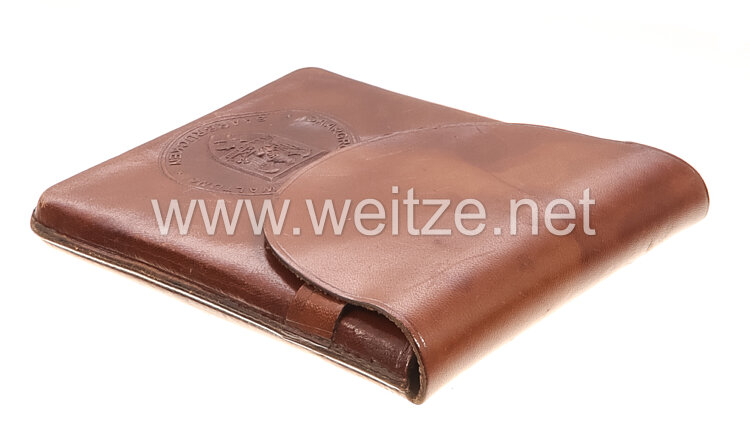
Third Reich - Gift Leather Cigar Case of the Preußische Saargruben AG 1938

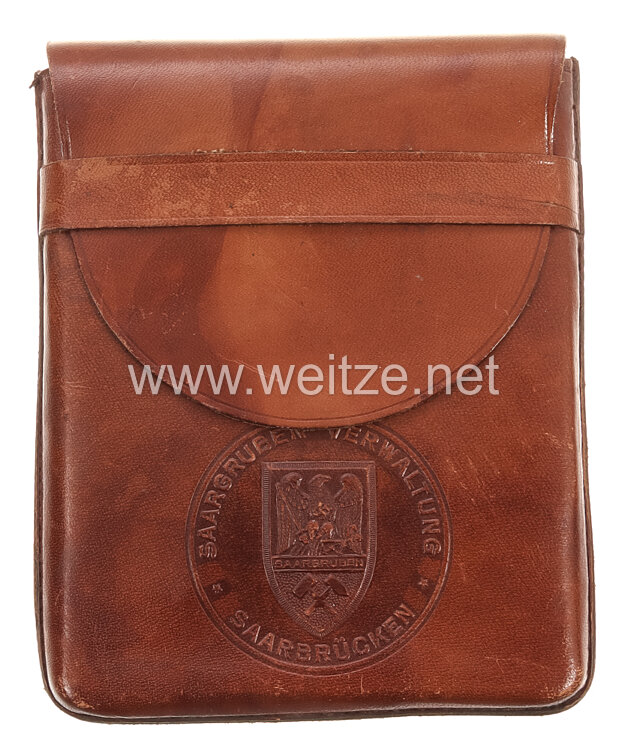
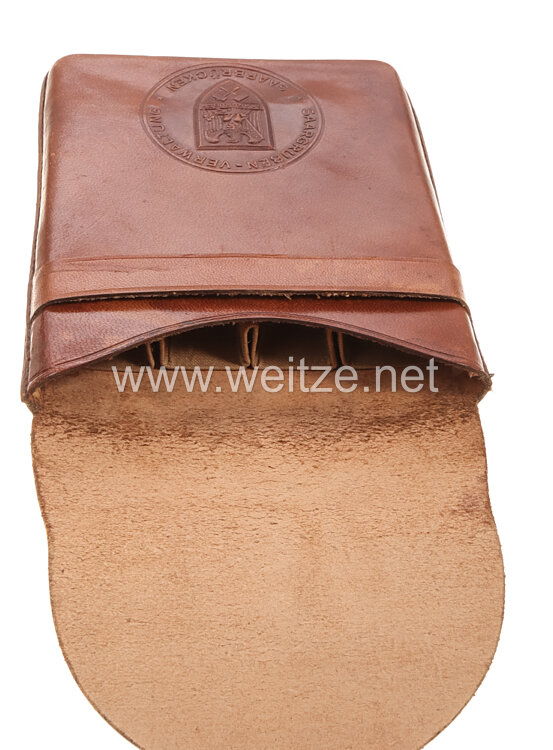
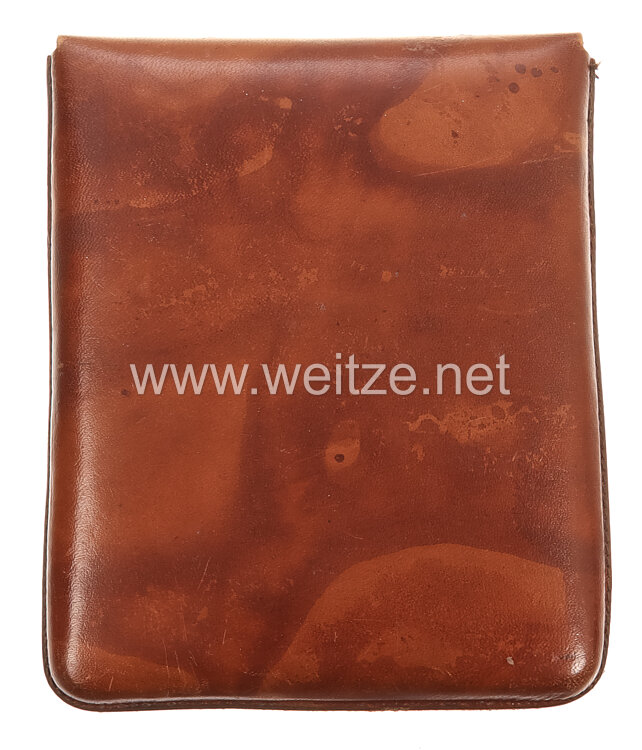
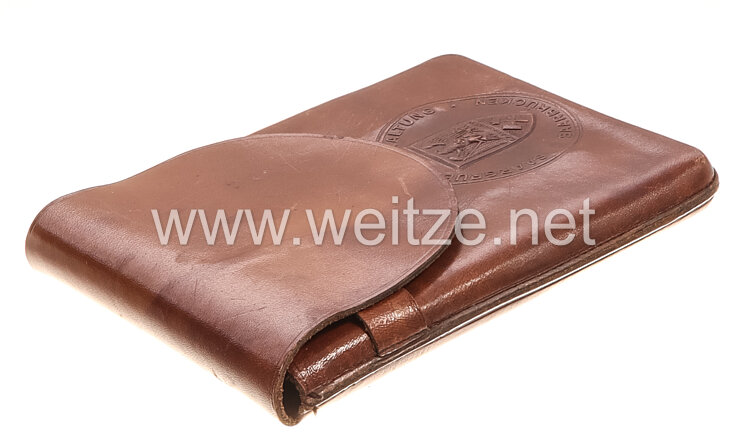
Leather approximately 130x100x20 mm, the closure flap with embossed emblem of the Saargruben: the Prussian eagle with swastika above the inscription “Saargruben” and crossed hammer and pick surrounded by the designation Saargruben-Verwaltung Saarbrücken.
456436
450,00

Third Reich - Gift Leather Cigar Case of the Preußische Saargruben AG 1938

The present object is a leather cigar case manufactured by the Preußische Saargruben AG (Prussian Saar Mines) in 1938 as a gift item. This representative piece, measuring approximately 130x100x20 mm, embodies the complex interweaving of economy, state symbolism, and propaganda during the era of National Socialism.

The Preußische Bergwerks- und Hütten-Aktiengesellschaft (Preußag), to which the Saargruben belonged, was one of the most significant state-owned mining companies in the German Reich. Following the reintegration of the Saar territory on March 1, 1935, as a result of the plebiscite of January 13, 1935, in which over 90% of the population voted for return to the German Reich, the Saar coal mines were taken into state administration. The year 1938, when this case was manufactured, marks a period of consolidation of National Socialist rule over the reintegrated territories.

The emblem embossed on the closure flap displays the Prussian eagle with swastika, a combination of traditional Prussian state symbolism with the National Socialist sovereign insignia. The crossed hammer and pick reference mining tradition and symbolize the importance of the mining industry for the German economy and armaments production. The inscription “Saargruben-Verwaltung Saarbrücken” clearly locates the object within the administrative context of the Saar administration.

Such gift cases were frequently used as representational objects in the Third Reich. They served to maintain business relationships, were presented at official occasions, or given as recognition for special achievements. The use of high-quality materials such as leather and the careful embossing of the emblem underscore the representative character of these objects. Cigar cases were particularly popular gift items, as smoking cigars was considered a sign of status and prosperity at the time.

The Saargruben played a strategically important role in National Socialist economic policy. Coal production in the Saar region was essential for German heavy industry and thus also for armaments production in the run-up to and during World War II. The integration of the Saar economy into the Reich territory was propagandistically portrayed as a great success of NS policy.

The connection of Prussian tradition and National Socialist symbolism on this object is characteristic of the legitimation strategies of the NS regime. By linking to Prussian history and its symbols, a historical continuity was to be suggested and their own rule incorporated into a longer German state tradition.

From today's perspective, such objects are important contemporary historical documents that provide insight into everyday culture, representational practices, and the symbolic politics of the Third Reich. They show how National Socialist symbolism extended into economic daily life and business culture. The fact that even a cigar case was provided with ideologically charged symbolism illustrates the totalitarian claim of the NS regime to permeate all areas of life.

Scientific engagement with such objects requires critical contextualization. They are neither to be glorified nor taboo, but to be understood as historical sources that provide information about a specific time and its practices of rule. In museums and collections today, such objects are exhibited and communicated within the framework of coming to terms with NS history.