III. Reich Adolf Hitler: Obstmesser aus Besteck der Kantine der Alten Reichskanzlei
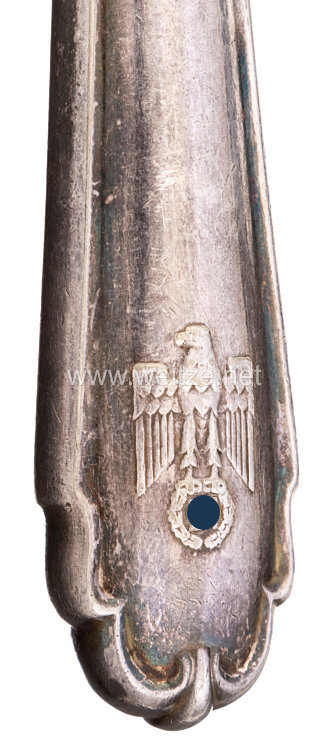
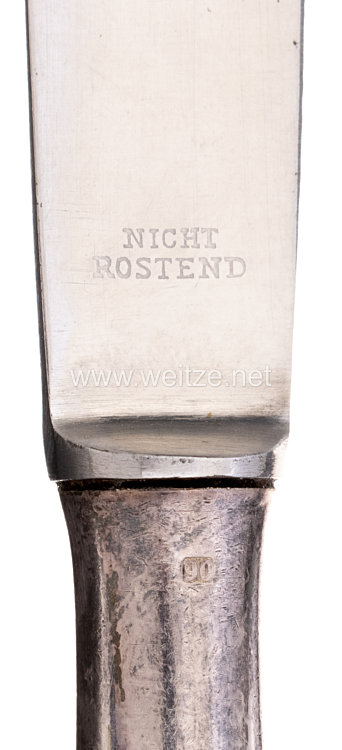
um 1935. Versilbertes Besteck aus dem Besteck der Kantine für die Mitarbeiter der Alten Reichskanzlei. Obstmesser, auf dem den Griffstück reliefierter Hoheitsadler mit umlaufender Zierkante. Rückseitig gestempelt "Bruckmann" sowie "90" für die Feinsilberauflage, Länge 16,5 cm. Leichte Gebrauchspuren, Zustand 2.
Dieses Tafelsilber war in der Alten Reichskanzlei in Gebrauch, als auch in den Deutschen Botschaften im Ausland.
Wir konnten einen kleinen Restbestand aus US Kriegsbeute erwerben.
Die Kantine der Reichskanzlei unterstand der Leitung von Arthur Kannenberg (* 23. Februar 1896 in Charlottenburg; † 26. Januar 1963 in Düsseldorf). Kannenberg war der Hausintendant Adolf Hitlers. Kannenberg schloss die Werdersche Oberrealschule in Berlin mit der mittleren Reife ab und begann 1912 eine Lehre im gastronomischen Betrieb seines Vaters Oskar Kannenberg. Ab 1915 diente er im Telegrafen-Bataillon I. und wurde 1918 als Gefreiter entlassen. Ab 1924 führte er die Betriebe seines Vaters, das Restaurant Kannenberg, Hotel Stadt Berlin und das im Grunewald gelegene Ausflugslokal Onkel Toms Hütte, die 1930 in Konkurs gingen. Als Geschäftsführer von Pfuhl’s Wein- und Bierstuben, in der auch bekannte Nazi-Größen wie Joseph Goebbels und Hermann Göring verkehrten, lernte er Hitler kennen, der ihm die Leitung des Kasinos der Parteizentrale Braunes Haus in München antrug. Diese Tätigkeit nahm er 1931 auf. In der Folge wurde ihm auch die Führung der Kantine der Reichsführerschule der NSDAP in der Schwanthalerstraße übertragen. Nachdem Hitler 1933 Reichskanzler geworden war, wurde Kannenberg Hausintendant in der Reichskanzlei. Dabei organisierte er den Ablauf des Führerhaushalts. Dazu gehörte insbesondere die Einstellung des Personals, die Versorgung mit Lebensmitteln und Getränken und die Erarbeitung der Speisepläne, aber auch die Organisation der Bewirtung bei Staatsempfängen sowohl in der Reichskanzlei als auch gelegentlich auf dem Berghof; während des Krieges war er dann im Führerhauptquartier in der Wolfsschanze tätig und zuletzt im Bunker der Reichskanzlei in Berlin. Im Mai 1945 wurde er von den Amerikanern interniert und am 25. Juli 1946 entlassen.
Viele Stücke aus der Reichskanzlei waren nach Kriegsende beliebte Souvenirs der Besatzungstruppen, aber auch viele Berliner haben mit den Überresten der Reichskanzlei ihren oft ausgebombten Haushalt wieder ausgestattet.
Dieses Tafelsilber war in der Alten Reichskanzlei in Gebrauch, als auch in den Deutschen Botschaften im Ausland.
Wir konnten einen kleinen Restbestand aus US Kriegsbeute erwerben.
Die Kantine der Reichskanzlei unterstand der Leitung von Arthur Kannenberg (* 23. Februar 1896 in Charlottenburg; † 26. Januar 1963 in Düsseldorf). Kannenberg war der Hausintendant Adolf Hitlers. Kannenberg schloss die Werdersche Oberrealschule in Berlin mit der mittleren Reife ab und begann 1912 eine Lehre im gastronomischen Betrieb seines Vaters Oskar Kannenberg. Ab 1915 diente er im Telegrafen-Bataillon I. und wurde 1918 als Gefreiter entlassen. Ab 1924 führte er die Betriebe seines Vaters, das Restaurant Kannenberg, Hotel Stadt Berlin und das im Grunewald gelegene Ausflugslokal Onkel Toms Hütte, die 1930 in Konkurs gingen. Als Geschäftsführer von Pfuhl’s Wein- und Bierstuben, in der auch bekannte Nazi-Größen wie Joseph Goebbels und Hermann Göring verkehrten, lernte er Hitler kennen, der ihm die Leitung des Kasinos der Parteizentrale Braunes Haus in München antrug. Diese Tätigkeit nahm er 1931 auf. In der Folge wurde ihm auch die Führung der Kantine der Reichsführerschule der NSDAP in der Schwanthalerstraße übertragen. Nachdem Hitler 1933 Reichskanzler geworden war, wurde Kannenberg Hausintendant in der Reichskanzlei. Dabei organisierte er den Ablauf des Führerhaushalts. Dazu gehörte insbesondere die Einstellung des Personals, die Versorgung mit Lebensmitteln und Getränken und die Erarbeitung der Speisepläne, aber auch die Organisation der Bewirtung bei Staatsempfängen sowohl in der Reichskanzlei als auch gelegentlich auf dem Berghof; während des Krieges war er dann im Führerhauptquartier in der Wolfsschanze tätig und zuletzt im Bunker der Reichskanzlei in Berlin. Im Mai 1945 wurde er von den Amerikanern interniert und am 25. Juli 1946 entlassen.
Viele Stücke aus der Reichskanzlei waren nach Kriegsende beliebte Souvenirs der Besatzungstruppen, aber auch viele Berliner haben mit den Überresten der Reichskanzlei ihren oft ausgebombten Haushalt wieder ausgestattet.