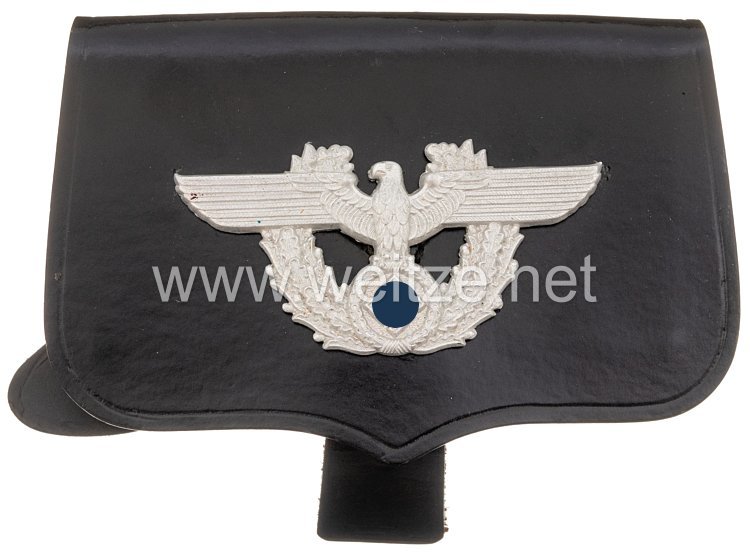
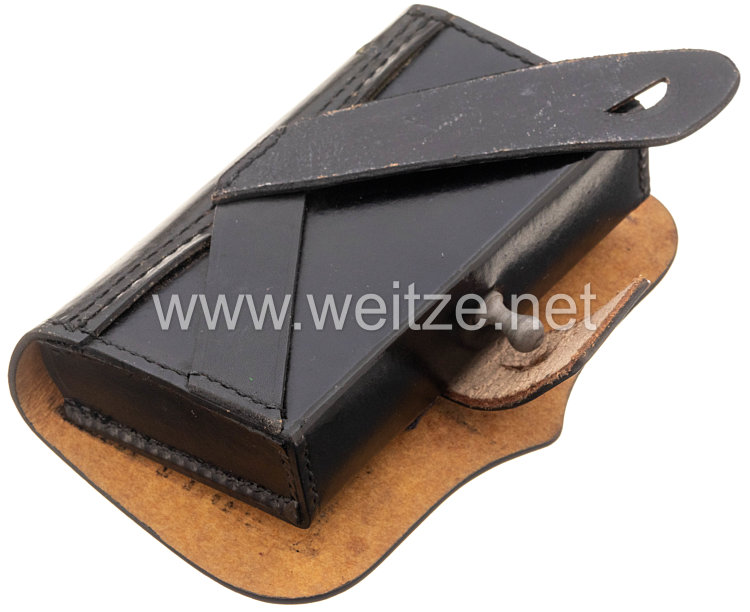
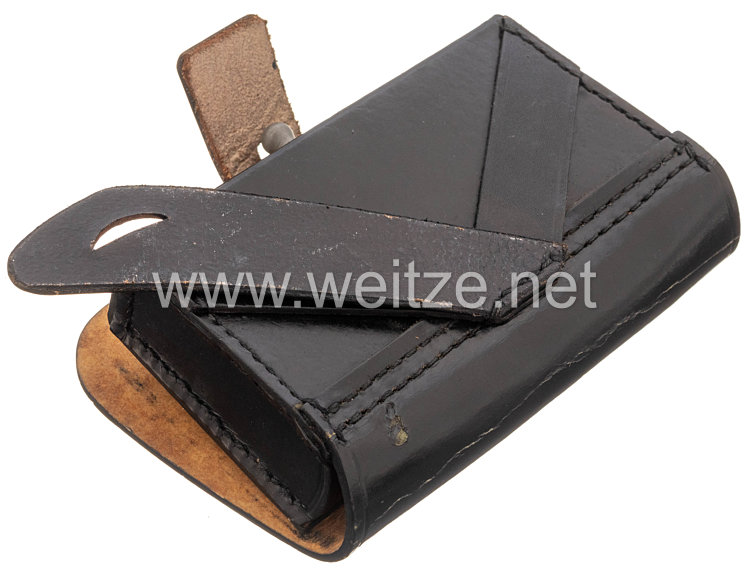
Third Reich - Cartridge Pouch for Enlisted Men of the Schutzpolizei
Cartridge Pouch of the Schutzpolizei in the Third Reich
The cartridge pouch for enlisted personnel of the Schutzpolizei represents a characteristic piece of equipment from the German Order Police during the National Socialist era. This practical leather equipment served to store ammunition and was an integral component of the uniforming and armament of uniformed police forces between 1933 and 1945.
The Schutzpolizei in the Nazi State
After the Nazi seizure of power in 1933, the German police underwent fundamental reorganization and centralization. The Schutzpolizei (Protection Police) formed, alongside the Criminal Police and Gendarmerie, a main pillar of the Ordnungspolizei (Order Police or Orpo). In June 1936, all police forces of the German Reich were consolidated under the leadership of Heinrich Himmler as Chief of the German Police. The Order Police was subordinated to Kurt Daluege, who functioned as Chief of the Order Police.
The Schutzpolizei was primarily responsible for uniformed patrol service, traffic regulation, and general order maintenance duties in cities. During the course of the war, however, Schutzpolizei units were increasingly deployed for occupation duties and war crimes in occupied territories, particularly in the form of Police Battalions.
Technical Description and Materials
The cartridge pouch was traditionally manufactured from brown or black leather and worn on the belt. The present example features an applied police eagle made of aluminum, which represents a typical identifying feature of the NS era. The Imperial Eagle with swastika symbolized state authority and was affixed to nearly all police equipment items.
Particularly noteworthy is the use of substitute material that was hardened. This material choice is characteristic of the later war years, when traditional materials had to be substituted with ersatz materials due to increasing raw material shortages. From approximately 1942/43 onward, plastics, pressed compounds, and other synthetic materials were increasingly employed. These wartime substitute materials demonstrate the economic strain on the Nazi regime and the priority of the armaments industry.
Equipment Regulations
The equipment of the Schutzpolizei was regulated by detailed specifications. The Equipment and Clothing Regulations precisely defined which items belonged to the basic kit. The cartridge pouch was part of the so-called “closed equipment,” which was worn during special operations or war service. It typically held 30 cartridges for the standard rifle or 12 rounds for the pistol.
The enlisted personnel of the Schutzpolizei were generally armed with the Karabiner 98k rifle or the Pistole 08 (Luger). The cartridge pouch enabled quick access to reserve ammunition and was constructed to protect the cartridges from weather conditions.
Historical Context
Equipment items such as this cartridge pouch document not only the material culture of the Nazi police but also stand symbolically for the militarization of the police in the Third Reich. The Order Police evolved from a civilian order maintenance force into a paramilitary organization that actively participated in military operations and crimes.
The use of substitute materials toward the end of the war underscores the regime's increasing desperation and the effects of Allied blockade and bombing on the German war economy. Nevertheless, production of equipment items was maintained until the final months of the war.
Collector Value and Historical Significance
Today, such equipment pieces are important historical testimonies of a dark epoch in German history. They serve in museums and collections for documentation and education about the structures of the Nazi state. The condition is typically assessed on a scale from 1 (mint) to 6 (heavily damaged), with the indicated condition 2 suggesting a well-preserved example with minimal signs of use.
Scholarly engagement with such objects is important for understanding the organization, equipment, and function of the Nazi police and contributes to historical reckoning.