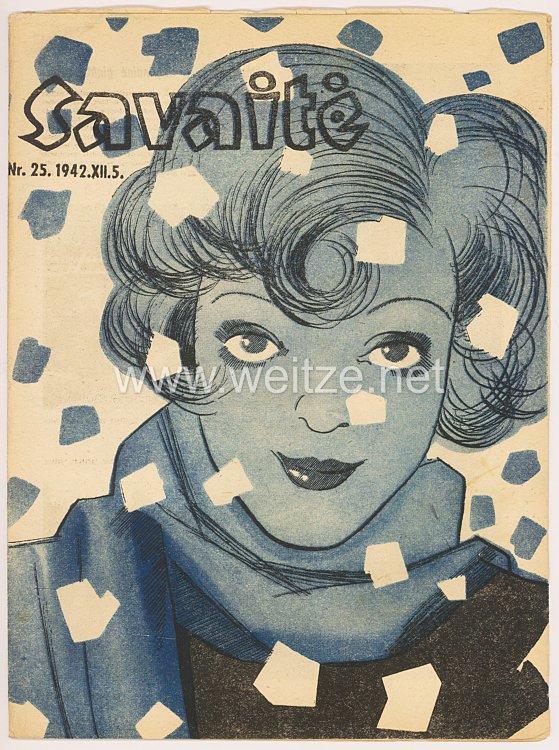
Third Reich / Lithuania - Magazine "Savaitė" - Volume 1942 No. 25

Condition 2-.
377361
25,00

Third Reich / Lithuania - Magazine "Savaitė" - Volume 1942 No. 25

The magazine "Savaitė" (English: “The Week”) represents a significant document of the complex and tragic history of Lithuania during the German occupation in World War II. The present issue No. 25 from the year 1942 originates from a period of intense political and social upheaval in the Baltic States under National Socialist rule.

Following the German invasion of the Soviet Union in June 1941 as part of Operation Barbarossa, Lithuania, which had been occupied by the Soviet Union since 1940, was conquered by German troops within a few days. The German occupation initially brought some Lithuanians hope for national independence, which was quickly disappointed. The territory was organized as part of Reichskommissariat Ostland, which encompassed the Baltic States and Belarus and was led by Hinrich Lohse as Reich Commissioner.

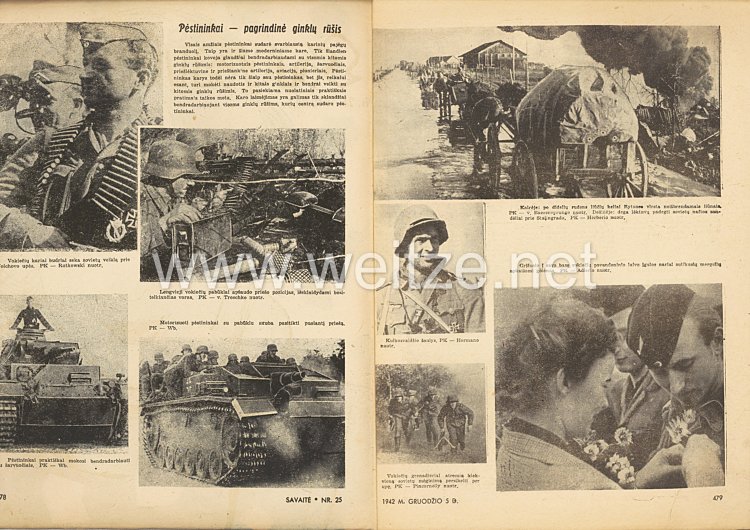
The press landscape in the occupied territories was subject to strict German control. The Reich Ministry of Public Enlightenment and Propaganda under Joseph Goebbels supervised all publications and used local magazines as instruments of occupation policy. Periodicals like “Savaitė” served several purposes: they were to inform the Lithuanian population about the official view of events, propagate German war aims, and simultaneously preserve a certain degree of Lithuanian cultural identity to encourage collaboration.

The year 1942, from which this issue dates, was a decisive year in World War II. On the Eastern Front, the German Wehrmacht reached its greatest extent, while simultaneously the turning point of the war was initiated with the Battle of Stalingrad. For Lithuania, this year meant an intensification of occupation policy. The Jewish population of Lithuania, which numbered approximately 220,000 people before the war, was systematically murdered by Einsatzgruppen and local collaborators. By the end of 1942, most Lithuanian Jews had already perished in mass shootings and ghettos.

Magazines like “Savaitė” typically appeared weekly and contained a mixture of political news, cultural contributions, local reports, and propaganda material. They were written in Lithuanian, which corresponded to the German strategy of tolerating local languages as long as political control was ensured. The content was carefully censored and had to comply with the guidelines of the German occupation authorities.

The preservation of such periodicals is of considerable historical value. They offer insights into everyday propaganda, information control, and the occupying power's attempts to shape public opinion. Historians use these sources to understand the mechanisms of collaboration, resistance, and living conditions under occupation. The issues also document how the German administration attempted to suggest a kind of normality while simultaneously committing crimes of unprecedented scale.

The relationship between the Third Reich and Lithuania was characterized by ambivalence. While some Lithuanians collaborated with the Germans – partly out of anti-communism, partly for opportunistic reasons – others resisted. However, German occupation policy was ultimately aimed at exploitation and racist oppression. Lithuanians were recruited for forced labor, resources were exploited, and National Socialist racial ideology determined the fate of the population.

Such magazines are today rare collectibles and important archival documents. Their state of preservation varies considerably, and well-preserved copies are accordingly valuable for research and documentation. They serve as reminders of a dark period in European history and warn of the need for vigilance against propaganda and totalitarian control.