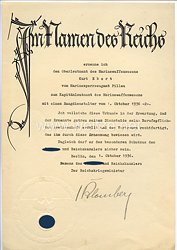
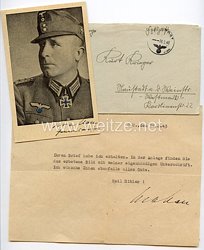
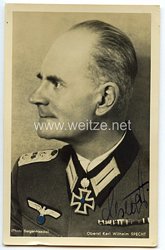
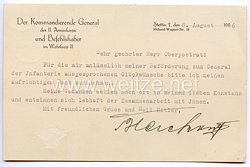
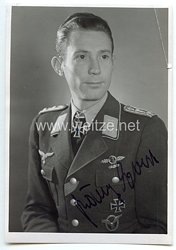
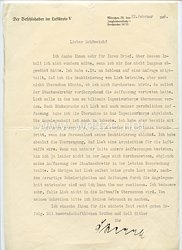
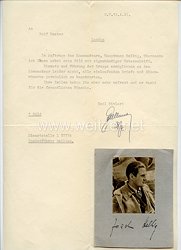
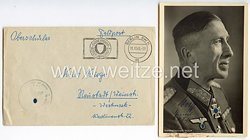
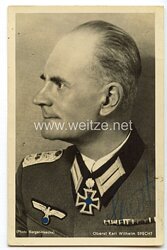
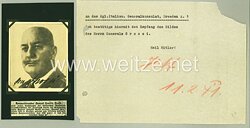
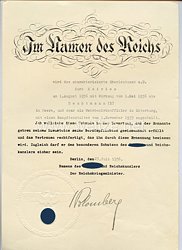
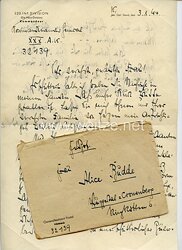
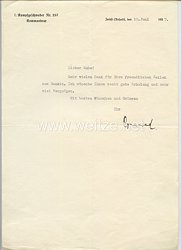
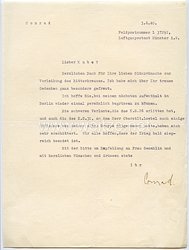
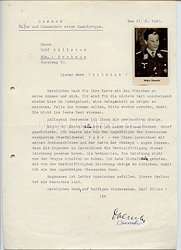
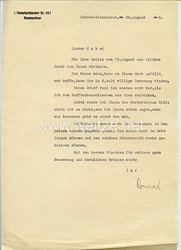
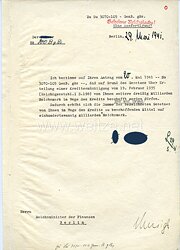
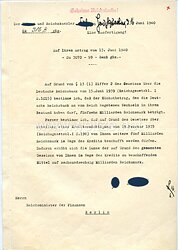
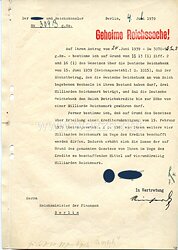
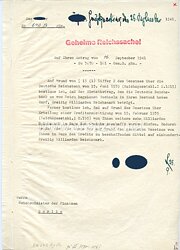
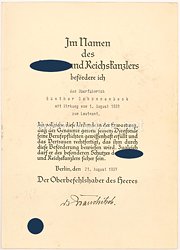
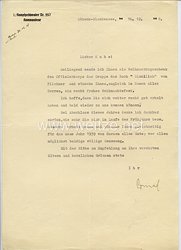
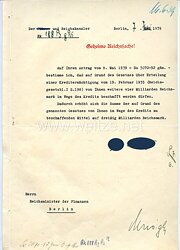
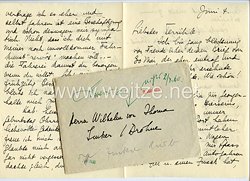
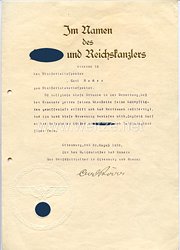
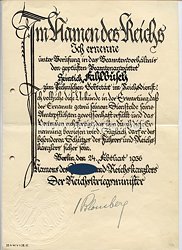
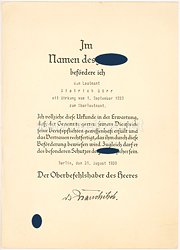
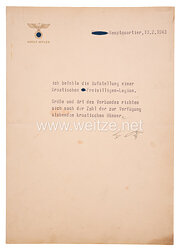
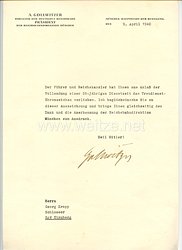
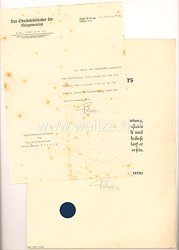
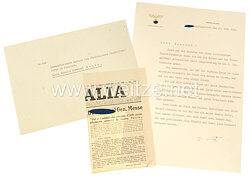
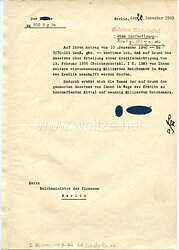
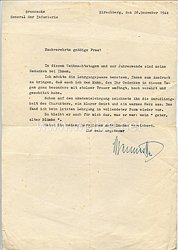
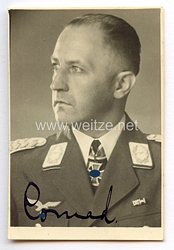
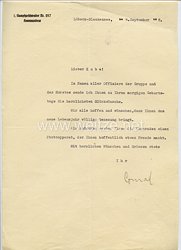
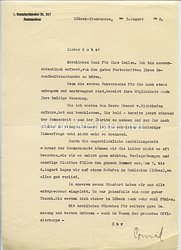
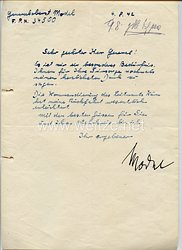
Es handelt sich um ein Schreiben auf dem originalen Briefpapier von Adolf Hitler, mit geprägtem Hoheitsadler über "Der Führer", datiert "Führerhauptquartier, 10.2.1943", mit schöner Tintenunterschrift " Adolf Hitler ".
Seitlich als Lesevermerk des Reichsführer-SS Heinrich Himmler seine handschriftliche Paraphe "HH" mit grünem Kopierstift. Unbeschädigt, Zustand 2. Extrem selten.
Am 10. Februar 1942 genehmigte Adolf Hitler die Aufstellung einer bosnischen SS-Division aus Muslimen, um auf dem Balkan gegen Partisanen eingesetzt zu werden. Die Zustimmung des kroatischen Staates erfolgte im März 1943. Der Aufstellungsbefehl Kroatische SS-Freiwilligen-Legion datierte vom 10..2.1943. Kurz darauf entschied man sich für die Bezeichnung Kroatische SS-Freiwilligen-Division. Die Unterführer sollten freiwillige Muselmanen aus dem Gebiet des unabhängigen Staates Kroatien sein. Für die Freiwilligen wurden die sonst geltenden SS-Tauglichkeits-Voraussetzungen außer Kraft gesetzt, sie mußten lediglich kriegsverwendungsfähig sein. Die Führer sowie die Sonderlaufbahnen wurden mit Reichsdeutschen besetzt. Am 30. April 1943 erhielt die Division die Bezeichnung Kroatische SS-Freiwilligen-Gebirgs-Division. Im Juni 1943 wurde die in Aufstellung befindliche Division dem Kommandanten des Heeresgebietes Südfrankreich unterstellt und in den Raum Mende, Haute Loire, Aveyron und Lozerne verlegt. Auf dem Truppenübungsplatz Wildflecken / Röhn wurden die aus Kroatien eintreffenden Transporte gesammelt. Da die Freiwilligen-Meldungen nicht ausreichten, wurden die Mannschaften auch direkt vom kroatischen Heer übernommen. Im Oktober 1943 wurden die Divisionen der Waffen-SS durchnummeriert, die neue Bezeichnung der Division lautete nun 13. Kroatische SS-Freiwilligen-Gebirgs-Division. Zum 31. Dezember 1943 hatte die Division eine Stärke von 21.065 Mann und damit 2.000 Mann über soll, wobei es trotzdem an Führern und Unterführern mangelte. Ende Januar 1944 wurde die Division einsatzbereit gemeldet. Im Februar 1944 wurde die Division nach Bosnien verlegt, um sofort am Unternehmen "Wegweiser" teilzunehmen. Dabei wurde der Bosut-Wald und einige Dörfer nördlich der Save durchkämmt. Am 11. April 1944 begann das Unternehmen "Osterei". Dabei wurden die Orte Janja, Ugljevik und Priboj erobert. Vom 26. April bis zum 7. Mai 1944 dauerte das Unternehmen "Maibaum", bei dem starken Partisanenverbänden in der Majevica der Übergang über die Drina nach Serbien verwehrt werden sollte. Es kam zu schweren Gefechten, in deren Verlauf den Partisanen zwar die Überquerung der Drina verwehrt werden konnte, ihre Vernichtung gelang jedoch nicht. Am 15. Mai 1944 wurde die Division nun erneut umbenannt, sie führte nun die Bezeichnung 13. Waffen-Gebirgs-Division der SS "Handschar" (kroatische Nr. 1). Am 8. Juni 1944 begann das Unternehmen "Vollmond", mit dem drei sich im Raum Posavina - Majevica befindliche Partisanen-Divisionen zerschlagen werden sollten. Die Division sollte dabei von Norden und Westen her angreifen und die Partisanen auf die Drina zurückdrängen, wobei es zu schweren Kämpfen kam. Vom 14. Juni bis zum 6. August 1944 folgte das Unternehmen "Kornblume", bei dem Partisanenverbände nördlich der Save bekämpft wurden. Anfang September 1944 wurde die Division zur Auffrischung in den Raum Vukovice - Osmaci - Srebrenica verlegt, um hier aufgefrischt zu werden. In diese Zeit fiel eine immer deutlicher zutage tretende Auflösungserscheinung der Division. Allein im September 1944 liefen über 2.000 Mann zu den Partisanen über. Durch die Übernahme von Soldaten der aufgelösten 23. Waffen-Gebirgs-Division der SS "Kama" konnte die Division auf eine Stärke von 346 Führern, 1.950 Unterführern und 18.520 Mannschaften gebracht werden. Mitte Oktober 944 wurde die Masse der Division in den Raum Agram in Marsch gesetzt, um dort das LXIX. Armeekorps zu entlasten. Hierbei desertierten erneut rund 1.000 Mann. Als die Division dann vor ihrem ersten Einsatz gegen sowjetische Truppen stand, löste sie sich größtenteils auf. Nur das deutsche Rahmenpersonal und einige Mannschaften verblieben, so daß sich die Division Ende Oktober über die Save nach Norden zurückziehen mußte. Die Divisionsreste wurden im November 1944 im Raum Apatin und bei Batina eingesetzt. Am 12. November 1944 wurde der Division, ihre schweren Waffen an die 1. Gebirgs-Division abzugeben, um dann ostwärts von Fünfkirchen (Pecs) bei Batina als Kampfgruppe eingesetzt zu werden. Diese wurde unter schweren Verlusten bis nach Hercöyszöllös zurückgedrängt. Am 29. November 1944 besetzten gegnerische Truppen Fünfkirchen. Die Reste der Divisions-Kampfgruppe bezogen östlich von Bolmay eine neue Linie. Von hier aus wurde sie nach Barcs in Marsch gesetzt. Aufgrund des russischen Vormarsches verlegte die Division zunächst in den Raum südlich des Plattensees (Csurgo - Berzencze - Nagykanizsa und von dort nach schweren Abwehrkämpfen in die Margarethen-Stellung zwischen der Drau und dem Plattensee. In diesem Abschnitt konnte die Division durch Urlauber und Versprengte wieder etwas aufgefrischt werden. Am 6. März 1945 nahm die Division dann an der Offensive "Frühlingserwachen" teil, bei der die Donau bei Baja erreicht werden sollte. Der Angriff blieb jedoch am 7. März vor Kaposvar im Schlamm stecken. Ende März 1945 wurde die Rote Armee im Divisionsabschnitt aktiv. Diese mußte sich dabei aus ihren Stellungen auf die geplante Dorothea-Stellung um Bajca zurückgehen. Am 3. April überquerte die Division die Mur und verlor dabei ihre schweren Waffen. Im Raum Kaag wurde die Reichsschutzstellung bezogen. Der Division wurde hier Ersatz aus Volkssturm- und Luftwaffen-Angehörigen zugeführt. Am 5. Mai 1945 wurden die letzten Bosniaken von ihrem Fahneneid entbunden, damit sich diese in ihre Heimat durchschlagen konnten. Der verbleibende Rest der Division trat den Rückmarsch an und bezog am 7. Mai 1945 die Ursula-Stellung im Raum um Kellersdorf. Bei Villach konnten die Reste in britische Gefangenschaft entkommen.
455257