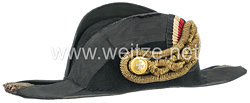
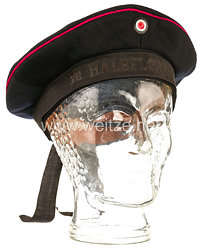
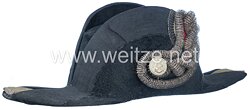
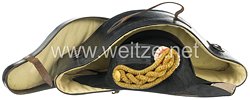
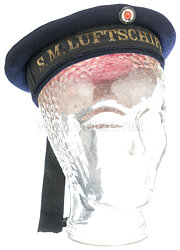
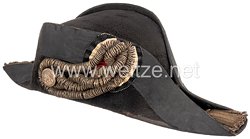
Mit dem Tod König Alberts im Juni 1902 und der Thronbesteigung seines Vaters wurde Friedrich August Kronprinz. Seine erste Aufgabe als solcher bestand darin, die Thronfolge gegenüber verschiedenen Königshäusern anzuzeigen. Dies tat er am 2. Juli (1902) in Kiel gegenüber Kaiser Wilhelm II., der ihn sogleich à la suite des I. Seebataillons der Marine-Infanterie stellte. 1904 bestieg Friedrich August den Thron und war bis zu seiner Abdankung 1918 der letzte König Sachsens.
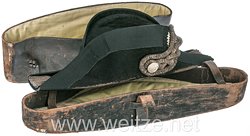
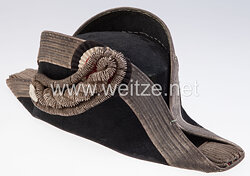
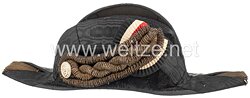
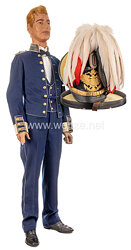
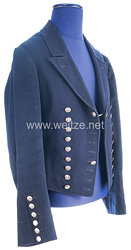
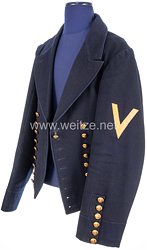
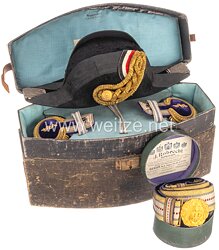
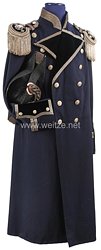
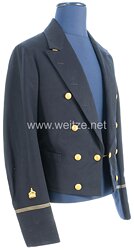
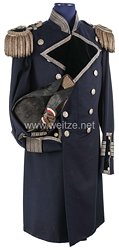
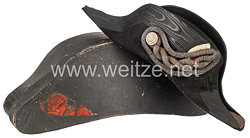
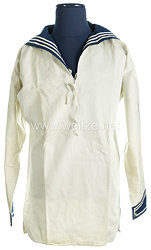
Die komplette Uniform zum Gala-Anzug des Königs besteht aus dem Tschako mit Federbusch, dem kompletten Messeanzug mit der Jacke und der Weste sowie dem weißen Hemd mit Fliege und der Hose und den Schuhen.
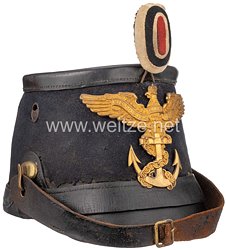
Kaiserliches Seebataillon Tschako für Offiziere. Eleganter schwarzer Lackledertschako mit Tuchbezug, komplett mit allen Beschlägen in feuervergoldeter Ausführung. Vorn fein vergoldeter Reichsadler mit aufpolierten Kanten, leicht gewölbte Schuppenketten, elegantes Offiziersfeldzeichen. Innen mit hellbraunem Lederschweißband mit Seidenbanddurchzug, beiges Seidenripsfutter mit goldgeprägter Chiffre "♔FAR" (Für Friedrich August Rex). Komplett mit dem Marine Parade-Federbusch für Generale im See-Bataillon mit schwarz-weiß-roten Federn und dem vergoldeten gekehlten Trichter. Größe ca. 58. Der Tschako leicht getragen. Im Original Koffer.
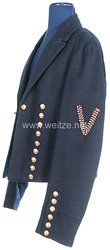
Die Messejacke aus feinem blauem Tuch mit weißem Stehkragen, weißen Ärmelaufschlägen mit blauen Patten mit weißen Vorstößen, am Kragen und den Aufschlägen die großen gold gestickten Gardelitzen, eine Knopfreihe mit 8 Messingknöpfen, auf den Schultern die Schulterstücke für den General a la suite der Marine-Infanterie mit den gekreuzten rot emaillierten Großadmiral-Stäben und der darüber aufgelegten versilberten Kaiserkrone. Auf der linken Brust mit elf Schlaufen für Orden/Ehrenzeichen. Innen mit feinem weißem Futter. Das Futter mit kleinen Beschädigungen.
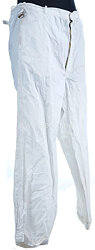
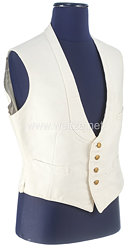
Darunter die Weste aus feinem blauem Tuch mit weißen Vorstößen, eine Reihe mit 4 Messingknöpfen, innen mit weißem Tuchfutter. Die blaue Hose mit der weißen Biese. Vollständig mit dem Hemd mit Fliege und den Schuhen.
Ein herausragende Zeugnis seiner Zeit von musealer Bedeutung in gutem Erhaltungszustand! Wir freuen uns besonders Ihnen diese wertvolle Hinterlassenschaft des Königs Friedrich August III. anbieten zu dürfen!
444414