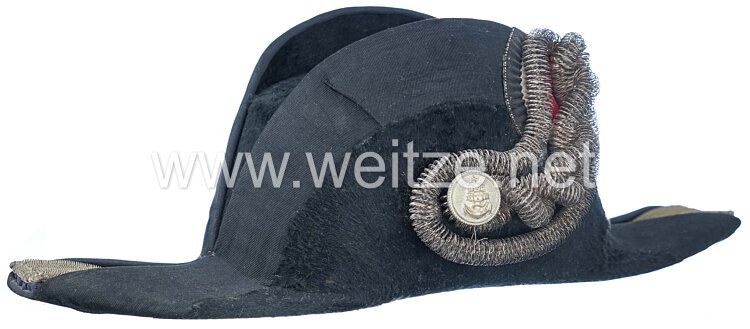
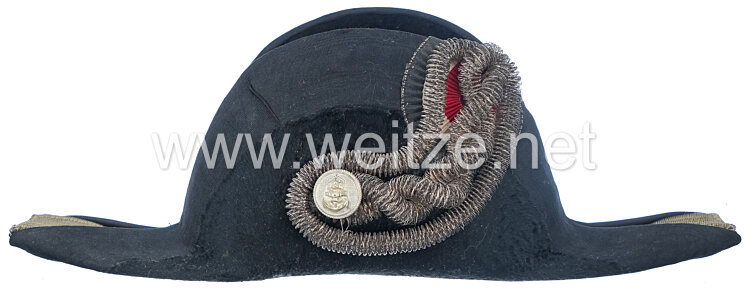
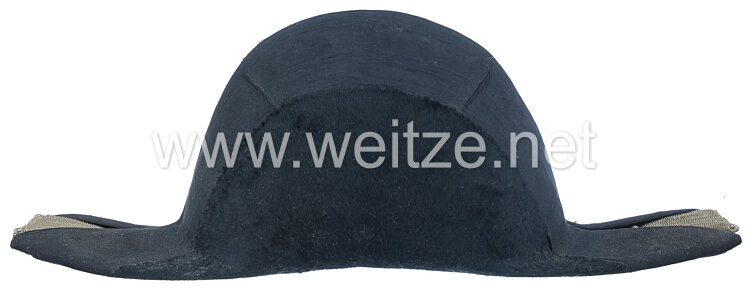
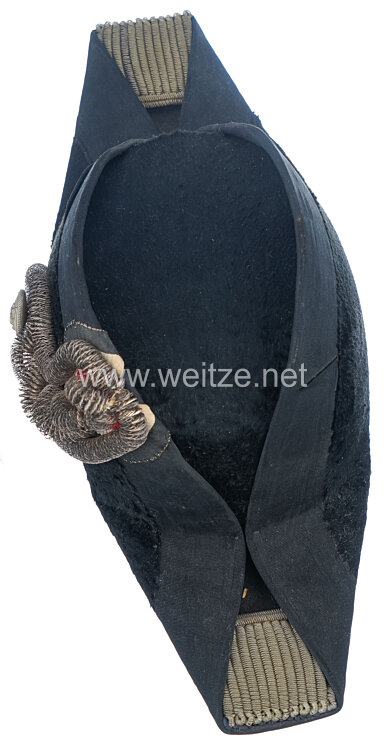
Imperial German Navy Bicorne for a Naval Official
The bicorne (two-cornered hat) represents one of the most traditional headpieces in German naval history, serving as a distinctive symbol of rank and authority within the Imperial German Navy (Kaiserliche Marine) of the German Empire (1871-1918). This example for a naval official represents the maritime administrative hierarchy, which, alongside military naval officers, played an indispensable role in the organization and operation of the Imperial war fleet.
The Imperial German Navy developed under Kaiser Wilhelm II into one of the world's most significant naval forces. The fleet expansion program, substantially initiated by Grand Admiral Alfred von Tirpitz from 1898 onwards, required not only a massive increase in ship numbers but also a corresponding expansion of the administrative apparatus. Naval officials were responsible for technical administration, supply, finances, medical services, and numerous other civilian functions that made military operations possible.
The uniform regulations of the Imperial Navy were strictly regimented, reflecting Prussian-German love of order. The bicorne as a ceremonial headpiece for officials followed a centuries-old European tradition dating back to the 18th century. While the tricorne evolved during the 18th century into the bicorne through lateral folding, this form established itself in the 19th century as a festive ceremonial and parade attribute for civilian and military dignitaries.
The construction of such bicornes followed the highest standards of craftsmanship. The black needle felt formed the foundation - a high-quality material made from felted animal hair that achieved its characteristic density and form through repeated needling and pressing. The edging of silk rep, a ribbed silk fabric, gave the headpiece an elegant sheen and protected the edges from wear.
The cockade in the Imperial colors of black-white-red indicated allegiance to the German Empire. This color combination was established in 1871 with the founding of the Reich as official national colors, replacing various individual state colors at the Reich level. The silver agrafe - a decorative clasp or buckle - held the cockade while simultaneously serving as a decorative element. The silver-plated naval button with its characteristic anchor emblem clearly identified the wearer as a member of the naval forces.
Particularly noteworthy are the silver fringes with blue lining that hung from the sides of the bicorne. These so-called bullions were traditional rank insignia and gave the headpiece a dignified, official character. The blue color referred to maritime tradition and distinguished naval personnel from army officials.
The interior of the bicorne reveals the practical side of this ceremonial headpiece: A brown leather sweatband provided wearing comfort and protected the valuable felt from moisture and dirt. The light-colored silk lining gave the interior a luxurious touch and facilitated putting on and removing the hat.
Naval officials of the Imperial Navy wore the bicorne on special occasions: at court receptions, fleet parades, official ceremonies such as ship launches, or when receiving high-ranking dignitaries. In everyday service, other, more practical headgear was used. The bicorne symbolized the connection between maritime tradition and imperial representation.
The size 55 corresponds to a head circumference of approximately 55 centimeters and documents the standardized manufacturing scales of the era. Hatmakers and military equipment manufacturers such as the firms of Clemens Wagner in Berlin or other specialized manufacturers produced these headpieces according to precise specifications of naval clothing regulations.
With the end of World War I and the dissolution of the Imperial Navy in 1918, the bicorne lost its official function. The Weimar Reichsmarine and later the Kriegsmarine of the Third Reich introduced modernized uniform regulations in which the traditional bicorne played no role. Today, preserved examples are valuable testimonies to a vanished epoch of German naval history, documenting the connection between military function, artisanal craftsmanship, and monarchical representational culture.