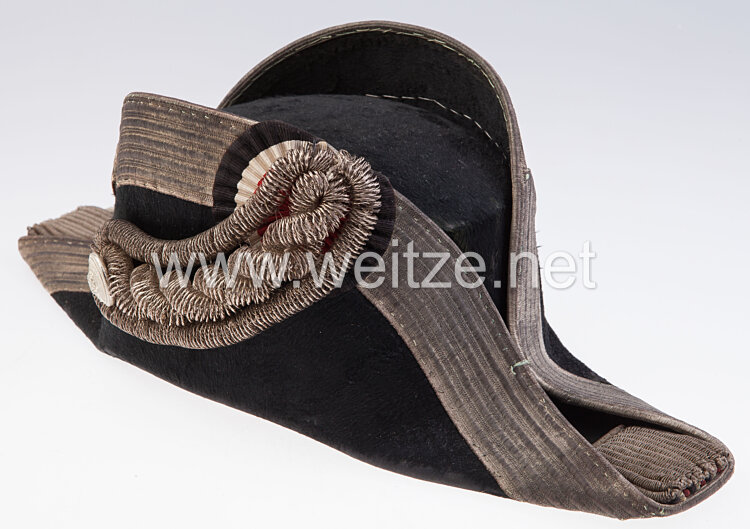
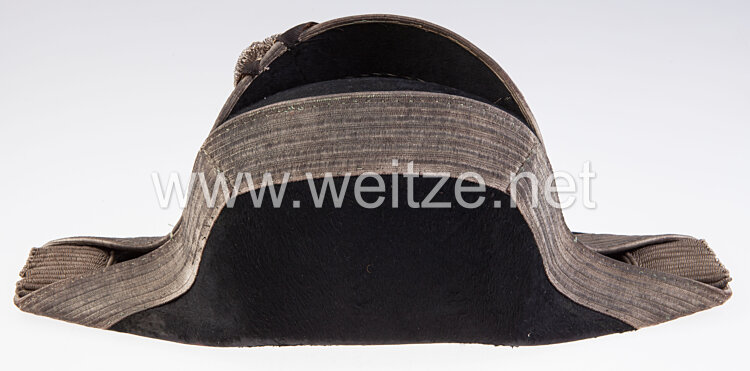
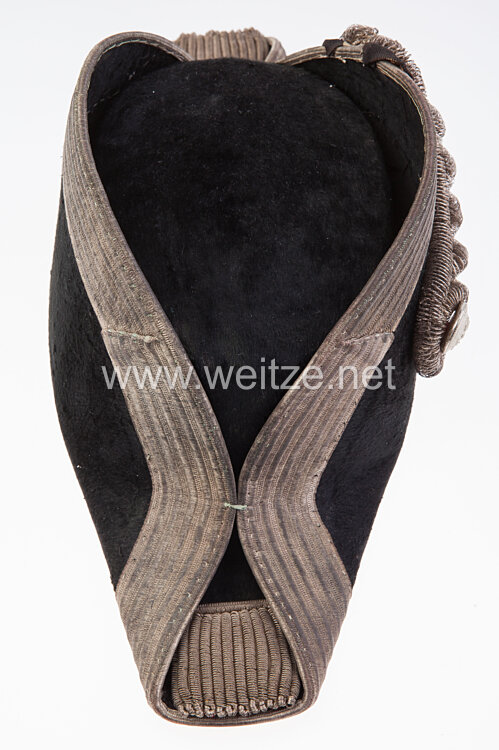
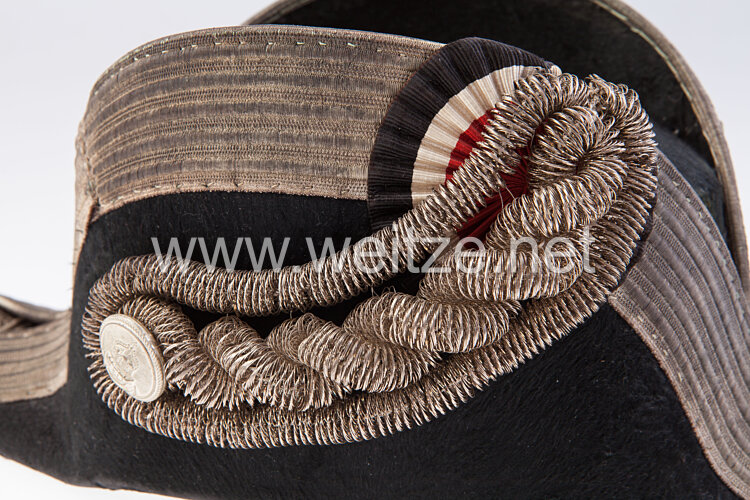
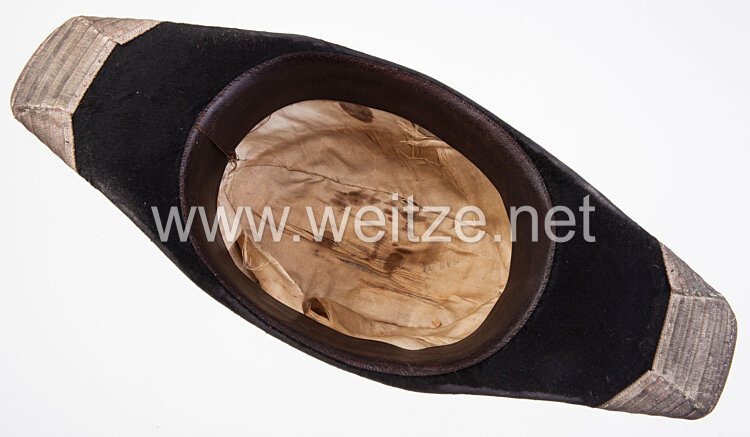
The bicorne hat (Zweispitz) for a Marine Station Intendant of the Imperial German Navy (Kaiserliche Marine) represents a fascinating chapter in German naval history circa 1913. This elegant headpiece embodies not only military tradition but also the complex administrative hierarchy of the imperial naval forces during the era of Kaiser Wilhelm II.
The Imperial German Navy, which developed into the world's second-largest battle fleet from the 1890s onward under the aegis of Grand Admiral Alfred von Tirpitz, required an extensive administrative infrastructure. Beyond naval and military officers, administrative officers played a crucial role in supplying, financing, and organizing the rapidly growing fleet. Marine Station Intendants belonged to this group of high-ranking administrative officials.
With the All-Highest Cabinet Order (A.K.O.) of January 21, 1905, Marine Station Intendants received the rank of Councillors 1st Class (Räte 1. Klasse), which corresponded to the military rank of Rear Admiral (Konteradmiral). This elevation underscored the growing importance of logistical and administrative functions within the navy. Despite their equivalent rank, however, administrative officers were distinguished from military admirals by their uniforms.
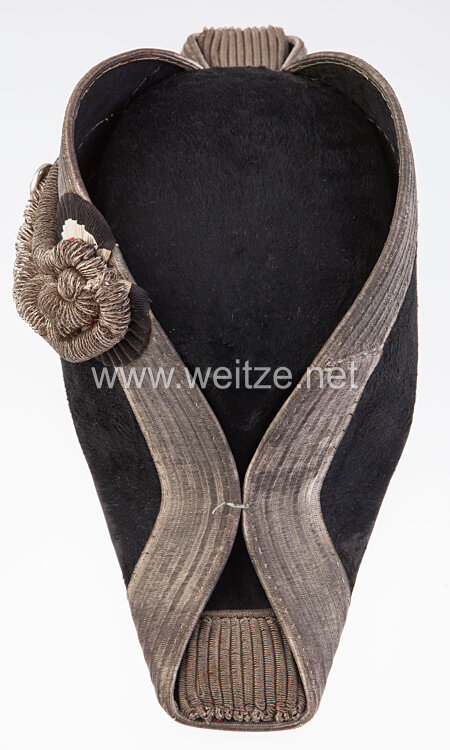
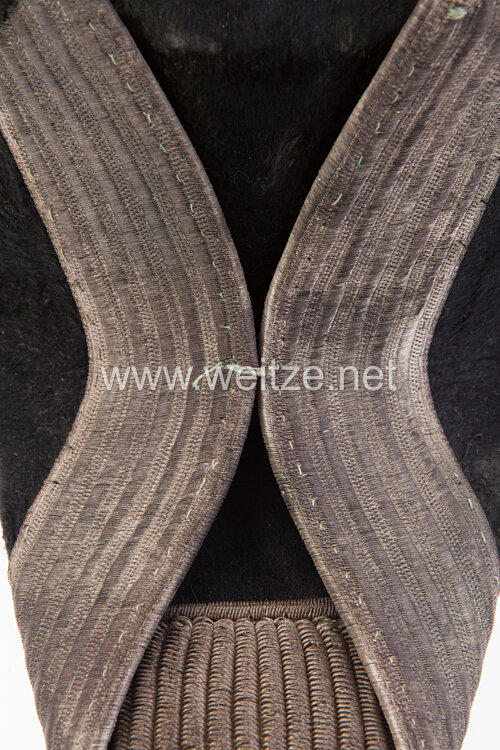
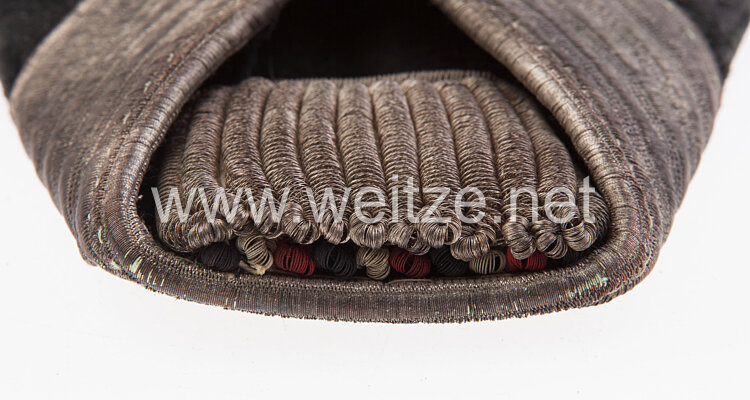
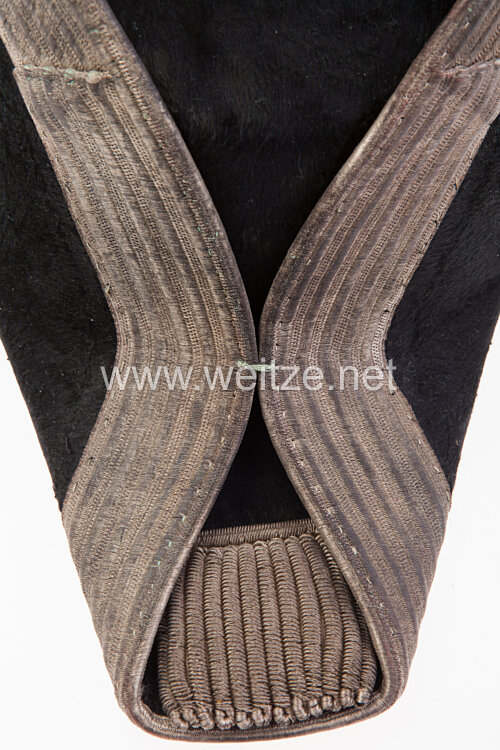
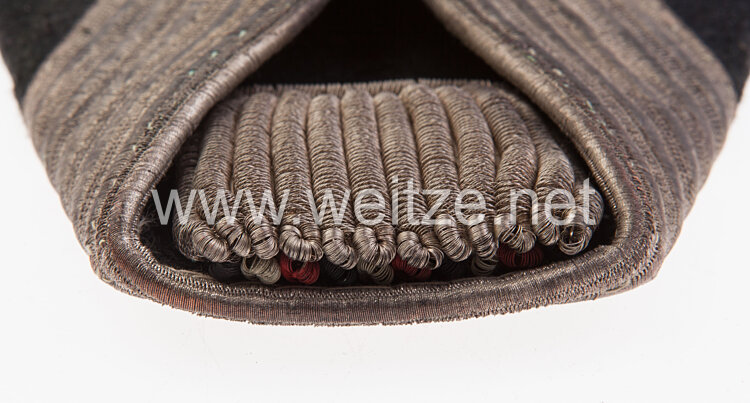
The present bicorne demonstrates this distinction impressively. While military admirals wore gold trimmings, the bicorne of Marine Station Intendants featured silver braid. The black needle felt is bordered all around with wide silver lace, and the characteristic silver agraffe on the left side, along with the silver-plated button, clearly identified the status of a high-ranking administrative officer. The Imperial cockade made of silk in the black-white-red colors symbolized loyalty to the German Empire.
The bicorne itself was a headpiece with a long military tradition dating back to the 18th century. Originally, the bicorne evolved from the broad-brimmed tricorne, whose brim was folded up on two sides. In the German Navy, the bicorne was worn as a full-dress uniform headpiece for senior officers and admirals at grand parades and official occasions. The form worn crosswise to the head direction distinguished it from the lengthwise variant worn by the army and was characteristic of the navy.
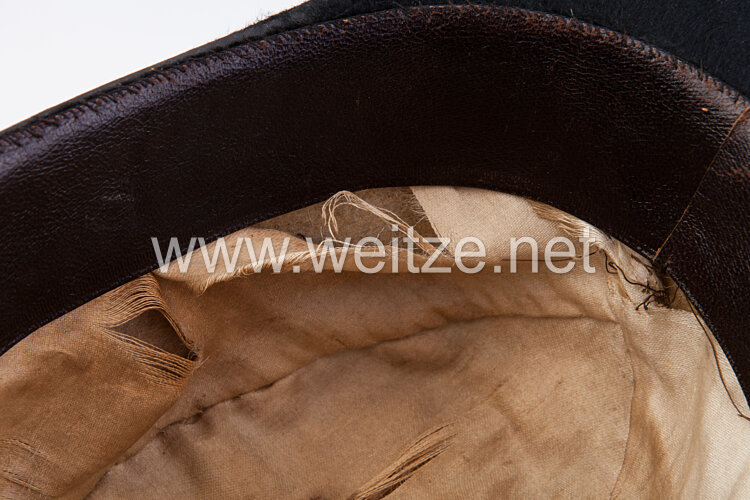
The craftsmanship of such uniform pieces was remarkable. The black needle felt was carefully shaped and reinforced, while the dark lining and light sweatband inside provided comfort even during lengthy ceremonies. Production was carried out by specialized military equipment manufacturers who worked according to exact specifications.
Marine Station Intendants were responsible for administering the naval stations – the important bases of the Imperial Navy in Wilhelmshaven, Kiel, and other locations. Their duties included material administration, financial management, provisioning, and all economic support for the fleet. At a time when the German fleet was expanding rapidly and becoming increasingly complex technologically, their role was indispensable.
The rank insignia and uniform regulations of the Imperial Navy were strictly regulated and precisely defined in the clothing regulations (Bekleidungsvorschriften). The distinction between military and administrative officers through gold and silver trimmings respectively enabled immediate identification of service position. This system reflected the Prussian-German preference for clear hierarchical structures.
Around 1913, the probable year of origin of this bicorne, the Imperial Navy stood at the peak of its development. Naval armament was in full swing, with Germany and Great Britain engaged in the so-called Anglo-German naval race. The administrative infrastructure had to keep pace with this growth, which further increased the importance of Marine Station Intendants.
With World War I and the demise of the Imperial Navy in 1918, the era of these magnificent uniforms also ended. The Reichsmarine of the Weimar Republic introduced simplified uniform regulations, and the traditional bicorne largely lost its significance.
Today, such uniform pieces are important historical testimonies of a bygone era. They document not only the military fashion and craftsmanship of their time but also the complex organizational and administrative structure of the Imperial Navy. For collectors and historians, they offer valuable insights into the culture and hierarchy of Wilhelmine Germany.