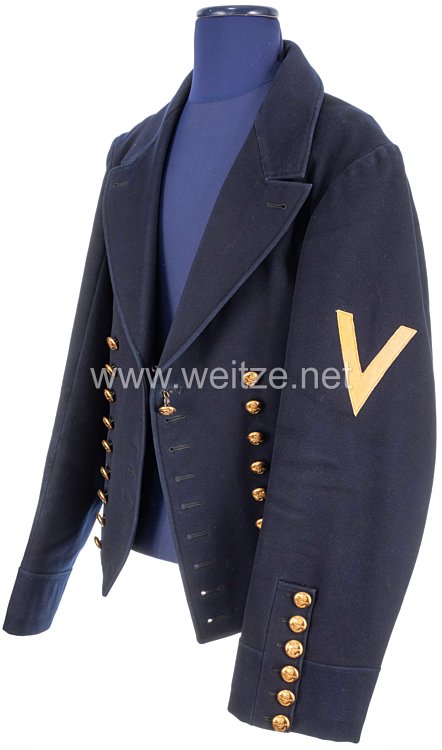
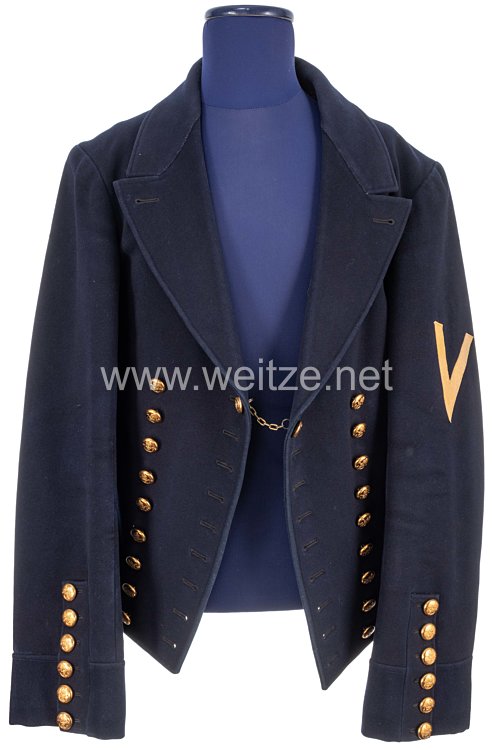
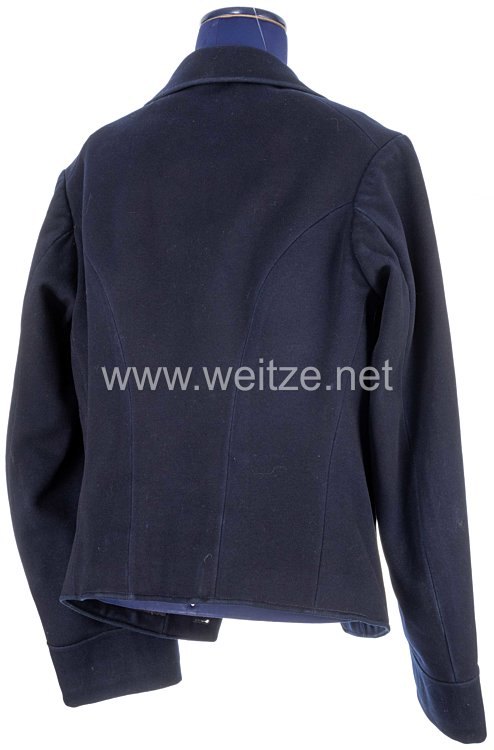
Imperial German Navy Short Dress Jacket for a Leading Seaman

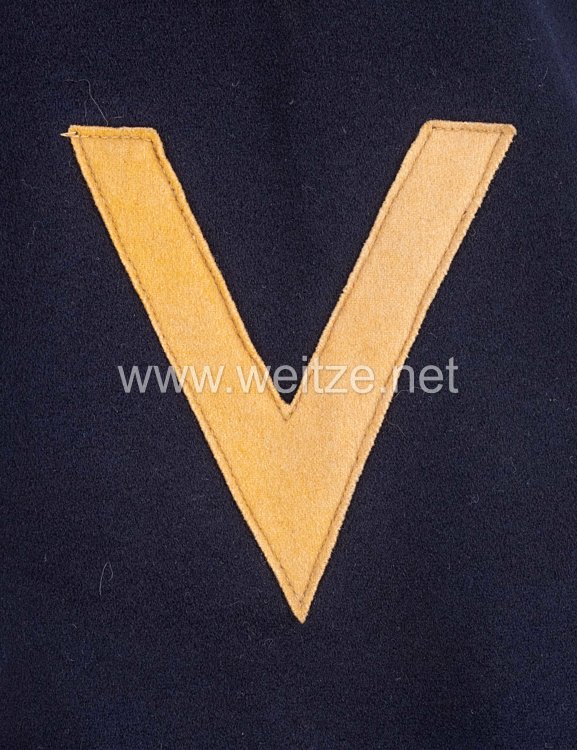
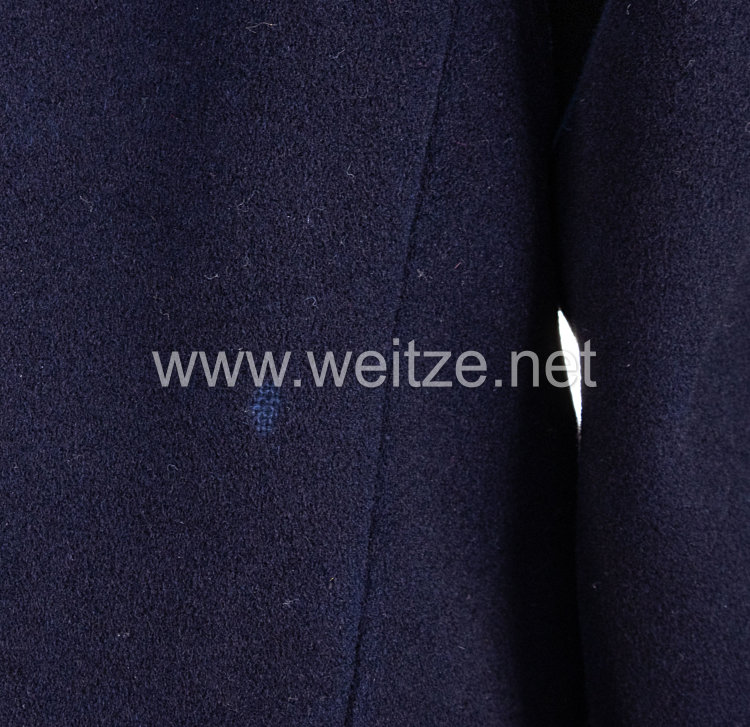
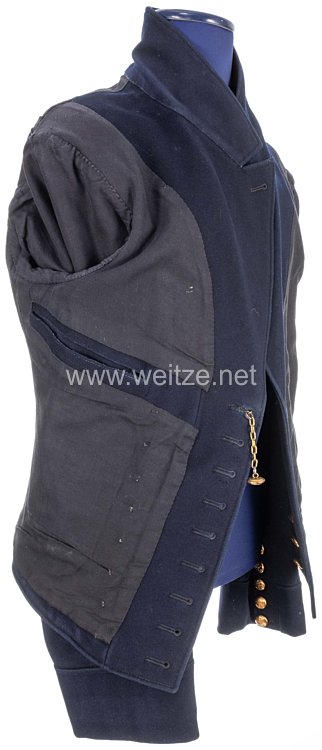
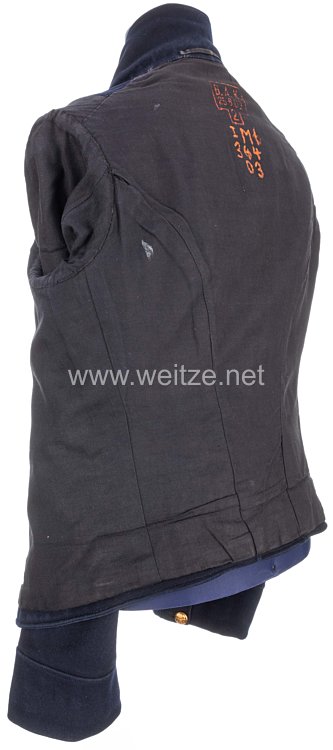
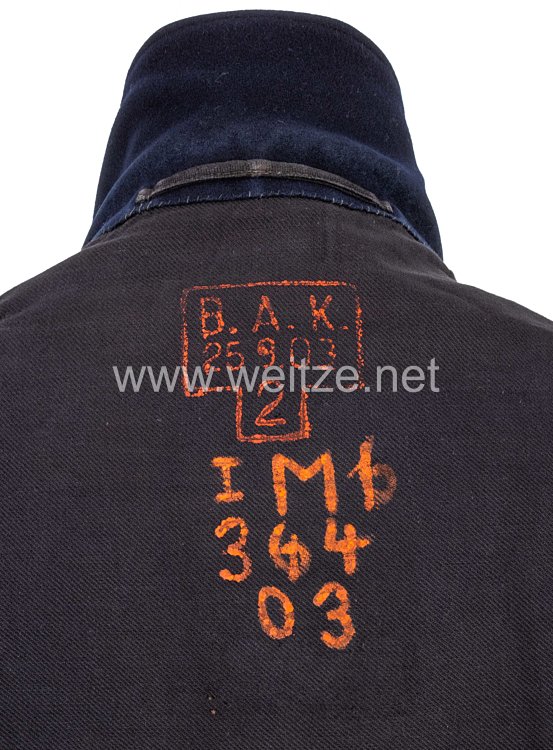
Chamber piece 1903. Blue wool with gold anchor buttons, on the left sleeve the chevron for Lance Corporal (Gefreiter), somewhat faded. Interior black lining, on the collar with chamber stamp “B.A.K. 25. 09. 03 ...”. Condition 2.
437244
450,00

Imperial German Navy Short Dress Jacket for a Leading Seaman

The short dress jacket (also known as a sailor's jacket) was an essential component of the uniform of the Imperial German Navy (Kaiserliche Marine) from 1871 to 1918. This specimen from 1903 represents the maritime tradition and military hierarchy of the Wilhelmine era and provides insight into the lives of enlisted ranks aboard imperial warships.

The Imperial German Navy underwent a phase of rapid expansion in the late 19th and early 20th centuries. Under Kaiser Wilhelm II and his State Secretary of the Imperial Naval Office, Alfred von Tirpitz, the fleet was massively expanded. The Naval Laws of 1898 and 1900 laid the foundation for building a High Seas Fleet intended to compete with the British Royal Navy. This naval arms buildup required the recruitment and training of thousands of sailors, all of whom needed to be equipped with standardized uniforms.

The short dress jacket was part of the parade uniform worn on special occasions, inspections, and ceremonial events. It differed significantly from the everyday working clothes of sailors. The characteristic blue cloth had been the standard color for naval uniforms in most European countries since the mid-19th century and symbolized the connection to the sea. The jacket was cut significantly shorter than contemporary army uniforms and allowed greater freedom of movement aboard ship.

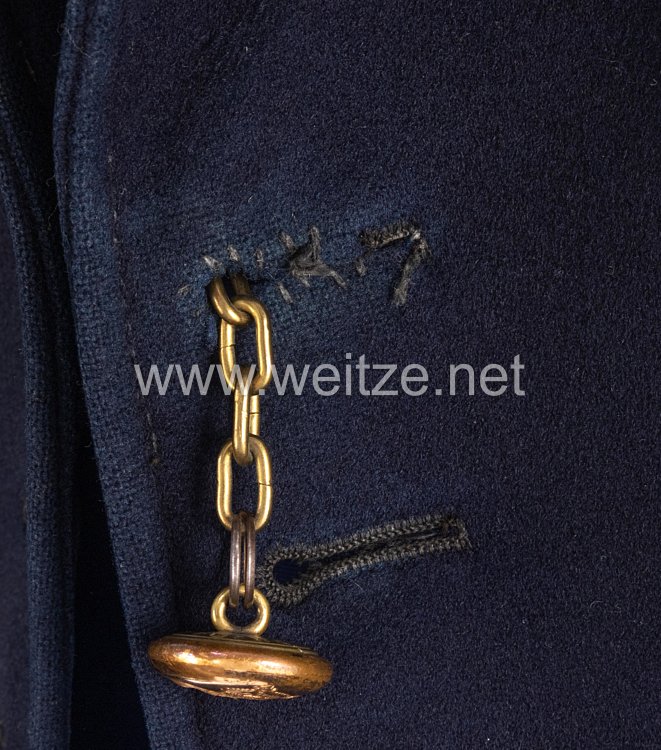
The golden anchor buttons were not only functional but also symbolically significant. The anchor as a maritime symbol clearly identified the wearers as members of the naval forces. The use of gold-colored shining buttons on the parade uniform emphasized the representative character of this clothing.

Particularly revealing is the chevron on the left sleeve, which identified the rank of Obermatrose (Leading Seaman, also called Gefreiter). In the hierarchy of the Imperial Navy, this rank represented the first promotion level above ordinary seaman. The Obermatrose had already gained experience in service and assumed minor leadership responsibilities. The rank insignia in the form of a chevron was attached to the left upper arm and was clearly visible to all. This visual hierarchy was of great importance for maintaining military order in the confined conditions of a warship.

The chamber stamp on the collar with the designation “B.A.K. 25. 09. 03” is an important document of military administration. Such stamps served to identify and assign uniform pieces to specific units or depots. B.A.K. could stand for Bekleidungsamt Kiel (Clothing Office Kiel) or a similar service point. The date September 25, 1903 probably marks the time of issue or inspection of the garment. Such precise records were characteristic of German military administration and enabled efficient logistics.

The black lining inside the jacket served both practical and aesthetic purposes. It reinforced the durability of the garment and provided additional protection against wind and cold at sea. The combination of blue outer fabric and black lining was typical of naval uniforms of this period.

The designation as a chamber piece (Kammerstück) indicates that this jacket belonged to the official equipment managed in the clothing depot. Unlike privately procured uniform parts, chamber pieces were property of the Navy and had to be returned upon discharge or transfer. This ensured a uniform appearance and facilitated the supply of crews.

In the historical context of 1903, the Imperial German Navy was in a phase of intense growth. At that time, the fleet comprised several modern battleships, cruisers, and torpedo boats. Manning levels grew continuously, and the Navy developed into an important instrument of German foreign policy. At the same time, this naval arms buildup intensified tensions with Great Britain and contributed to the arms race that would eventually lead to World War I.

Uniforms like this short dress jacket are today important material witnesses to this historical epoch. They document not only military organization and hierarchy but also the craftsmanship and textile technology of the time. The slight fading of the chevron badge testifies to the actual use of the piece and gives it additional authenticity as a historical document. Such objects enable historians and collectors to better understand the everyday reality of naval soldiers of the Imperial era.

r