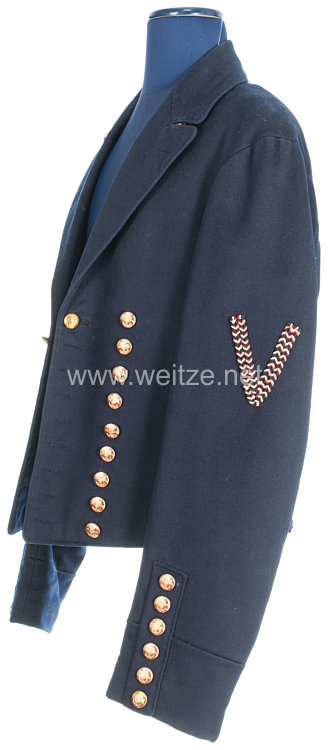
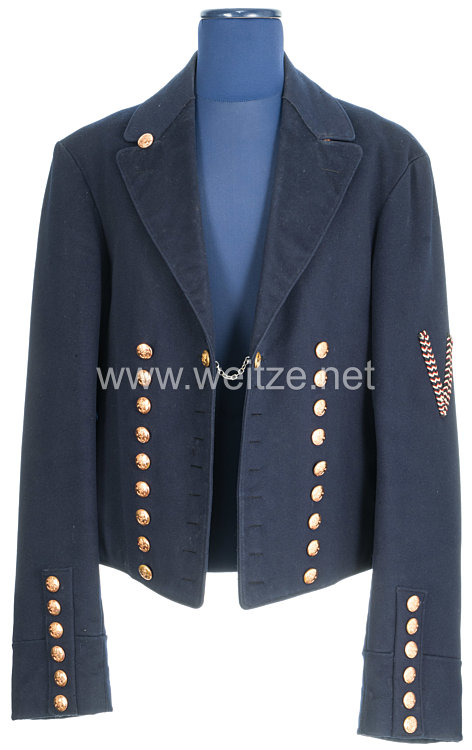
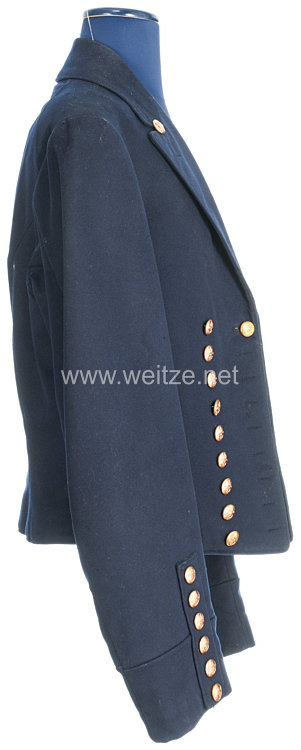
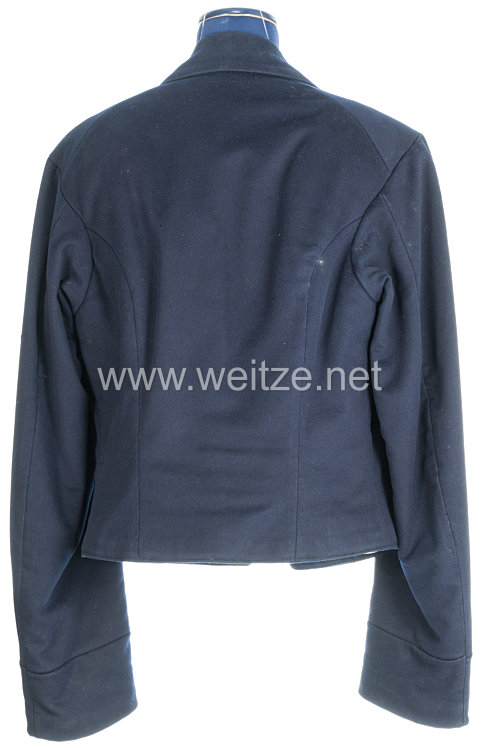
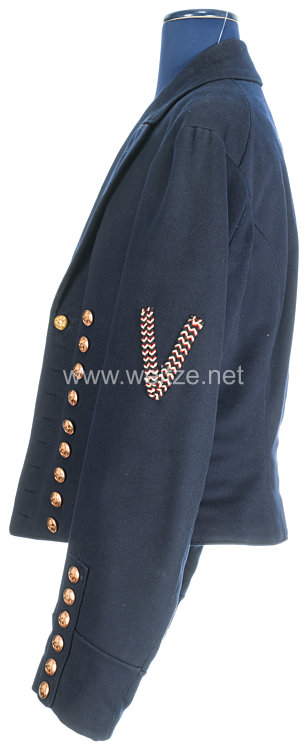
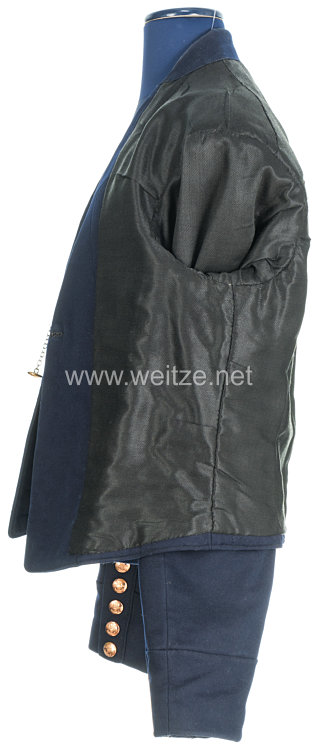
Imperial German Navy Short Dress Jacket for a One-Year Volunteer
The short parade jacket of the Imperial German Navy for One-Year Volunteers represents a significant chapter in German naval history during the Imperial era. This special uniform variant was not merely a military garment but also a visible sign of the social status and special educational prerequisites of its wearer.
The system of One-Year Volunteers (Einjährig-Freiwillige) was introduced in Prussia in 1814 and later extended to the entire German Empire. Young men who had obtained the One-Year Certificate could reduce their military service from the usual two or three years to one year. The prerequisite was proof of higher education, typically passing the examination after Obersekunda (roughly equivalent to 11th grade) at a Gymnasium or comparable educational institution.
In the Imperial German Navy, which gained particular significance under Kaiser Wilhelm II, similar regulations applied. One-Year Volunteers had to finance their own equipment and uniforms, making this form of service an affair of the wealthier social classes. This also explains the high quality and careful workmanship of these privately owned pieces.
The described parade jacket in blue cloth corresponds to the characteristic coloring of the Imperial Navy. Dark blue cloth had been the standardized color for naval uniforms since the founding of the Imperial Navy in 1872. The golden anchor buttons were typical for officer candidates and One-Year Volunteers and distinguished them from the simpler buttons of regular enlisted personnel.
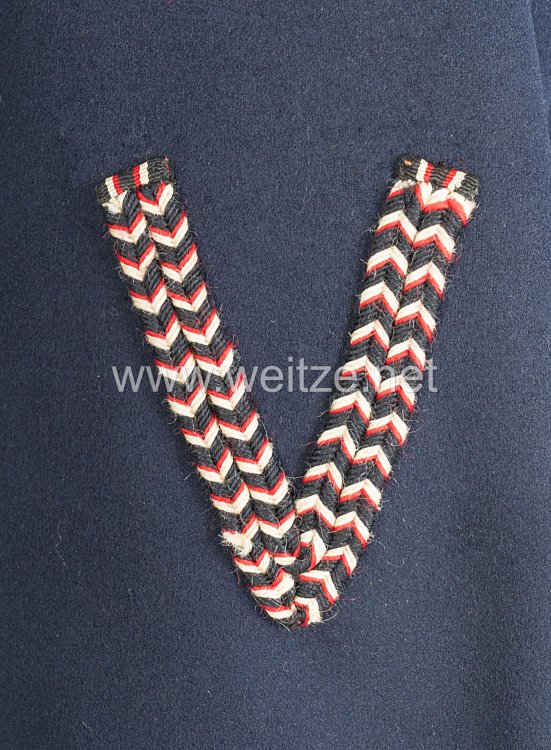
A particularly characteristic feature of this jacket is the chevron for One-Year Volunteers on the left upper arm. This chevron, also called Einjährigenwinkel, was attached to the jacket according to uniform regulations and was made of gold-colored material. It served as immediate identification of the special status of the wearer within the military hierarchy. After successful completion of the one-year service period and passing the examination, One-Year Volunteers could be transferred to the reserves as Reserve Officers, which meant a considerable gain in social prestige.
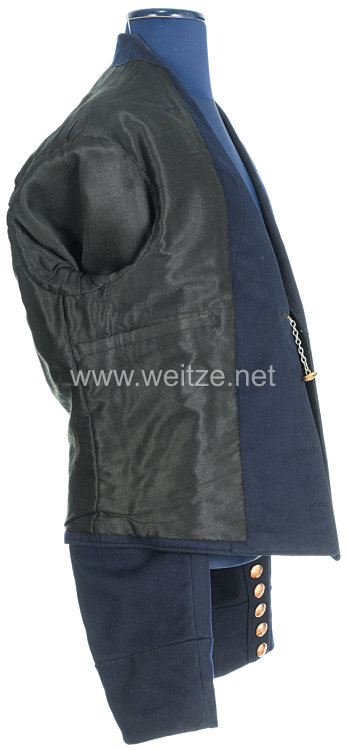
The toggle chain (Knebelkette) was both a functional and decorative element of the parade jacket. This type of closure, consisting of a series of loops and toggles, was typical of military parade uniforms of the period and gave the jacket a particularly splendid appearance. The parade jacket was worn at official occasions, parades, inspections, and festive events.
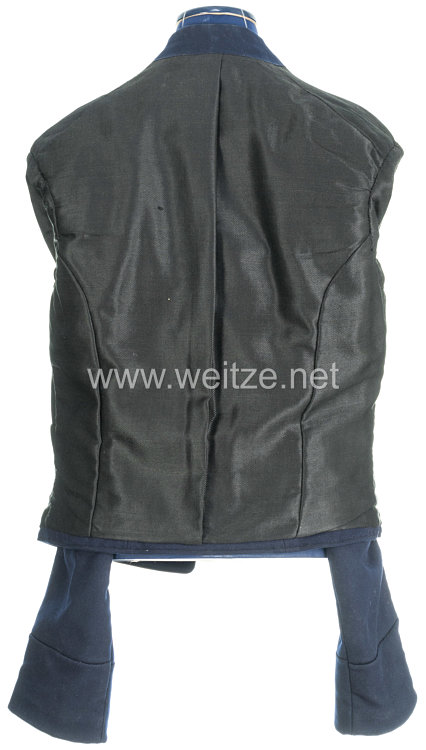
The black inner lining demonstrates the quality workmanship of these uniform pieces. One-Year Volunteers were required to have their uniforms made by private tailors, which resulted in higher quality compared to the standardized uniforms of regular personnel. The tailors oriented themselves to the official uniform regulations laid down in the Clothing Regulations of the Imperial Navy.
The Imperial German Navy experienced unprecedented expansion under Kaiser Wilhelm II, who had a special interest in maritime affairs. The Naval Laws of 1898 and 1900, significantly promoted by Grand Admiral Alfred von Tirpitz, led to a massive expansion of the war fleet. This also increased the need for qualified personnel, and the One-Year Volunteer system offered an opportunity to recruit educated young men for the navy and train them as reserve officers.
The period between 1871 and 1918 was the golden age of such uniforms. After the end of World War I and the Kaiser's abdication in 1918, the Imperial Navy was dissolved and replaced by the Reichsmarine of the Weimar Republic. The One-Year Volunteer system and its associated uniform traditions ended with the Empire.
Today, such parade jackets are important military-historical objects that provide insight into the social structure, educational system, and military traditions of the German Empire. They document an era in which military service and social status were closely intertwined and in which the navy served as a symbol of the German Empire's imperial rise to world power status. The good state of preservation of such pieces is rare and makes them valuable witnesses to a bygone era of German military history.