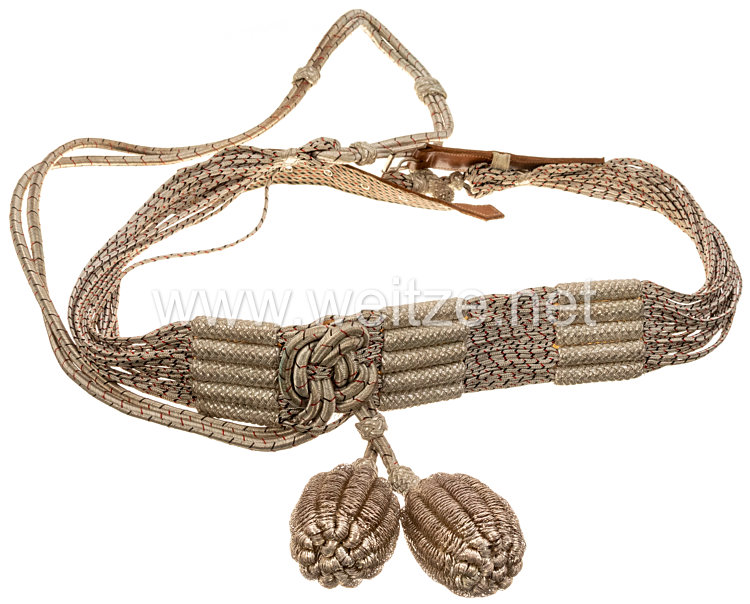
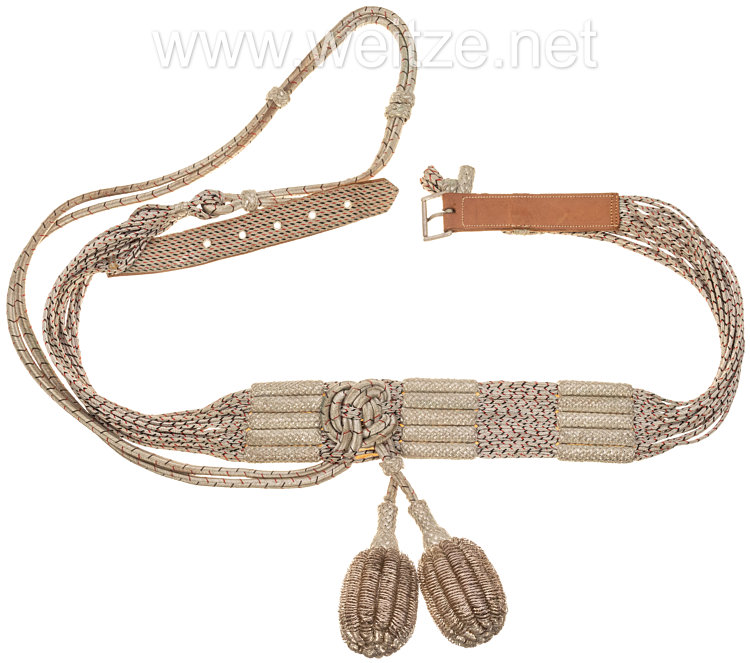
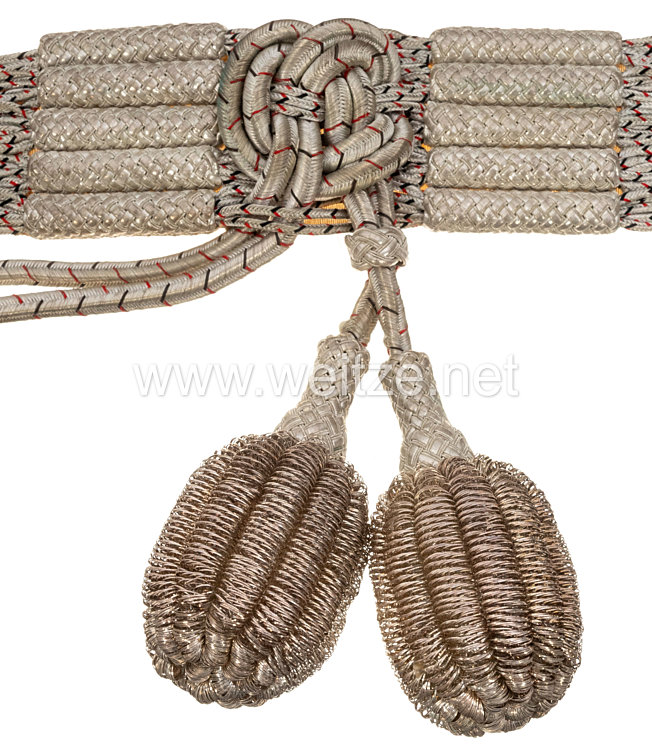
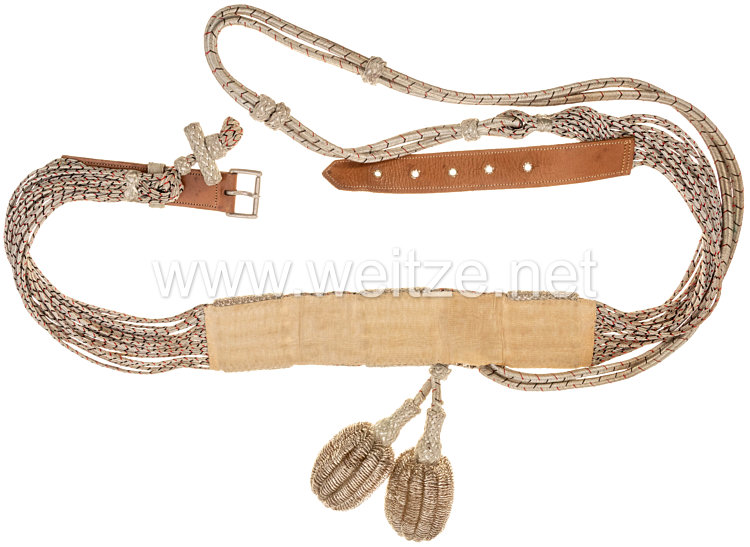
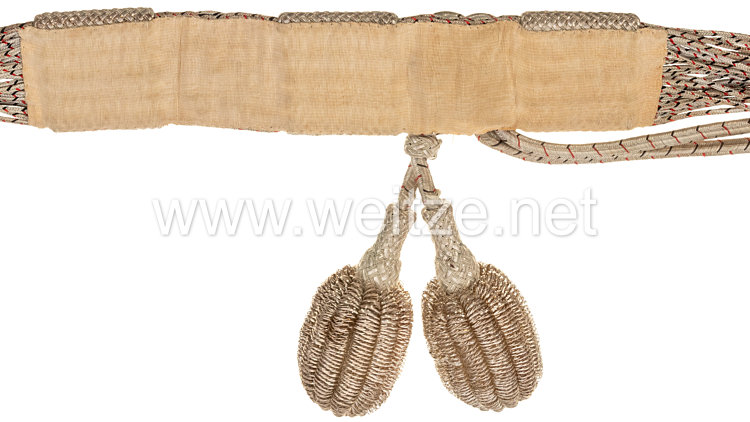
Imperial German Navy so-called “Hussar Sash” Model 1873 for Naval Officers for Full Dress Coat
The so-called “Hussar Sash” of the Imperial German Navy following the Model 1873 represents a fascinating testimony to Prussian-German naval history and embodies the representative splendor of the Wilhelmine era. This sash was worn exclusively by naval officers with the full dress coat and formed an essential component of the highest uniform category.
Following the founding of the German Empire in 1871, the previously designated Prussian Navy was renamed the Imperial Navy (Kaiserliche Marine). This necessitated a comprehensive redesign and standardization of uniform regulations. The Supreme Cabinet Order (Allerhöchste Kabinettsorder) of November 20, 1872, along with the subsequent implementing provisions of 1873, established the new uniform standards, including the introduction of the hussar sash for officers.
The designation “hussar sash” refers to the traditional field sash of hussar regiments, which had been worn in various European armies since the 18th century. This representative braiding increasingly became a distinguishing feature of officer uniforms at ceremonial occasions during the 19th century. The adoption of this element into naval uniforms testifies to the close connection between branches of service and the effort to create a unified imperial appearance.
The described sash consists of elaborate silver braiding with black and red interwoven threads. This color combination was by no means coincidental: black-white-red were the imperial colors of the German Empire, while silver traditionally symbolized officer rank. The complex braiding pattern required the highest level of craftsmanship and was produced by specialized passementerie makers in a few authorized manufactories. The production of such a sash could take several weeks.
The sash was worn diagonally across the chest, running from the right shoulder area to the left hip, where it ended with an elaborate tassel. It was worn exclusively with the full dress coat (großer Galarock), which was prescribed for imperial parades, fleet reviews, court receptions, and other highly official occasions. The full dress uniform of the Imperial Navy was considered one of the most magnificent military dress uniforms of its time.
The year 1875, to which this sash is dated, marks a phase of intensive development of the Imperial Navy. Under the aegis of Kaiser Wilhelm I and his Reich Chancellor Otto von Bismarck, the fleet was systematically expanded. The Navy was intended not only to demonstrate military power but also to symbolize the growing self-confidence of the young Empire as an emerging world power.
The hierarchy within the officer corps was strictly regulated. The hussar sash was worn by all naval officers from Leutnant zur See (naval lieutenant) to Admiral, with differences in epaulettes and other insignia indicating the precise rank. The sash itself remained identical in its basic form across all ranks, symbolizing the unity of the officer corps.
The craftsmanship quality of these uniform components was extraordinarily high. The use of genuine silver thread, precise workmanship, and careful color coordination made these pieces costly investments. Officers had to finance their uniforms themselves, which required considerable financial means and underscored the elite character of the officer corps.
The nearly unworn condition of this particular sash is remarkable. Many officers owned multiple uniform sets, and full dress uniforms were worn only on rare, highly official occasions. The preservation speaks to careful storage over nearly 150 years and makes this specimen an exceptional historical testimony.
With the end of the Imperial Navy in 1918 after World War I and the proclamation of the Weimar Republic, these magnificent uniform components became obsolete. The Reichsmarine and later the Kriegsmarine introduced more austere uniform regulations. Many of these historical uniform pieces were lost in the turmoil of the two World Wars, destroyed, or melted down.
Today, well-preserved hussar sashes of the Imperial Navy represent significant collectibles that document the splendor and representative character of the Wilhelmine Navy in maritime museums and private collections. They are material witnesses to an era in which military uniforms were not merely functional clothing but also expressions of power, tradition, and national pride.