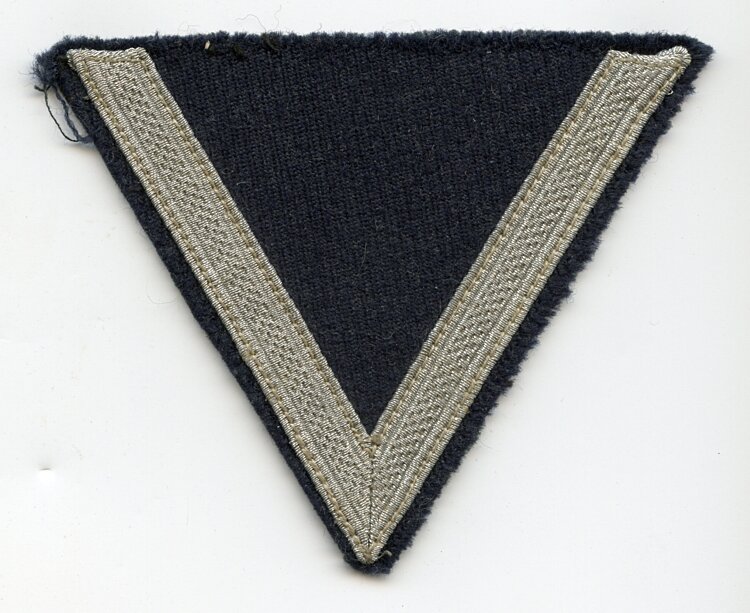
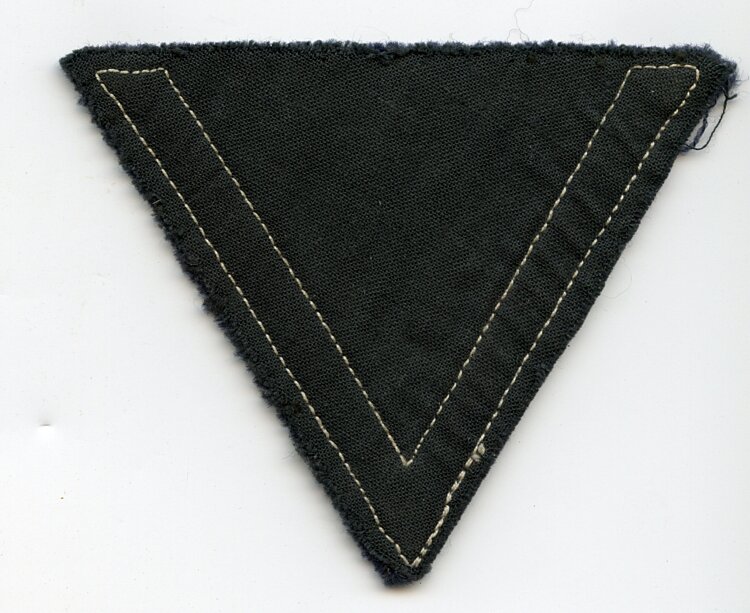
Luftwaffe Sleeve Insignia Lance Corporal
The Luftwaffe sleeve insignia for Gefreiter (Lance Corporal) represents a significant element of military rank identification within the German Air Force during World War II. These badges were worn on the Waffenrock (dress tunic) and served for immediate visual identification of service rank within the military hierarchy.
The Luftwaffe, officially established on February 26, 1935, developed a comprehensive system of rank insignia and uniform regulations that differed from those of the Army (Heer) and Navy (Kriegsmarine). The rank insignia for the Gefreiter marked the first promotion level above the basic Flieger (Airman) and thus signaled the beginning of a military career within the Luftwaffe.
The rank of Gefreiter was typically awarded after a service period of approximately six months to one year, provided the soldier had successfully completed basic training and proven himself reliable. The sleeve insignia for this rank usually consisted of a simple chevron or angle, which was affixed to both upper sleeves of the Waffenrock.
The Waffenrock itself was the official dress uniform of the Luftwaffe and was worn at formal occasions, parades, and off active duty. It differed distinctly from the field tunic (Feldbluse) worn during daily service and combat operations. The Waffenrock was tailored in the characteristic blue-gray color of the Luftwaffe and demonstrated through its cut and finish the affiliation with the youngest of the three Wehrmacht branches.
The sleeve insignia were manufactured and affixed according to the Heeresdienstvorschrift (HDv) (Army Service Regulations) and the specific uniform regulations of the Luftwaffe. The regulations precisely specified where and how these insignia were to be worn. For the Gefreiter, the badge was typically located on both upper sleeves, approximately 10 to 15 centimeters below the shoulder seam.
Production of these insignia was carried out by specialized military tailors and civilian suppliers authorized by the Wehrmacht. The quality of the insignia varied depending on the manufacturer and production period. Early war years frequently showed higher manufacturing quality with precise embroidery on cloth backing, while later productions were often simplified due to material shortages.
The Luftwaffe rank system included several levels below non-commissioned officer ranks: Flieger (the lowest rank), Gefreiter, Obergefreiter (Senior Lance Corporal), and Hauptgefreiter (Chief Lance Corporal). Each of these ranks had its specific sleeve insignia, which clearly indicated the hierarchical position within the enlisted ranks.
The significance of these rank insignia extended beyond mere identification. They were part of a complex system of military honor and discipline. Wearing the correct insignia was mandatory, and violations of uniform regulations could result in disciplinary consequences. Simultaneously, the award of a higher rank insignia represented recognition of the soldier's achievements and reliability.
From a collector's perspective, original Luftwaffe sleeve insignia are today important military-historical objects. They document not only uniform history but also the social structure and organization of the German Air Force during World War II. The condition of such insignia varies considerably, with “Condition 2” typically indicating a well-preserved piece with slight signs of wear.
Scientific examination of these objects requires knowledge of manufacturing techniques, materials, and the specific uniform regulations of the respective time period. Modern research utilizes these artifacts to develop a better understanding of military everyday culture and the organizational structures of the Wehrmacht.