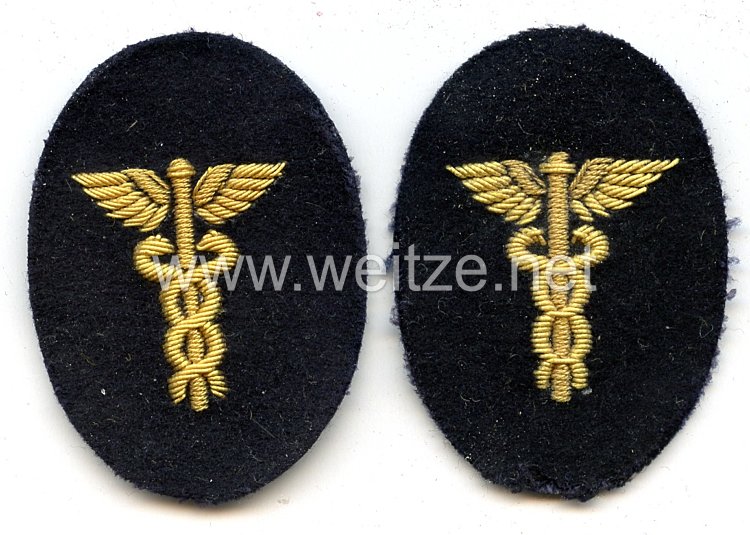
Kriegsmarine Pair of Sleeve Insignia for an Administrative Officer

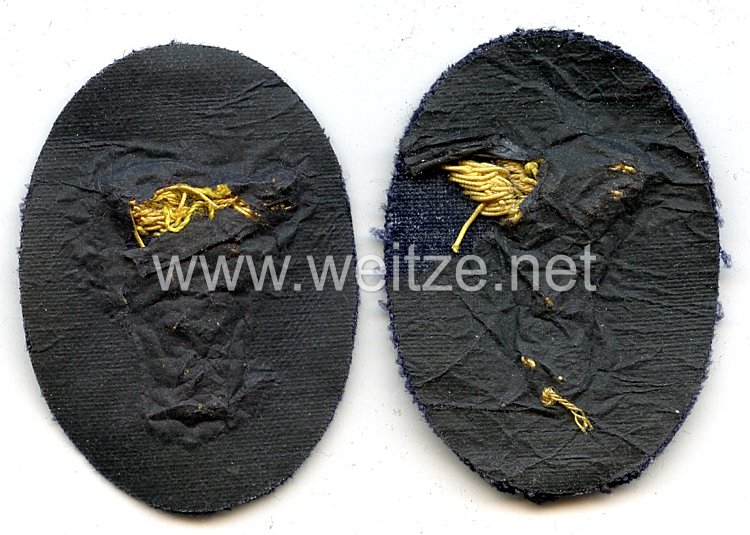
Cellon hand-embroidered version, condition 2-.
441099
55,00

Kriegsmarine Pair of Sleeve Insignia for an Administrative Officer

These sleeve insignia for a Kriegsmarine administrative officer represent an important aspect of the complex rank badge system of the German Navy during World War II. These hand-embroidered cellophane (Cellon) versions testify to the precise hierarchy and specialist service organization that was characteristic of the military structure of Nazi Germany.

The Kriegsmarine, officially established in 1935 as the successor to the Reichsmarine, developed a detailed system of uniform insignia that identified not only military ranks but also specialist service branches. Administrative officers formed a distinct category within the naval organization, responsible for logistical, administrative, and economic duties.

Administrative officers (Verwaltungsoffiziere) wore special sleeve insignia distinguished from other specialist branches by characteristic colors. According to Kriegsmarine uniform regulations, administrative officers were identified by dark blue interlayers between the gold rank stripes. This color coding enabled immediate identification of an officer's service affiliation.

The Cellon construction described here refers to a special manufacturing technique in which the badges were embroidered on a cellulose-based material. Cellon was a transparent, cellulose-based material used as a backing for high-quality, hand-embroidered badges. This technique was mainly used for officer insignia and differed significantly from the machine-made versions for non-commissioned officers and enlisted men.

The hand embroidery was a laborious process performed by specialized craft workshops. Various manufacturers, including renowned firms such as BEVO (Bandfabrik Ewald Vorsteher) and other textile manufacturers, produced these badges according to precisely defined regulations. The gold threads typically consisted of metal threads or metallized yarn, which formed a clear contrast against the dark blue cloth of the naval uniform.

The organizational structure of the Kriegsmarine included several specialist service branches, including line officers, engineering officers, medical officers, ordnance officers, and administrative officers. Each group had its specific markings. Administrative officers were indispensable for the smooth operation of the Navy, as they were responsible for provisions, pay, equipment, and other administrative matters.

The wearing of sleeve insignia was precisely regulated in the Kriegsmarine's dress regulations. They were attached to the left forearm of the service jacket, with the position and number of stripes indicating the respective rank. A Leutnant zur See (naval lieutenant junior grade) wore one stripe, an Oberleutnant zur See (naval lieutenant) two stripes, and higher ranks correspondingly more stripes with additional markings.

A pair of sleeve insignia was necessary because they were worn on both parade and service uniforms. The careful storage and maintenance of these badges was part of military discipline, and officers were personally responsible for the proper condition of their uniform parts.

The historical significance of such badges lies not only in their military function but also in their role as witnesses to the organizational structure and hierarchy of the Kriegsmarine. They document the complexity of a military organization that grew from approximately 50,000 men to over 800,000 personnel between 1935 and 1945.

After the war, many of these badges were destroyed, hidden, or taken as souvenirs by Allied troops. Today they are collector's items and important study objects for military historians. The indicated condition grade of 2- suggests very good preservation with minimal signs of wear, which is remarkable for an object over 75 years old.

The scholarly study of such militaria contributes to understanding the everyday reality in the armed forces and enables the reconstruction of military material culture. They are important primary sources for researching uniform history and military organizational structures of World War II.

r