Kingdom of Denmark Officer's Pallasch for Cuirassiers from the Era of King Frederick VII (1848-1863)
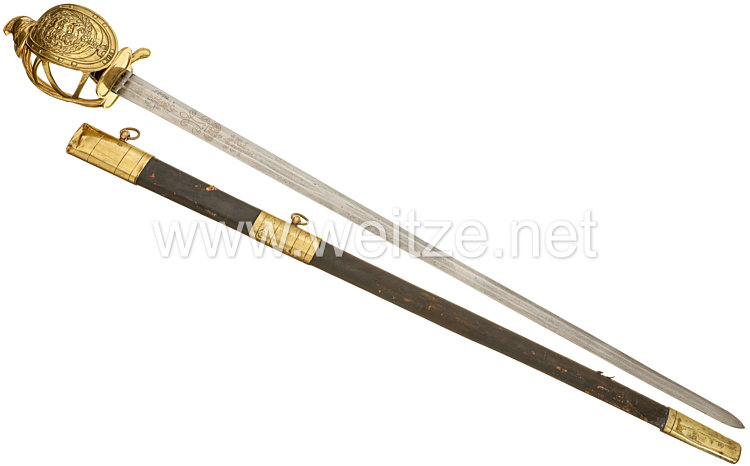
Overall length 110 cm.
The Danish officer's pallasch for cuirassiers from the reign of King Frederick VII (1848-1863) represents a significant epoch in the military history of the Kingdom of Denmark. This period was characterized by profound political changes and military conflicts, particularly the Schleswig-Holstein Wars, which had a lasting impact on the Danish military establishment.
Frederick VII ascended to the Danish throne in 1848 during a time of great upheaval. He was the last king of the House of Oldenburg and his reign marked Denmark's transition to a constitutional monarchy. The introduction of the Danish Constitution on June 5, 1849 made him one of the most popular monarchs in Danish history. However, his reign was also marked by the existential challenges of the Schleswig-Holstein Question and military confrontations with German states.
The Danish cuirassiers formed the elite of the kingdom's mounted troops. As heavy cavalry, they were designed for shock attacks and decisive breakthrough maneuvers. The pallasch, a double-edged cavalry blade, was the characteristic weapon of this formation. The broad blade of 3.68 cm enabled both cutting and thrusting techniques, making it ideal for mounted combat.
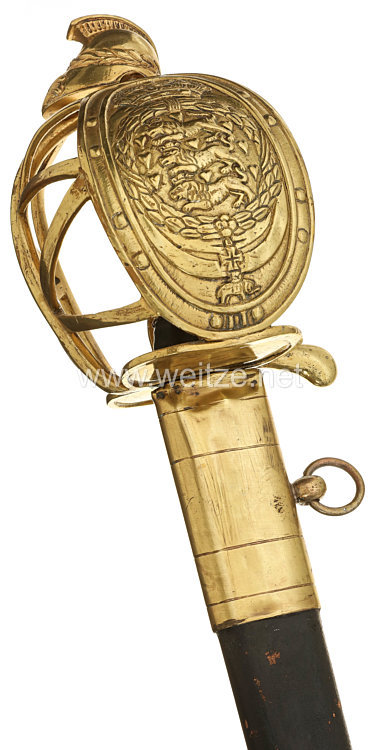
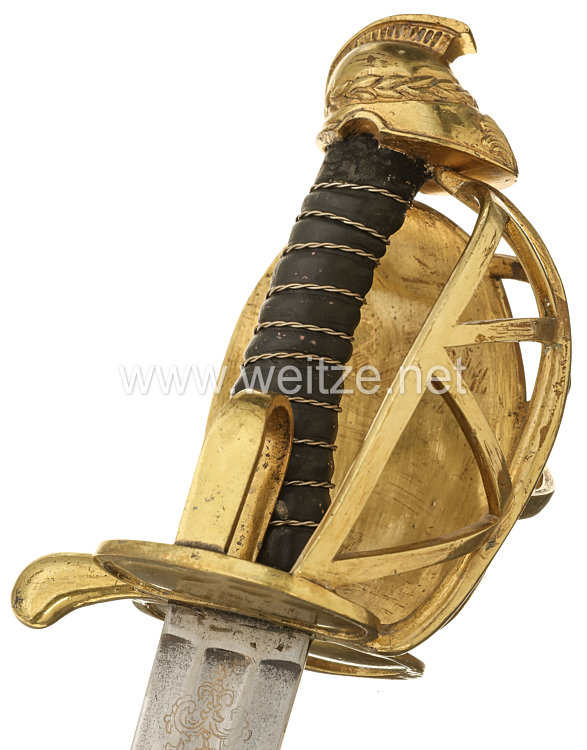
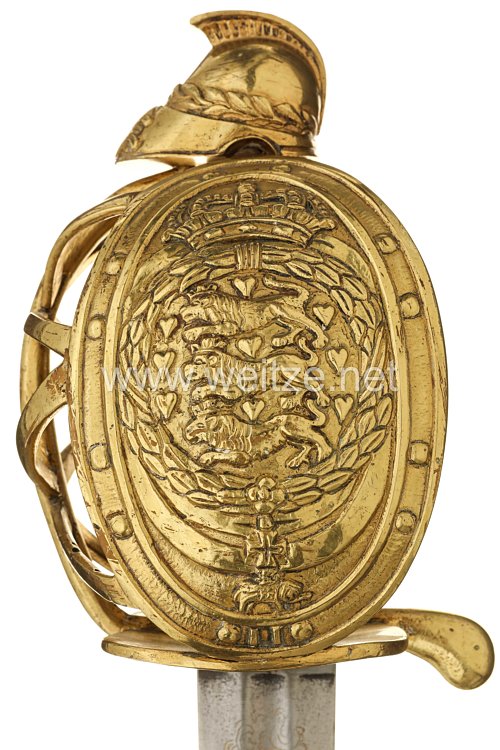
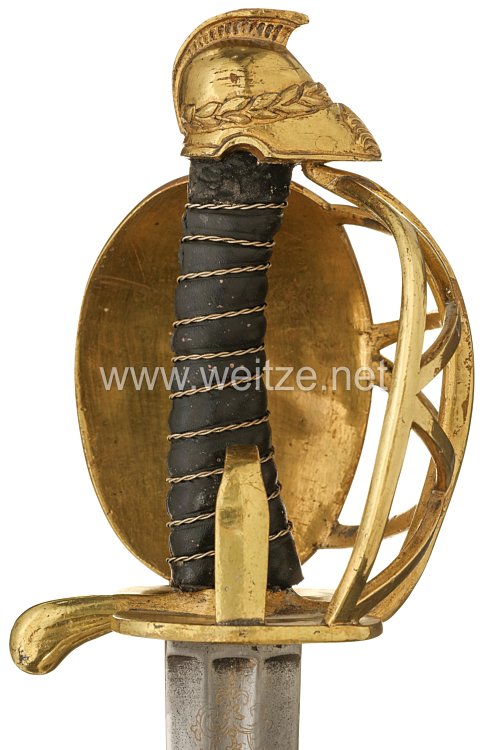
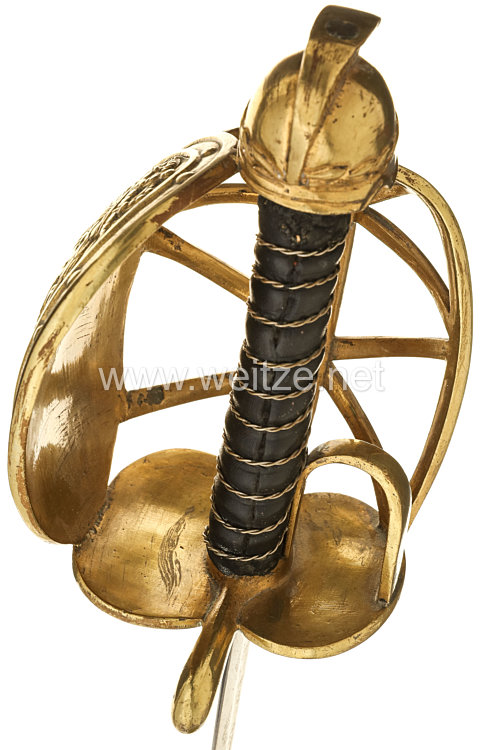
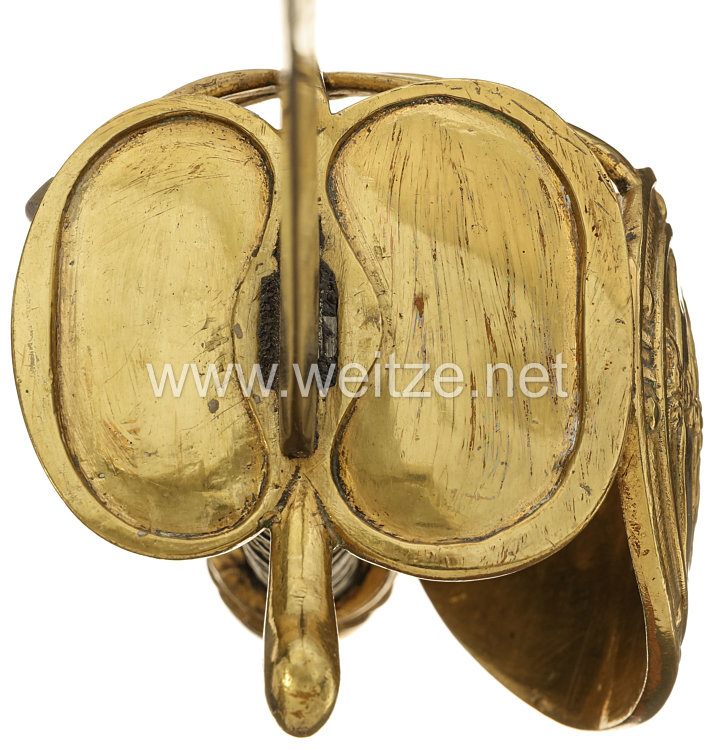
The magnificent basket hilt of this pallasch displays the typical construction of the mid-19th century with crossed terz bars, providing both protection and stability. Particularly noteworthy is the large shield bearing the royal coat of arms and the chain of the Order of the Elephant, Denmark's highest chivalric order, founded in 1693 by King Christian V. The presence of this symbol on an officer's sword underscores the elite status of its bearer and their proximity to the royal house.
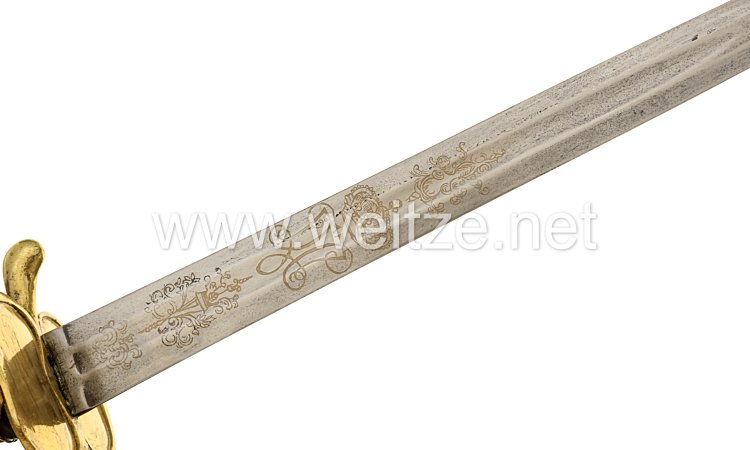
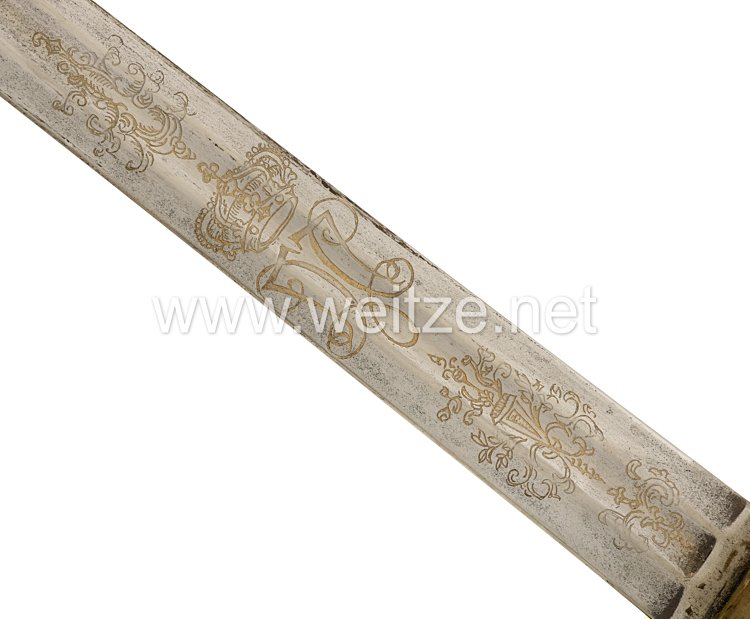
The etched and gilded decorations on both sides of the blade, along with the cipher “Crown F 7”, clearly identify the weapon as a royal issue from Frederick VII's reign. Such royal ciphers were not merely decorative elements but served as official markings of state equipment and symbols of loyalty to the monarchy.
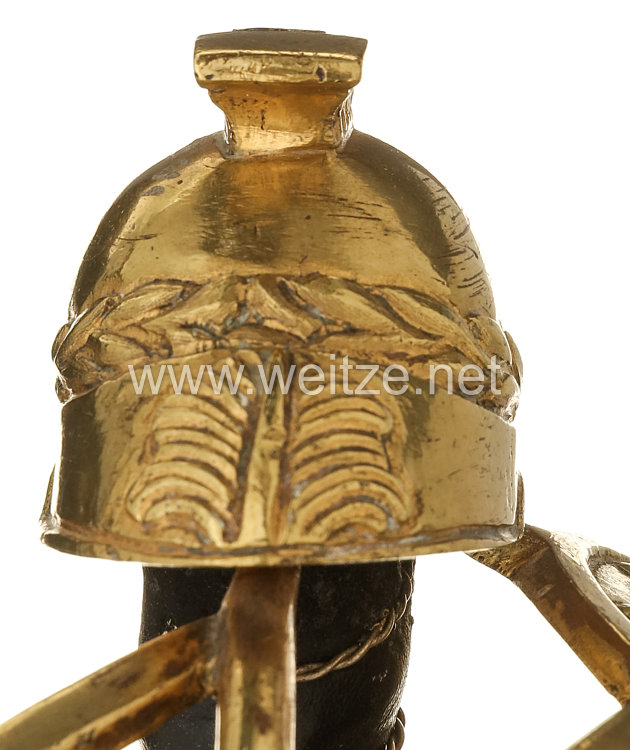
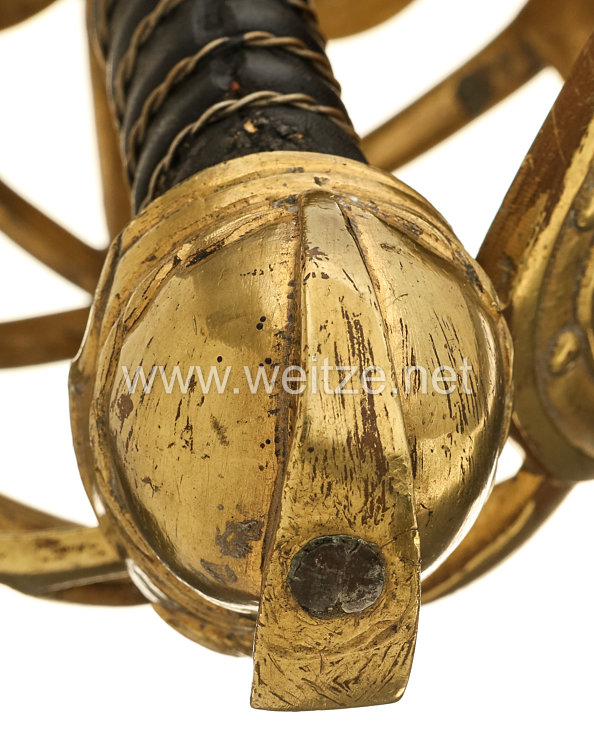
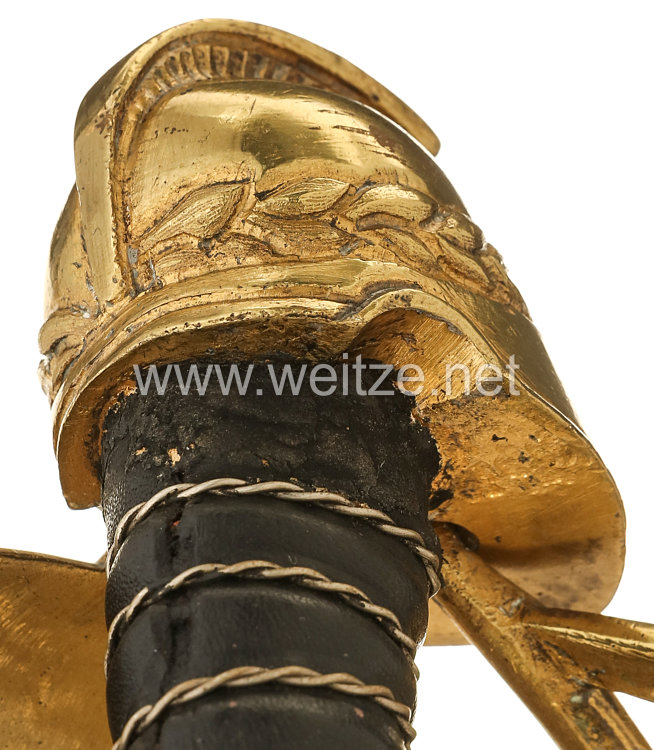
The pommel in the form of a Greek helmet reflects the neoclassicism of the 19th century, which strongly influenced military equipment of this era. This return to ancient forms was intended to evoke virtues such as bravery, discipline, and military excellence associated with Greek and Roman warriors.
The period around 1850/60 was of particular significance for the Danish military. The First Schleswig-Holstein War (1848-1851) had clearly demonstrated the need for a modern, well-equipped army. Although Denmark was successful in this conflict, structural problems were already apparent that would lead to a devastating defeat in the Second Schleswig-Holstein War (1864). However, this later conflict occurred under Frederick's successor, Christian IX.
Cuirassiers played a central role in the military planning of this era. Their heavy armament and armor made them a formidable force on the battlefield. The pallasch was not merely a weapon but also a status symbol. For officers, these weapons were often individually decorated and of higher quality than those issued to enlisted men.
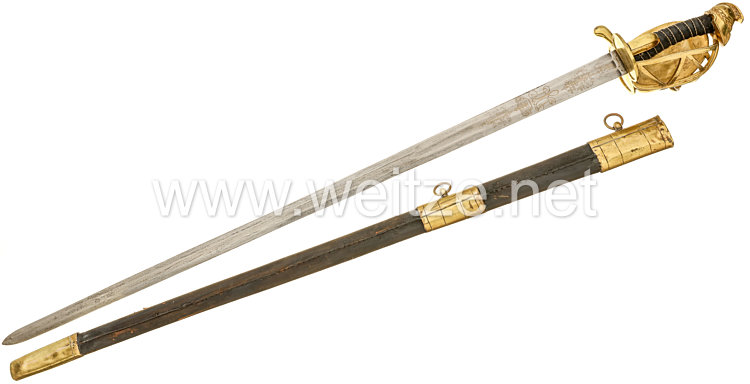
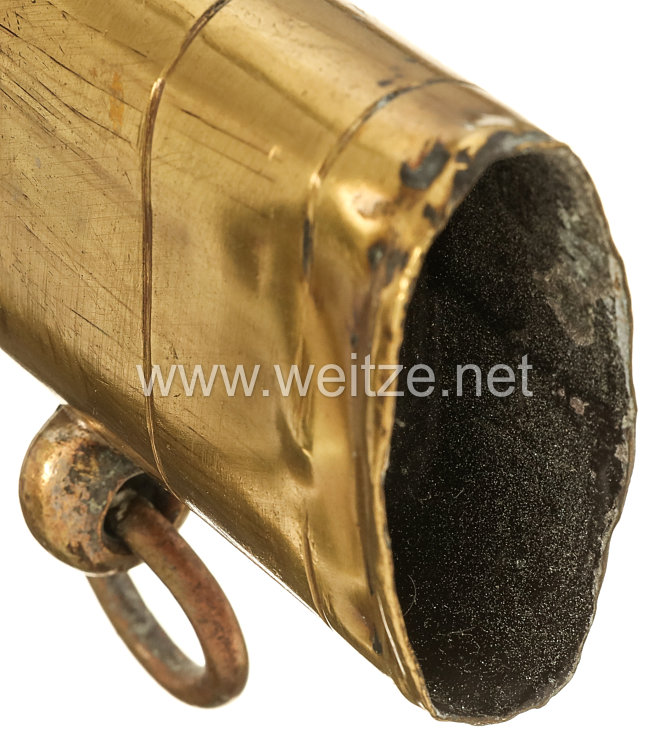
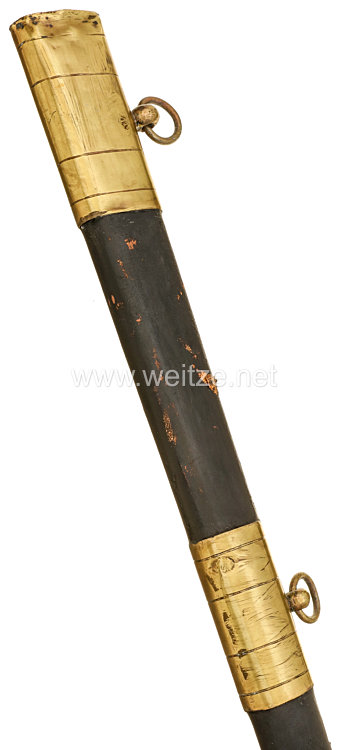
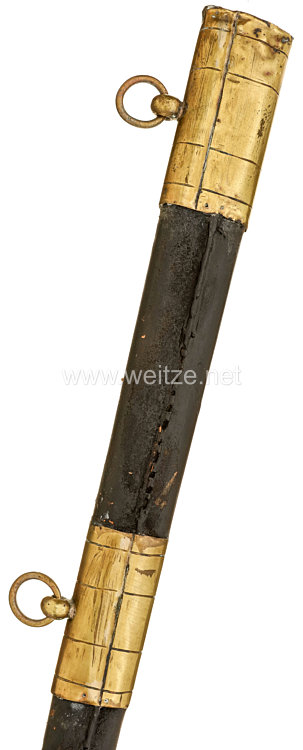
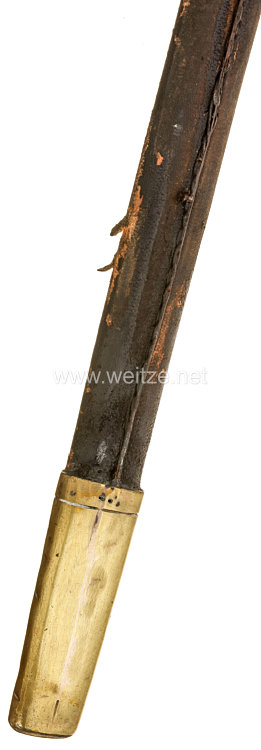
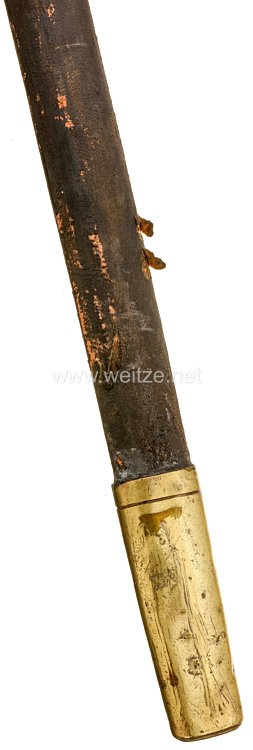
The leather scabbard with brass fittings and two movable suspension rings corresponds to the military standard of this period. The suspension rings allowed wearing on a sword belt, with the position of the weapon on the rider's body adjustable according to the situation. The brass fittings – usually made of brass or bronze – protected the scabbard at the most heavily stressed points.
The overall length of 110 cm is typical for cavalry pallasches of this period. This length provided sufficient reach from horseback while remaining manageable enough for mounted combat. The double-edged design distinguishes the pallasch from the saber and was characteristic of Central European cuirassier weapons.
The Kingdom of Denmark possessed a considerable military tradition in the 19th century, dating back to the era of Danish great power status in the 17th century. The cuirassiers formed an important part of this tradition and embodied military professionalism and royal authority.
Objects such as this officer's pallasch are today important historical testimonies of an era of transformation. They document not only military-technical aspects but also the political symbolism and social position of the military in pre-modern Europe. The careful craftsmanship and rich decoration underscore the representative character of such weapons, which were far more than mere combat instruments.
The presence of the Order of the Elephant symbolism is particularly significant. This order, limited to only 30 living members at any time, represented the highest honor in the Danish kingdom. Its appearance on military equipment signified the intimate connection between the monarchy, nobility, and military elite that characterized European armed forces of the period.
The wire-wrapped leather grip represents standard military construction, providing secure handling even in adverse conditions. This practical design element, combined with the ornate hilt and blade decorations, exemplifies the dual nature of such weapons: functional tools of war that also served as symbols of rank, authority, and royal patronage.