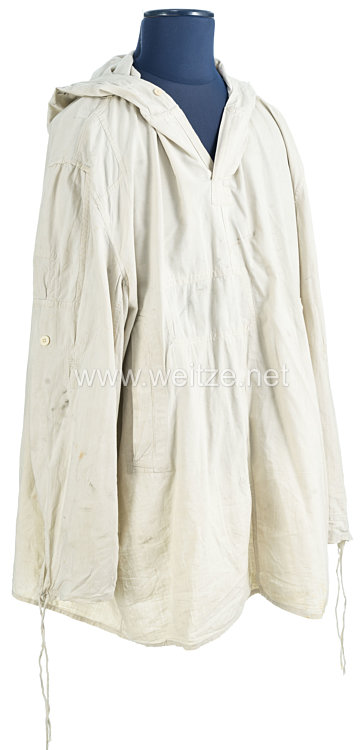
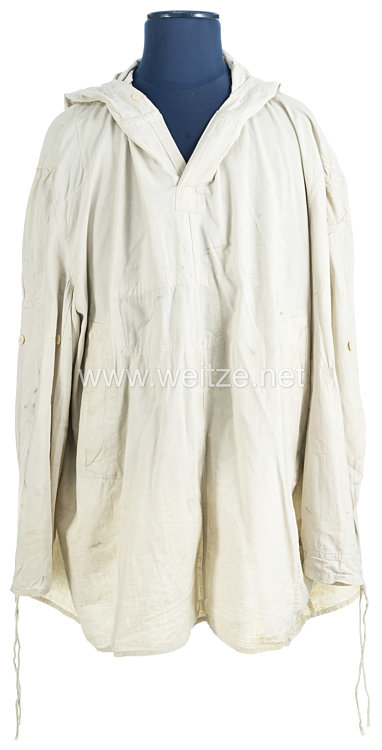
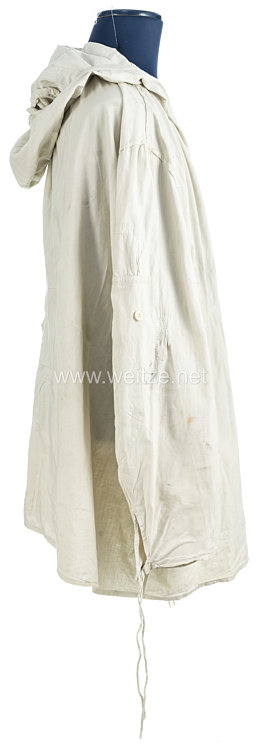
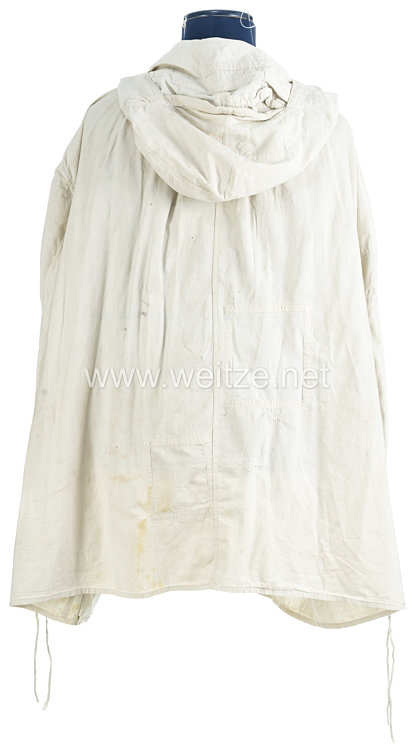
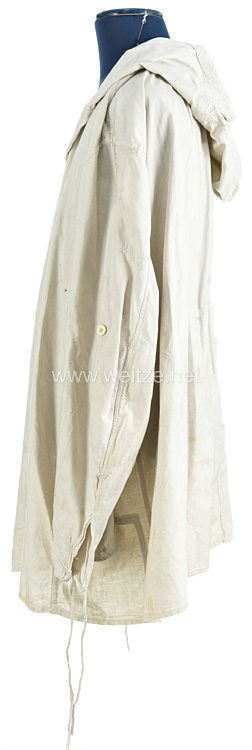
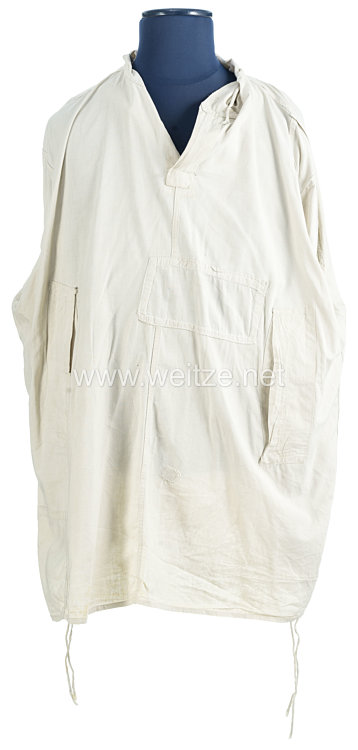
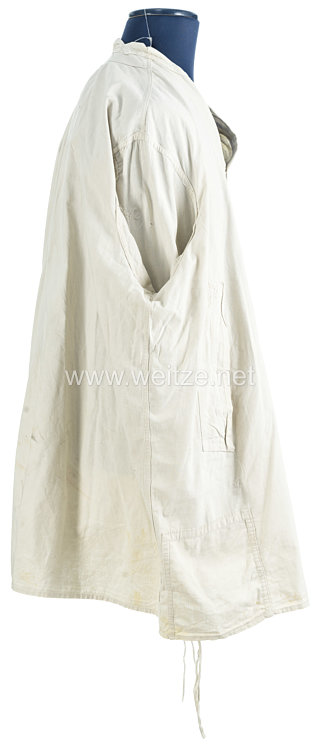
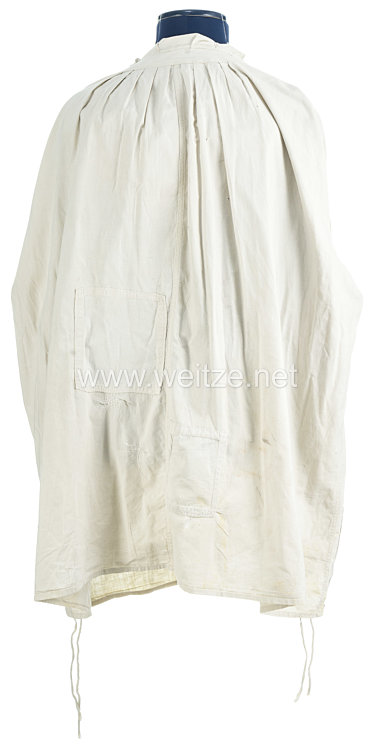
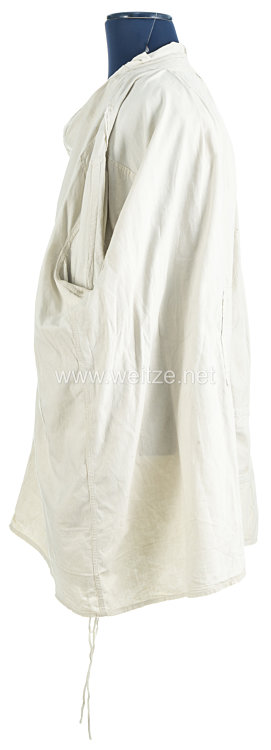
Wehrmacht Snow Smock for Mountain Troops
The Wehrmacht snow shirt for mountain troops represents an essential element of German military winter equipment during World War II. This specialized garment was developed to provide soldiers operating in alpine and winter combat zones with tactical advantages through camouflage and additional protection.
The German mountain troops, also known as Gebirgsjäger, were elite units specially trained for operations in mountainous terrain. Their tradition extends back to the 19th century, when Austria-Hungary and the German Empire began establishing specialized alpine units. In the Wehrmacht, these forces were significantly expanded and played important roles in various campaigns, particularly in Norway, the Alps, the Caucasus, and later in Italy.
The snow garment was manufactured from white cotton fabric, designed to be worn over the regular uniform. The material offered several practical advantages: it was lightweight, breathable, and could be reversed when necessary. The white color served as camouflage in snowy landscapes, a crucial factor for survival and success in winter operations. The Gebirgsjäger frequently fought at extreme altitudes and in freezing temperatures, where any tactical advantage was significant.
The typical snow shirt was designed as an over-garment and featured a hood that could cover both the head and the characteristic German steel helmet. The side pockets allowed soldiers to keep essential equipment readily accessible without having to open the uniform worn underneath. This practical design was the result of years of experience with winter warfare and alpine operations.
The production of such snow suits followed the Heeresdienstvorschriften (Army Service Regulations) and was part of a comprehensive system of winter equipment. From approximately 1939 onwards, various versions of snow camouflage clothing were introduced, including one-piece and two-piece suits. Mountain troops often received priority access to this specialized equipment, as their deployments took place in particularly demanding environments.
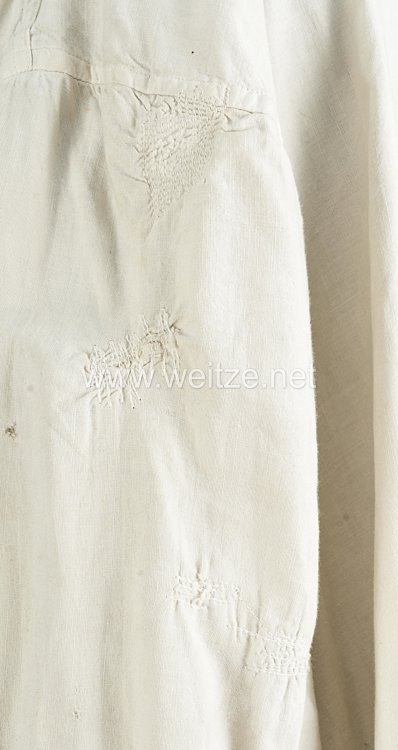
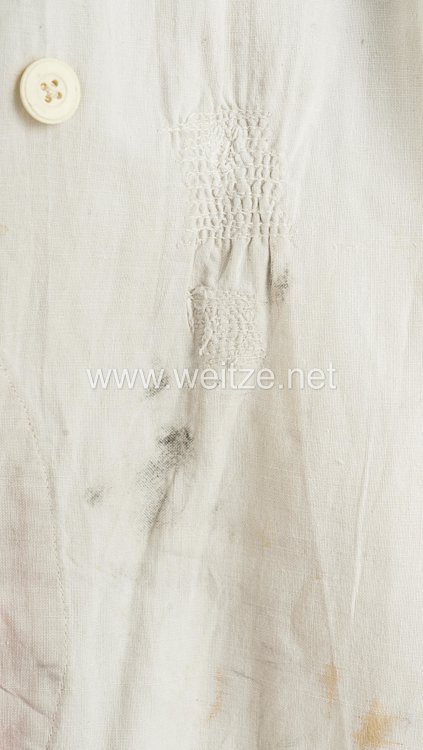
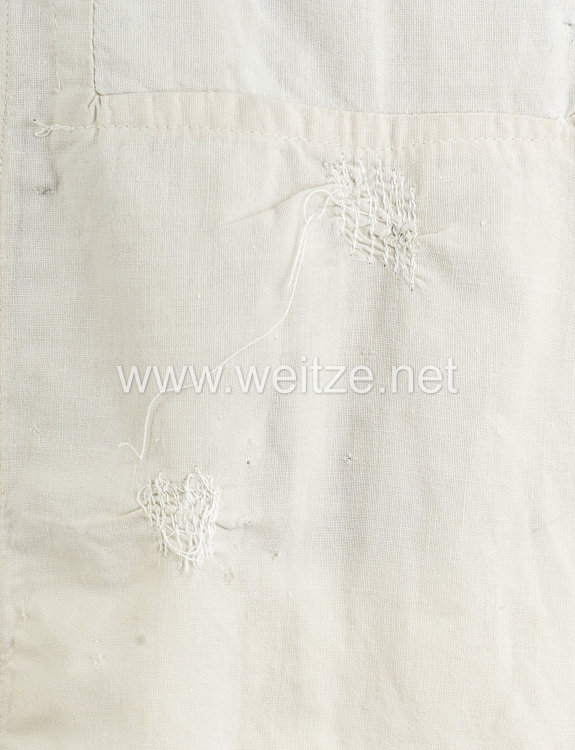
The condition of this specimen, with its patches and signs of wear, tells its own story. Such repairs were common at the front, as supply lines were often irregular and soldiers had to maintain their equipment under the most difficult conditions. The multiple patches indicate prolonged use and are typical of equipment actually used in the field, as opposed to warehouse stocks.
The Gebirgsjäger wore their snow shirts during various operations: during Operation Weserübung (the invasion of Norway in 1940), in the Balkans Campaign of 1941, during fighting in the Caucasus in 1942-1943, and in defensive battles in the Alps toward the end of the war. The harsh conditions of these campaigns, particularly the catastrophic winter offensive on the Eastern Front, made adequate winter equipment a matter of survival.
After the war, Wehrmacht snow clothing became a sought-after collectible of military-historical equipment. Authentic pieces with documented provenance are rare today, as many were destroyed at war's end or taken as souvenirs by Allied troops. The preservation of such objects is important for understanding the material culture of World War II and the conditions under which soldiers fought.
From a conservation perspective, textiles from this period present special challenges. Cotton is subject to natural decay, and exposure to extreme weather conditions, dirt, and mechanical stress during wartime use has often led to significant degradation. The stains on this specimen could originate from various sources: mud, oil, sweat, or other substances encountered in the field.
The dimensions of this particular garment—arm length 64 cm, chest circumference 112 cm, overall length 81 cm—indicate a standard military size designed to fit over winter uniforms and equipment. These measurements are consistent with Wehrmacht clothing regulations of the period, which aimed to provide functional, if not always comfortable, combat attire.
The snow shirt represents an important aspect of military history and illustrates the technical and logistical challenges of warfare under extreme conditions. It stands symbolically for the experiences of thousands of soldiers who had to fight in hostile environments, and today serves as a material connection to this dark chapter of history. Such artifacts are preserved not to glorify war, but to educate future generations about the realities of armed conflict and the human cost of military operations in all their dimensions.