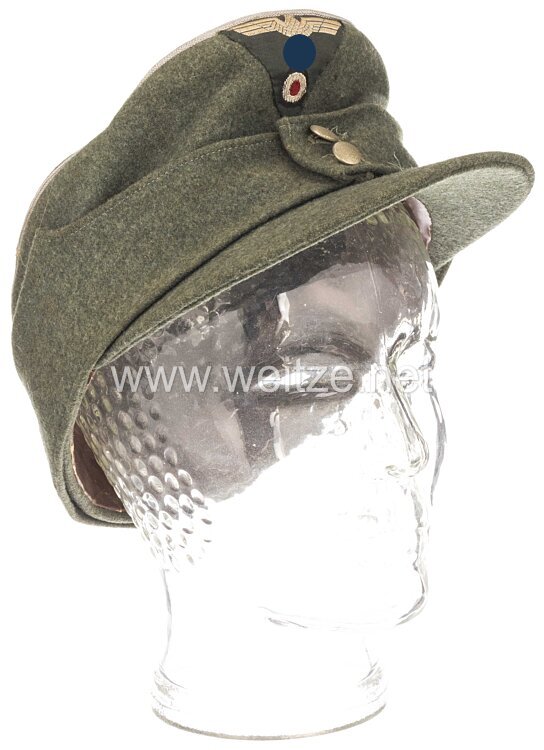
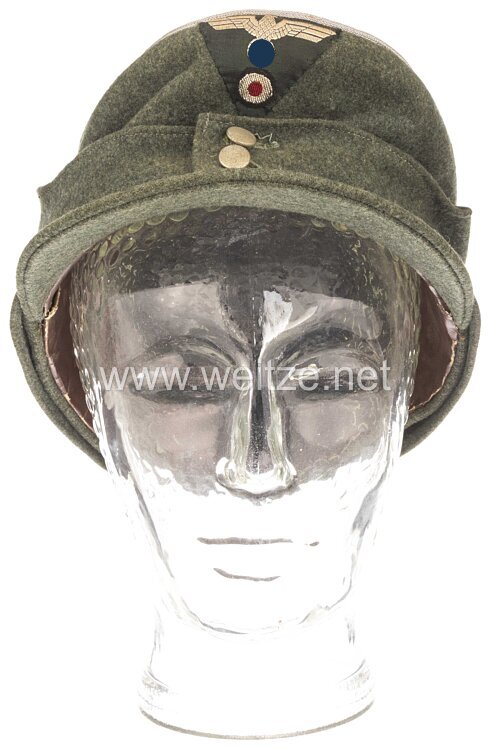
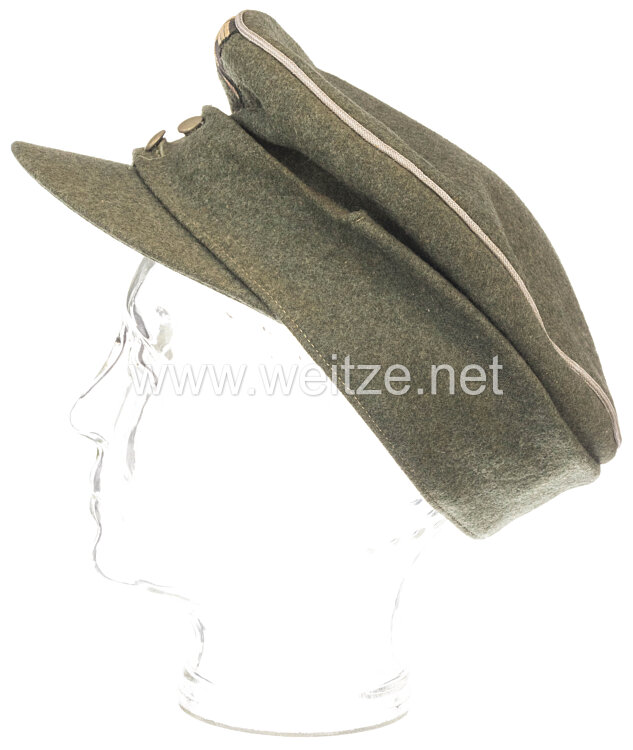
Wehrmacht M43 Field Cap for Officers

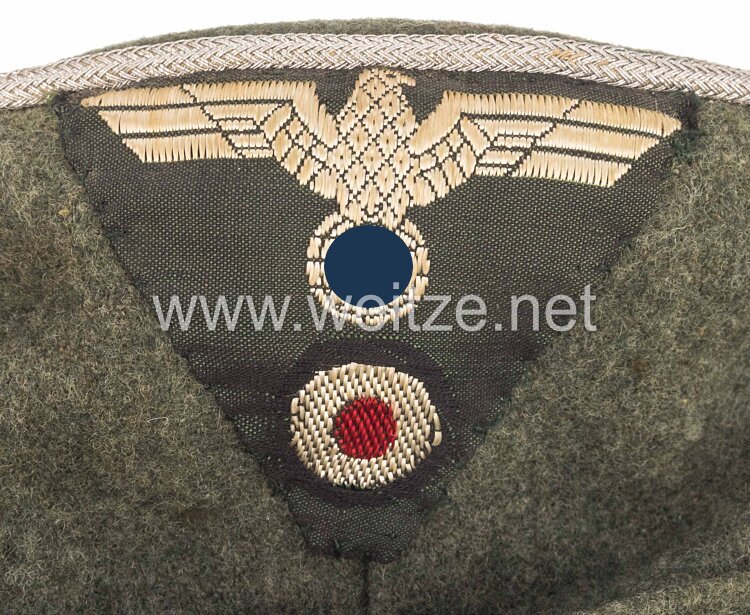
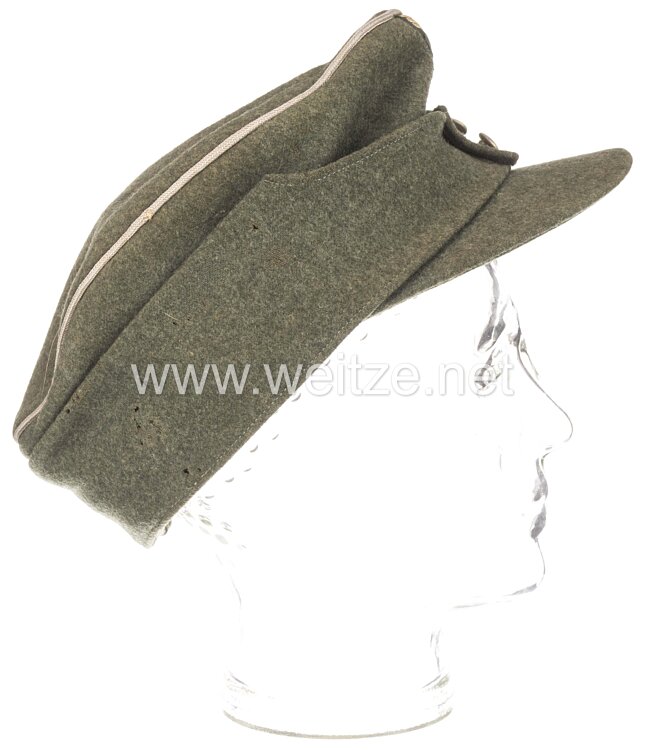
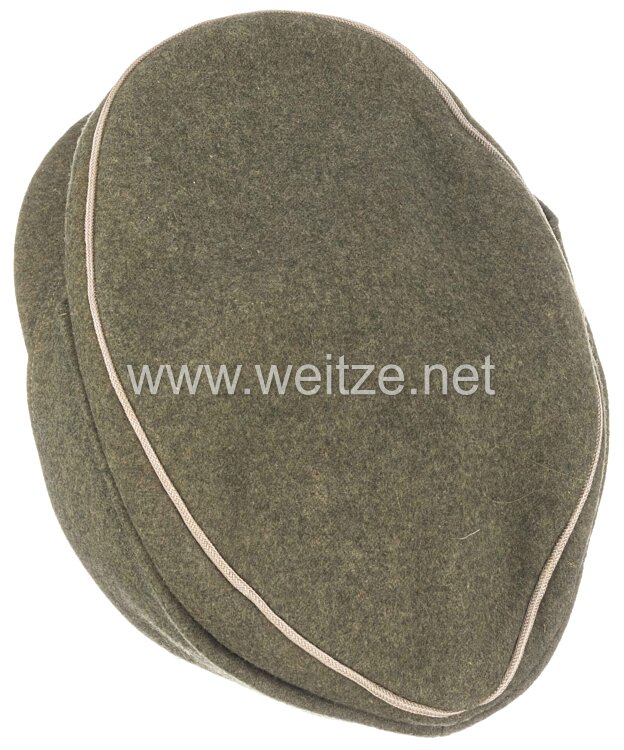
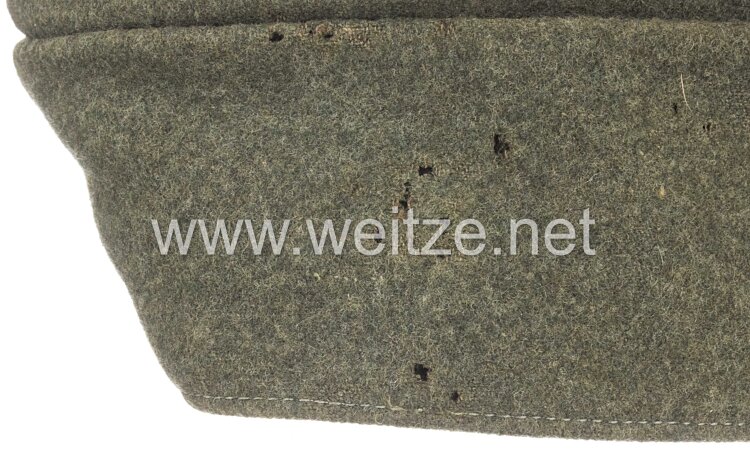
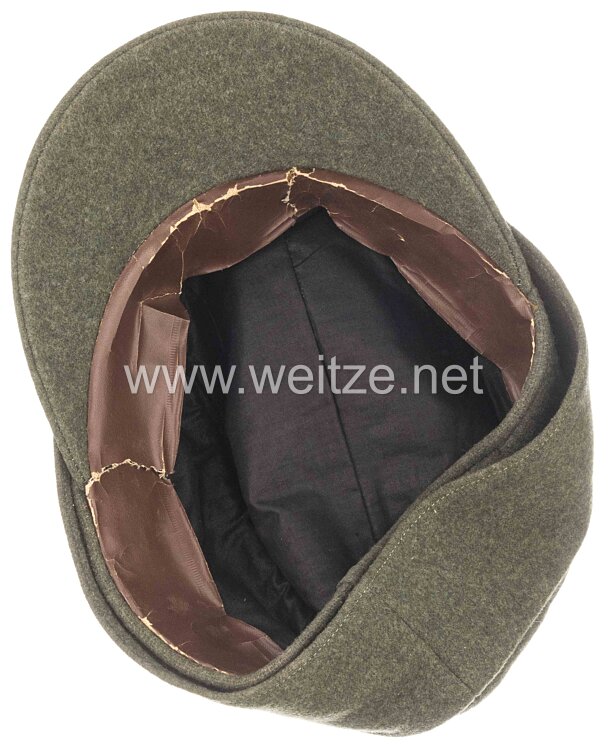
circa 1943, complete with woven officer's insignia, Belgian manufacture. Silver piping around the crown, two buttons at front. Interior with dark brown sweatband, damaged, and black lining, size approximately 57. Condition 2.
460698
1.350,00

Wehrmacht M43 Field Cap for Officers

The Wehrmacht Einheitsfeldmütze M 43 (Model 1943 Unified Field Cap) represents a significant turning point in German military headgear during World War II. Introduced in 1943, this cap embodied a pragmatic response to wartime demands for simplification, cost reduction, and more efficient production methods.

The development of the M 43 occurred against a backdrop of increasing material and manufacturing constraints in the German Reich. While the traditional peaked cap (Schirmmütze) for officers and the side cap (Schiffchen) for enlisted ranks remained in service, the M 43 proved to be a more practical alternative for front-line duty. Its design was partially based on the mountain cap introduced in 1938, combining functionality with a certain military elegance.

The officer's variant described here differed from the enlisted version through several characteristic features. The circumferential silver piping along the upper edge served as a clear rank insignia, immediately identifying the wearer's officer status. The woven national emblem on the front - consisting of the Wehrmacht eagle above the swastika - was manufactured to a higher quality standard for officer versions, often executed in aluminum or silver thread on an appropriate backing.

Particularly noteworthy is the Belgian manufacture of this cap. Following the occupation of Belgium in 1940, numerous Belgian textile factories were requisitioned for the production of German military clothing. This aligned with National Socialist economic policy to integrate occupied territories into the German war economy. Belgian manufacturers were renowned for their high craftsmanship, and many uniform items of Belgian production display careful workmanship. Outsourcing production also allowed domestic manufacturing capacity to be reserved for other war-essential goods.

The two buttons on the front of the M 43 served functional purposes: they enabled the side panels to be folded up for protection against cold and weather. This practical feature made the cap particularly popular on the Eastern Front, where extreme temperatures prevailed. When folded down, the side panels covered the ears and neck, providing additional protection.

The inner lining of officer caps typically consisted of black or dark brown material, with the sweatband made from leather or leather-like material. Size 57 corresponds to a head circumference of approximately 57 centimeters and was a common standard size. The use of dark lining materials had practical reasons: they were less susceptible to visible soiling than light materials.

The M 43 was manufactured in various color variants depending on the branch of service: field gray for army troops, blue-gray for the Luftwaffe, and black for armored units. The unified field cap was intended to gradually replace the multitude of different headgear types and become a true “unified cap,” though this was not fully realized by war's end.

The introduction of the M 43 was implemented through corresponding Army Regulation Bulletins (Heeres-Verordnungsblätter) and was gradually adopted across all troop units during 1943. Interestingly, the traditional peaked cap remained prescribed for dress uniforms and parade occasions, so officers frequently possessed both types of headgear.

Surviving examples of the M 43, particularly in officer's versions with documented Belgian origin, are today important witnesses to production history and economic entanglements during the German occupation period. They document not only military hierarchies and uniform regulations but also the exploitation of occupied territories' economies for German war purposes.

The organizational structure of Wehrmacht uniform production involved multiple agencies, including the Army Ordnance Office and various inspection authorities. Quality standards were maintained through regular inspections, though these became increasingly difficult to enforce as the war progressed and resources became scarcer.

From a conservation perspective, textiles such as this field cap present special challenges. The sweatband, which had direct skin contact, is often damaged or discolored - a typical damage pattern for such objects. The preservation of such uniform items requires proper storage at controlled temperature and humidity, as well as protection from light exposure to prevent further deterioration of materials.

The M 43 cap serves as a tangible reminder of the total mobilization of resources during World War II, the hierarchical structure of military organizations, and the industrial exploitation of occupied territories. As a historical artifact, it provides valuable insights into material culture, economic history, and the daily realities of military service during this period.