U-Boat War Badge - Wächtler & Lange
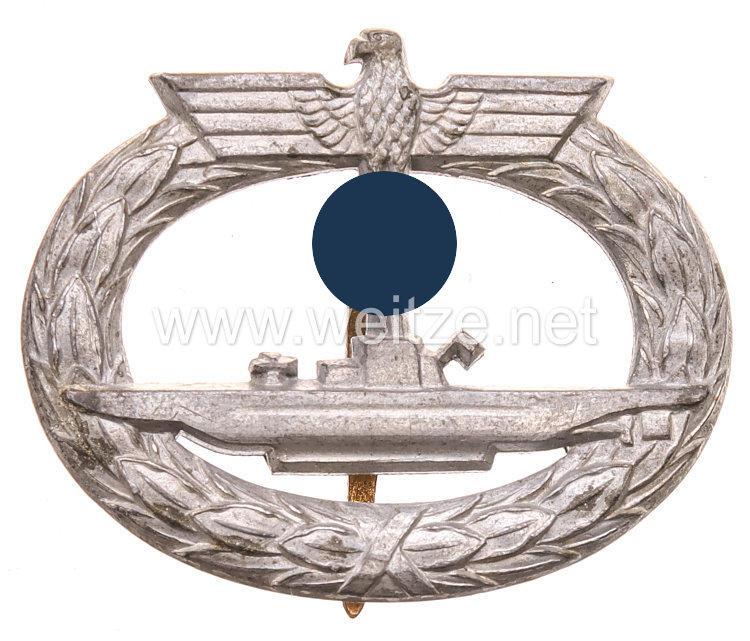
The U-Boot War Badge (Submarine War Badge) ranks among the most significant military decorations of the German Kriegsmarine during World War II. This particular example was manufactured by the renowned firm Wächtler & Lange of Mittweida in Saxony, a company well-known for its high-quality military insignia production.
The U-Boot War Badge was instituted on October 13, 1939, by Grand Admiral Erich Raeder as recognition for the extraordinary achievements and special courage of submarine crews. The award criteria were precisely defined in the regulations: qualification required successful participation in at least two war patrols or a special act of bravery during a single patrol. Wounds sustained while serving on submarines could also lead to the award being conferred.
The present fine zinc construction represents a characteristic manufacturing variant of this decoration. Fine zinc was a frequently used material during the war years, as strategically more important metals were needed for weapons production. Badges in fine zinc construction were typically given a gilt finish to provide them with a more dignified appearance. The characteristic design consisted of a submarine in frontal view, surrounded by an oval oakleaf wreath, which had long been associated with bravery and strength in German tradition.
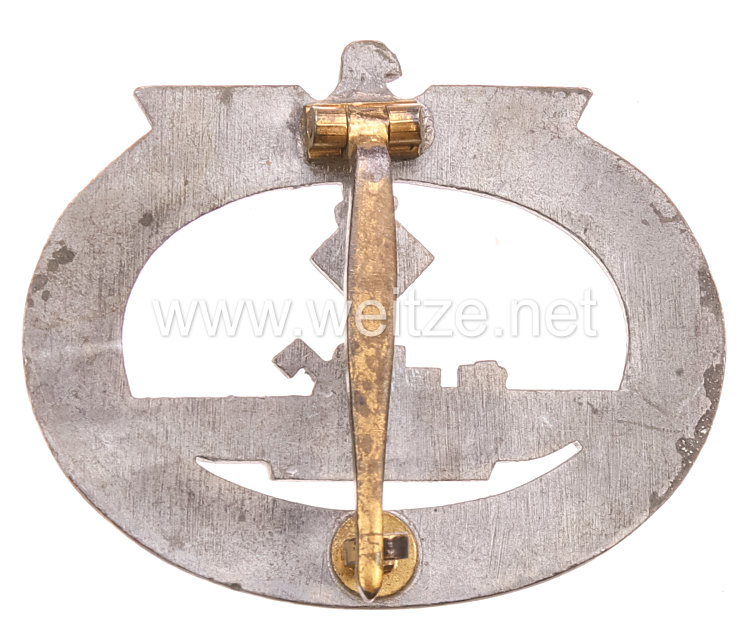
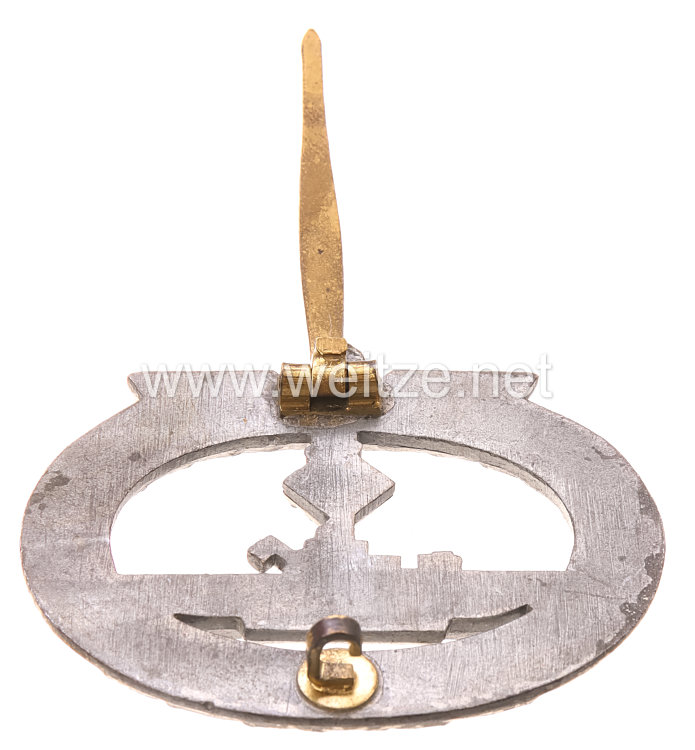
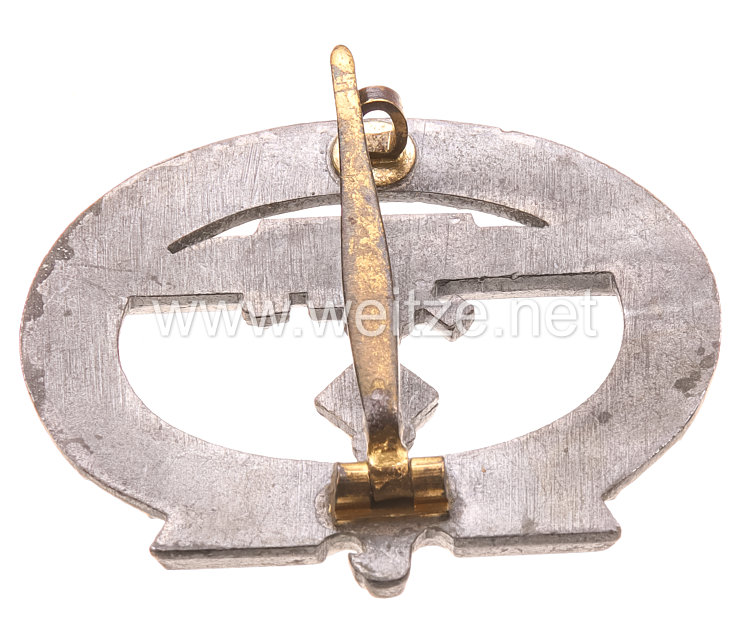
Wächtler & Lange was among the officially authorized manufacturers of orders and decorations. The company produced various military awards throughout the war and was known for its careful workmanship. Interestingly, not all badges by this firm bore a visible maker's mark. Many specimens, like the one described here, were manufactured without maker's markings, which makes attribution difficult today, though it remains possible through characteristic manufacturing features.
The gilding on fine zinc badges was technically demanding and was usually applied through a galvanic process. Over time and through wear on the uniform tunic, this gilding was subject to natural wear, which has led to the described faded surface on this specimen. This condition is characteristic of worn pieces and demonstrates authentic use during the war years.
The U-Boat War Badge was worn on the left breast of the uniform, below the Iron Cross First Class if that decoration had been awarded. Attachment was achieved by means of a horizontal pin on the reverse of the badge, which was pushed through the uniform fabric and secured with a catch plate.
The submarine service played a central role in German naval warfare. Under the command of Grand Admiral Karl Dönitz, who led the submarine fleet, the U-boats were deployed primarily in the Atlantic to disrupt Allied supply lines. The bearers of the U-Boat War Badge belonged to an elite whose service was associated with extreme dangers. The casualty rate among submarine personnel was alarmingly high: of approximately 39,000 U-boat crew members, more than 28,000 did not return, representing a loss rate of over 70 percent.
After the war's end, production of all German military decorations ceased. The firm Wächtler & Lange, like many other manufacturers, converted its production. Today, these historical awards are significant witnesses to a dramatic epoch of naval history and are valued equally by collectors and historians, not as glorification, but as material remnants for documentation and research of this period.
Condition grade 2 corresponds in collector nomenclature to a worn but well-preserved piece with visible but not disfiguring signs of use. Such specimens are historically particularly valuable as they had authentic wearers and thus represent direct connections to historical events.
The fine zinc construction technique employed by Wächtler & Lange demonstrates the adaptation of German military manufacturing to wartime material shortages while maintaining the symbolic importance of military decorations. The quality of execution, even in base metal versions, reflected the importance placed on these awards as morale builders and recognition of service under the most hazardous conditions imaginable at sea.