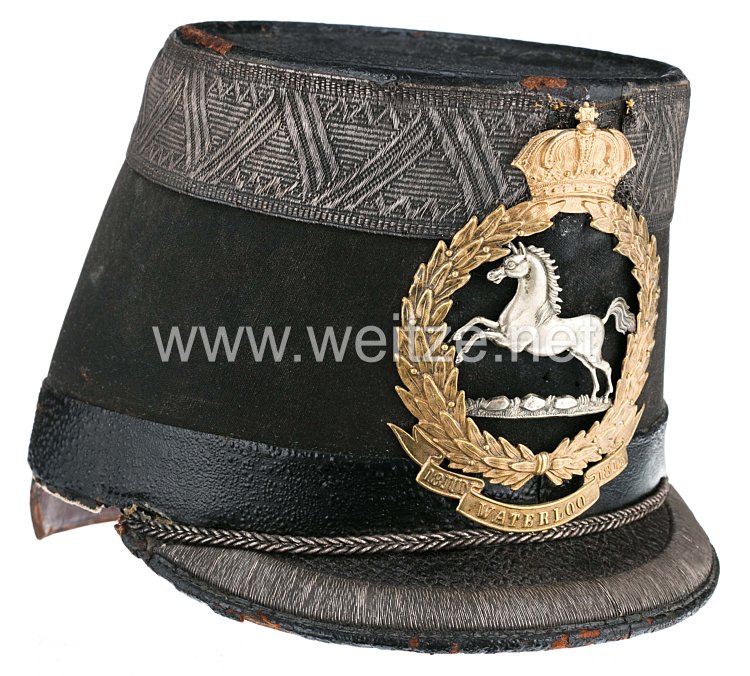
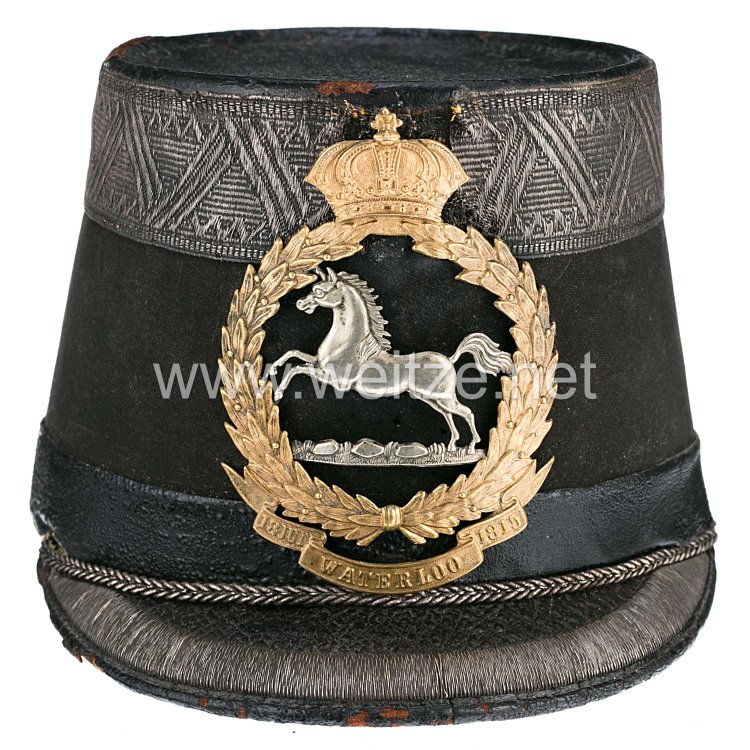
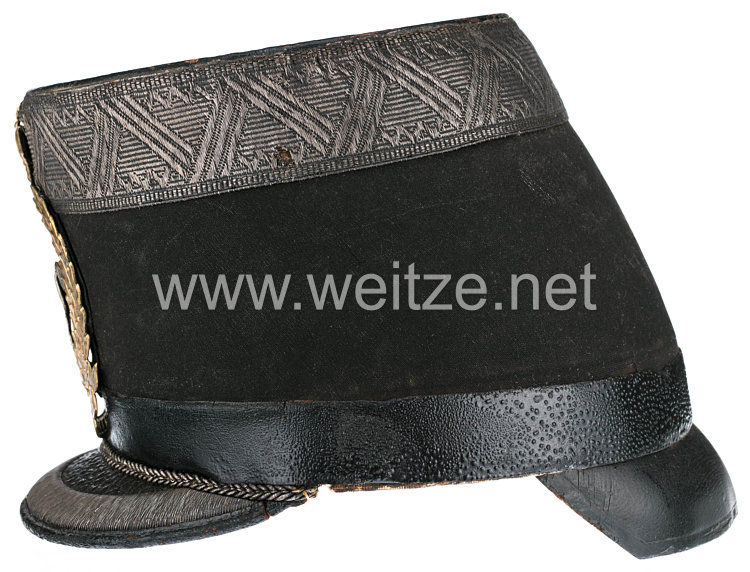
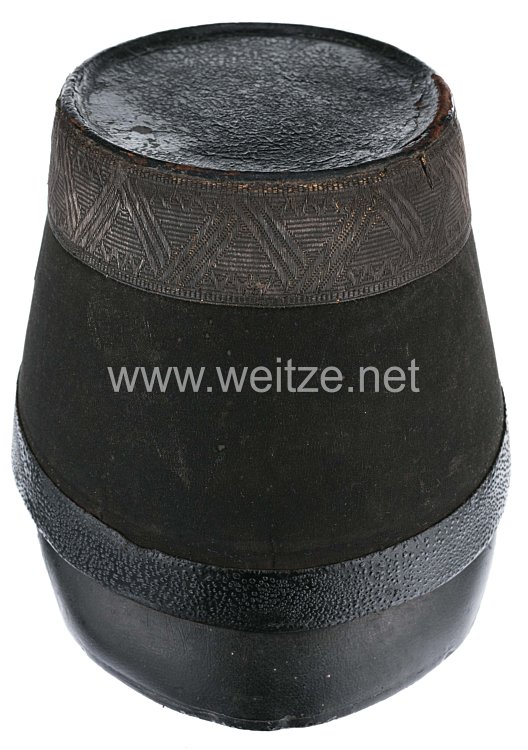
Kingdom of Hannover Shako for Subaltern Officers of the Line Infantry Regiments
An attic find, still untouched.
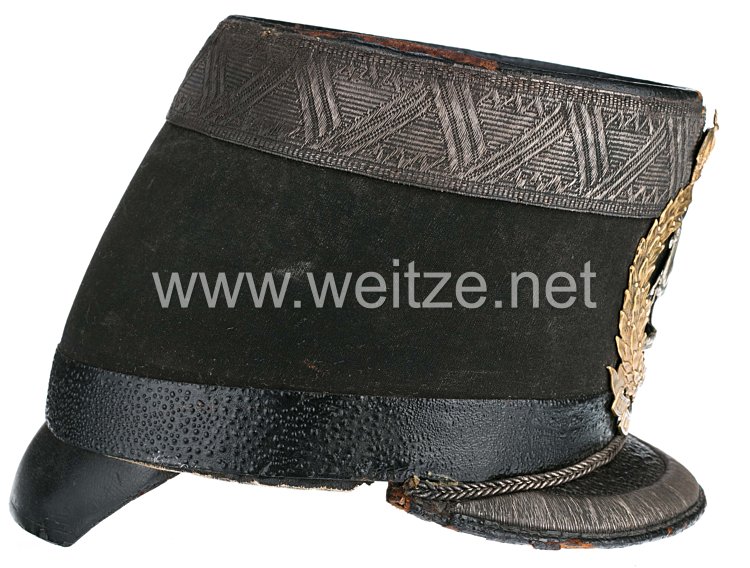
The Hanoverian shako for subaltern officers of the line infantry regiments from around 1860 represents a significant artifact of 19th-century German military history. The Kingdom of Hanover, which existed as an independent German state from 1814 to 1866, developed a distinctive military tradition closely connected with the British Crown, clearly reflected in its uniforms.
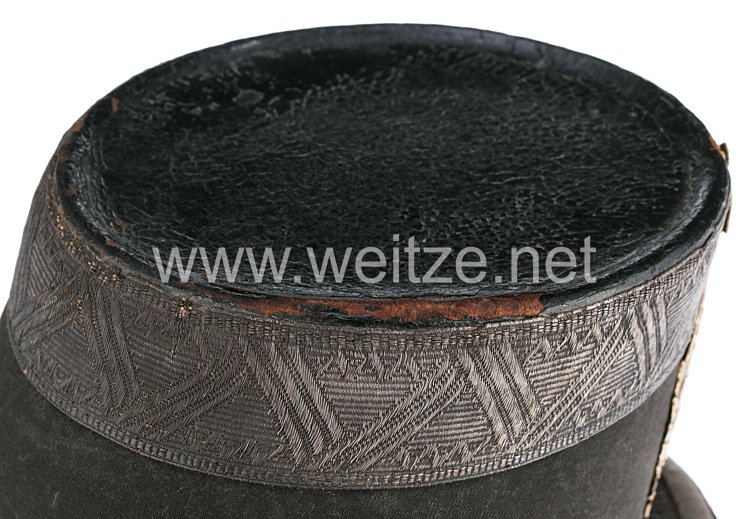
The shako, a tall cylindrical headdress, became the standard headgear for European infantry units in the first half of the 19th century. The Hanoverian variant was characterized by its distinctive shape and specific decorations. The shako described here is made of black felt with needle felt covering, typical of military fashion of this era. The black color was practical for field service and corresponded to the aesthetic ideals of the time.
Particularly significant is the shako emblem featuring the leaping horse within a crowned laurel wreath, the historical coat of arms of Lower Saxony and Hanover. The white horse (Saxon Steed) symbolized the long tradition of the House of Welf and served as an identification mark for Hanoverian troops. The laurel wreath and crown emphasized royal dignity and military honor.
The bandeau “8. Juni Waterloo 1813” commemorates the participation of Hanoverian troops at the Battle of Waterloo, though the date contains an interesting historical error: the battle actually took place on June 18, 1815, not 1813. This inscription testifies to the importance the Kingdom of Hanover placed on its role in the Wars of Liberation against Napoleon. The King's German Legion and Hanoverian Landwehr units fought bravely on the British side and contributed significantly to the victory. The Hanoverian army received special honors for its achievements, and the Waterloo date became a proud commemorative symbol.
The silver braid encircling the upper edge of the shako clearly identifies the rank of subaltern officers. This term encompassed the lower officer ranks, typically lieutenants and first lieutenants. Distinction through metal braids was a common system in German armies of the 19th century: while common soldiers and non-commissioned officers wore simpler cockades, officers of various ranks had different decorations in silver or gold.
The Hanoverian line infantry formed the backbone of the royal army. After reorganization in the 1850s and 1860s, it consisted of several infantry regiments designated by numbers. The uniform regulations of this period were detailed and established in royal ordinances that precisely regulated cut, color, and decorations.
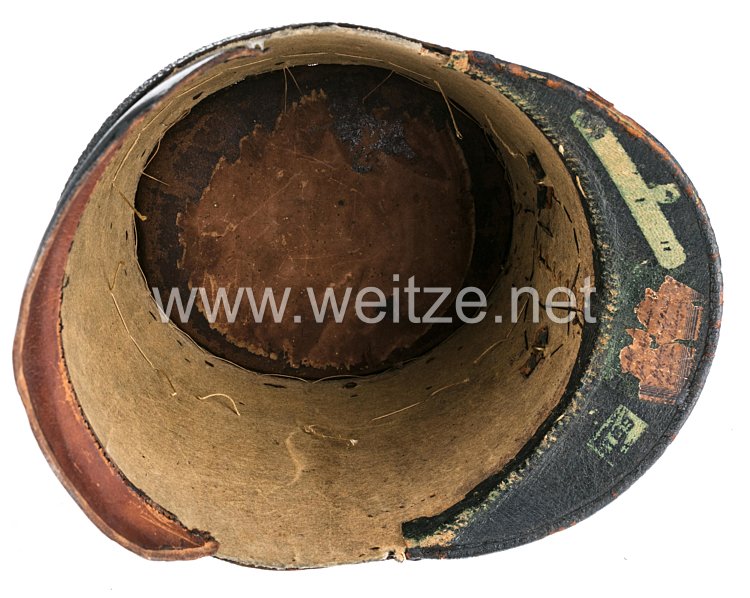
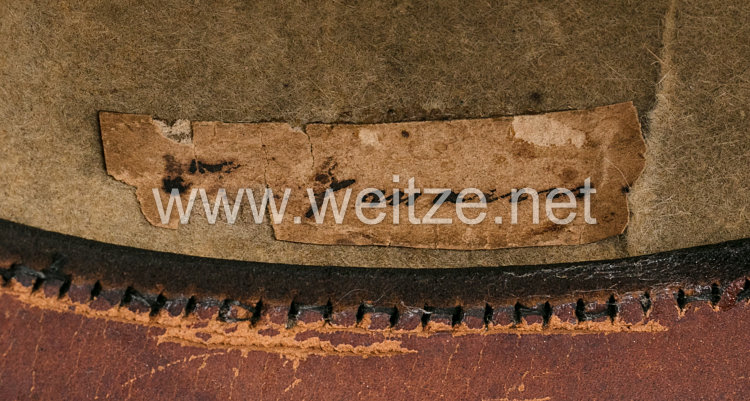
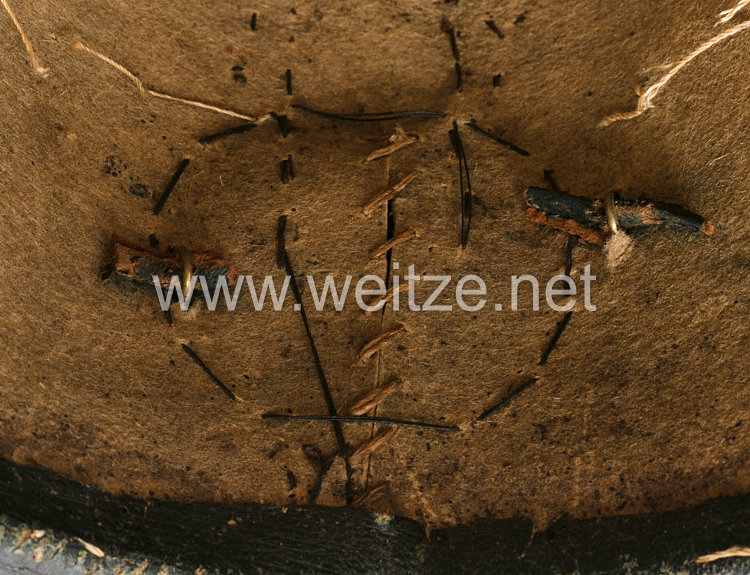
The missing plume (Feldzeichen) was originally an essential element of the shako. For Hanoverian officers, this frequently consisted of feathers in regimental colors and served both for representation and recognizability in battle. The absence of the inner lining suggests heavy use or later removal.
The temporal classification “around 1860” falls in the final phase of the Kingdom of Hanover. After the Austro-Prussian War of 1866, Hanover was annexed by Prussia and ceased to exist as an independent state. The Hanoverian army was dissolved or integrated into the Prussian forces, making equipment pieces like this shako historical relics of a vanished military tradition.
As an “attic find,” this shako represents an authentic testimony of military everyday culture. Such headgear was frequently kept by officers as mementos after service and passed down through families for generations. The untouched condition makes it particularly valuable for military historical research and museum collections, as later restorations and alterations are absent.
This shako embodies not only military fashion but also the political history of the 19th century: the Napoleonic Wars, the reorganization of Europe after 1815, the fragmentation of the German Confederation, and finally Prussian unification. It is a tangible testimony of an era when Hanover functioned as a significant German middle power and maintained its own military tradition.
The craftsmanship evident in this piece reflects the importance placed on military appearance and regimental identity. The combination of practical design and symbolic elements demonstrates how military headgear served multiple functions: protection, identification, and the representation of state power and military tradition. Today, such items provide invaluable insights into the material culture, social structures, and historical consciousness of 19th-century German states.