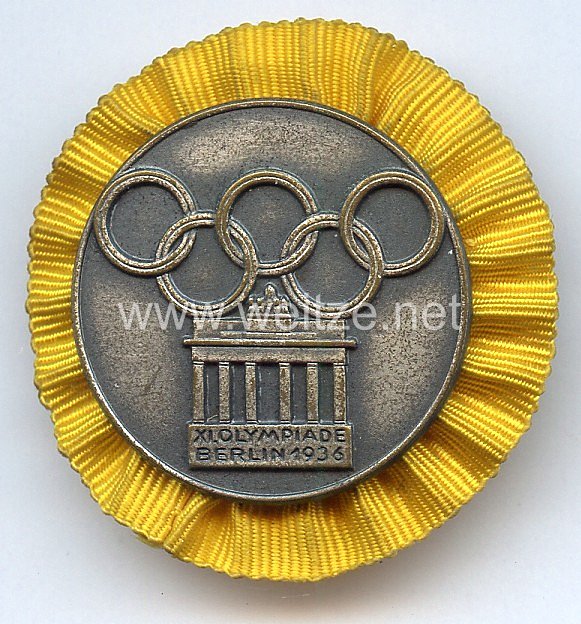
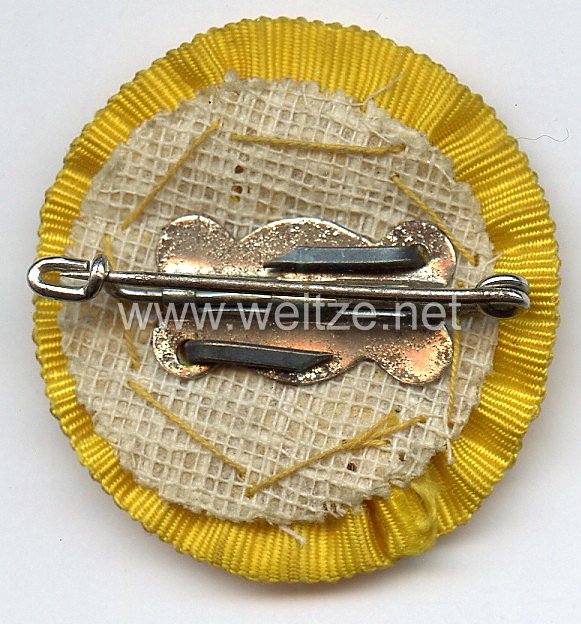
XI. Olympic Games 1936 Berlin - Participant Badges for the International Student and Youth Camp - for the Camp of Specialized Departments in the 1st Week
The participant badge for the International Student and Youth Camp of the XI Olympic Games 1936 in Berlin represents a fascinating chapter in Olympic history, closely linked to the political instrumentalization of sports in Nazi Germany.
The 1936 Summer Olympics in Berlin constituted an unprecedented propaganda spectacle, carefully orchestrated by the Nazi regime under Adolf Hitler. Beyond the athletic competitions held from August 1 to 16, 1936, German authorities organized extensive supplementary programs, including special camps for international students and youth. These camps officially served cultural exchange and international understanding, but were also part of the Nazi efforts to promote a positive image of Germany abroad.
The International Student and Youth Camp was conducted parallel to the Olympic competitions, offering young people from various countries the opportunity to participate in the Olympic experience even if they had not traveled as athletes. Participants were accommodated in different camps, with organization structured according to specialized departments and weeks. This particular badge was issued specifically for the camp of specialized departments during the first week.
The technical execution of the badge corresponds to the high craftsmanship standards of German metalworking of that era. The silver-plated bronze with a diameter of 26 millimeters demonstrates the typical quality of official Olympic memorabilia. The pin attachment enabled wearing on clothing, while the yellow fabric rosette served as an additional identifying feature, possibly indicating specific group affiliation within the camp.
The issuance of such badges fulfilled multiple functions: they served as identification badges for camp participants, as souvenirs commemorating participation in a historic event, and not least as propaganda instruments. The visual design of Olympic badges and plaques was strictly controlled by the Organizing Committee of the XI Olympiad and followed the aesthetic concepts of Nazi cultural policy.
The 1936 Olympic Games were the first to be extensively staged for media purposes. Filmmaker Leni Riefenstahl created “Olympia,” a monumental propaganda film. The entire event was intended to demonstrate the supposed superiority of the National Socialist system, while temporarily concealing racist ideologies to avoid international criticism.
From today's perspective, such badges are important historical documents bearing witness to the complexity of the Olympic movement during one of the darkest periods in German history. They remind us how sports and international encounters can be instrumentalized for political purposes. The International Olympic Committee (IOC) under President Henri de Baillet-Latour was criticized at the time for not boycotting the Games, despite the Nazi regime's human rights violations being already apparent.
Collectors and historians today regard objects like this participant badge as important study objects. They help understand the mechanisms of propaganda and comprehend the history of the Olympic movement in its entirety – including its problematic moments. The good condition of many of these badges testifies that they were preserved by their original owners as valuable mementos, regardless of the later historical assessment of the events of 1936.
These artifacts serve as tangible links to a complex historical moment when the ideals of international athletic competition collided with totalitarian ideology. They remind us of the ongoing responsibility to ensure that sporting events promote genuine international understanding rather than serve as vehicles for political manipulation.