U-Boat War Badge - Schwerin Berlin

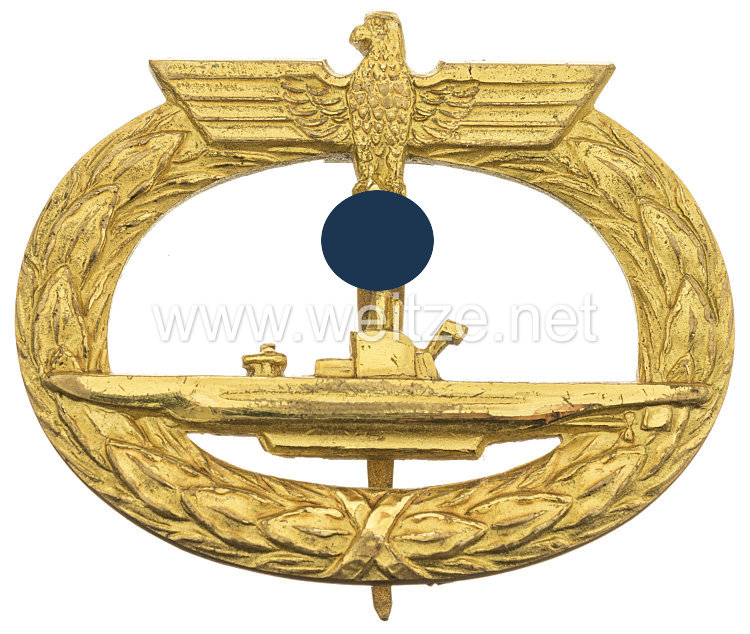
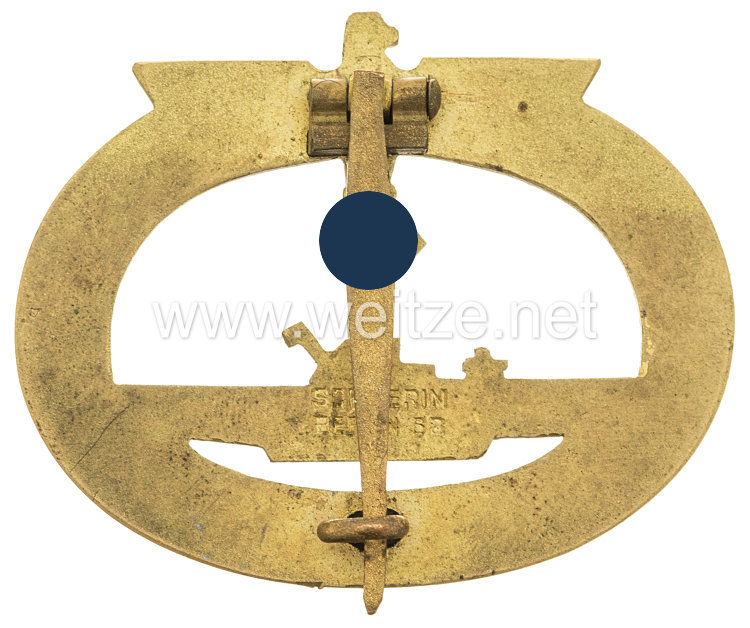
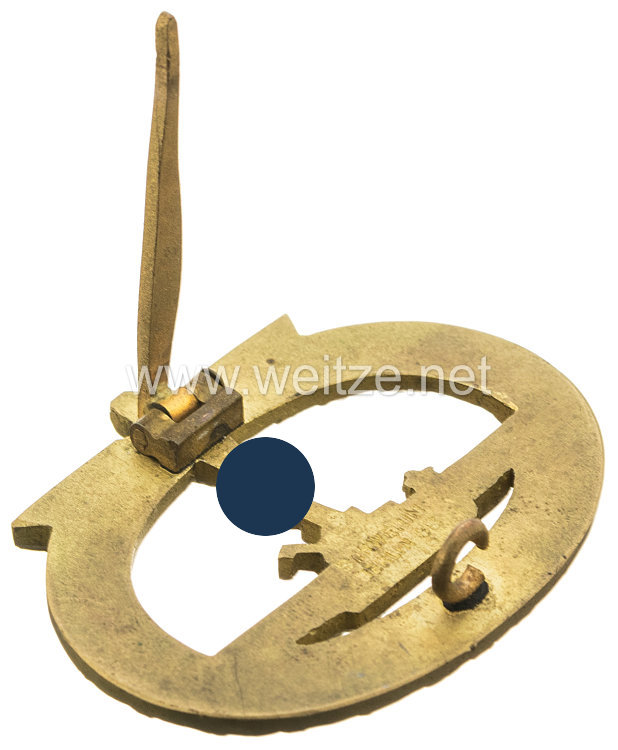
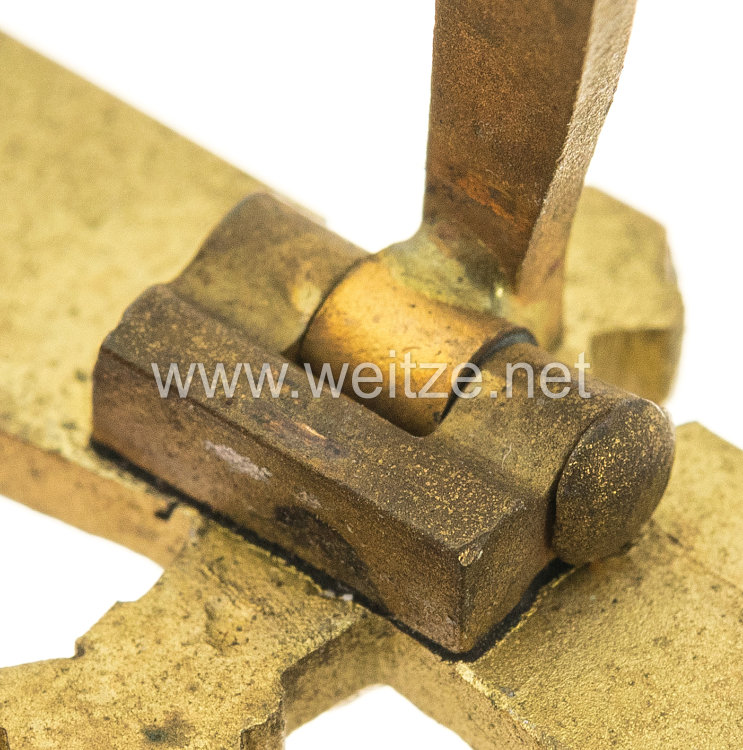
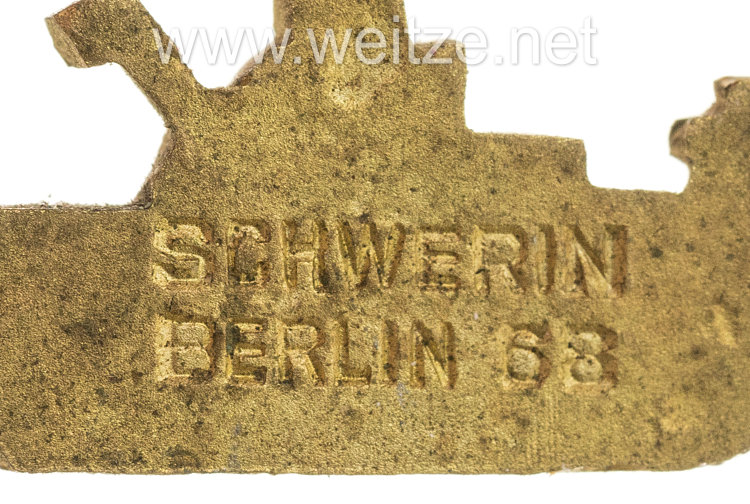
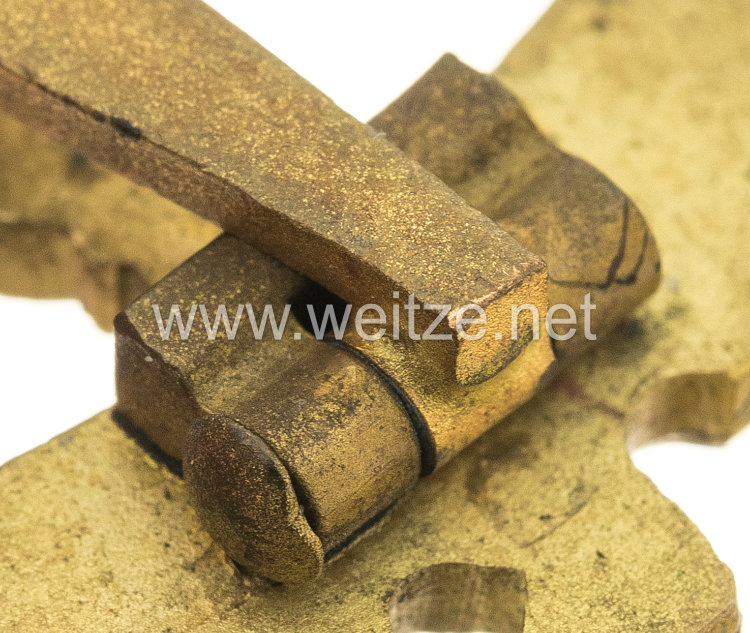
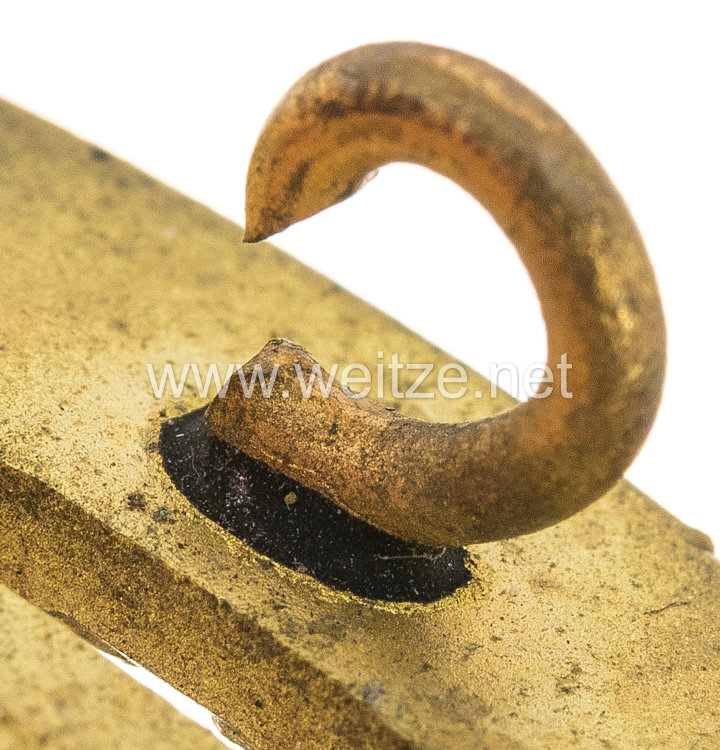
Non-ferrous metal, matte gilt finish with polished edges, reverse marked "Schwerin Berlin 68", early production with round wire catch. Unworn, in mint condition, Condition 2
408096

U-boat War Badge – Schwerin Berlin

This specimen of the U-Boot-Kriegsabzeichen (U-boat War Badge) represents an early production example of one of the most significant decorations awarded by the German Kriegsmarine during World War II. Manufactured by the distinguished Berlin firm C. Schwerin & Sohn, the badge bears the reverse marking “Schwerin Berlin 68,” identifying it firmly with this well-known maker. Executed in base metal with matte gilding and polished raised edges, this piece displays characteristics consistent with early production methods, when badges were constructed from tombac with fire gilding and polished highlights. The round wire hook fastener on the reverse further confirms its status as an early manufacturing variant.

Institution and Historical Background

The U-boat War Badge traces its origins to the First World War, when it was originally instituted on 1 February 1918 and awarded for the completion of three war patrols. On 13 October 1939, the badge was reinstituted for the Second World War by Großadmiral Erich Raeder, Commander-in-Chief of the Kriegsmarine. This reintroduction underscored the vital strategic role envisioned for the submarine arm in Germany’s naval campaign against the Allies.

The badge honored the extraordinarily high-risk operations conducted by U-boat crews, particularly during the Battle of the Atlantic, where German submarines inflicted devastating losses on Allied merchant shipping. Under Admiral Karl Dönitz, who directed U-boat command from its inception in 1939 and succeeded Raeder as Grand Admiral in 1943, the submarine service paid a staggering human cost. Over 28,000 personnel lost their lives, and casualty rates exceeded 70 percent — making U-boat service among the deadliest assignments of the entire war. During the later stages of the conflict, U-boat losses became so catastrophic that many crewmen never survived past their second war patrol, the very threshold required for the standard badge.

Award Criteria

The most common criterion for receiving the U-boat War Badge was the successful completion of two or more war patrols. The decoration could also be awarded for being wounded during a patrol or for being killed in action. Additionally, the badge could be conferred for participation in at least two operational missions or one successful sortie against the enemy. U-boat commanders held discretionary authority to grant waivers to the two-patrol requirement for crew members wounded in action. The badge was open to all ranks of U-boat personnel and was worn on the lower left side of the uniform.

Design

The badge takes the form of an oval wreath of laurel leaves, with a submarine depicted across the center and a German Eagle above a swastika positioned at the top. The 1939 version featured a more modernized submarine design facing toward the left, distinguishing it from its First World War predecessor.

Classes and Production Variants

The U-boat War Badge was bestowed in two classes. The standard version, exemplified by the present specimen, was awarded according to the criteria described above. A far rarer variant, the U-boat War Badge with Diamonds, was instituted by Großadmiral Karl Dönitz and reserved for U-boat commanders who had already received the Knight’s Cross of the Iron Cross with Oak Leaves. This prestigious version was manufactured by the firms Schwerin u. Sohn and Gebr. Godet & Co.

In terms of production evolution, early examples were crafted from tombac with fire gilding, while later wartime production shifted to zinc construction with a gold wash — reflecting the increasing scarcity of strategic materials as the war progressed. Cloth embroidered versions also existed, rendered in golden yellow cotton bullion thread on blue woolen backing.

Numbers Awarded and Notable Recipients

During the course of the Second World War, a total of 9,536 U-boat War Badges were awarded in the standard version. Admiral Karl Dönitz himself was among the recipients of the U-boat War Badge with Diamonds, wearing a unique special version in which both the wreath and the swastika were inlaid with diamonds. Some exceptionally successful commanders received the badge after only a single patrol; one documented example is Rolf Thomsen aboard U-1202.

The Manufacturer

The firm C. Schwerin & Sohn (also known as Carl Schwerin & Sohn or simply Schwerin & Sohn) of Berlin was one of the established manufacturers of military decorations during the Third Reich. The reverse marking “Schwerin Berlin 68” clearly identifies this producer. The present example, described as unworn and in mint condition, with its early-production round wire hook, represents a particularly desirable variant for collectors — combining documented provenance through its maker’s mark with the material quality and construction methods characteristic of the earliest production runs.

The U-boat War Badge remains one of the most evocative symbols of the naval war of 1939–1945, bearing witness to the extraordinary sacrifices demanded of Germany’s submarine crews in one of the conflict’s most brutal campaigns.

r