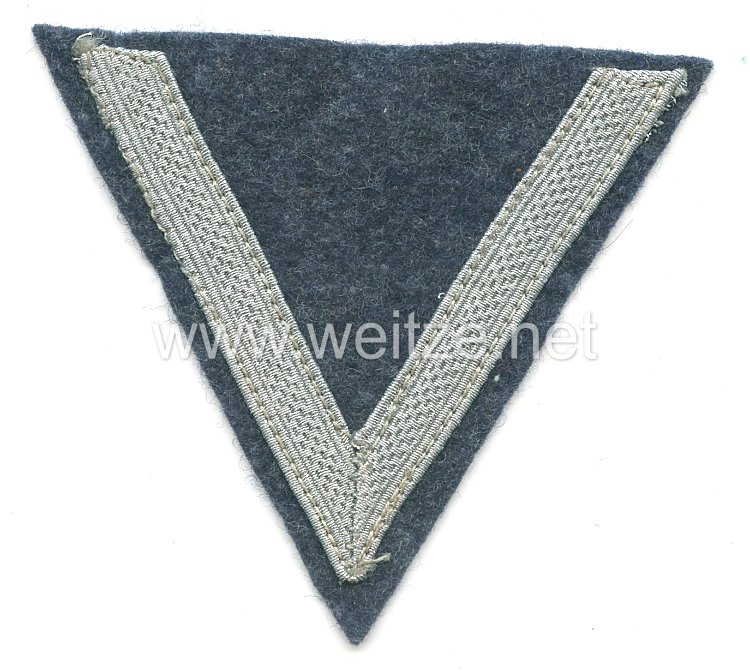
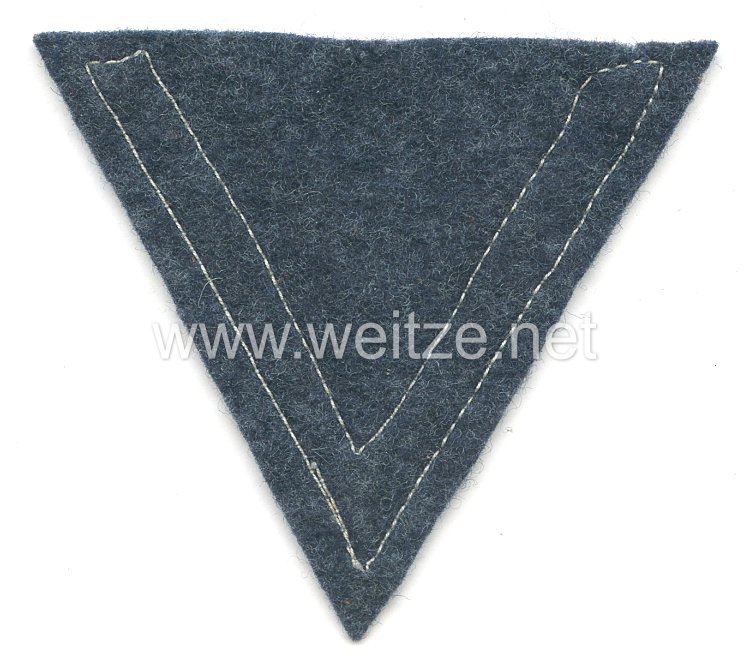
Luftwaffe Sleeve Insignia Lance Corporal

, Condition 2
338196
15,00

Luftwaffe Sleeve Insignia Lance Corporal

The Luftwaffe Sleeve Insignia for Gefreiter represents a significant element of military rank identification in the Third Reich. These insignia were worn by members of the German Air Force between 1935 and 1945 and served for immediate identification of military rank within the hierarchy.

The Luftwaffe was officially established on February 26, 1935, when Hermann Göring publicly announced its existence, which constituted a direct violation of the provisions of the Treaty of Versailles. With the establishment of this new service branch, a comprehensive system of rank insignia and uniform regulations was developed, which was based on traditional Prussian-German military conventions while also incorporating distinctive elements.

The rank of Gefreiter (literally: the “freed one”) represented the first promotion level above the common soldier. This rank had a long history in German military tradition and designated a soldier who was freed from certain menial duties and could already assume initial leadership tasks at the lowest level. In the Luftwaffe, the Gefreiter was an enlisted rank, typically awarded after several months of satisfactory service.

The sleeve insignia for the rank of Gefreiter consisted of a single chevron made of aluminum-colored braid, worn on the left upper sleeve of the uniform. These chevrons pointed downward and followed a standardized design precisely defined in the Luftwaffe dress regulations. The insignia were attached to the characteristic blue-gray uniform fabrics of the Luftwaffe, with the light-colored braid forming a distinct contrast to the base material.

The production of these insignia was carried out both by military depots and by private manufacturers who operated as authorized suppliers to the Wehrmacht. Quality could vary accordingly, with early war years generally showing higher-quality versions with careful handwork, while later productions became increasingly simplified. The insignia were either machine-woven or embroidered and subsequently applied to appropriately cut backings.

The wearing system was precisely regulated: the chevron was attached to the left upper sleeve of all uniform jackets, both on the Fliegerbluse (flight blouse) and on the Waffenrock (service tunic). The position was exactly prescribed and was generally located approximately midway between shoulder and elbow. For multiple chevrons indicating higher enlisted ranks, these were arranged one above the other at uniform intervals.

The historical significance of these rank insignia lies in their function as a visible sign of military hierarchy. They enabled immediate recognition of the command structure and contributed to maintaining military discipline. For the individual soldier, the award of a sleeve insignia represented an important career step associated with increased responsibility and often slightly better pay.

From a collector's perspective, originally preserved Luftwaffe sleeve insignia are today sought-after military-historical objects. Their authenticity can be determined through various characteristics, including the quality of materials, the type of workmanship, and typical signs of aging. The indicated condition 2 suggests a well-preserved example with minor signs of use that has largely retained its original shape and color.

These insignia are important testimonies to the military history of the 20th century and serve the scientific study of uniform studies, rank structures, and the organization of German armed forces during World War II. Their documentation and preservation in museums and collections contributes to understanding this historical era.

r