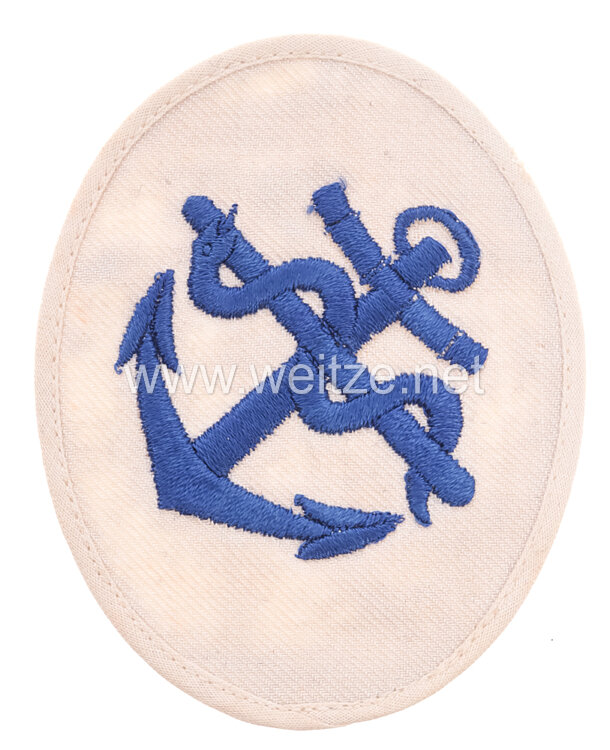
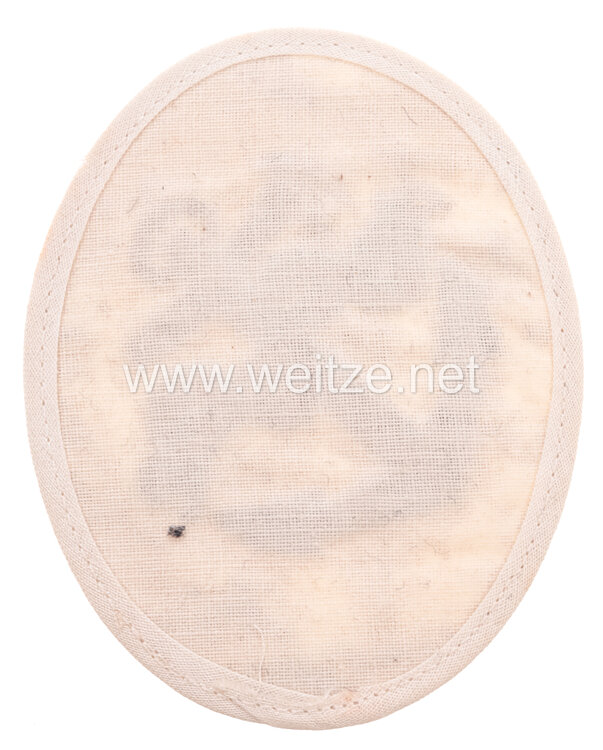
Kriegsmarine Sleeve Insignia Medical Petty Officer

for the white blouse. Condition 2
466396
20,00

Kriegsmarine Sleeve Insignia Medical Petty Officer

The Kriegsmarine sleeve insignia for Sanitätsmaat (Medical Petty Officer) represents a fascinating example of the complex rank and uniform system of the German Navy during World War II. These special insignia served not only to identify rank and function but also expressed the strict hierarchical order within the Kriegsmarine.

The Kriegsmarine, officially established on June 1, 1935, was the naval force of the German Reich from 1935 to 1945. With rearmament under the National Socialist regime, the Navy developed a detailed system of uniforms and insignia that built upon the traditions of the Imperial Navy while incorporating its own distinctive characteristics.

The rank of Sanitätsmaat belonged to the group of petty officers and designated a medical non-commissioned officer with specialized training. The term “Maat” is the traditional maritime designation for a naval petty officer and derives from Middle Low German roots. A Sanitätsmaat was responsible for basic medical care on board and assisted the ship's doctor in his duties. This position required both seamanship skills and medical expertise.

The sleeve insignia described here was intended for the white blouse, which was part of the summer uniform or tropical uniform of the Kriegsmarine. The Kriegsmarine strictly distinguished between different types of uniforms: the dark blue service dress, the working uniform, and the white summer uniform. Each of these uniform variants required appropriately adapted rank insignia and career insignia.

The career insignia of the Kriegsmarine were worn on the left upper arm and indicated the wearer's special assignment. Medical personnel were identified by a characteristic symbol: an Aesculapius staff, the traditional symbol of the healing arts, which has been associated with medicine and healing since antiquity. This staff with a snake coiled around it was usually embroidered in the color appropriate to the respective uniform - for the white blouse typically in dark embroidery to create the necessary contrast.

The rank insignia for petty officers of the Kriegsmarine were worn on the upper sleeves and consisted of a system of chevrons and stars. A Maat wore a special chevron angle that identified his status as a petty officer. The precise execution of these insignia was precisely defined in the Dress Regulations of the Kriegsmarine, particularly in the “Anzugordnung für die Kriegsmarine” (A.O.K.), which was updated several times.

The manufacture of such sleeve insignia was carried out by specialized craftsmen and manufacturers of military accoutrements. Insignia for the white uniform were usually made on a white fabric background and were then to be sewn onto the corresponding uniform. The quality of execution could vary - from machine-made standard insignia to finely hand-embroidered examples for officers.

The Medical Service of the Kriegsmarine played an essential role in the combat effectiveness of the fleet. Medical care at sea presented special challenges: limited resources, the impossibility of rapid evacuation in combat situations, and the specific dangers of naval warfare such as drowning accidents, burns, and combat injuries. Sanitätsmaate therefore had to be comprehensively trained and able to work under extreme conditions.

Training to become a Sanitätsmaat included several years of schooling that encompassed both general naval training and special medical training. Candidates completed courses in anatomy, first aid, wound care, hygiene, and other medical topics relevant to daily life on board. Advanced Sanitätsmaate could be promoted to higher ranks such as Obersanitätsmaat or Stabssanitätsmaat.

The historical significance of such sleeve insignia extends beyond their original purpose. Today they are important objects for uniform studies and military history research. They document the organizational structure of the Kriegsmarine, the importance of specialized functions such as the medical service, and the maritime tradition of rank designations. For collectors and historians, they offer insights into the everyday reality of naval personnel and the material culture of the period.

When evaluating and authenticating such insignia, various factors must be considered: the type of manufacture, the materials used, the quality of embroidery, and compliance with historical regulations. Preservation in condition grade 2 indicates a well-preserved example with possibly minor signs of use.

The Kriegsmarine's medical personnel were integral to naval operations throughout World War II, serving on vessels ranging from small coastal craft to mighty battleships and submarines. Their distinctive insignia marked them as specialists whose skills could mean the difference between life and death for their shipmates. These artifacts remain as tangible connections to the individual stories of those who served in this capacity during one of history's most tumultuous periods.