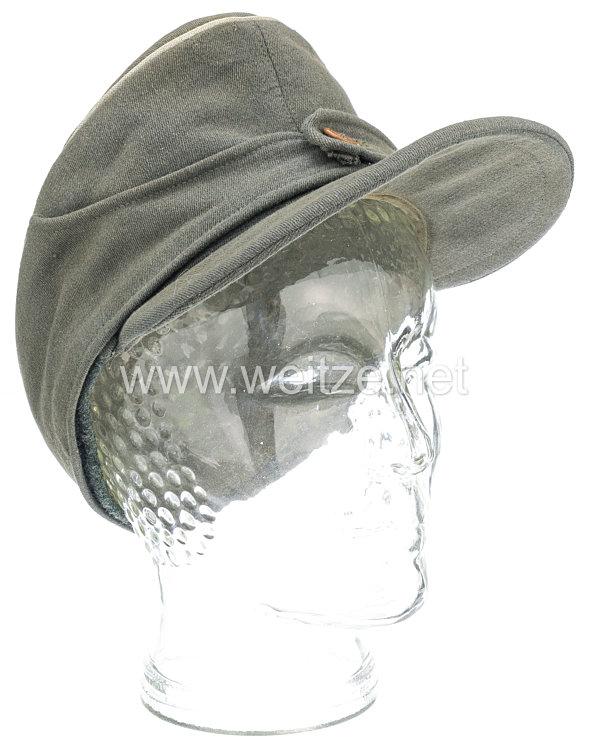
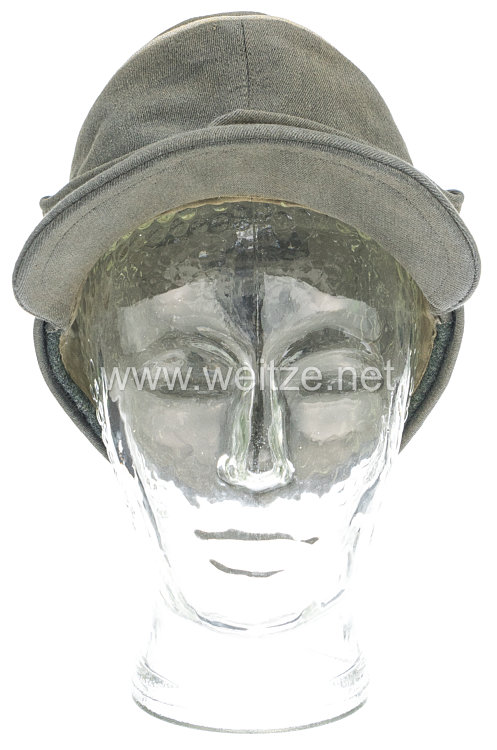
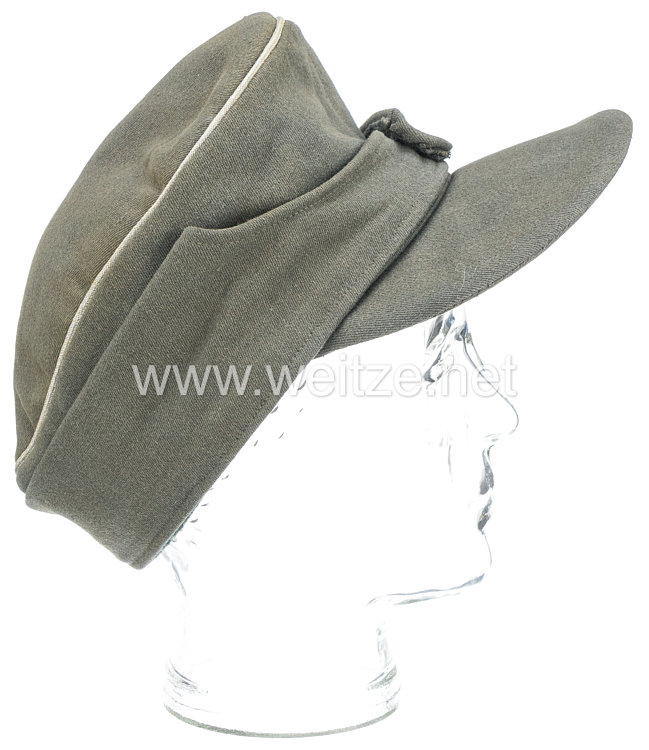
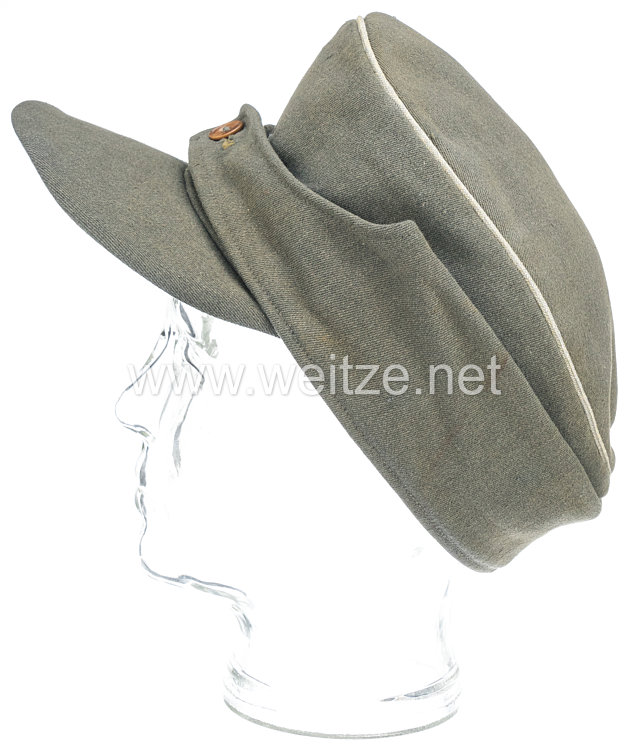
Waffen-SS M43 Officer's Field Cap

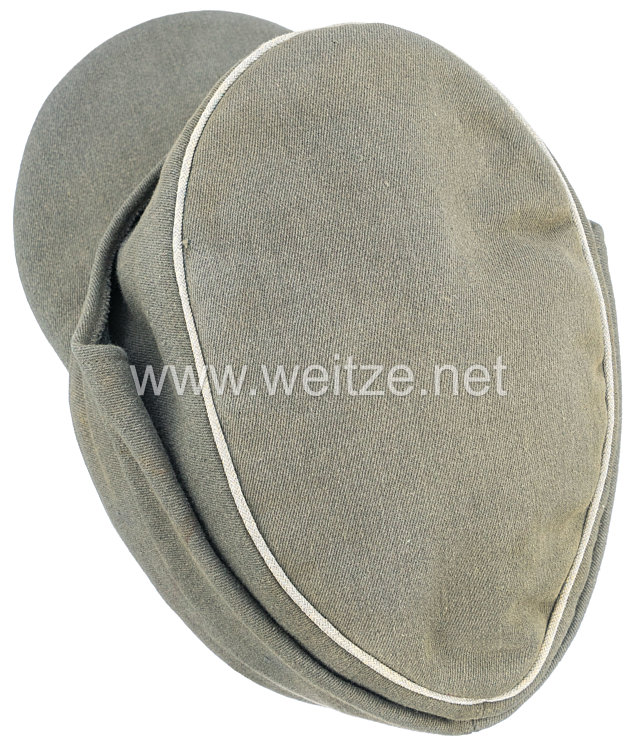
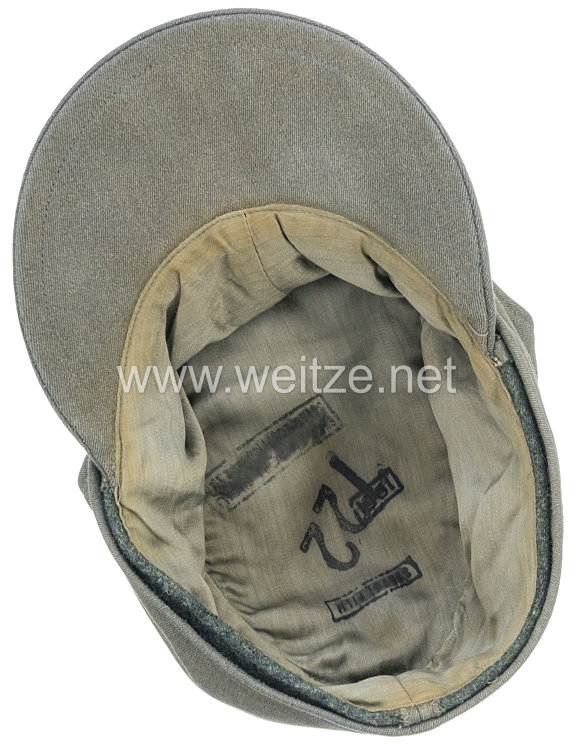
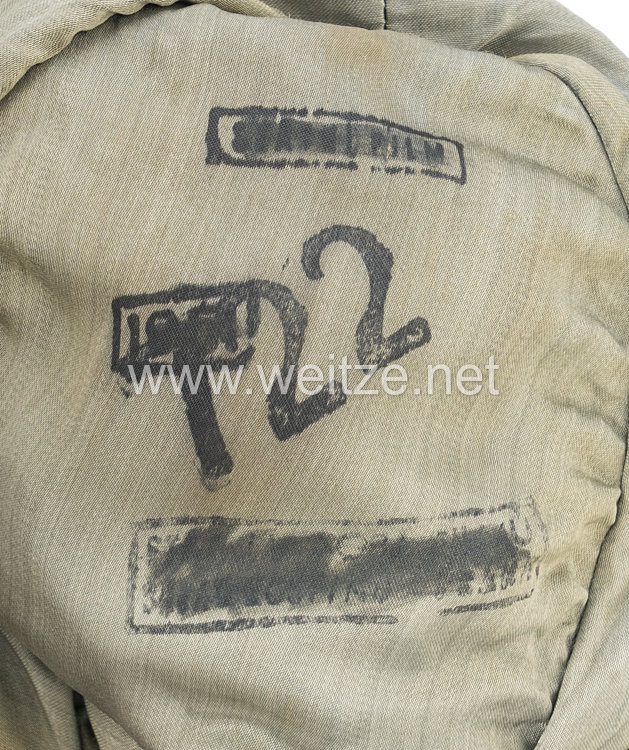
Circa 1943/44. Manufactured from field-gray Italian captured material, the cap trapezoid has been removed. Silver piping around the top with 1 Bakelite button at front. Interior with silk lining and Czech depot stamp, size approximately 55. Condition 2.
428095
2.500,00

Waffen-SS M43 Officer's Field Cap

The Einheitsfeldmütze M 43 (unified field cap M 43) for Waffen-SS officers represents a significant example of German military uniforms from the late phase of World War II. This headgear was introduced as part of comprehensive simplification measures that characterized German uniform production from 1942/43 onwards.

The introduction of Model 43 marked an important turning point in German uniform history. Facing increasing material shortages and the necessity for more rational production, the Wehrmacht High Command ordered the development of simplified uniform items. The M 43 field cap largely replaced the more elaborate peaked cap (Schirmmütze) and the earlier M 42 field cap, distinguishing itself through a more practical, field-oriented design.

The officer's cap described here from approximately 1943/44 exhibits several characteristic features. Its manufacture from Italian captured fabric in field-gray documents the strained supply situation of the Wehrmacht during this phase of the war. After Italy's armistice with the Allies in September 1943, Germany confiscated substantial quantities of Italian military stocks, including uniform fabrics. These materials were systematically utilized for German uniform production, as documented in numerous surviving examples.

The silver piping clearly identifies this piece as an officer's cap. According to Waffen-SS clothing regulations, officers wore silver-colored (aluminum-colored) piping and insignia, while enlisted men and NCOs used white piping. This distinction enabled immediate rank recognition in the field.

The absence of the cap trapezoid (national eagle and death's head insignia) is a commonly encountered phenomenon in surviving uniform pieces. After the war's end, many owners systematically removed NS symbols to continue using their uniform items or to avoid problems with occupation authorities. Allied denazification regulations strictly prohibited wearing such insignia.

The silk lining and superior workmanship underscore the officer character of this headgear. While simple enlisted men's caps were often equipped with cotton lining, officers' caps used higher-quality materials. The mentioned Czech depot stamp suggests storage or administration by Czechoslovak authorities after the war's end. Czechoslovakia confiscated substantial quantities of German militaria, which were partly stored in state depots.

The size 55 corresponds to the then-standard German head circumference measurements in centimeters and represents an average size. The Waffen-SS clothing production system remained relatively standardized despite wartime circumstances, with various manufacturers working according to uniform regulations.

The Waffen-SS developed its own clothing administration during the war, which differed organizationally from the Wehrmacht. The SS Economic and Administrative Main Office (SS-Wirtschafts-Verwaltungshauptamt) coordinated uniform production, involving both state and private manufacturers. Quality varied considerably depending on production year and manufacturer, with later wartime productions increasingly showing simplifications and material substitutions.

The M 43 field cap was intended for all service branches and could be worn both in the field and during garrison duty. Its practical design with ear and neck flaps offered better protection in cold weather than the peaked cap. This made it particularly popular on the Eastern Front, where extreme climatic conditions prevailed.

From a historical perspective, such uniform pieces document the material realities of German warfare in the late phase of World War II. The use of captured fabrics, simplified construction, and pragmatic design reflect the increasing resource scarcity of the German Reich. Simultaneously, they demonstrate the adaptability of military administration under extreme conditions.

The production of these caps involved numerous contractors across German-occupied territories. Quality control became increasingly difficult as the war progressed, leading to greater variations in workmanship and materials. The use of Italian cloth specifically indicates production during or after late 1943, providing valuable dating evidence for military historians.

Today, such items serve as important material sources for understanding the organizational, economic, and social aspects of the German military during World War II. They provide tangible evidence of supply chain adaptations, rank distinctions, and the practical realities faced by military personnel during the conflict's final years.

r