Volunteer Jäger Battalion Schill / Border Protection Jäger Battalion Schill

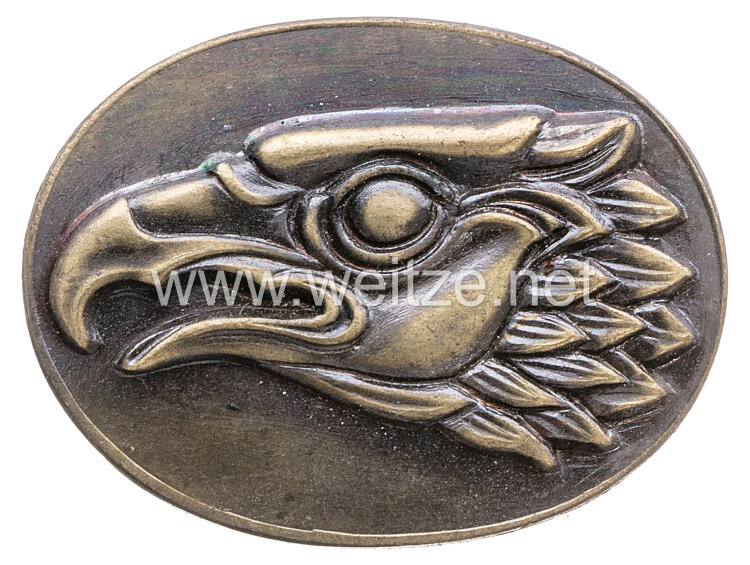
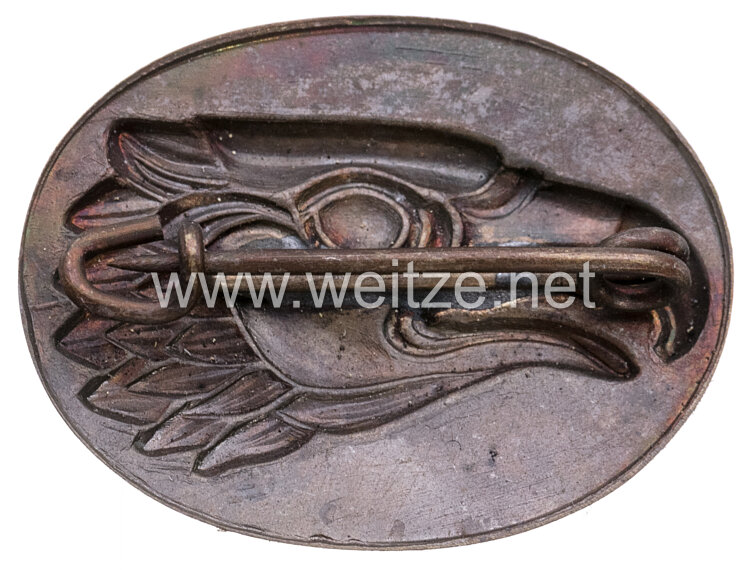
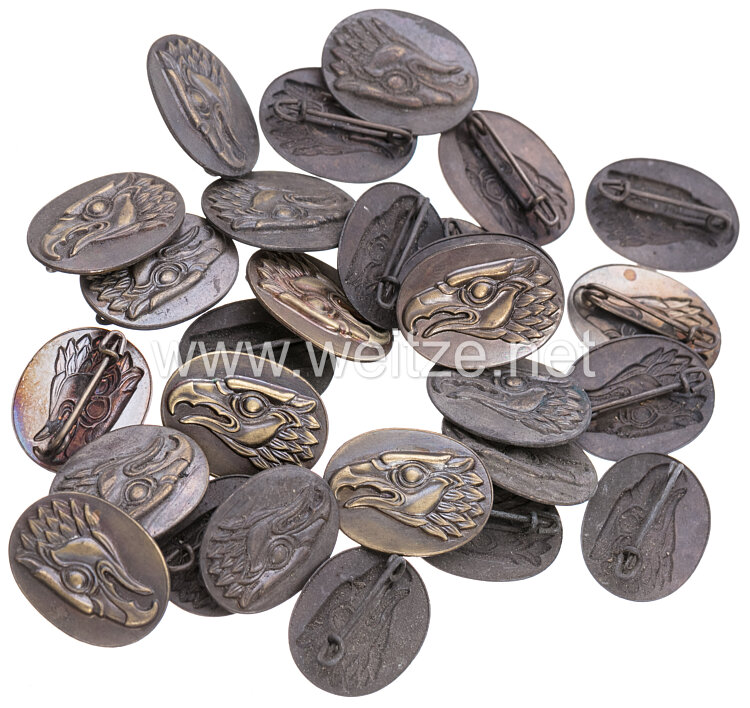
Civilian badge, hollow-embossed, pin back, approx. 25 x 19 mm. Unworn, condition 2+.
290795
45,00

Volunteer Jäger Battalion Schill / Border Protection Jäger Battalion Schill

The Freiwilliges Jäger-Bataillon Schill (Volunteer Rifle Battalion Schill) and later the Grenzschutz-Jägerbataillon Schill (Border Protection Rifle Battalion Schill) represent a significant tradition in German military history, tracing back to the legendary Prussian officer Ferdinand von Schill (1776-1809). The civil badge described here documents the connection between military units and civilian supporter circles in the first half of the 20th century.

Ferdinand von Schill became an iconic figure of German resistance during the Napoleonic occupation. In April 1809, he launched an uprising with his free corps against French rule, which ended tragically with his death on May 31, 1809, in Stralsund. Schill was posthumously elevated to a martyr of the German freedom movement, and his name became synonymous with courage, sacrifice, and national honor.

The tradition of the Jäger-Bataillon Schill was revived during the Weimar Republic and the Third Reich. After World War I, various free corps and paramilitary units emerged in Germany, invoking historical models. The Freiwilliges Jäger-Bataillon Schill was one of these units that bore the name of the Prussian freedom fighter and felt committed to his tradition.

In the 1930s, the Grenzschutz-Jägerbataillon Schill was formed as part of the Wehrmacht buildup. This unit was part of the border protection troops stationed along German borders. The name “Schill” bestowed special historical dignity upon the unit and was meant to serve as a model for the soldiers.

The present civil badge is a characteristic example of supporter badges from that era. Measuring approximately 25 x 19 mm, it is a relatively small, hollow-embossed badge that could be worn on civilian clothing. Hollow embossing was a common manufacturing method for metal badges, where the metal was stamped from the reverse side to create a relief on the front. This technique enabled cost-effective mass production while maintaining an attractive appearance.

The pin attachment on the reverse is typical for civil supporter badges. Unlike military orders and decorations, which often featured more elaborate fastening mechanisms, civil badges were equipped with a simple pin that was pushed through clothing and secured with a small clasp. This allowed for uncomplicated attachment and removal.

The condition rating of “2+” and the description as “unworn” indicate that this particular specimen was never or only very rarely used. The preservation of such badges in nearly mint condition is remarkable, as most of these pieces show signs of wear from use, such as scratches, oxidation, or bent pins.

Civil badges of this type fulfilled several functions: they publicly demonstrated support for a particular military unit, promoted esprit de corps and connection between the troops and civilian population, and often served fundraising purposes through sales to supporters. Patrons, veterans, soldiers' relatives, and patriotic citizens wore such badges to show their solidarity.

The use of historical names like “Schill” was part of a deliberate tradition-building that aimed to link military units with glorious episodes from the past. This was particularly common in the 1920s and 1930s, when Germany, after its defeat in World War I, attempted to revive military traditions and strengthen national identity.

From a collector's perspective, such civil badges are today important historical documents that provide insight into military structures, propaganda methods, and social conditions of their time. They complement the picture conveyed by official documents and military equipment through the civilian dimension of military history.