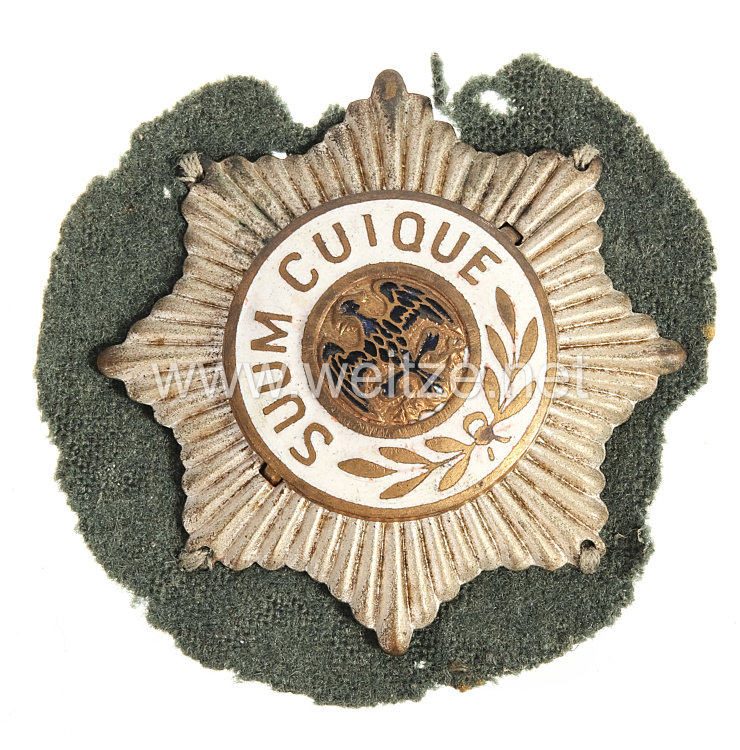
Freikorps Sleeve Insignia of the Potsdamer Garde Formations

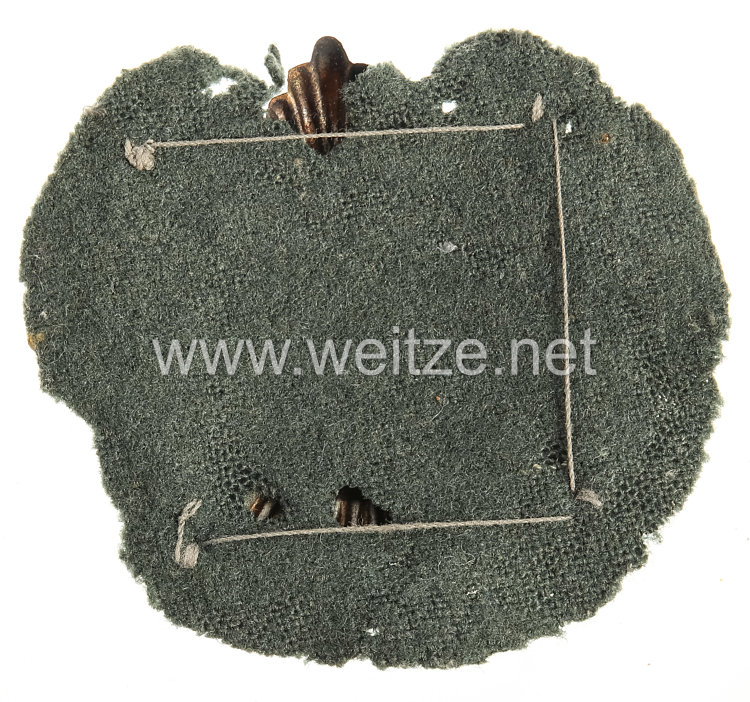
Guards star, hollow embossed, the center lacquered, with holes on the sides for sewing, height 50mm, on field-gray wool backing. Worn condition, Condition 2-.
368195
250,00

Freikorps Sleeve Insignia of the Potsdamer Garde Formations

The Freikorps sleeve insignia of the Potsdam Guard formations represents a significant artifact from the turbulent post-war period in Germany, when paramilitary volunteer units played a decisive role in the political and military conflicts of the years 1918 to 1923.

Following the collapse of the German Empire in November 1918 and the signing of the Armistice of Compiègne, numerous Freikorps emerged throughout Germany. These paramilitary formations recruited primarily from former soldiers, officers, and nationalist-minded volunteers who opposed or at least viewed with skepticism the new democratic order of the Weimar Republic. The Freikorps were initially tolerated and sometimes even supported by the Reich government, as they were deployed in suppressing communist uprisings and securing borders.

The Potsdam Guard formations deliberately connected themselves to the proud tradition of the Prussian Guard regiments, which dated back to the 17th century. Since the time of Frederick William I and Frederick the Great, Potsdam had been the garrison city of the Prussian Guard par excellence. After 1918, former members of these elite units attempted to continue military traditions and preserve their identity through characteristic insignia.

The badge described here displays the characteristic Guard star, an iconographic symbol closely associated with the Prussian Guard regiments. The star was manufactured using hollow embossing, a technique in which the metal was worked from the reverse side to create a relief. The lacquered center gave the badge additional visual impact and protected the metal from corrosion. The lateral drill holes served for sewing onto uniforms, with field-gray cloth used as backing – that color which had characterized German field uniforms since 1910 and continued in use after 1918.

With a height of 50mm, this badge belonged to the highly visible distinguishing features worn on the sleeve. Such sleeve badges served multiple purposes: they identified membership in a particular formation, strengthened esprit de corps, and demonstrated the continuity of military traditions in a time of political and social upheaval.

The legal situation of the Freikorps was complicated. Officially they were not regular troops, but frequently operated under orders or with the tolerance of state authorities. The Treaty of Versailles of 1919 limited the German army to 100,000 men (Reichswehr), leading to the dissolution of many units. The Freikorps partially operated in this legal gray zone, particularly during operations in the eastern border regions and the Baltic states.

The Potsdam Guard formations participated in various events of the post-war period, including the fighting during the Spartacist uprising (January 1919), the Kapp Putsch (March 1920), and various confrontations in border regions. Their political position was predominantly nationalist and anti-democratic, with many members later transferring to right-wing extremist organizations.

From 1921 onwards, pressure on the Freikorps intensified from the Allied Control Commission and the German government. Many formations were officially dissolved but reorganized as veterans' associations, defense leagues, or paramilitary organizations. The badges and symbols retained their significance as identifying marks and expressions of political attitude.

Wearing such badges was not merely practical but also symbolically highly charged. It expressed nostalgia for the Empire, rejection of the Weimar Republic, and the desire for military restoration. The use of the Guard star connected the wearers with the prestigious history of the Prussian army and implicitly legitimized their activities.

From a collection history perspective, such Freikorps badges are today important witnesses to a historical transitional phase. They document the difficulties of democratic consolidation in the Weimar Republic and the persistence of militaristic and anti-democratic traditions. For historical research, they offer insights into the material culture of paramilitary groups, their self-representation, and tradition formation.

The preservation of such objects in collections serves exclusively for scholarly documentation and historical education, not for the glorification of militaristic or anti-democratic ideologies.