Kriegsmarine Sleeve Insignia for a Matrosenobergefreiter with More Than 6 Years of Service
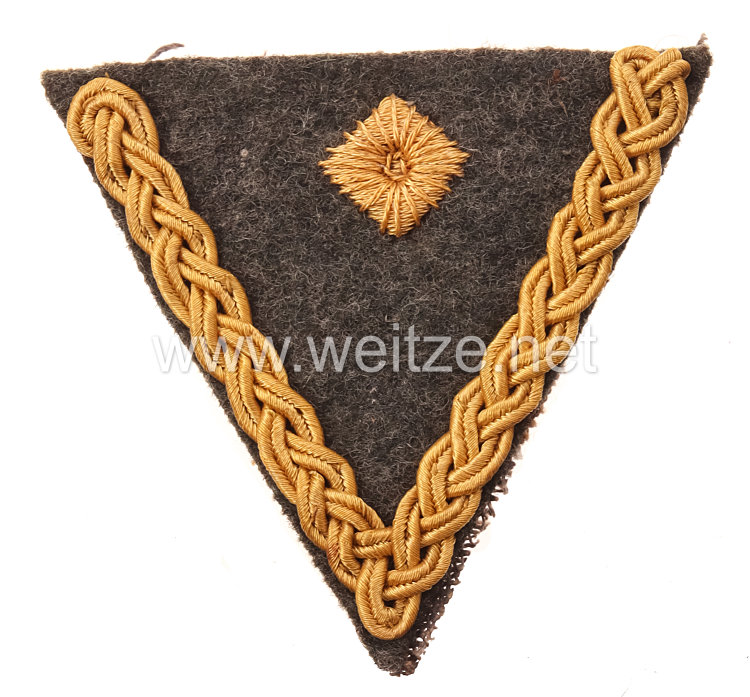
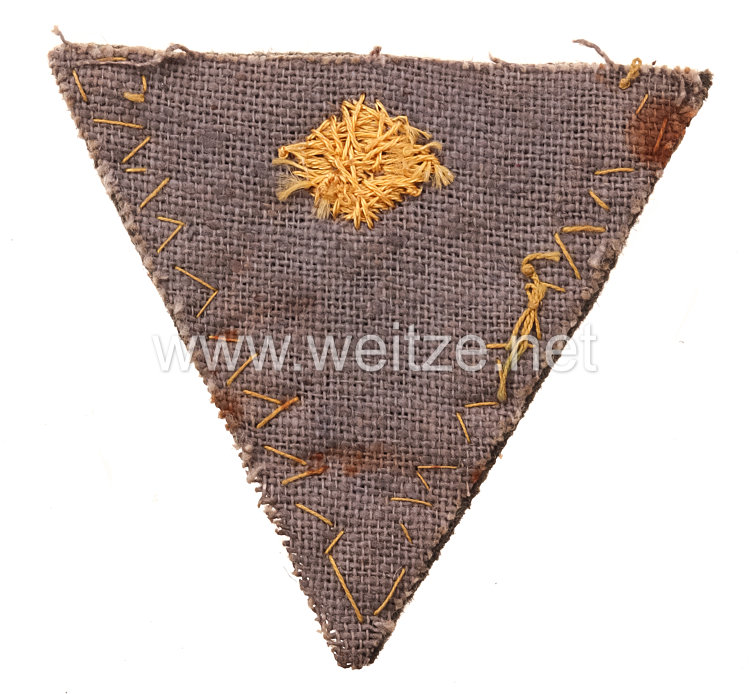
The Kriegsmarine sleeve insignia for a Matrosenobergefreiter (Able Seaman) with more than 6 years of service represents an important element of German naval uniform regulations during World War II. This particular badge in hand-embroidered execution for the field-grey uniform of the coastal artillery embodies the complex rank structure and service time regulations of the Kriegsmarine between 1935 and 1945.
The Kriegsmarine, officially established on June 1, 1935, developed a detailed system of rank insignia and service badges that built upon the traditions of the Imperial German Navy. The rank of Matrosenobergefreiter formed the second level in the hierarchy of enlisted ranks, directly above the simple Matrose and below the Matrosenhauptgefreiter. This rank designation was indicated by specific badges worn on the left upper arm of the uniform jacket.
The service time badges of the Kriegsmarine followed a structured system that documented the duration of active service. Naval personnel received a first badge after four years of service, a second after another four years (thus eight years total), and so forth. The present badge identifies a soldier with more than six years of service, meaning the wearer had already exceeded the first four-year badge and was approaching the second. These service chevrons were attached in the form of diagonal stripes below the rank insignia.
The hand-embroidered execution of this badge is of particular significance. While standard badges were frequently machine-made or woven, hand-embroidered variants existed that were either produced by specialized military tailors or privately procured. These hand-embroidered versions often exhibited higher quality and finer detail work, though they were not officially mandated. Officers and non-commissioned officers more frequently had such higher-quality badges made, but enlisted ranks could also acquire them.
The field-grey uniform of the coastal artillery represents a peculiarity within the Kriegsmarine. While the Navy traditionally wore dark blue uniforms, units of the Marine Coastal Artillery received field-grey uniforms that resembled those of the Army. This practice developed from practical considerations, as coastal artillerymen frequently served in land-based fortifications and were visually distinguished from seafaring personnel. The coastal artillery was responsible for defending harbors, naval bases, and strategically important coastal sections, employing heavy guns designed to engage enemy ships.
The organization of the Marine Coastal Artillery encompassed numerous batteries along occupied coasts, particularly as part of the Atlantic Wall. From Norway through Denmark, the Netherlands, Belgium, and France to the Bay of Biscay, the Wehrmacht erected an extensive defense system. Naval artillery formed an essential component of these defensive installations, with guns of various calibers, from light 10.5 cm cannons to heavy 40.6 cm guns.
Training as a coastal artilleryman took place in specialized schools of the Kriegsmarine. Recruits first completed basic training before receiving their specialized instruction on guns, fire control, or technical services. Promotion to Matrosenobergefreiter occurred after proving oneself and completing the required service time, with performance, conduct, and professional qualifications being considered.
The badge itself was worn according to the dress regulations of the Kriegsmarine, which precisely governed where and how rank insignia and decorations were to be attached. Sleeve insignia were fastened on the left upper arm, with exact measurements prescribed for positioning. The coloring and execution had to conform to official specifications, even though individual variations occurred in hand-embroidered examples.
From a collector's perspective, such original badges are today significant historical documents. The indicated Condition 2 suggests a well-preserved example with minimal signs of wear. Condition, authenticity, and provenance are decisive factors in the historical evaluation of such militaria. Hand-embroidered versions are particularly valued by collectors as they reflect the craftsmanship quality of the period.
The study of such uniform components contributes to understanding military everyday culture and provides insights into the organization, hierarchy, and self-conception of the Kriegsmarine. They document not only military structures but also social differentiations and the significance of rank and service time in the military context of World War II.