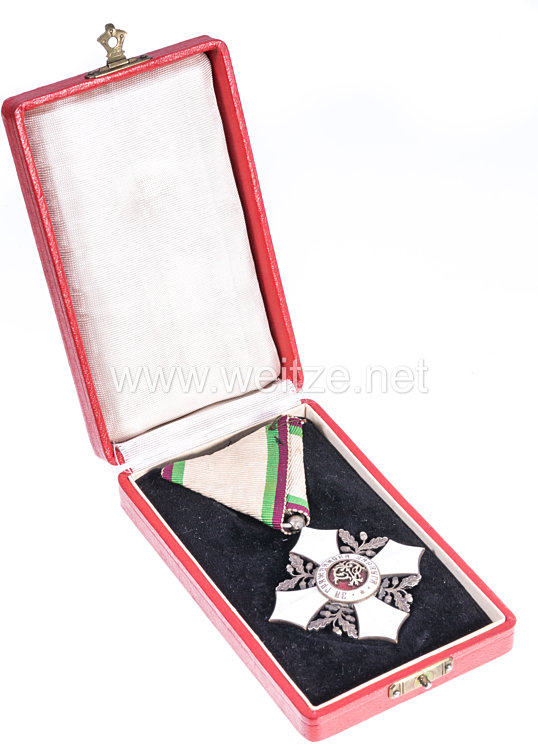
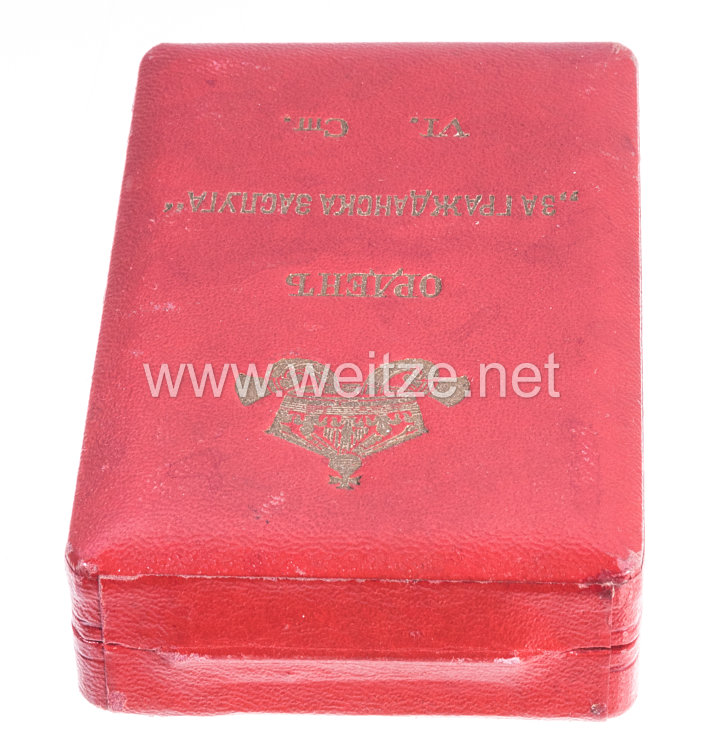
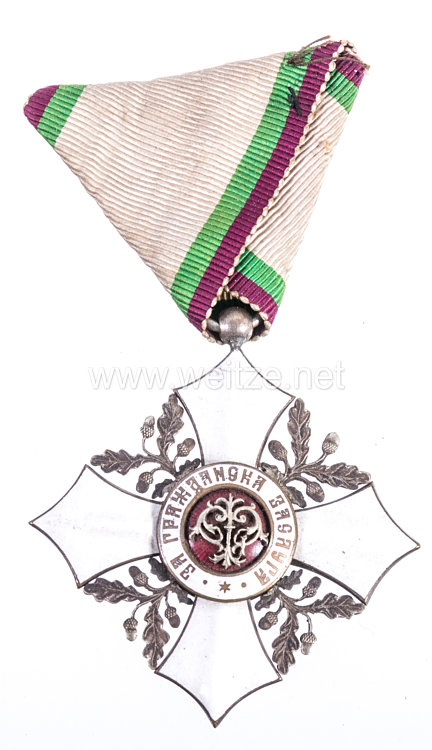
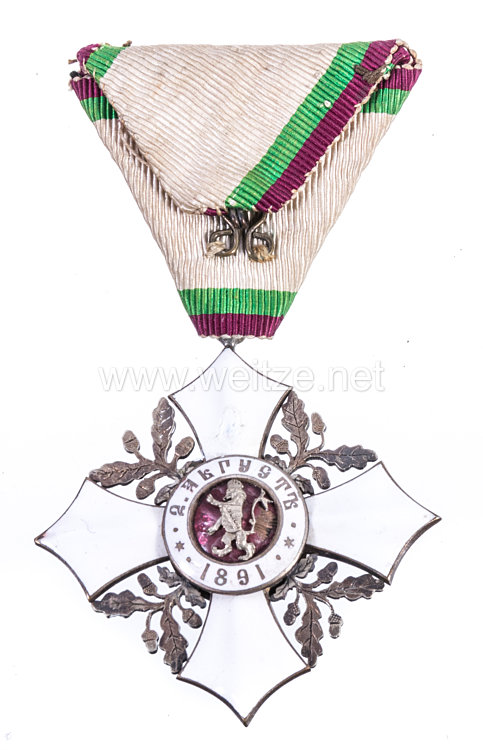
Kingdom of Bulgaria Order of Civil Merit, 5th Class

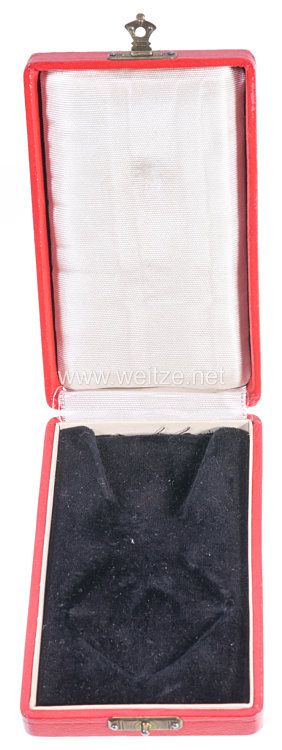
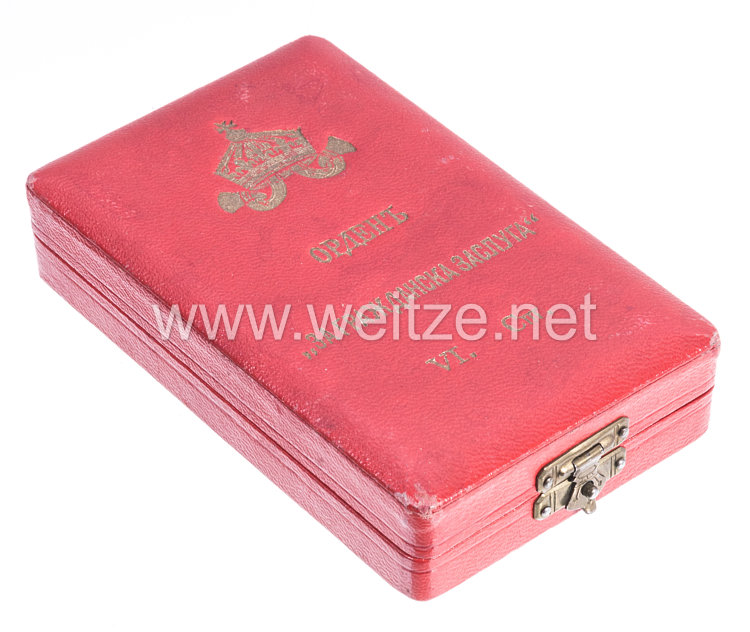
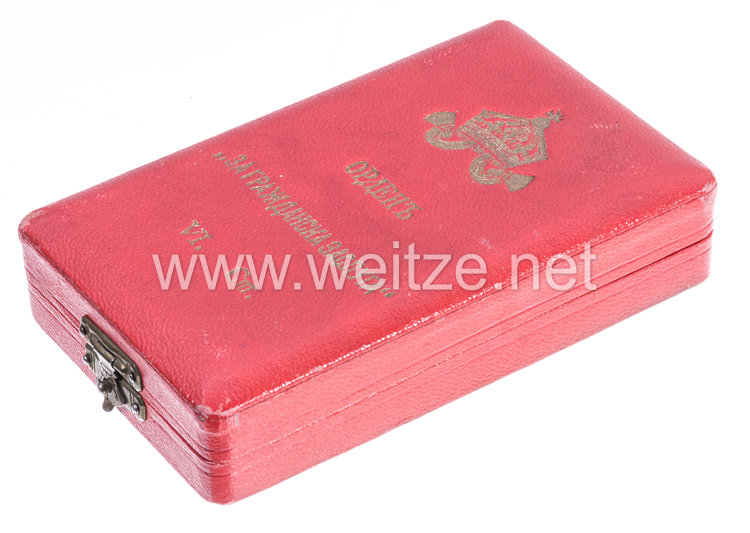
silver-plated and enameled on both sides, on triangular ribbon, complete in fitted case with imprint. Worn, with minor enamel damage on reverse, condition 2.
355493
185,00

Kingdom of Bulgaria Order of Civil Merit, 5th Class

The Bulgarian Order of Civil Merit (Bulgarian: Орден за гражданска заслуга) represents one of the most significant state decorations of the Kingdom of Bulgaria, awarded between 1891 and 1946. The 5th Class (fifth grade) constituted the entry level of this prestigious award, granted to individuals who had rendered distinguished service to the Bulgarian state.

The Order was founded on January 1, 1891 during the reign of Prince Ferdinand I, who was later proclaimed King. The Order formed part of a comprehensive system of state honors established by the young Bulgarian monarchy after the country gained independence from the Ottoman Empire in 1878. The Order of Civil Merit was specifically designed to recognize civilian achievements, distinguishing it from the parallel Military Merit Order.

The Order's classes were hierarchically organized into five grades: Class I as Grand Cross, Class II as Grand Officer, Class III as Commander, Class IV as Officer, and finally Class V as Knight. This gradation followed the widely adopted French Legion of Honor system prevalent throughout Europe, allowing for differentiated recognition of varying degrees of merit.

The design of the Order reflects Bulgaria's national symbolism. The badge consists of an enameled cross with characteristic form, typically executed in silver or gold plating depending on the class. The double-sided enameling shows on the obverse the Bulgarian state coat of arms featuring the crowned lion, surrounded by the Order's inscription. The reverse typically bears the monogram of the reigning monarch along with dates. The 5th Class was generally crafted from silver-plated metal, while higher classes received gilded versions.

The triangular ribbon of the Order of Civil Merit displays the Bulgarian national colors in characteristic arrangement. The color combination of white, green, and red represents the Bulgarian nation and clearly distinguishes the Order from other state decorations. The specific wearing method varied by class: while higher classes were worn as breast stars or on wide shoulder ribbons, the 5th Class was worn on the triangular ribbon on the left breast.

The conferral practice of the Order followed strict regulations. Recipients of the 5th Class typically included civil servants, scholars, artists, business leaders, and other civilians who had performed services beneficial to the Bulgarian state. Foreign nationals could also be decorated with the Order, making it an important instrument of Bulgarian diplomacy. Awards were made by royal decree and accompanied by an official certificate.

The original case with corresponding inscription documents the authenticity and provenance of the decoration. Such cases were manufactured by official court suppliers and typically bear the name of the jeweler or mint. Today they constitute an important element for collectors and historians, as they can provide additional information about the time of manufacture and provenance.

The historical significance of the Order extends across several political epochs. From its founding in 1891 until the end of the monarchy in 1946, it was continuously awarded, experiencing various political systems: the princely period under Ferdinand I, the royal period under Boris III (1918-1943), and the brief regency under Simeon II. After the communist takeover in 1946, the royal Order system was abolished and replaced by new socialist decorations.

During both World Wars, Bulgaria played a significant role in the Balkans as an ally of the Central Powers and Axis Powers respectively. The Order of Civil Merit was also awarded to allies during these periods, documenting the complex diplomatic relations of the time.

For collectors and historians, the Bulgarian Order of Civil Merit today represents a fascinating testimony to Bulgaria's monarchical era. The preservation of such decorations in their original cases enables important insights into the country's social and administrative history. Enamel damage, as frequently occurs with worn examples, slightly diminishes material value but underscores the authentic use and historical patina of the object.

The Order system reflected the modernization efforts of the Bulgarian state, which sought to establish itself as a recognized European monarchy. Through such decorations, the kingdom created visible symbols of state authority and social hierarchy, while simultaneously fostering loyalty among its civil servants and citizens. The award of the 5th Class, though the most modest grade, represented significant recognition and often marked the beginning of a distinguished career in state service.

r