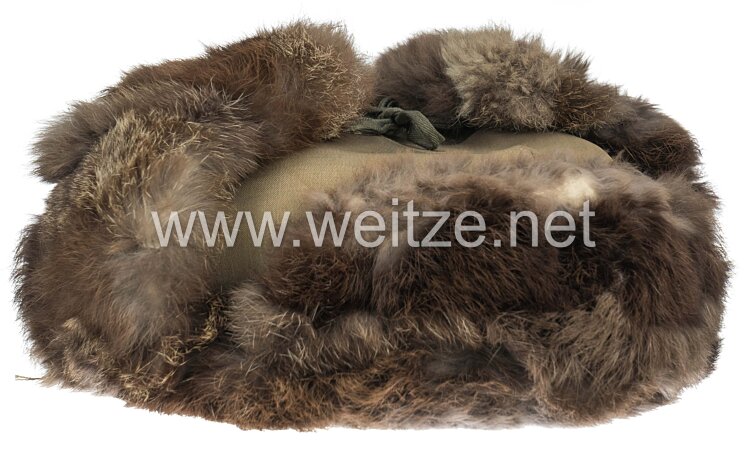
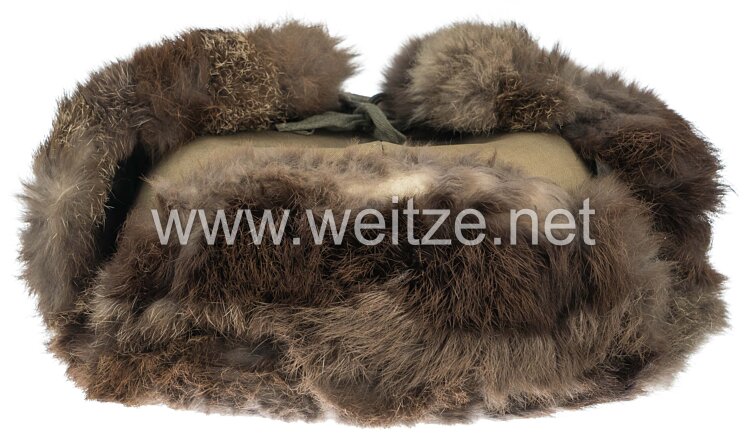
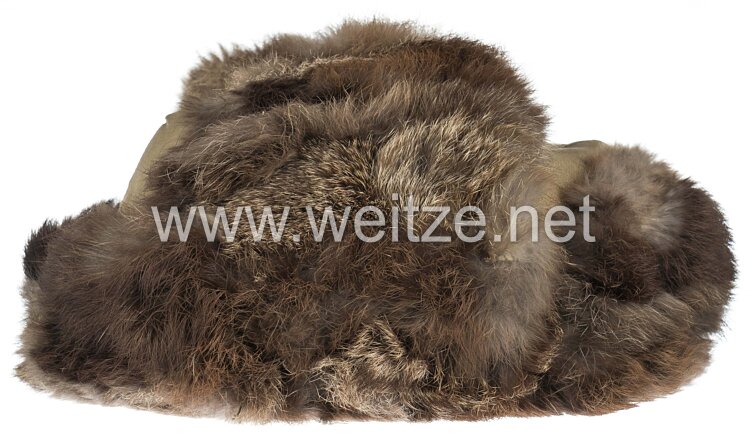
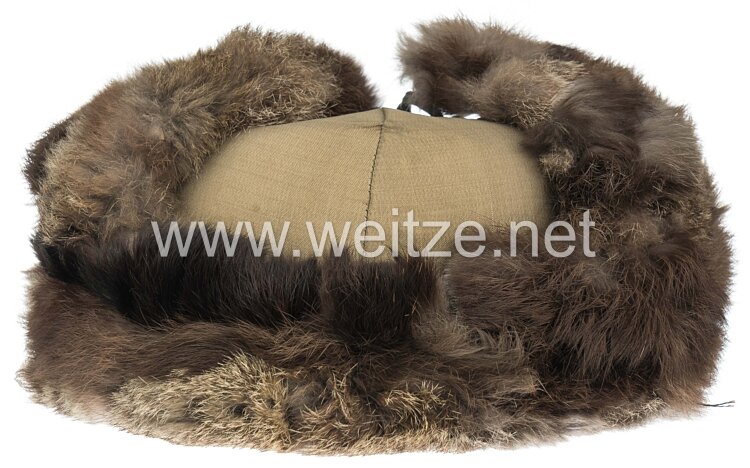
Waffen-SS Winter Beret for Panzer Crews

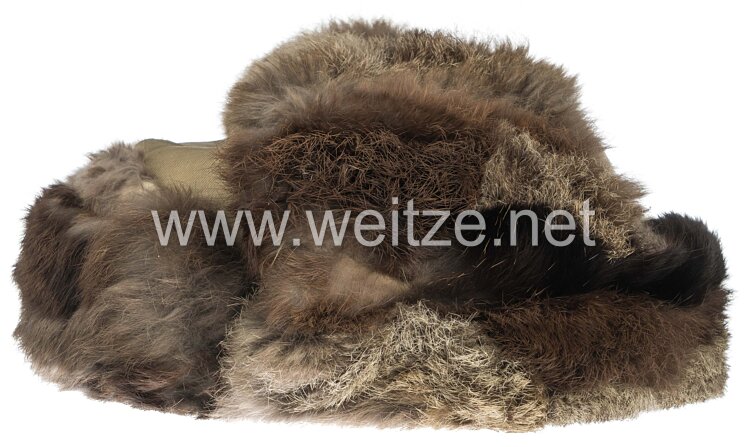
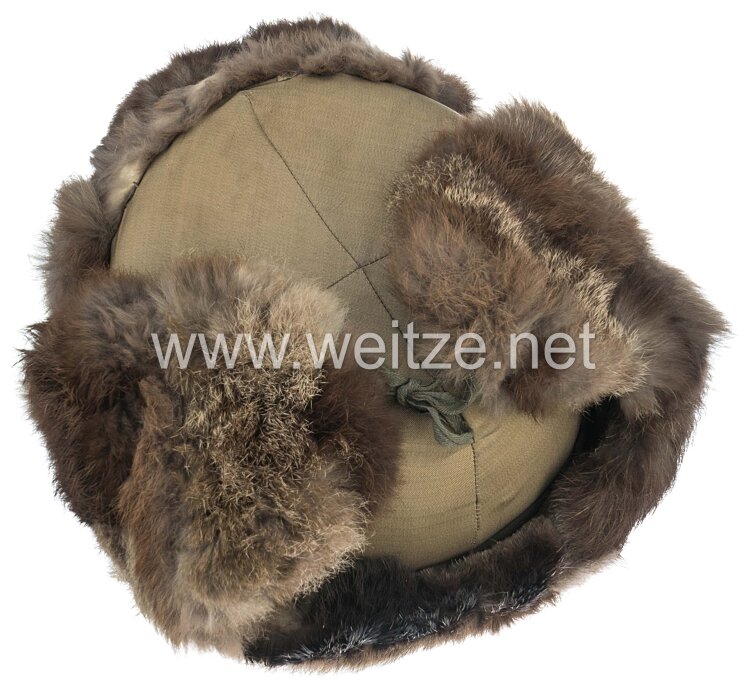
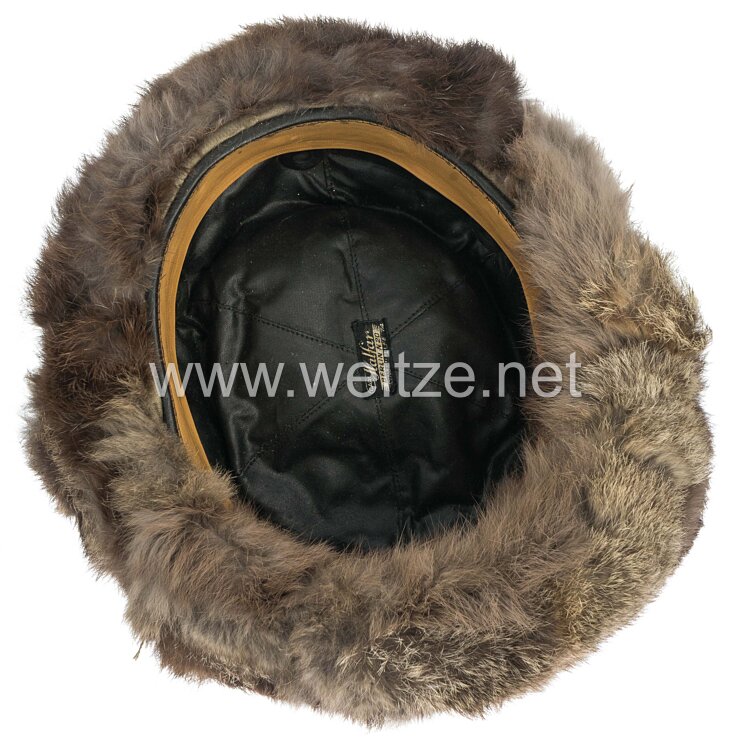
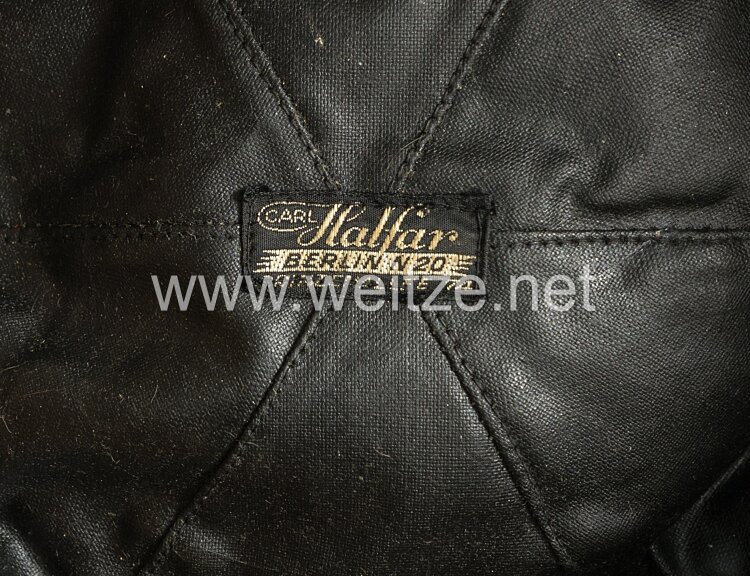
circa 1940. This is a panzer beret in typical construction, however with field-gray cover and fur trim with side folding ear flaps. Interior with light brown sweatband with black oilcloth edge. Black oilcloth lining, in center with woven maker's label “Carl Halfar Berlin Prinzenallee 74”. On leather sweatband with size stamp 57. In lining with 6 black rubber ventilation holes. Lightly worn, Condition 2. A very rare headgear. Condition 2
456592
4.500,00

Waffen-SS Winter Beret for Panzer Crews

The Waffen-SS Winter Tank Beret represents a rare and highly specialized piece of headgear developed during World War II for armored vehicle crews. This particular example, manufactured by Carl Halfar Berlin, embodies German military technology and equipment of the early 1940s.

The development of specialized headgear for tank crews began in the Wehrmacht during the 1930s. The classic garrison cap or traditional field cap proved impractical in the confined interior of armored vehicles. Tank crews required soft, padded headgear that provided protection from impacts against hard armor plating while allowing the wearing of headphones for onboard radio equipment.

The tank beret was introduced in its basic form around 1934, made of black wool felt, corresponding to the tradition of the German armored forces who wore black uniforms. This coloring had practical reasons: it concealed oil stains and dirt that were inevitable when working with armored vehicles.

The winter variant described here represents a significant development. The field-gray cover and fur trim with fold-down ear protection were special adaptations for use under extreme winter conditions, such as those experienced on the Eastern Front from 1941 onwards. The first winter of the war in 1941/42 in the Soviet Union had dramatically demonstrated that the German Wehrmacht was completely unprepared for Siberian temperatures reaching down to minus 40 degrees Celsius.

The manufacturer Carl Halfar at Prinzenallee 74 in Berlin was one of several suppliers of military headgear. The Berlin clothing industry played a central role in the production of equipment for the Wehrmacht and Waffen-SS. The use of a woven manufacturer's label and marking with a size stamp (here size 57) complied with military production regulations.

The constructional details are remarkable: The light brown sweatband with black oilcloth edging served to absorb moisture, while the black oilcloth lining provided protection against dampness. The six black rubber ventilation holes in the lining were essential to prevent heat buildup and reduce condensation – an important detail since tank crews often had to remain in their vehicles for hours.

The Waffen-SS generally used the same equipment as Wehrmacht tank units, with occasional variations in details and procurement channels. The Waffen-SS had partially independent procurement channels and suppliers, which could lead to slight differences in manufacture and materials.

Winter equipment became a priority after the catastrophic experiences of winter 1941/42. The Oberkommando der Wehrmacht and the SS-Führungshauptamt ordered accelerated production of winter clothing. Fur-trimmed headgear, lined boots, and special winter uniforms were ordered in large quantities but often arrived too late or in insufficient numbers at the front.

The rarity of such winter berets today can be explained by several factors: First, they were produced in significantly smaller numbers than the standard summer version. Second, the loss rate on the Eastern Front was extremely high. Third, many pieces of equipment were destroyed or lost after the war's end.

Technically speaking, this beret combined several functions: It provided mechanical protection inside the tank, thermal insulation in cold weather, and its soft construction enabled the wearing of headphones essential for communication. The field-gray cover also had a tactical advantage: if the crew had to abandon the tank, they were less conspicuous with field-gray headgear than with the black standard beret.

The preservation in “lightly worn condition” is remarkable, as most surviving examples are either heavily worn or found unworn in depots. This suggests a limited period of use, possibly because the original wearer used it only briefly.

From a historical perspective, this object documents the material culture of World War II and the continuous efforts to adapt equipment to the brutal realities of warfare. It stands as an example of the technical development of military equipment under wartime conditions.

The specific features of this winter beret – the combination of practical functionality, adaptation to extreme weather conditions, and manufacturer documentation – make it a significant artifact for understanding the evolution of specialized military equipment during the Second World War. It represents not just a piece of equipment, but a response to the harsh lessons learned on the battlefields of the Eastern Front.

r