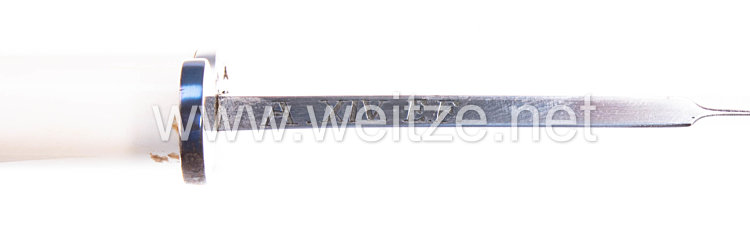
Faschistisches Italien Geschenkdolch der faschistischen Miliz M.V.S.N. an General Pistoia, Herzog von Savoyen, in Luxusausführung, 1936
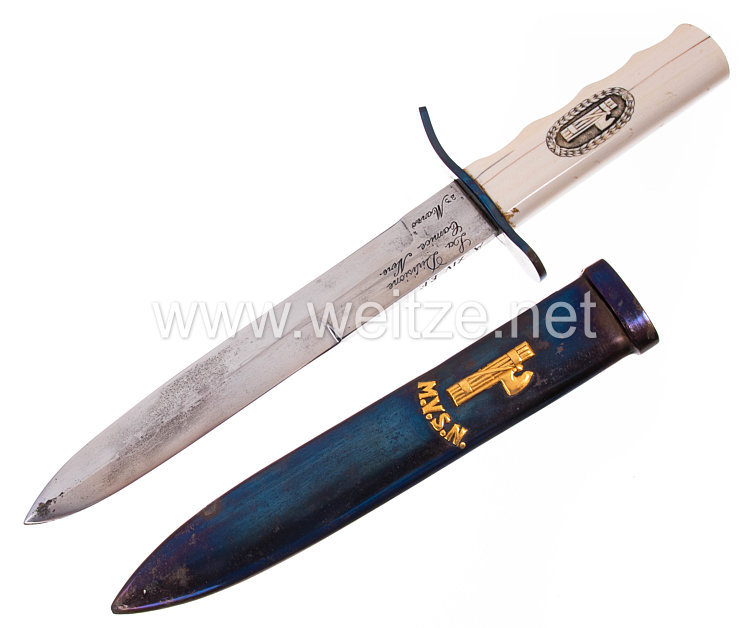
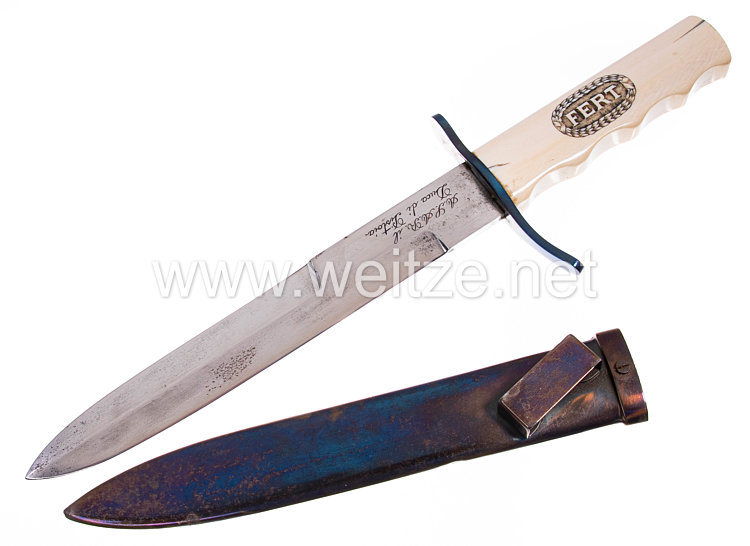
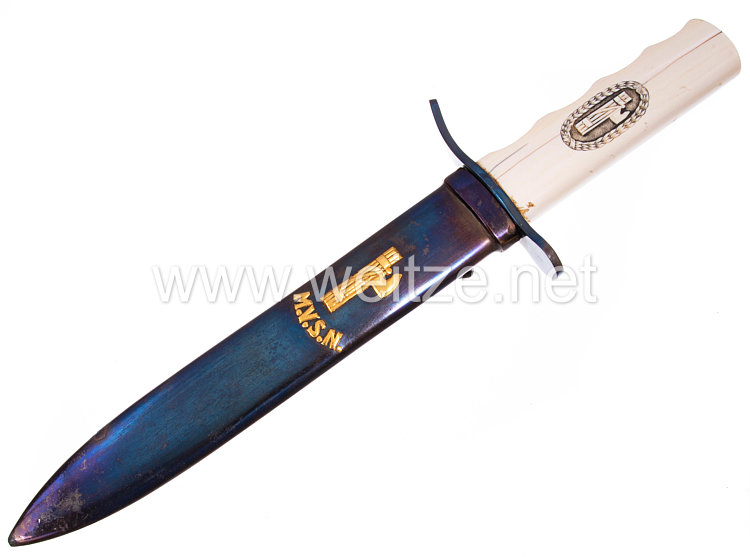
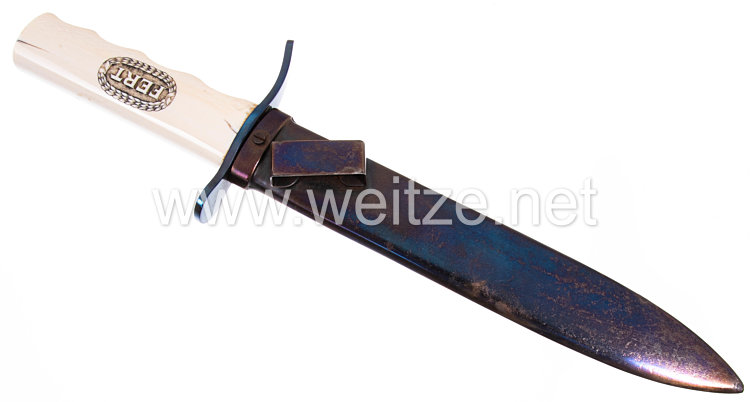
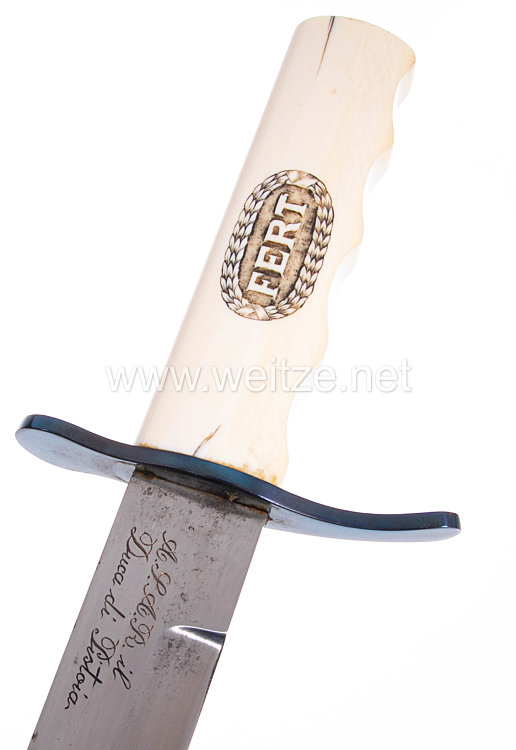
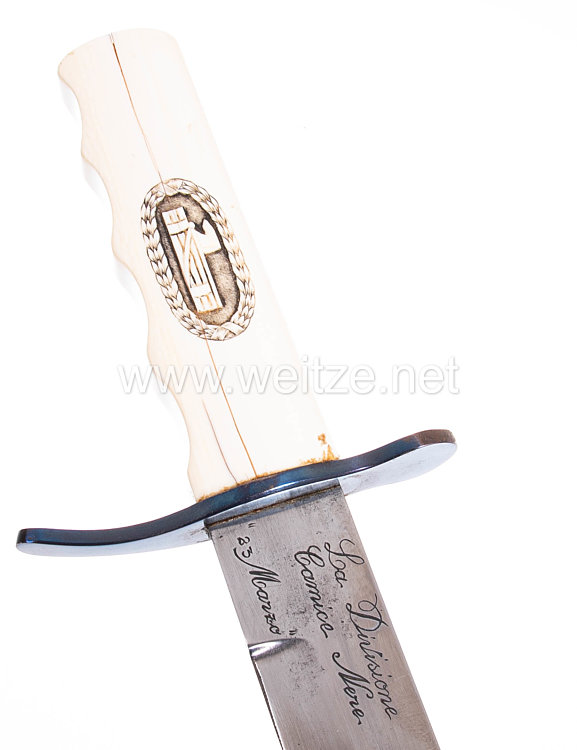
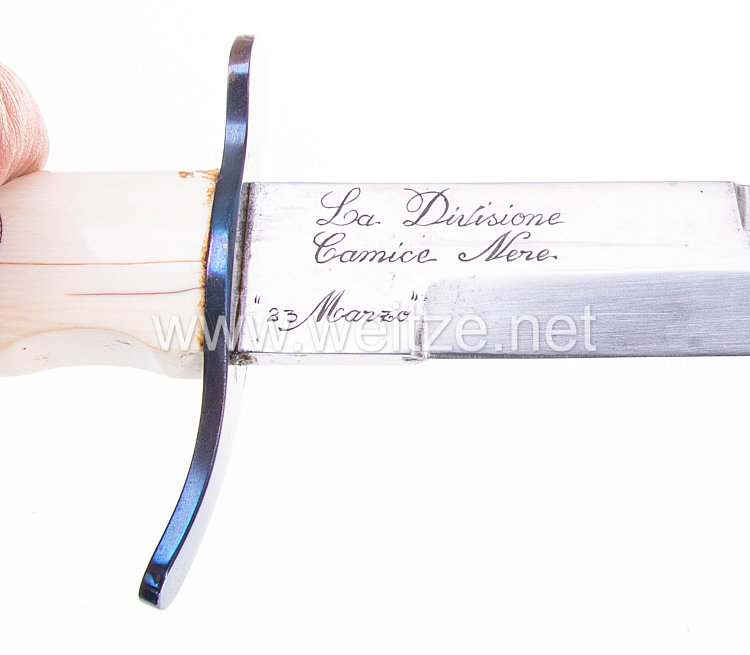
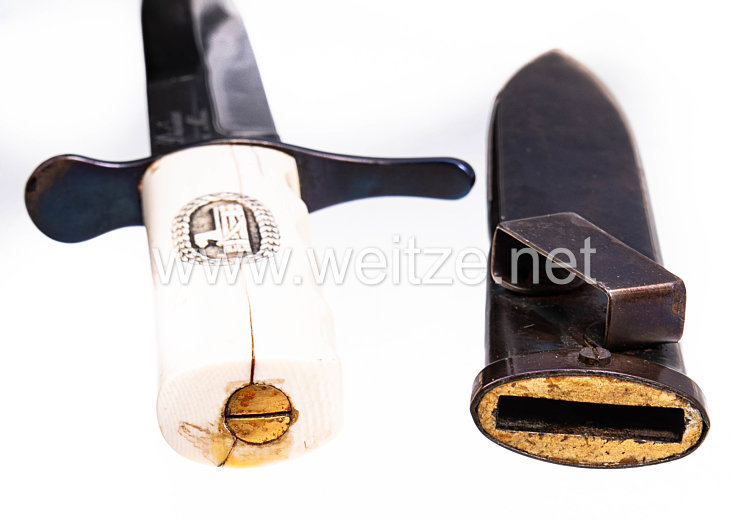
Der Dolch entspricht dem reglementierten Dolch der M.V.S.N. (Milizia volontaria per la sicurezza nazionale) in der Ausführung für Generale, allerdings in einer besonderen Luxusausführung. Anstelle der üblichen Holzgriffschalen ist das weiße Griffstück aus echtem Elfenbein, einteilig geschnitzt, auf der Vorderseite mit eingeschnitzt des faschistische Liktorenbündel in einem ovalen Lorbeerbündel. Rückseitig die gleiche geschnitzte Kartusche mit der Bezeichnung "FERT" des Hauses Savoyen. Die Parierstange gebläut. Die blanke Stahlklinge auf der Vorderseite mit Verleihungsgravur: "La Divisione / Camice Nere / "23 Marzo" (= Die Division der CCNN (Schwarzhemden) "23. März"). Auf der Rückseite mit Gravur: "A.S.A.R. il Duca di Pistoia" (A.S.A.R. = A Sua Altezza Reale = An Seine Königliche Hoheit). Auf dem Klingenrücken mit Jahreszahl "A. XIV. E.F." ( Anno XIV Epoca Fascista, das Jahr 14 der Faschistischen Epoche ist das Jahr 1936, gezählt ab der Machtübernahme der Faschisten im Jahr 1922). Gebläute Eisenscheide, die Auflagen Liktorenbündel und Bezeichnung: "M.V.S.N." aus Gold. Gesamtlänge 33 c. Nur leichte Trage- und Alterspuren, in sehr gutem Zustand.
Extrem selten, mit Sicherheit ein Unikat in höchster Anfertigungsqualität.
Filiberto di Savoia - Genova, Herzog von Pistoia (1895 - 1990). Der Herzog nahm am Ersten Weltkrieg im 1. Kavallerieregiment "Nizza" teil und war an einigen Kämpfen bei Monfalcone und am Isonzo beteiligt. Am 4. November 1918 gehörte er mit einer Schwadron seines Regiments zu den ersten, die in die Stadt Trient einmarschierte. Nach dem Krieg wurde sein Wohnsitz nach Bozen verlegt, um das Gefühl der nationalen Einheit in der Bevölkerung zu stärken. Seine militärische Laufbahn verlief in der Folge zwischen Italien und Italienisch-Ostafrika: 1929: Beförderung zum Oberst. 1932-1933: Kommandeur des 232. Infanterieregiments. 1933-1934: Kommandeur der 11. Infanteriebrigade. 1934: Beförderung zum Brigadegeneral. 1935-1937: Kommandierender General der 1. CC.NN.-Division. "23. März" der MVSN (in Äthiopien). 1936: Beförderung zum Divisionsgeneral. 1937-1938: Generalkommandant der 11. Infanteriedivision "Brenner". 1938-1939: Generalkommandant der Alpentruppen. 1940: Generalkommandant der 7. Armee. 1942: Inspektor der mobilen Truppen. Seine Division war die erste, die in Amba Aradam die Fahne des Königreichs Italien hisste, eine Operation, die ihm eine Silbermedaille"Al Valore Militare" und das Ritterkreuz des Militärordens von Savoyen einbrachte. Schöner und extrem seltener Dolch eines Divisionskommandeurs der M.V.S.N.
Anbei die CITES-Genehmigung für den Verkauf, Ein- und Ausfuhr nach dem Washingtoner Artenschutzübereinkommen, datiert 7.3.2023.
Extrem selten, mit Sicherheit ein Unikat in höchster Anfertigungsqualität.
Filiberto di Savoia - Genova, Herzog von Pistoia (1895 - 1990). Der Herzog nahm am Ersten Weltkrieg im 1. Kavallerieregiment "Nizza" teil und war an einigen Kämpfen bei Monfalcone und am Isonzo beteiligt. Am 4. November 1918 gehörte er mit einer Schwadron seines Regiments zu den ersten, die in die Stadt Trient einmarschierte. Nach dem Krieg wurde sein Wohnsitz nach Bozen verlegt, um das Gefühl der nationalen Einheit in der Bevölkerung zu stärken. Seine militärische Laufbahn verlief in der Folge zwischen Italien und Italienisch-Ostafrika: 1929: Beförderung zum Oberst. 1932-1933: Kommandeur des 232. Infanterieregiments. 1933-1934: Kommandeur der 11. Infanteriebrigade. 1934: Beförderung zum Brigadegeneral. 1935-1937: Kommandierender General der 1. CC.NN.-Division. "23. März" der MVSN (in Äthiopien). 1936: Beförderung zum Divisionsgeneral. 1937-1938: Generalkommandant der 11. Infanteriedivision "Brenner". 1938-1939: Generalkommandant der Alpentruppen. 1940: Generalkommandant der 7. Armee. 1942: Inspektor der mobilen Truppen. Seine Division war die erste, die in Amba Aradam die Fahne des Königreichs Italien hisste, eine Operation, die ihm eine Silbermedaille"Al Valore Militare" und das Ritterkreuz des Militärordens von Savoyen einbrachte. Schöner und extrem seltener Dolch eines Divisionskommandeurs der M.V.S.N.
Anbei die CITES-Genehmigung für den Verkauf, Ein- und Ausfuhr nach dem Washingtoner Artenschutzübereinkommen, datiert 7.3.2023.