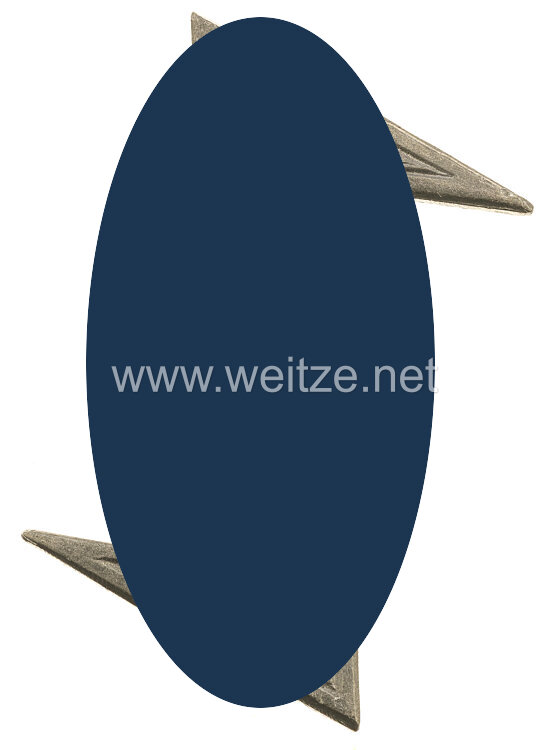
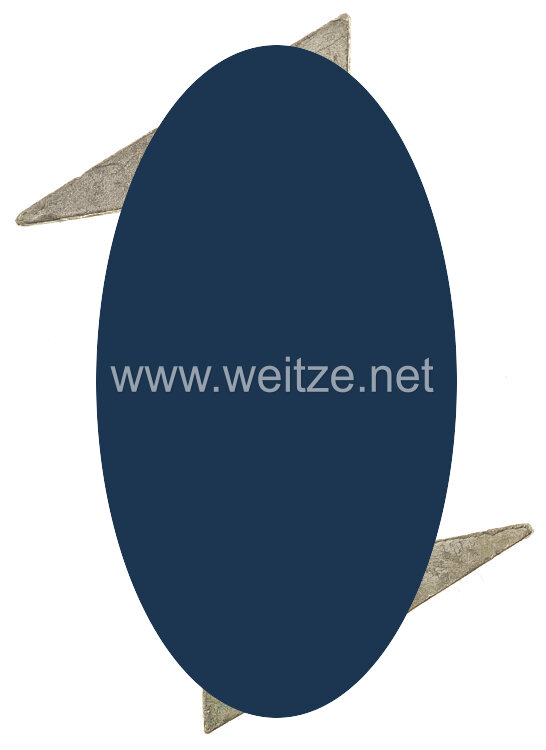
Allgemeine-SS in the Netherlands: Visor Cap Insignia

Dutch manufacture in aluminum, reverse with hinged pin attachment. Lightly worn in good condition. Very rare.

The visor cap for members of the Allgemeine-SS in the Netherlands was the same as that of the Allgemeine-SS in the German Reich, however instead of the national eagle, the Wolfsangel was worn.
458892
750,00

Allgemeine-SS in the Netherlands: Visor Cap Insignia

The cap badge of the Allgemeine SS in the Netherlands represents a rare and historically significant artifact from the period of Nazi occupation in Western Europe during World War II. Following the German invasion and occupation of the Netherlands in May 1940, the Nazi regime established a complex administrative structure that included the recruitment of Dutch volunteers for various SS formations.

The Allgemeine SS, in contrast to the armed Waffen-SS, functioned within the German Reich as a political organization of the NSDAP. With the occupation of the Netherlands, attempts were made to establish similar structures there as well. The Dutch variant of the Allgemeine SS differed in several details from its German counterpart, with the use of the Wolfsangel (wolf's hook) instead of the national eagle being the most distinctive feature.

The Wolfsangel, an ancient Germanic symbol, was used by various Dutch Nazi organizations, particularly by the Nationaal-Socialistische Beweging (NSB) under Anton Mussert. The NSB, founded in 1931, was the principal fascist party in the Netherlands and collaborated closely with the German occupiers after 1940. The integration of this symbol into the SS uniforms worn by Dutch members was intended to maintain a certain national identity while simultaneously demonstrating membership in the overarching SS organization.

The cap itself followed the standardized regulations of the Allgemeine SS in the German Reich. It typically consisted of black cloth with a black lacquered visor and black chin strap. The badge described here, manufactured in Dutch production from aluminum, was attached to the front of the cap. Local production of such insignia was common during the occupation period, as supply from Germany was often insufficient and local manufacturers had to meet the demand.

The construction with a clasp-type pin on the reverse was the standard attachment method for such badges. This technique allowed for relatively easy attachment and removal of the badge, which was practical in cases of damage or rank changes. Aluminum manufacture was material-efficient and corresponded to wartime conditions under which non-ferrous metals became increasingly scarce.

The recruitment of Dutch citizens for SS formations began as early as 1940 and intensified in subsequent years. While the Waffen-SS established several Dutch volunteer units, including the “Wiking” Division and later the “Nederland” Division, the Allgemeine SS in the Netherlands remained a smaller organization. Its members were often employed in administrative and political functions in the occupied territory.

The rarity of such badges today can be explained by several factors. First, the Dutch Allgemeine SS was limited in numbers. Second, after the liberation of the Netherlands in 1945, Nazi symbols and memorabilia were systematically destroyed. Many former collaborators destroyed their uniforms and badges out of fear of retaliation. Dutch post-war society dealt harshly with collaborators – tens of thousands were brought to trial, and social ostracism was massive.

The historical classification of such objects requires a nuanced examination. They are witnesses to a dark period in European history when parts of the Dutch population collaborated with the occupation regime. At the same time, they document the mechanisms by which the Nazi regime attempted to transfer its ideology and organizational structures to occupied territories, while making certain local adaptations.

For military historians and collectors, such badges represent important objects of study that illustrate the complex relationships between occupiers and occupied. The use of the Wolfsangel instead of the national eagle demonstrates how the Nazi regime propagandistically attempted to connect to supposedly “Germanic” traditions while simultaneously feigning a certain Dutch autonomy to facilitate recruitment.

The aluminum construction and local Dutch manufacture also reflect the economic realities of wartime occupation. As the war progressed and resources became scarcer, local production of military insignia and equipment became increasingly necessary. The quality and craftsmanship of such locally produced items varied considerably, making each piece a unique historical document of the circumstances under which it was created.

r