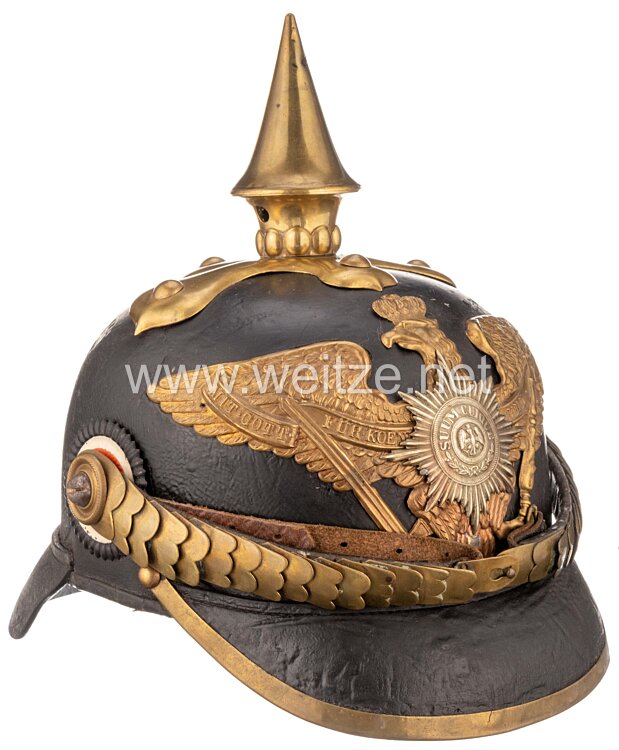
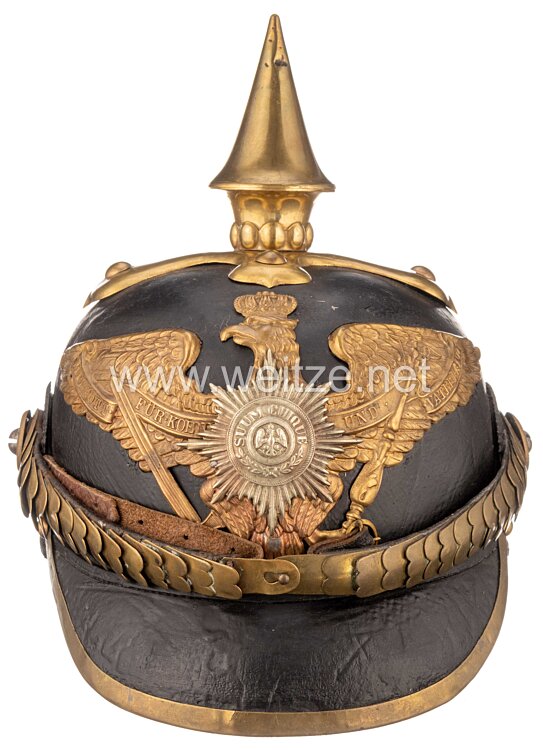
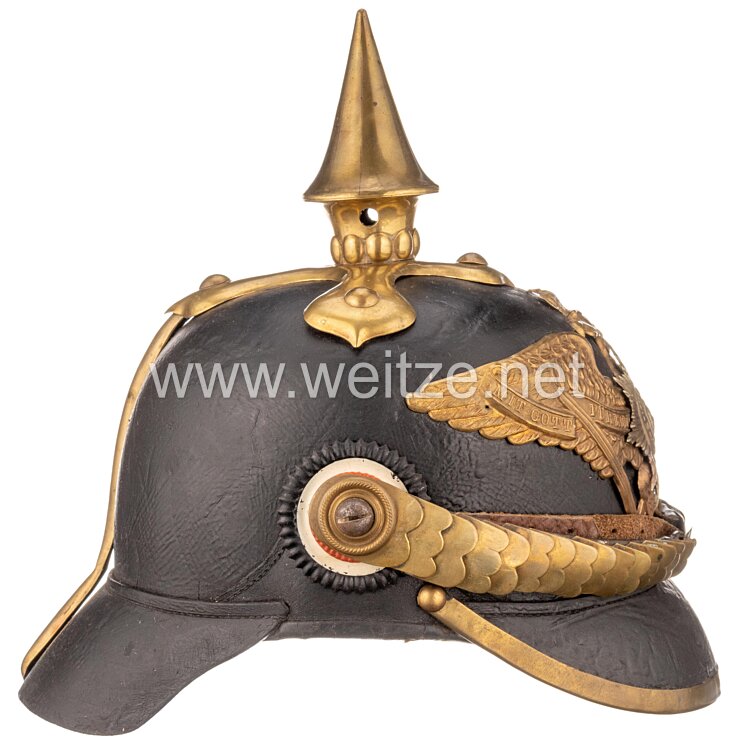
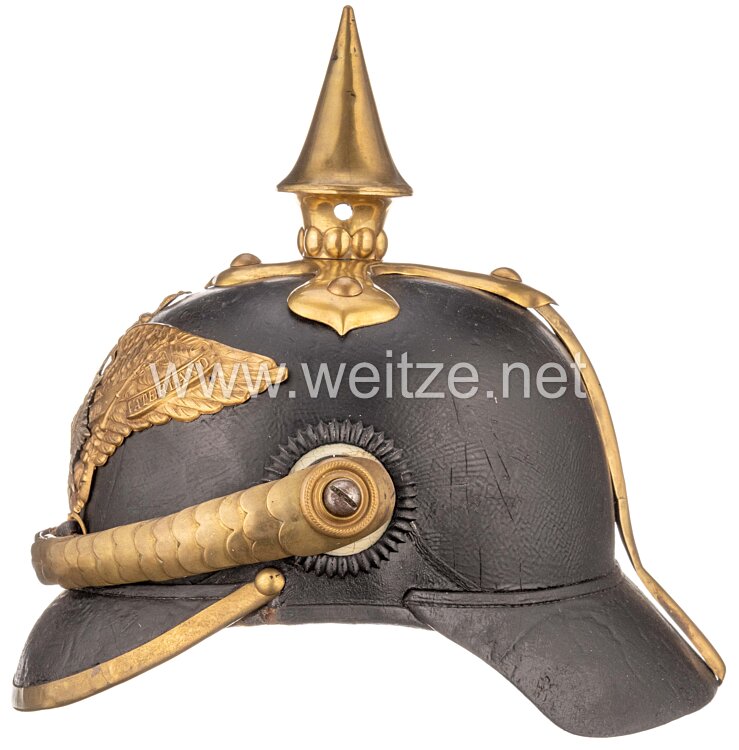
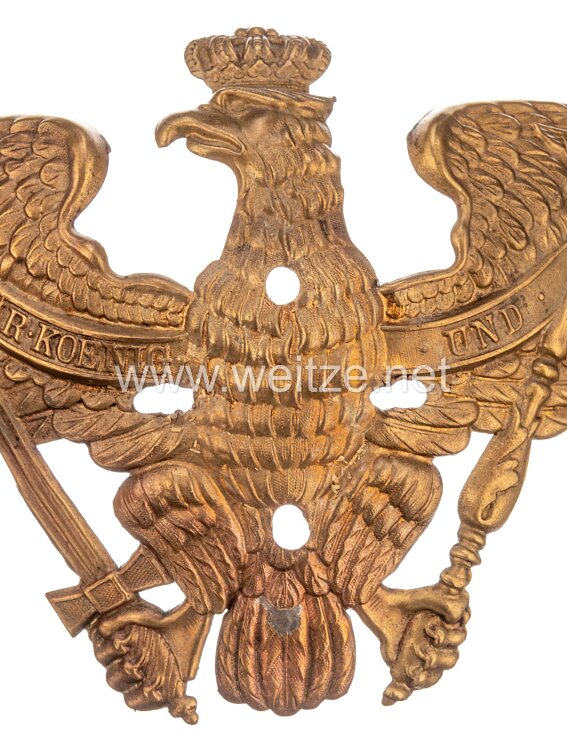
Prussian Pickelhaube Model 1867/71 for Enlisted Men of the Landgendarmerie
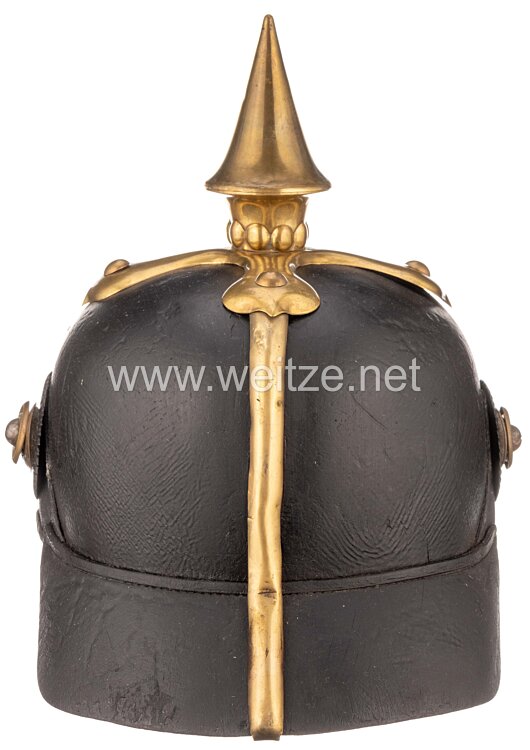
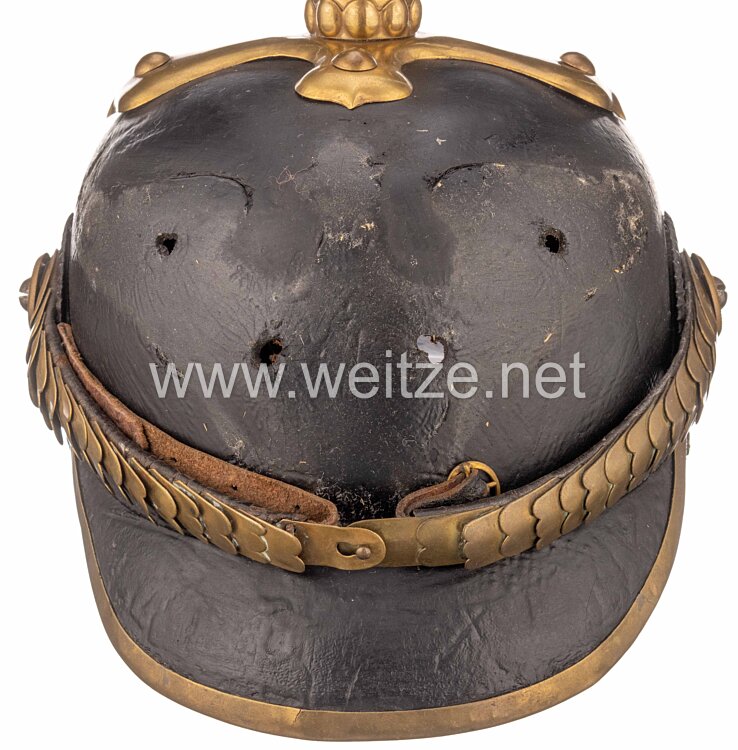
The Prussian Pickelhaube Model 1867/71 for enlisted men of the Rural Gendarmerie (Landgendarmerie) represents a significant chapter in the history of German military uniforms and state law enforcement in the late 19th century. This distinctive helmet model, manufactured around 1870 and in service until after 1897, embodies both Prussian military tradition and the increasing professionalization of rural police forces.
The Landgendarmerie held central importance in the Kingdom of Prussia for maintaining public order in rural areas. Following the reorganizations of the 1860s, this institution was developed into an effective, militarily-organized police force. The gendarmes were subordinate to the War Ministry and uniformed accordingly, with their equipment closely modeled on military patterns.
Model 1867/71 marks an important transitional phase in the development of Prussian helmets. After the German War of 1866 and the founding of the Empire in 1871, uniform regulations were standardized and adapted. The heavy leather helmet from this period is characterized by its robust construction of pressed and molded leather, which offered both protection and representation. Manufacturing such helmets required specialized craftsmanship, with the leather processed in multiple layers and pressed into the characteristic shape.
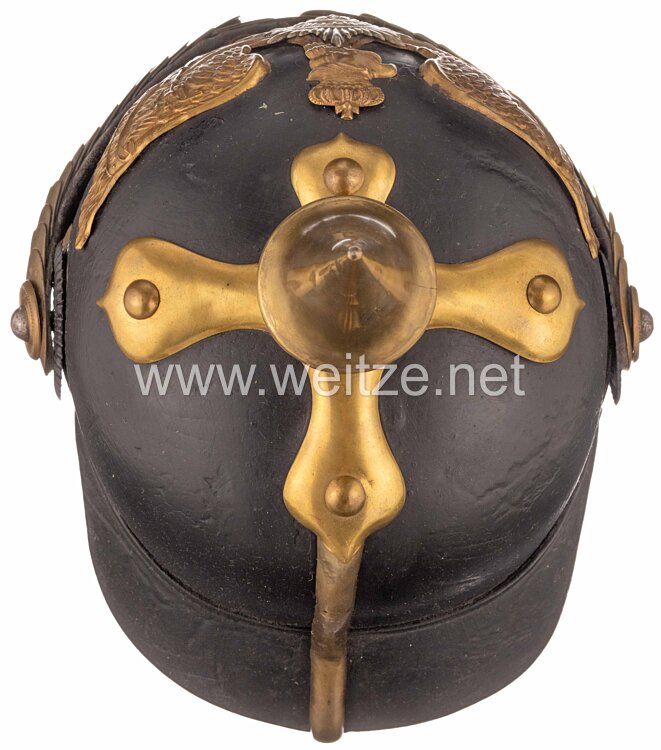
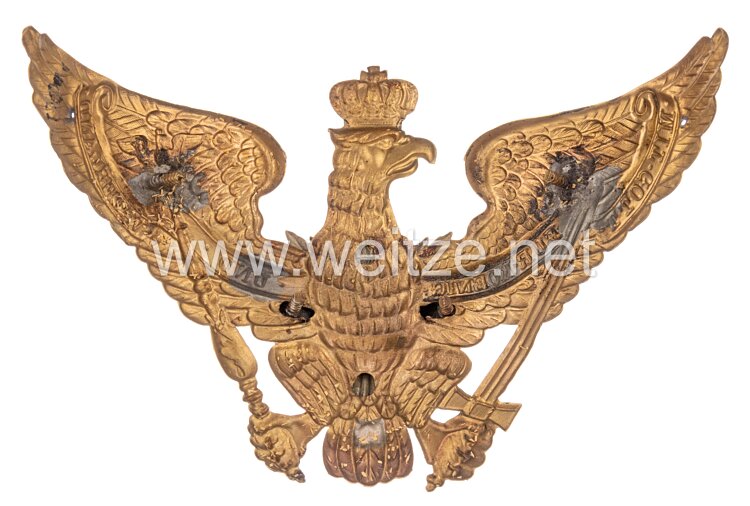
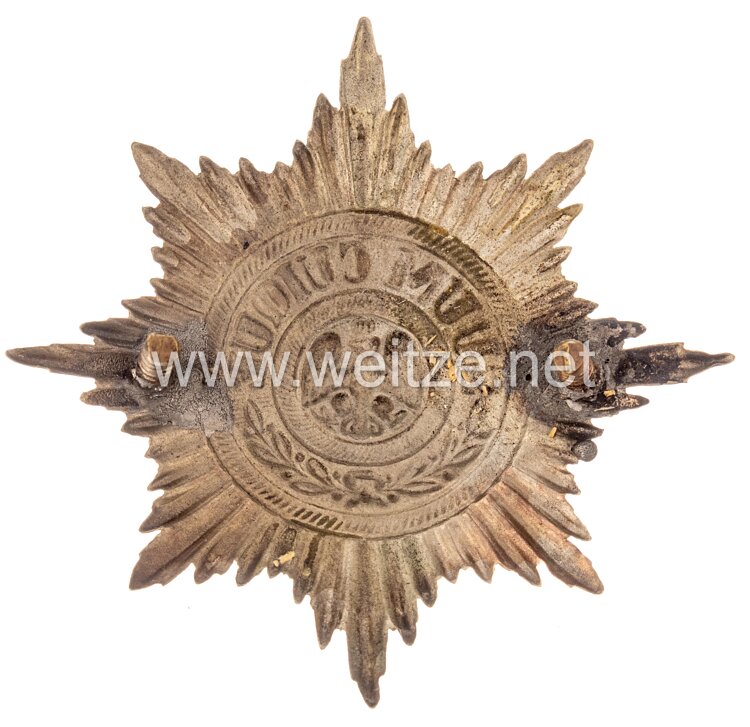
Particularly noteworthy on this helmet type is the large Guard eagle with applied Guard star on the front. This decoration indicates the special status of the Landgendarmerie, which despite its police function maintained a close connection to the Guard formations. The Prussian eagle, the heraldic symbol of the Hohenzollern monarchy, symbolized the direct royal authority under which the gendarmerie operated. The Guard star additionally reinforced this connection to the military elite.
The curved scale chains, attached to small rosettes with iron screws, originally served a practical purpose: they were meant to secure the helmet on the head and could be fastened under the chin when needed. Over time, however, they increasingly developed into a decorative element. The rosettes themselves were frequently adorned with regimental insignia or other markings.
A particularly interesting historical detail is the presence of both cockades. The Reich cockade in black-white-red was only officially introduced from 1897 and worn in addition to the Prussian cockade in black-white. This marks the increasing integration of individual state troops into the overall structure of the German Empire. The Prussian cockade retained its place as an expression of state affiliation, while the Reich cockade symbolized the overarching national identity.
The cross-shaped base with removable spike is a characteristic feature of the Pickelhaube. This spike, often called the “Pickel” and giving the entire helmet its name, had both decorative and symbolic significance. The ability to remove it was practical for transport and storage. The neck of the spike with pearl edging demonstrates the craftsmanship invested in these pieces of equipment.
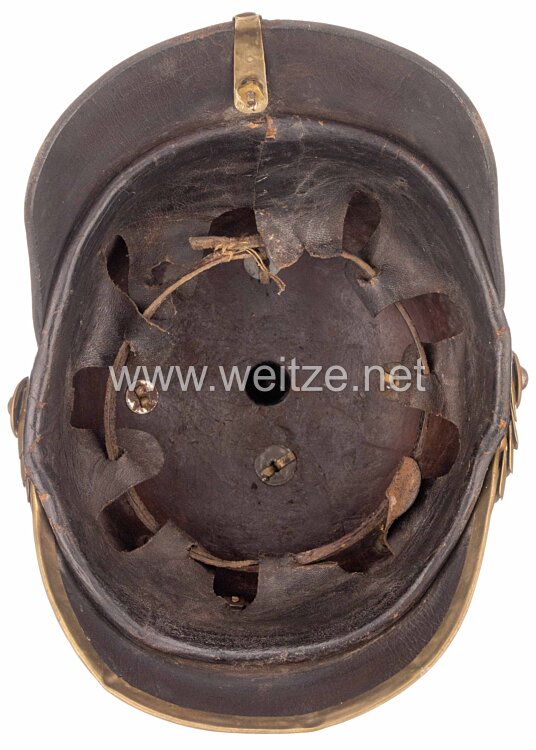
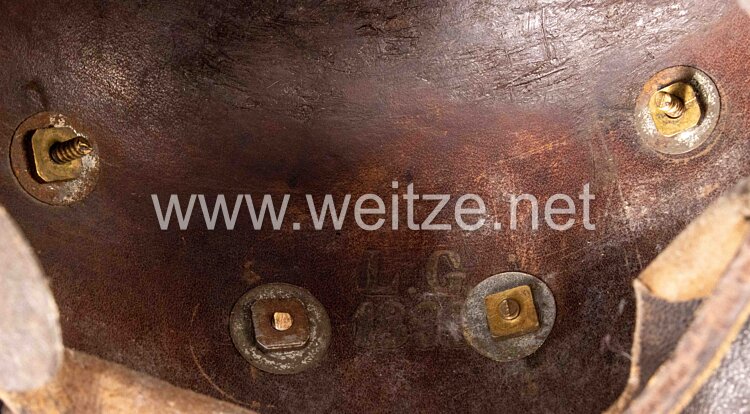
The construction with round front visor and rear spine followed proven functional principles. The front visor offered protection from sun and weather as well as from blows from above, while the helmet spine served for stabilization and attachment of fittings. The tabbed leather lining inside provided wearing comfort and sweat absorption during long periods of duty.
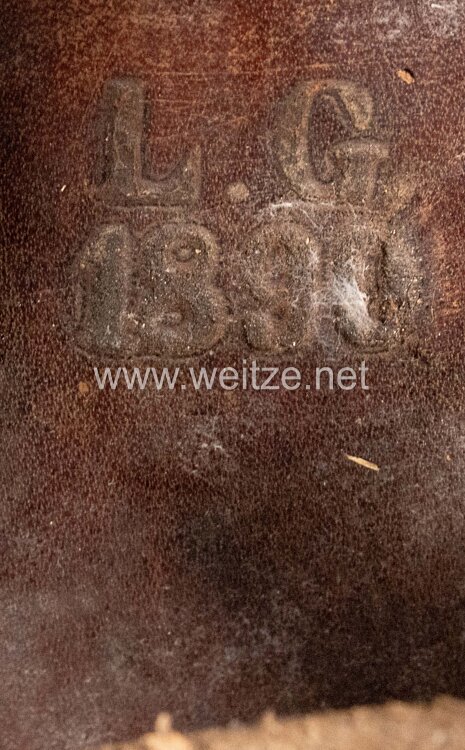
Size 57 corresponds to a head circumference of approximately 57 centimeters and was a standard size for adult men of this era. Helmets were manufactured in various sizes to ensure the best possible fit for wearers.
The long wearing period until after 1897 attests to the quality and durability of these helmets. In an era of rapid technological and social change, the Pickelhaube remained a constant symbol of Prussian state power and military tradition. Only with the progressive modernization of armament and the experiences of later conflicts was this iconic headpiece finally replaced by more practical models.
The Landgendarmerie itself played an important role in enforcing state authority in the countryside, from crime fighting to monitoring itinerant workers to assisting with tax collection. Their military training and equipment made them an imposing presence in the rural communities of the Kingdom of Prussia and later the German Empire.