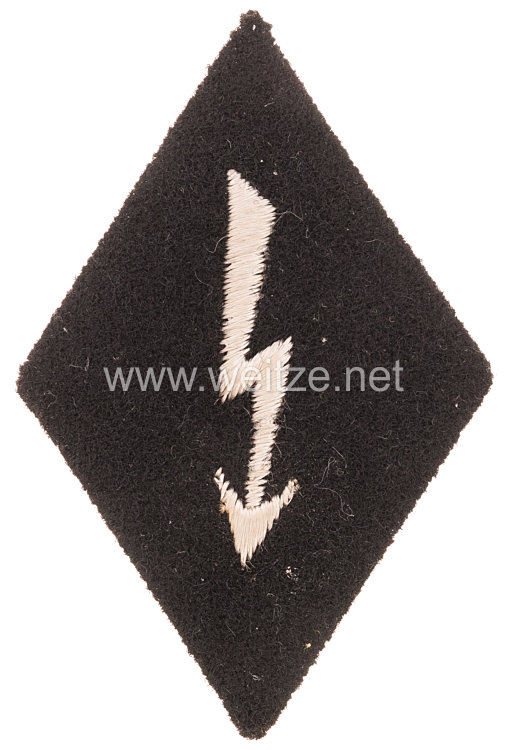
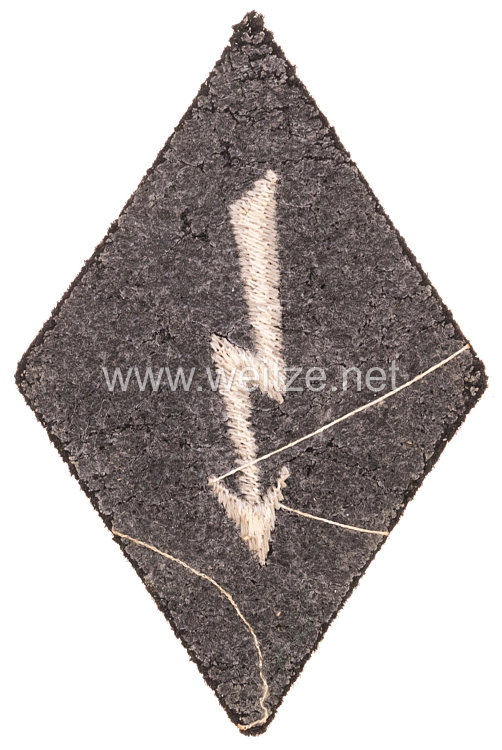
SS Sleeve Diamond for Radio Operator

RZM machine-embroidered version. Unissued, condition 2+.
431389
200,00

SS Sleeve Diamond for Radio Operator

The SS sleeve insignia for radio operators represents a significant example of the complex uniform identification systems employed by the Waffen-SS during World War II. These specialized badges served the immediate purpose of identifying communications personnel within the military hierarchy and reflect the high importance placed on radio communication in modern warfare.

The introduction of specialized sleeve insignia in the SS occurred as part of a comprehensive standardization of uniform regulations in the late 1930s. The Reichszeugmeisterei (RZM) system was established to control the quality and uniformity of all Party and SS equipment items. The RZM was the central procurement and certification authority of the NSDAP, enforcing strict quality standards and supervising licensed manufacturers.

The machine-embroidered execution of this sleeve diamond indicates a production period when industrial manufacturing methods were already established. While early SS insignia were frequently produced through elaborate handwork, machine embroidery from approximately 1939-1940 enabled more efficient mass production. This technique typically used artificial silk or cotton thread on a cloth base, with characteristic lightning runes or specialty-specific symbols precisely embroidered.

Radio operators formed an essential specialization within the Waffen-SS. With increasing motorization and the development of Blitzkrieg tactics, radio communication became a decisive factor in coordinating rapid armored advances and combined operations. Radio operators were trained in specialized signals schools, where they learned to operate various radio equipment such as the Torn.Fu. system.

The sleeve insignia was typically worn on the left upper arm of the uniform tunic, approximately 15 cm below the shoulder seam. The position and design were precisely defined by detailed uniform regulations documented in various service instructions and decrees. The coloring also followed strict guidelines: signals troops typically used brown or yellow branch colors on black or field-gray backgrounds, depending on the respective uniform variant.

The “unworn” condition is of particular historical significance for such insignia. It suggests that the piece was either kept as a spare part or never issued. Many such unworn examples originate from depot stocks that were secured by Allied troops after the war's end. The preservation of such objects in nearly mint condition enables detailed studies of manufacturing techniques and materials today.

The RZM marking on such insignia frequently included a manufacturer code that allowed attribution to specific production facilities. Dozens of licensed manufacturers throughout the Reich territory produced SS insignia, including well-known firms in Berlin, Munich, and other centers of the textile industry.

From today's perspective, such objects are important historical sources for uniform studies and military history. They document the organizational complexity and technological standards of the time. Simultaneously, as relics of a criminal organization, they serve as reminders for critical examination of history. The scholarly study of such objects serves historical education and preservation of memory of the victims of National Socialism.

The research of SS uniform components contributes to understanding military structures and helps recognize the mechanisms through which ideological indoctrination was combined with military efficiency. The meticulous regulation of even the smallest uniform details reflects the totalitarian regime's claim to control and standardize all aspects of life.

Military historians and researchers continue to study these artifacts not to glorify the organization they represent, but to maintain comprehensive documentation of this dark period. Museums and academic institutions preserve such items as educational tools, ensuring that future generations understand the full scope of the Nazi regime's structure and the importance of preventing such ideologies from rising again.