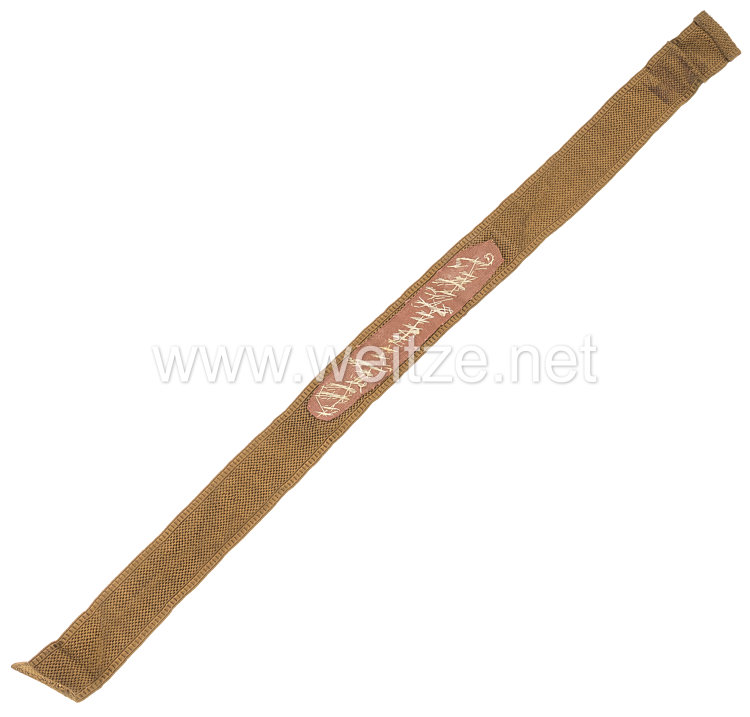
SA Standarte “Feldherrnhalle” Cuff Title for Leaders - Variant

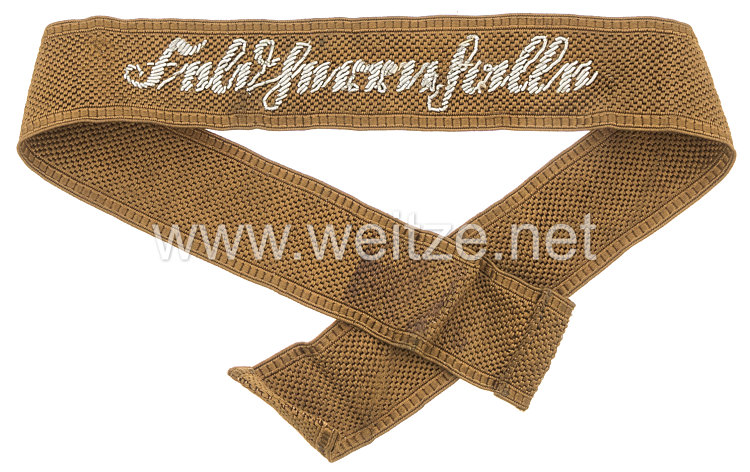
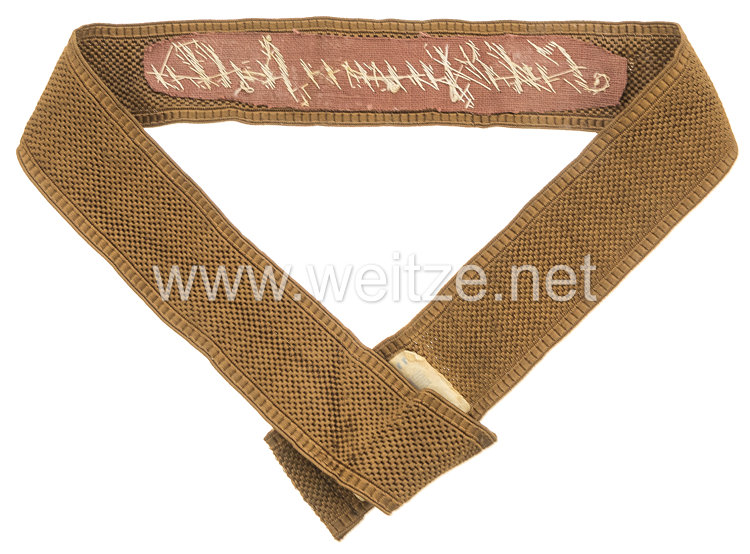
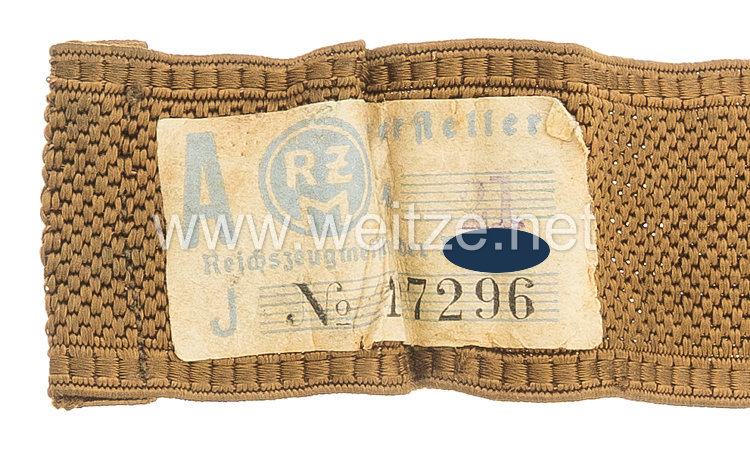
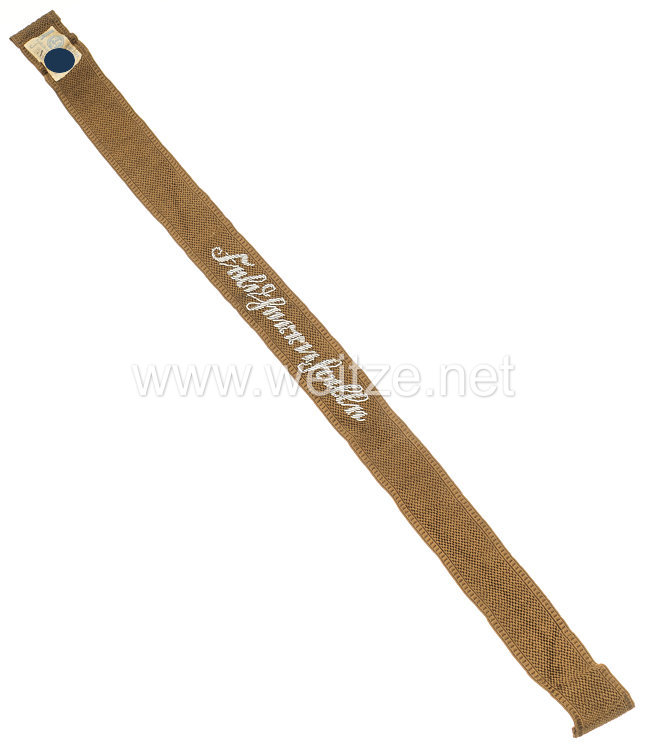
The cuff title in the typical brown woven construction, with brown stripes at top and bottom. The inscription “Feldherrnhalle” in hand-embroidered metal bullion thread execution. Full length with hemmed ends, right side with the RZM paper label “A” in light blue. Unworn, condition 2+.
A very, very rare variant.
445189
1.500,00

SA Standarte “Feldherrnhalle” Cuff Title for Leaders - Variant

The SA Armband “Feldherrnhalle” represents one of the rarest and most historically significant insignia of the National Socialist Sturmabteilung (Storm Detachment). The creation of this special armband is inseparably connected to the events of the failed Hitler Putsch of November 9, 1923 in Munich, a turning point in the history of the NSDAP.

On November 9, 1923, Adolf Hitler, together with General Erich Ludendorff and other leading National Socialists, attempted to overthrow the Reich government through an armed uprising. The march through Munich ended in front of the Feldherrnhalle (Field Marshals' Hall) in a firefight with the Bavarian State Police, resulting in the deaths of 16 putschists and four police officers. Although the putsch failed, this day was later elevated by the National Socialists to become a central myth of their movement.

After the seizure of power in 1933, the event was given a central role in Nazi propaganda. The SA-Standarte “Feldherrnhalle” was established as an elite unit to honor the “martyrs of the movement.” This Standarte enjoyed special status within the SA organization, and its members wore the distinctive armband as a sign of their membership in this prestigious unit.

The specimen described here represents the Führer variant of the armband, which explains its particular rarity. While ordinary ranks wore armbands with machine-woven or printed lettering, the leader armbands were characterized by hand-embroidered metallic thread execution. This elaborate manufacturing process required considerably more time and craftsmanship, which severely limited production numbers.

The technical characteristics of this armband conform to RZM regulations (Reichszeugmeisterei), the central procurement office of the NSDAP. The brown base fabric with brown border stripes at top and bottom was characteristic of SA armbands and differed markedly from the black variants of the SS. The attachment of the light blue RZM paper label marked “A” indicates authorized manufacture by a licensed producer.

The Reichszeugmeisterei was founded in 1929 and controlled the production and distribution of all uniform parts and insignia of the NSDAP and its formations. Manufacturers had to acquire a license, and their products were marked with corresponding identifications. The system was designed to ensure quality and prevent counterfeits, but simultaneously created a lucrative monopoly for authorized producers.

The SA, founded in 1921 as the paramilitary combat organization of the NSDAP, reached a strength of several million members by 1934. After the “Röhm Affair” in June 1934, during which the SA leadership was murdered, the organization lost considerable political significance. However, the Feldherrnhalle Standarte retained its special status and was later partially transferred to the Wehrmacht.

From 1936 onward, parts of the SA-Standarte “Feldherrnhalle” were used to form the Wehrmacht's Infantry Regiment “Feldherrnhalle,” later expanded to a division and finally to a Panzer corps. These units continued the tradition of the name during World War II, with their members partially maintaining SA traditions.

The unworn condition of the described armband is remarkable, as most of these pieces were used in active service. The full length with hemmed ends demonstrates the high-quality workmanship characteristic of leader pieces. The metallic thread embroidery of the inscription “Feldherrnhalle” required specialized embroidery businesses that existed only in limited numbers.

From a historical perspective, such objects document the elaborate symbolism and hierarchy within Nazi organizations. The differentiation between enlisted and leader versions reflected the strictly stratified structure in which even the smallest details of appearance communicated the wearer's rank and status.

Today, authentic SA armbands “Feldherrnhalle” in leader execution are extremely rare on the collector market. Many specimens were lost during the war or destroyed after 1945 during denazification. The presence of the original RZM label significantly increases the historical authenticity and documentary value.

r