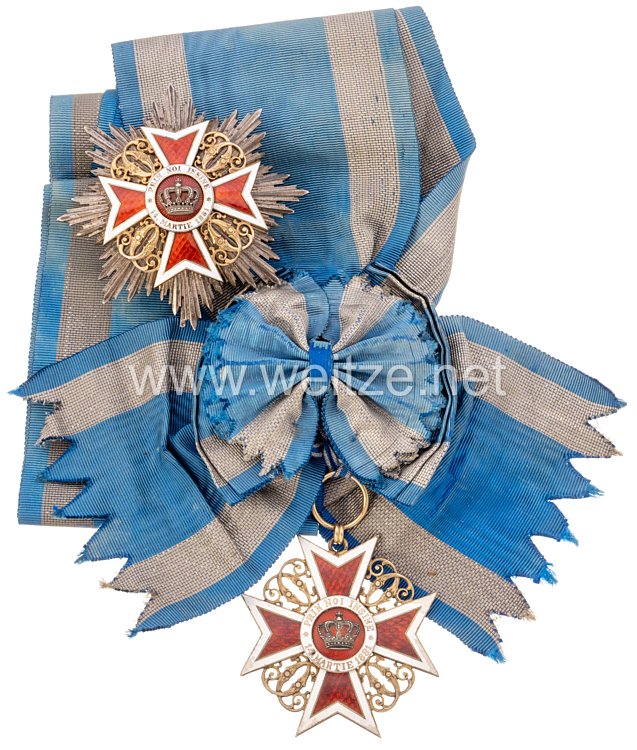
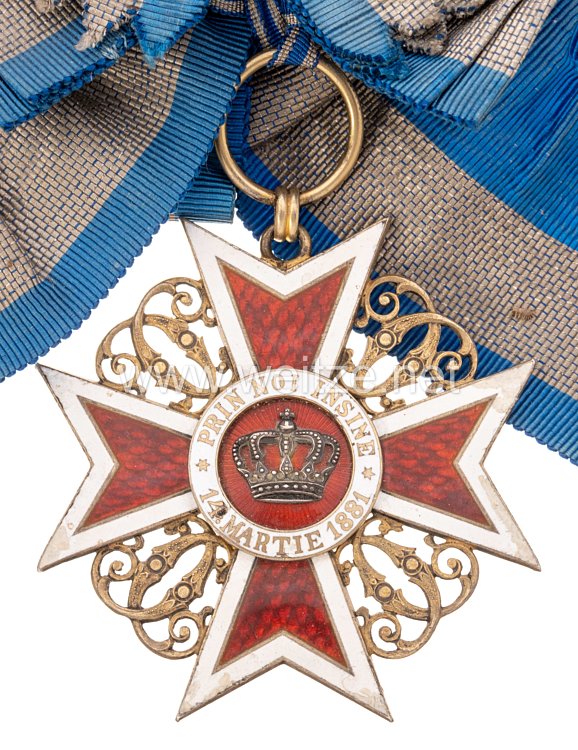
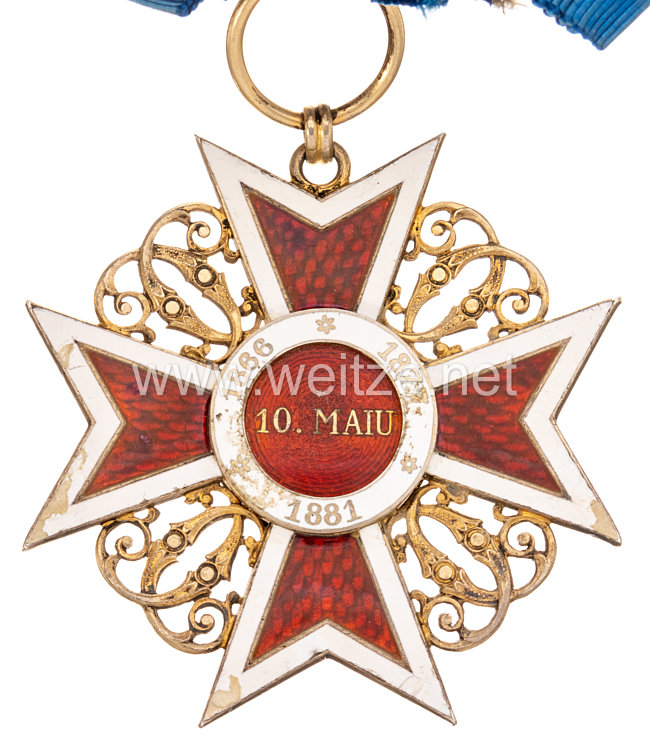
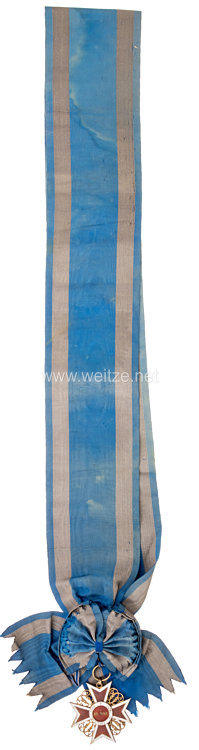
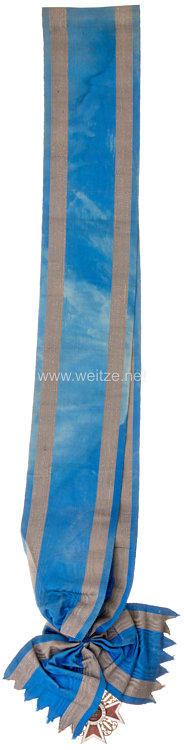
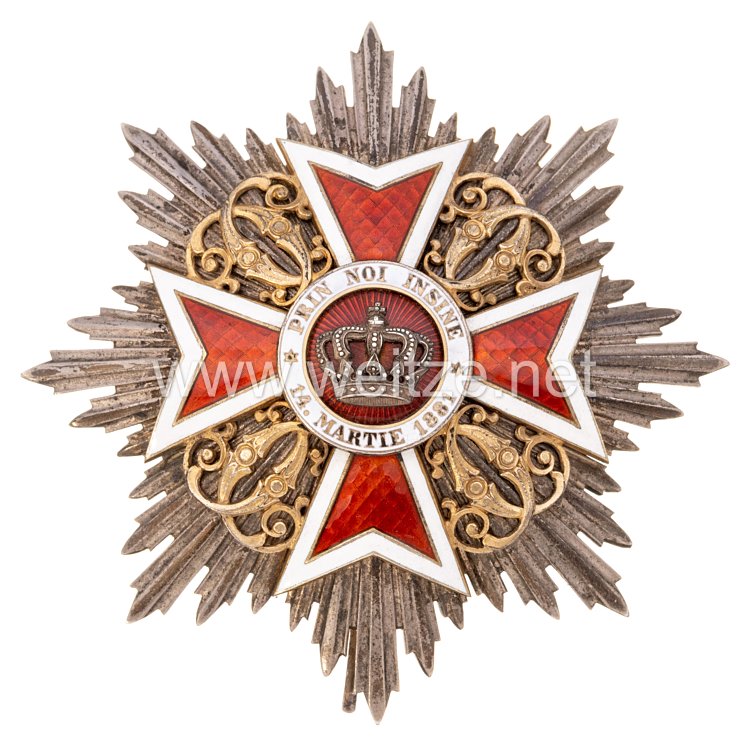
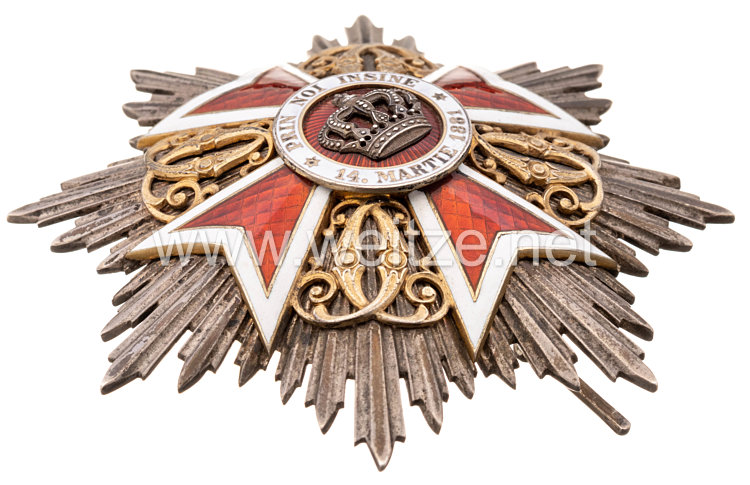
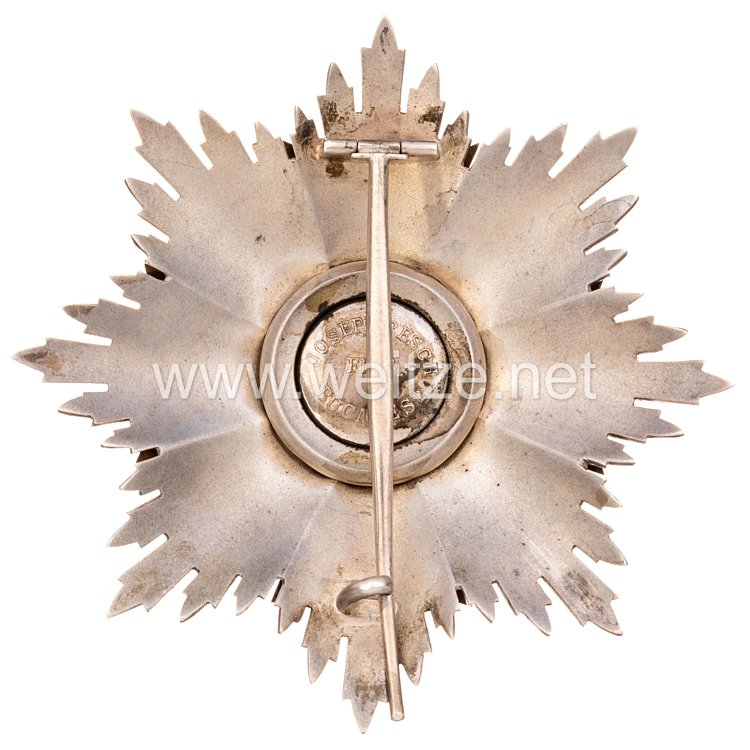
Order of the Crown of Romania 1st Model (1881-1932) Grand Cross Set
The Order of the Crown of Romania (Ordinul Coroana României) represents one of the most significant state decorations of the Kingdom of Romania and was established on May 10, 1881 by King Carol I on the occasion of his proclamation as King. The introduction of this order marked an important moment in Romanian history, as the country was elevated from a principality to a kingdom only in 1881.
This Grand Cross set of the first model (1881-1932) represents the highest or second-highest class of this prestigious decoration, depending on the specific ranking system of the respective period. The order was awarded in various classes: Grand Cross with sash, Grand Officer, Commander, Officer, and Knight. The Grand Cross was reserved for high dignitaries, foreign heads of state, ambassadors, and generals.
The design of the first model followed the heraldic traditions of European monarchies of the late 19th century. The badge is made of silver gilt and is finely enameled on both sides. The characteristic form typically shows a cross with the Royal Crown of Romania at the center, surrounded by an enameled band with the inscription of the motto. The blue enameling was particularly characteristic of Romanian orders of this epoch.
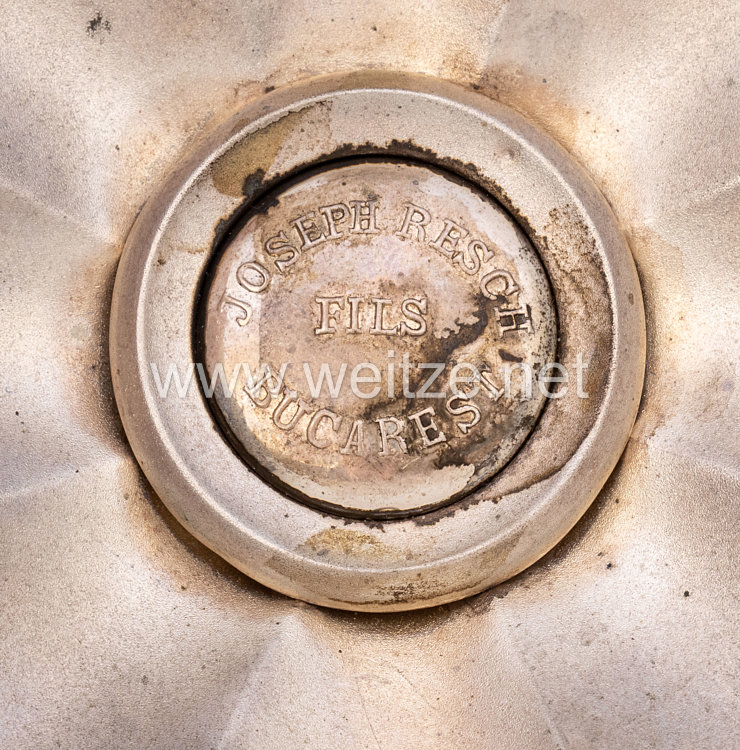
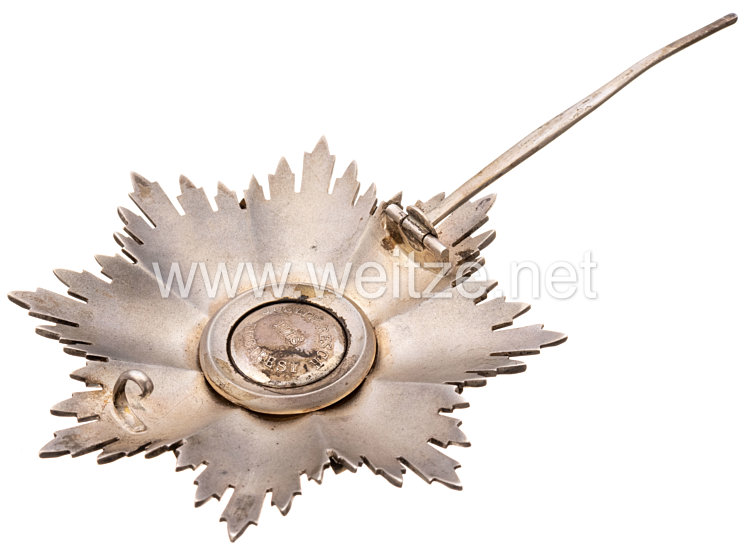
The breast star, crafted from silver with a gilt and enameled center, bears the maker's mark “Joseph Resch Fils Bucarest”. The Resch family belonged to the most renowned jewelers and order manufacturers in Bucharest during the monarchy. Joseph Resch Fils (Son) ran the business in the second generation and supplied the royal court as well as the order administration. The workshops in Bucharest produced orders of the highest craftsmanship quality, which could easily compete with Viennese or Parisian productions.
The shoulder sash of the Grand Cross was traditionally worn from the right shoulder to the left hip, where the badge hung. The breast star was attached to the left breast side. This manner of wearing corresponded to international conventions for Grand Cross decorations and allowed the simultaneous display of both components at official occasions.
The Order of the Crown of Romania was awarded to both Romanian citizens and foreigners. It served as an instrument of diplomacy and recognition of special merits to the Romanian state. During World War I, numerous Allied officers and diplomats received this decoration when Romania entered the war on the side of the Entente in 1916. The order remained an important sign of royal favor during the interwar period as well.
The first model (1881-1932) differs in various details from the second model, which was introduced from 1932 under King Carol II. The changes concerned both stylistic elements and manufacturing techniques. Collectors and experts can distinguish between the two models based on the enameling, the crown shape, and other detailed features.
The craftsmanship of these orders reached the highest level. The enamel work required specialized techniques in which colored glass masses were applied in several layers and fired at high temperatures. The gilding was carried out according to traditional methods, and the silver work demonstrated masterful engraving and chasing artistry.
After World War II and the abolition of the monarchy in 1947, the Order of the Crown of Romania became obsolete. The communist government introduced a new system of state decorations. Many orders were taken into exile by their bearers or found their way into collections outside Romania through various means.
Today, complete Grand Cross sets of the first model represent significant historical artifacts that document both the artisanal tradition and the political history of the Kingdom of Romania. They are sought-after collector's items that represent the era of European monarchies and their diplomatic culture. The preservation of such ensembles contributes to the understanding of Romanian history and European orders and decorations.