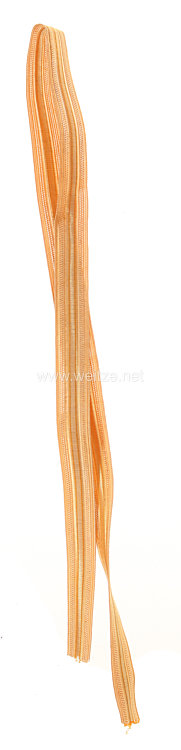
Kriegsmarine Sleeve Braid “Zwischenstreifen” for Kapitänleutnant

Metal thread, width: approx. 0.9 mm, length: approx. 40 cm, condition 2
440289
25,00

Kriegsmarine Sleeve Braid “Zwischenstreifen” for Kapitänleutnant

The Kriegsmarine sleeve braid for the rank of Kapitänleutnant (Lieutenant Commander) represents a significant example of German naval uniform regulations during World War II. This particular type, known as a Zwischenstreifen (intermediate stripe), was worn on the sleeves of service jackets and served to immediately identify an officer's rank within the hierarchical structure of the Kriegsmarine.

The Kriegsmarine, officially established on June 1, 1935 as the successor to the Reichsmarine, developed a complex system of rank insignia based on traditional German naval conventions. The rank of Kapitänleutnant corresponded to that of a Captain (Hauptmann) in the Army and represented a middle officer rank. Kapitänleutnants frequently commanded smaller warships, U-boats, or served as executive officers on larger vessels.

This sleeve braid was manufactured from metal thread, typically gold or silver-plated material, applied on a dark blue background. The width of approximately 0.9 mm corresponds to the standardized specifications of the Anzugsordnung für die Kriegsmarine (Dress Regulations for the Kriegsmarine), which prescribed precise measurements for all uniform components. This braid was attached as a narrow stripe between wider rank insignia, hence the designation “Zwischenstreifen” or intermediate stripe.

The rank insignia of a Kapitänleutnant consisted of two medium stripes with a narrow intermediate stripe between them. This configuration allowed for quick visual identification of rank, which was crucial in the military command structure. The length of approximately 40 cm was sufficient to cover the entire sleeve circumference, with the braid sewn above the sleeve cuff.

The uniform regulations of the Kriegsmarine were detailed in the Marineverordnungsblatt (Naval Regulations Gazette) and subject to strict quality controls. Officers were required to have their uniforms made by authorized tailors or obtain them from official sources. Metal thread braids were produced either by specialized manufacturers such as ASSMANN, Friedrich Linden, or other recognized firms that produced military accoutrements.

The condition rating of 2 indicates a well-preserved specimen showing only minor signs of use. This is remarkable, as metal braids frequently suffered oxidation, discoloration, or mechanical damage through wearing, cleaning, and storage over decades. The preservation of such details is of great value for historical studies, as it provides insights into the manufacturing techniques and material quality of the period.

The Kriegsmarine played a central role in German warfare, particularly in the Atlantic and European waters. Kapitänleutnants were often U-boat commanders or executive officers on destroyers, torpedo boats, and other warships. Their responsibility was immense, and their rank insignia symbolized not only authority but also the years of training and experience required for this position.

After the end of World War II in May 1945, most uniform parts of the Wehrmacht and Kriegsmarine were destroyed, confiscated, or taken as souvenirs by the victorious powers. Surviving examples like this sleeve braid therefore have special historical and collectible value. They serve as material witnesses to a significant, albeit dark, period of German history.

For collectors and historians, such objects offer important insights into the material culture of the military, the production standards of the era, and the symbolic significance of rank insignia. The precise workmanship and use of high-quality materials reflect the importance that the Nazi regime attached to military presentation and hierarchy.

r