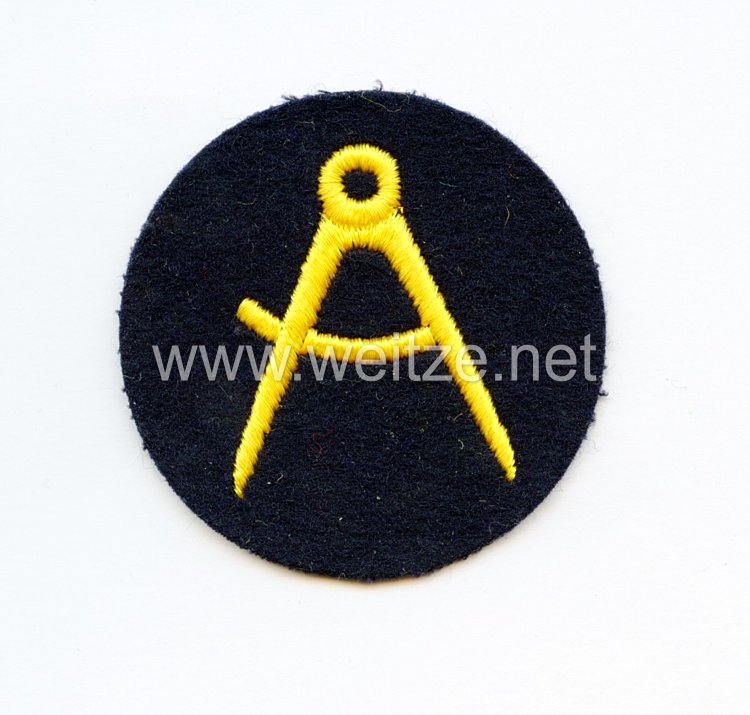
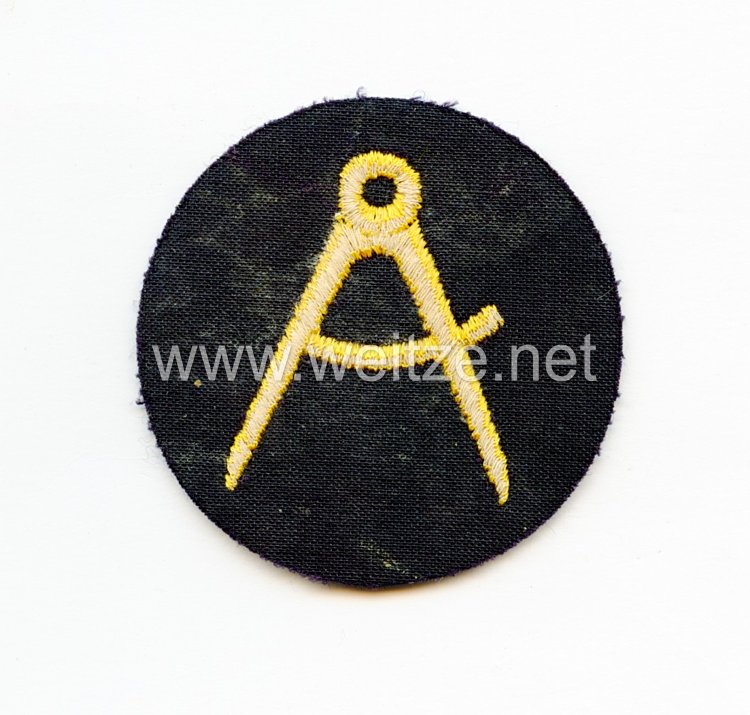
Kriegsmarine Enlisted Ranks Career Specialty Sleeve Insignia Carpenter
The Kriegsmarine Enlisted Trade Badge for Carpenters represents a fascinating example of the complex rank insignia and specialization systems employed in the German Navy during World War II. This particular badge was worn on the blue uniform and identified naval personnel with specialized training as ship's carpenters.
The Kriegsmarine, the official designation of the German Navy from 1935 to 1945, implemented a sophisticated system of trade badges to identify the various technical specializations within the enlisted ranks. This system was regulated by the Anzugsordnung für die Kriegsmarine (Dress Regulations for the Kriegsmarine), first introduced in 1935 and modified several times in subsequent years.
The carpenter held a significant role aboard warships. His duties included maintaining and repairing all wooden structures on board, maintaining hatches, doors, and other woodwork, as well as emergency repairs in case of battle damage. Although warships were increasingly constructed of steel, wood remained an important material for numerous fixtures, furniture, deck planking, and other elements aboard ship.
The sleeve badge was typically worn on the left upper arm of the blue uniform, usually between the shoulder and elbow. The blue uniform, also known as the service dress or walking-out uniform, was the standard service dress for enlisted personnel and petty officers of the Kriegsmarine. These uniforms were made from dark blue cloth and worn on various occasions, both aboard ship and ashore.
The design of such trade badges followed a uniform pattern: they were typically oval or circular and displayed symbolic representations of the respective specialization. For carpenters, a carpenter's axe or similar tools were typically depicted, often in gold-yellow or silver embroidery on a dark blue background to ensure contrast with the uniform.
The manufacture of these badges was carried out by specialized firms authorized by the Kriegsmarine. Quality could vary depending on whether they were privately purchased badges, which were often of higher quality, or navy-issued standard pieces. Privately purchased variants frequently showed finer embroidery work and better materials.
In the context of Kriegsmarine organization, carpenters belonged to the group of technical specialists. They underwent specific training that combined practical skills in woodworking with maritime knowledge. Training took place both in naval schools ashore and through practical experience aboard ship.
The wearing regulations were strictly controlled in the Kriegsmarine. The trade badge could only be worn by enlisted personnel who had completed the corresponding training and received official authorization. This ensured that the badges actually reflected the wearer's qualification and were not merely decorative.
After the end of World War II in May 1945, the Kriegsmarine was dissolved, and all its uniforms and insignia lost their official significance. Many of these items were kept by former naval personnel as personal mementos or passed into collections. Today, such badges are important historical artifacts that provide insight into the organization and structure of the Kriegsmarine.
For collectors and historians, these trade badges offer valuable information about the technical organization of the German Navy. They document the diversity of specializations required for the operation of warships, from machinists to radio operators to carpenters. The preservation of these objects contributes to the understanding of maritime history of the 20th century.
The authentication of such badges requires expertise, as numerous reproductions were manufactured after the war. Original pieces exhibit characteristic features in terms of materials, embroidery quality, and manufacturing techniques that distinguish them from later reproductions.
These badges serve as tangible reminders of the complex organizational structure of the Kriegsmarine and the specialized skills required to maintain naval vessels during one of history's most significant conflicts. They represent not only military insignia but also the recognition of professional craftsmanship within a military context.