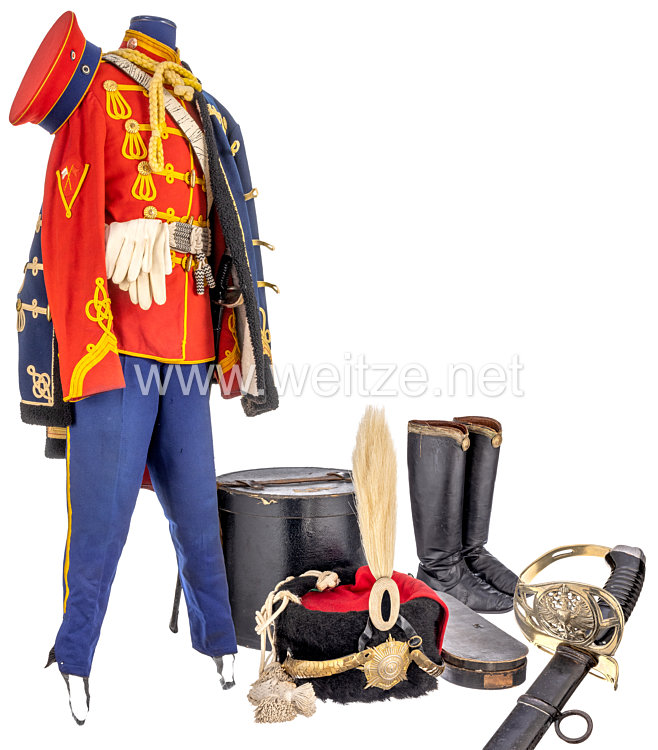
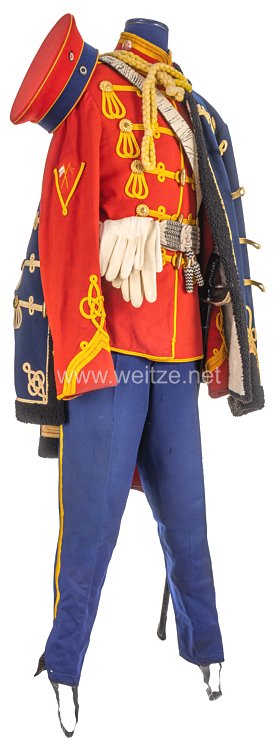
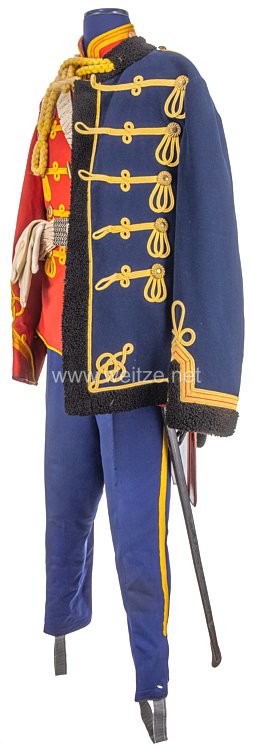
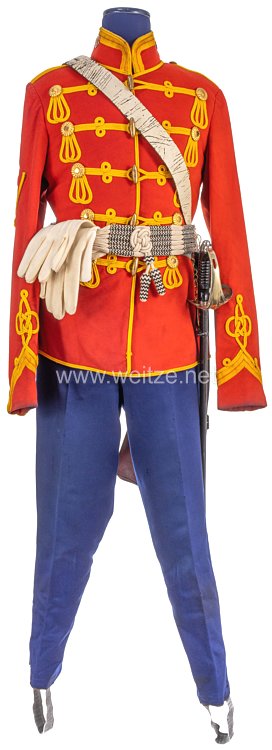
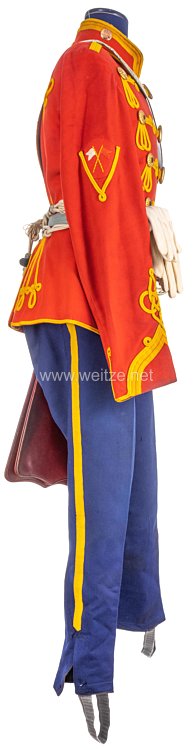
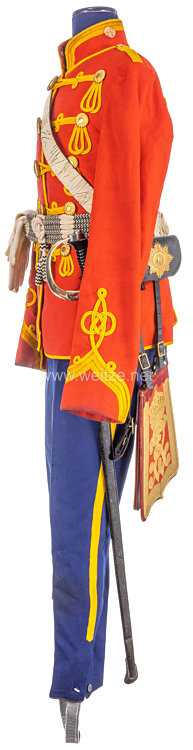
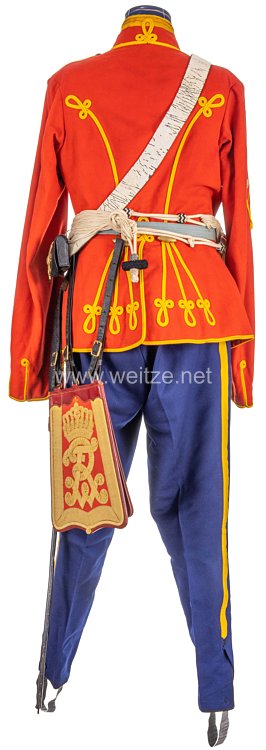
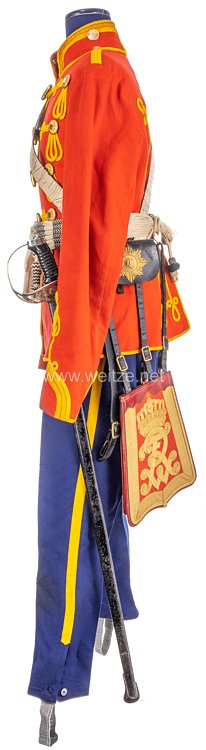
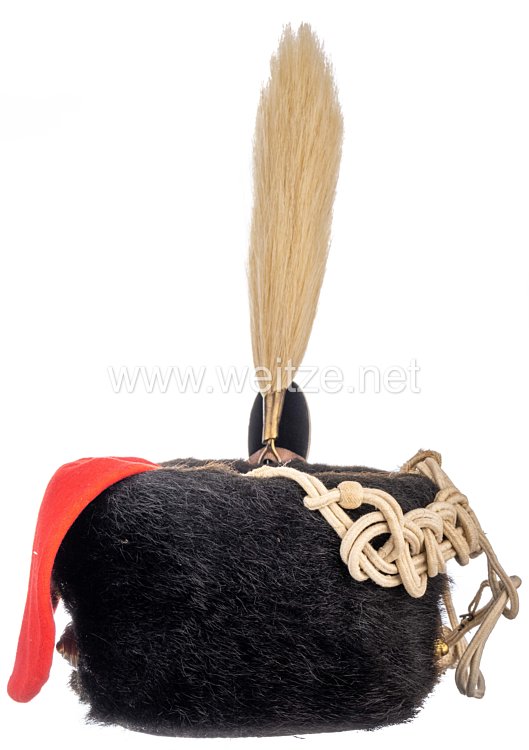
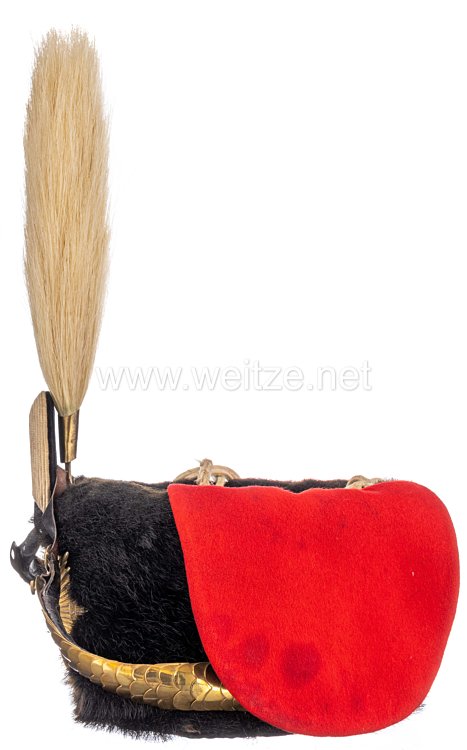
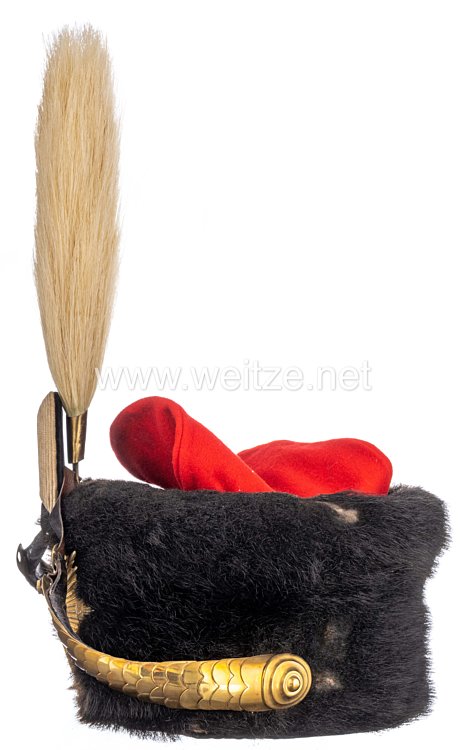
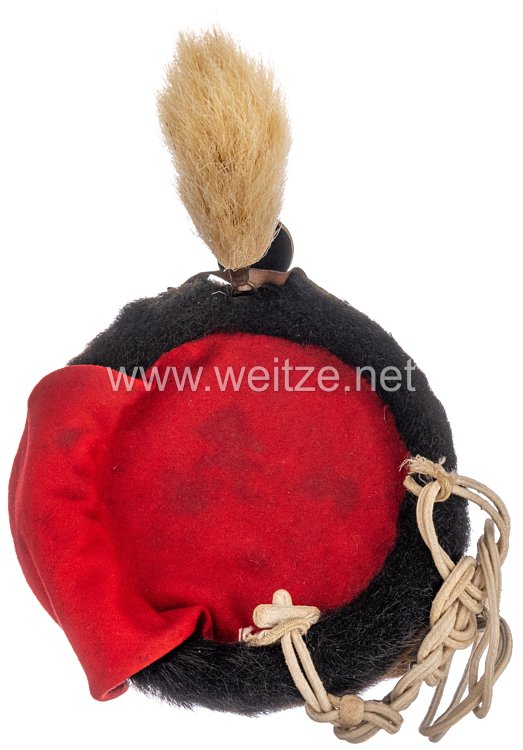
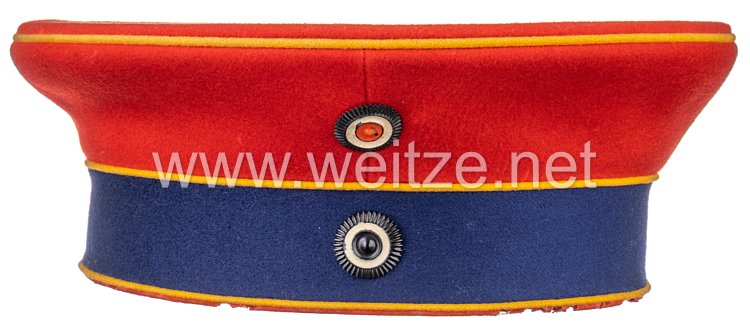
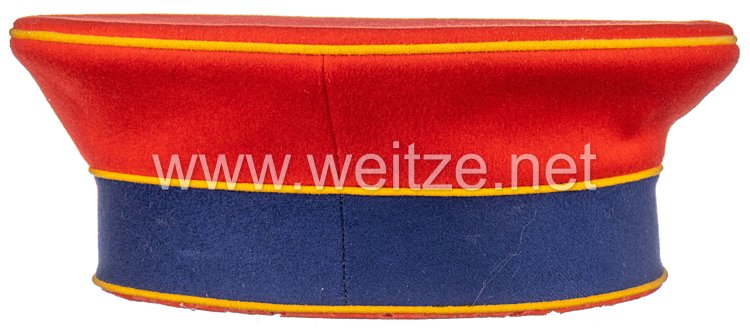
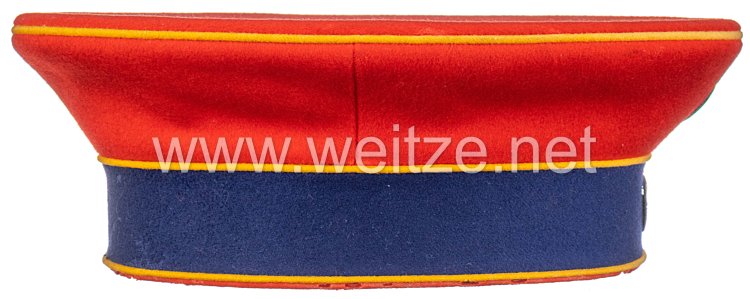
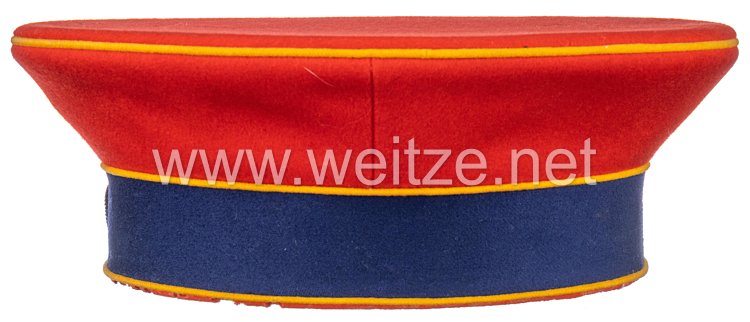
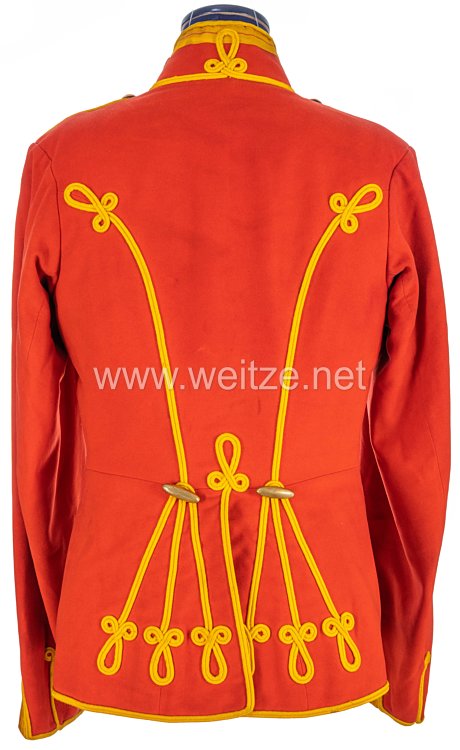
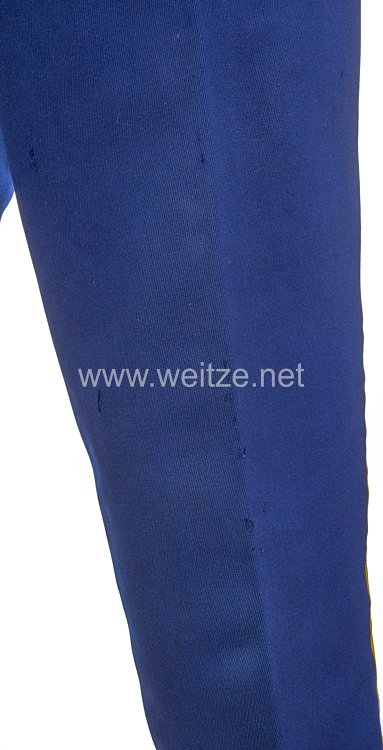
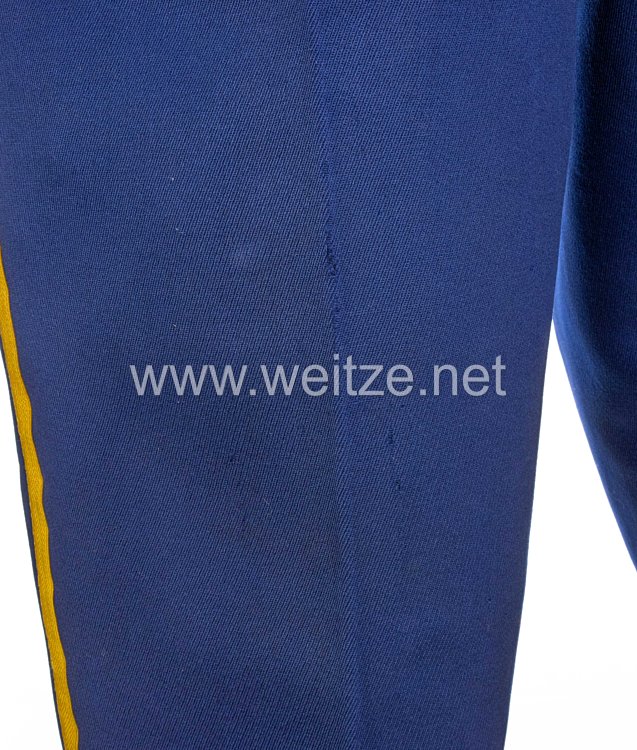
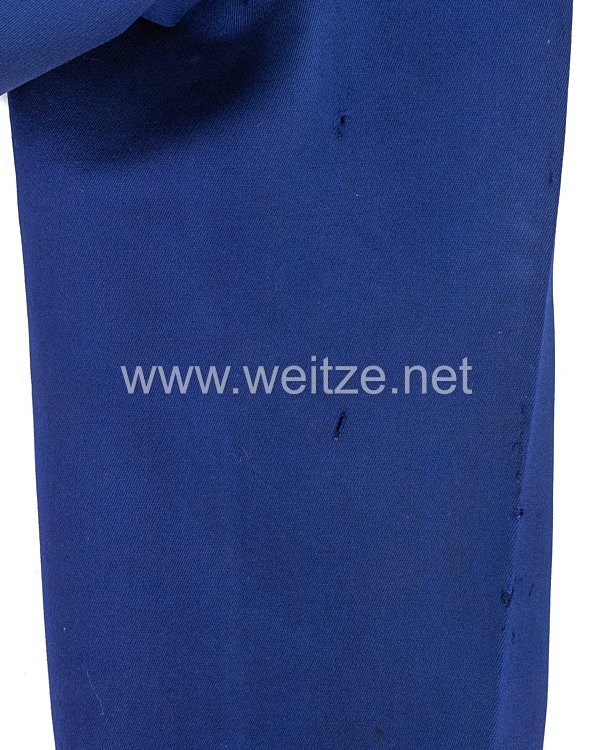
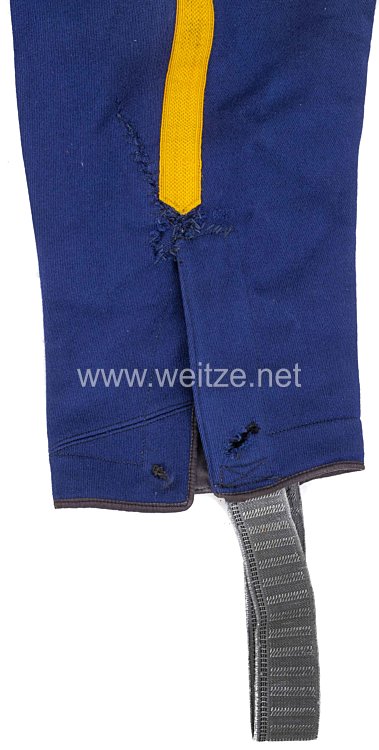
Preußen komplettes Uniformensemble eines Gefreiten im Leibgarde-Husaren-Regiment, 2. Eskadron.
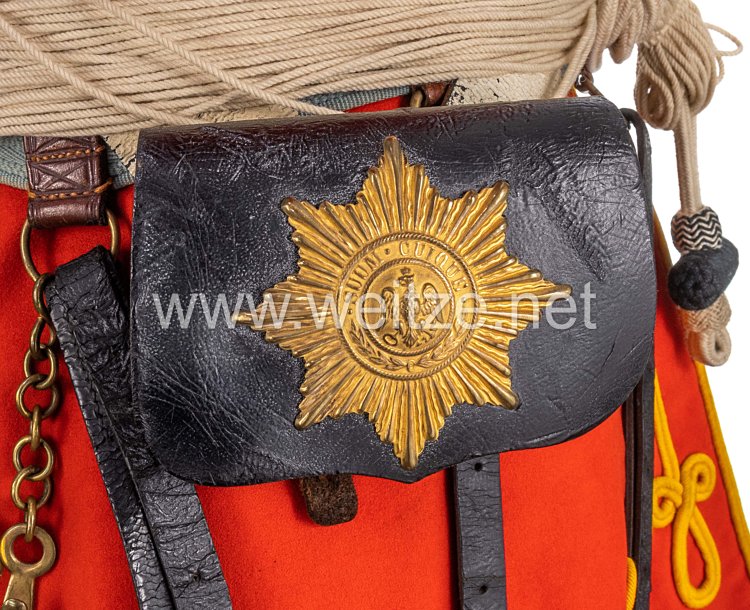
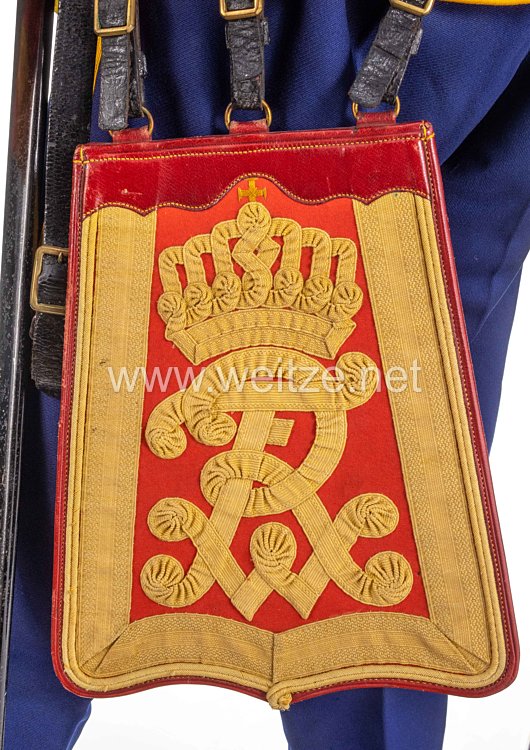
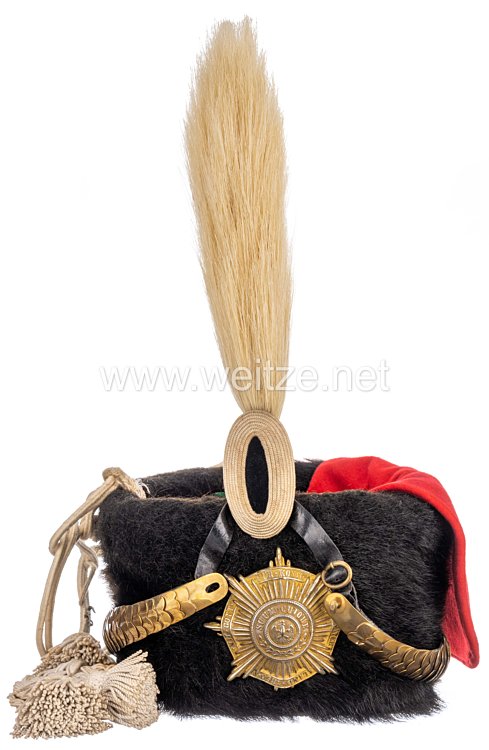
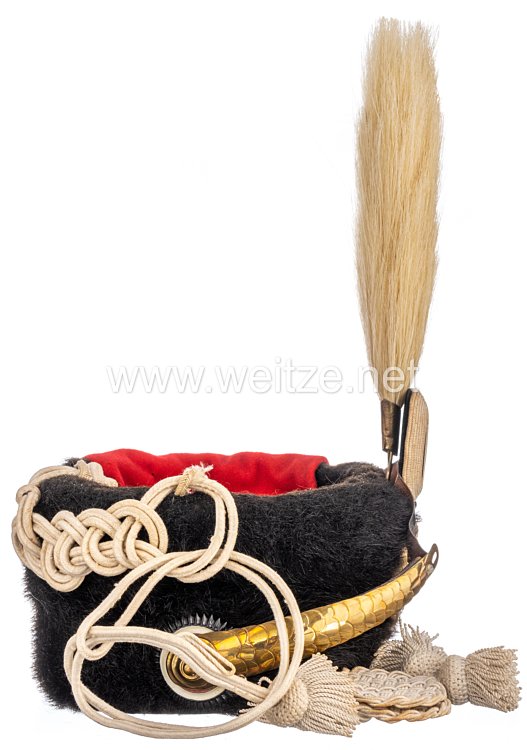
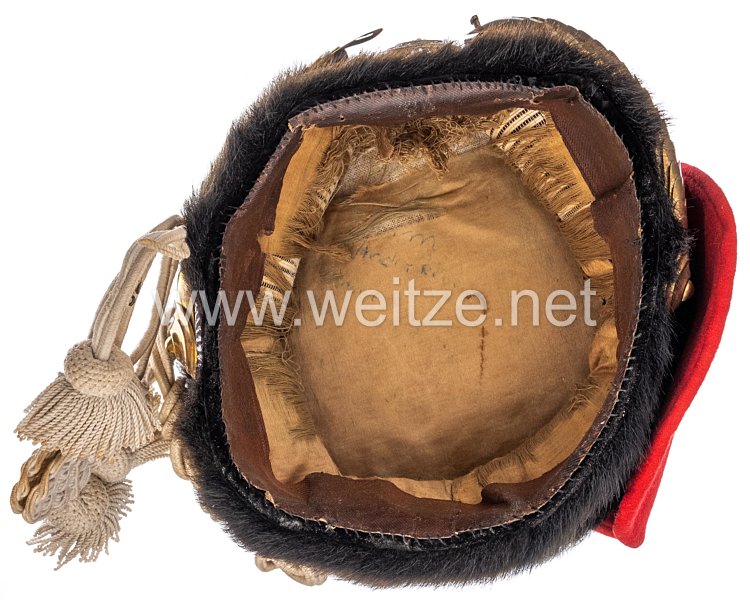
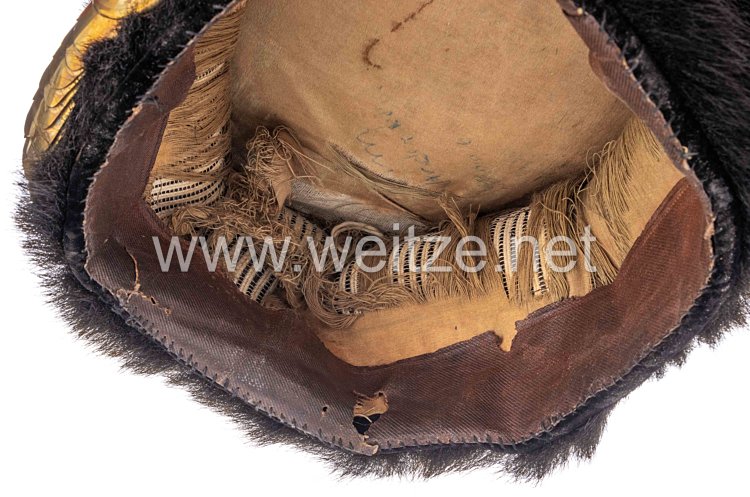
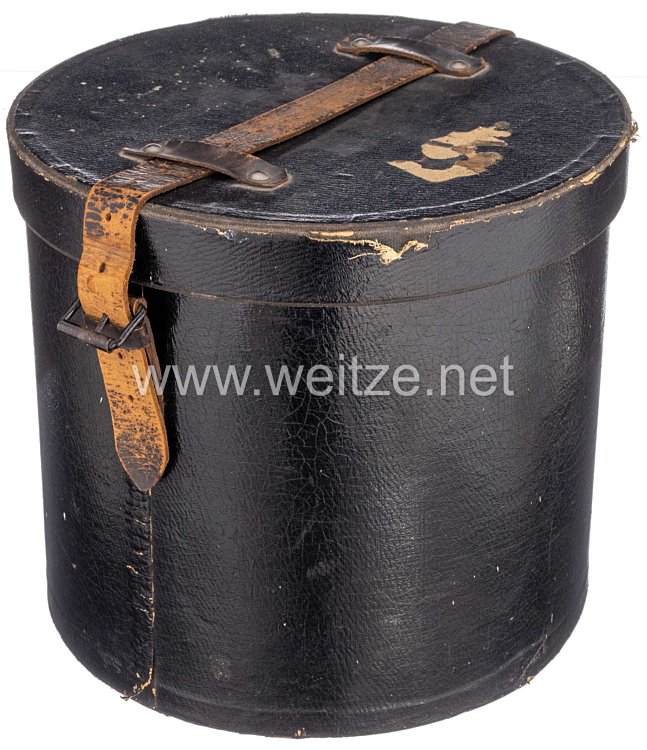
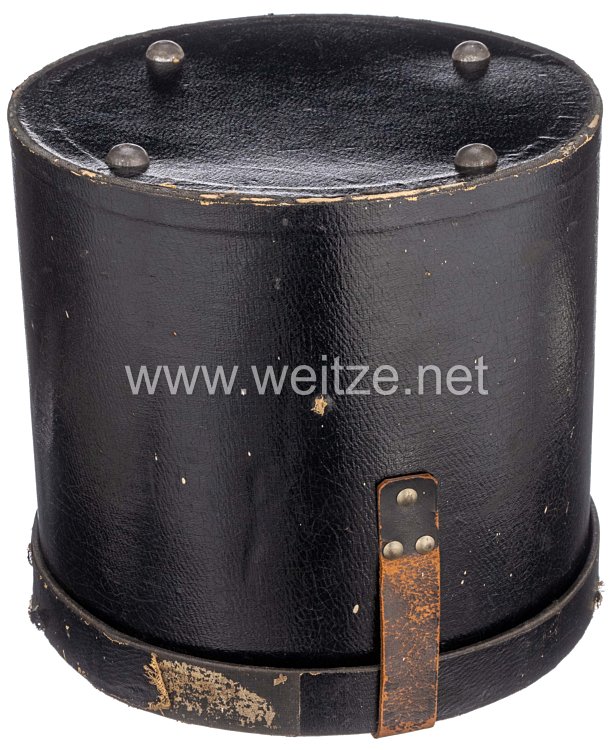
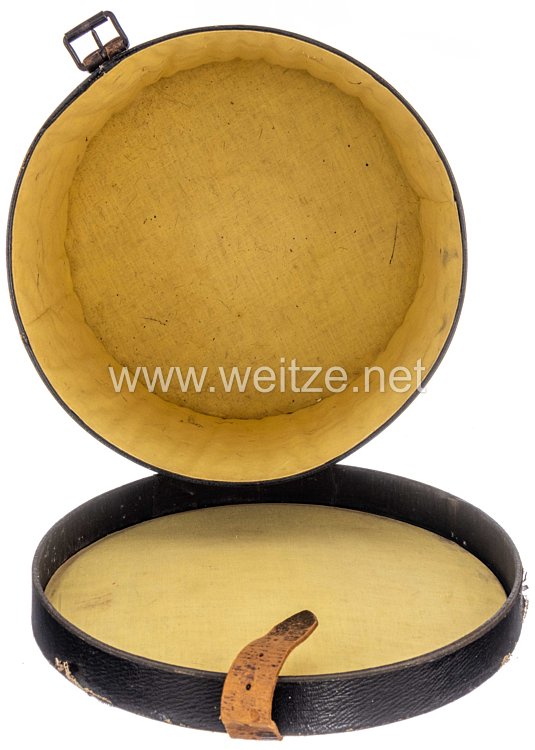
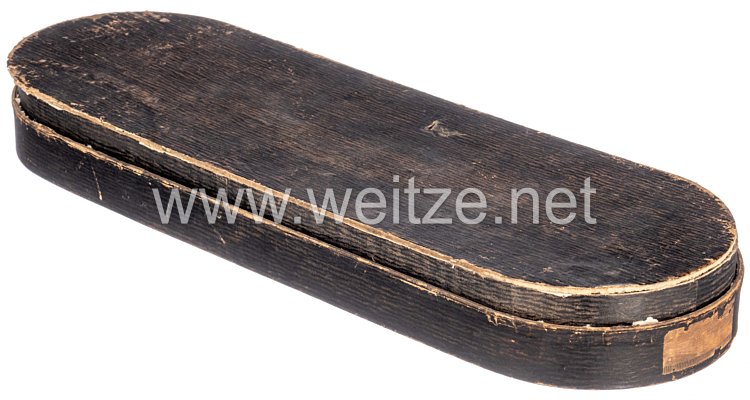
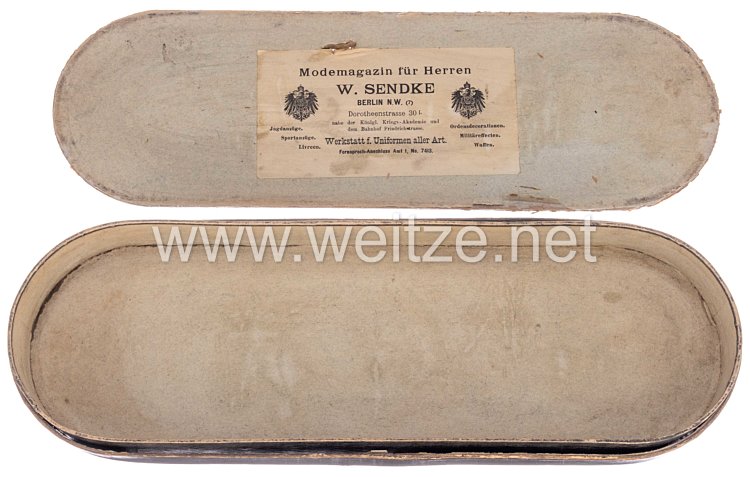
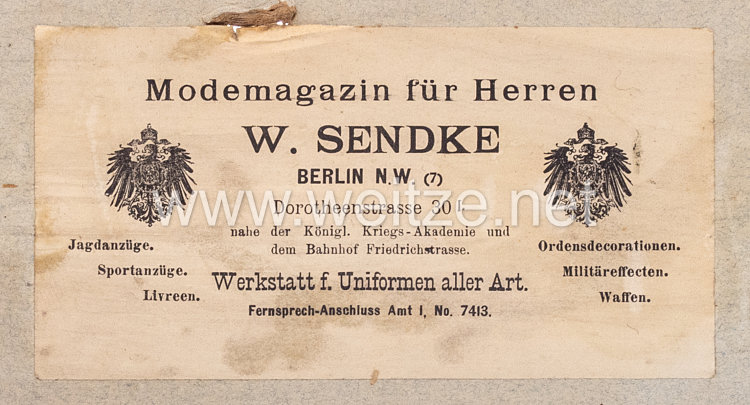
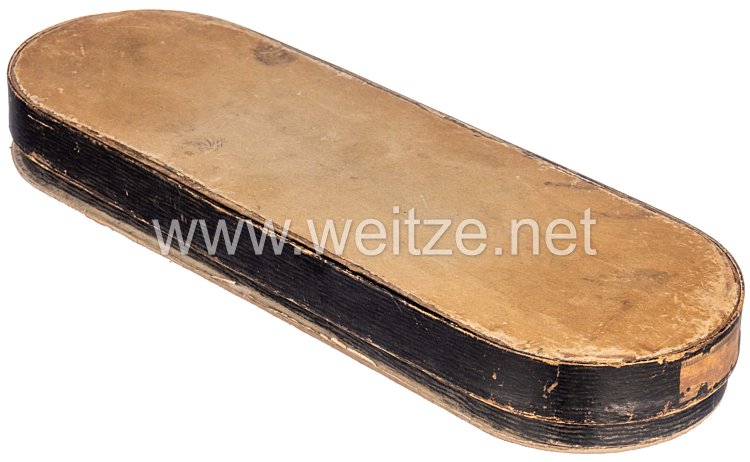
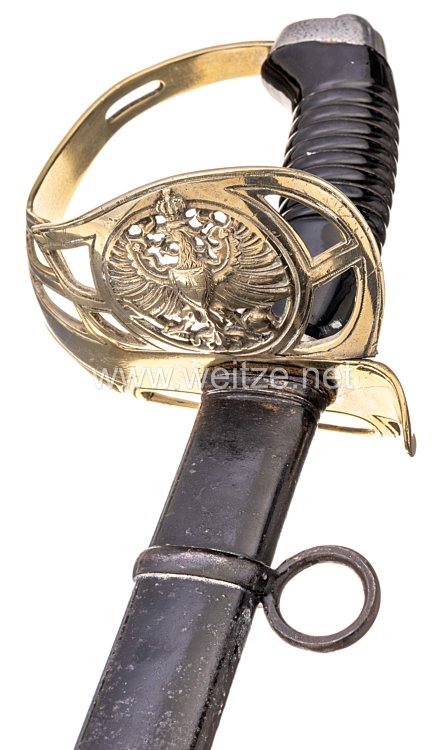
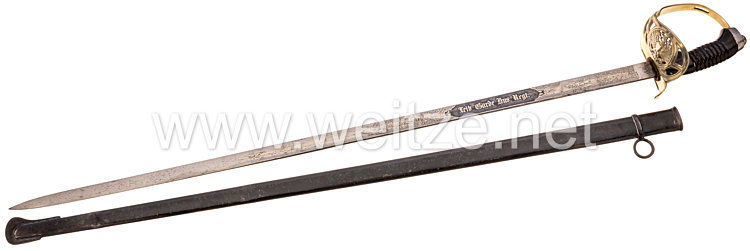
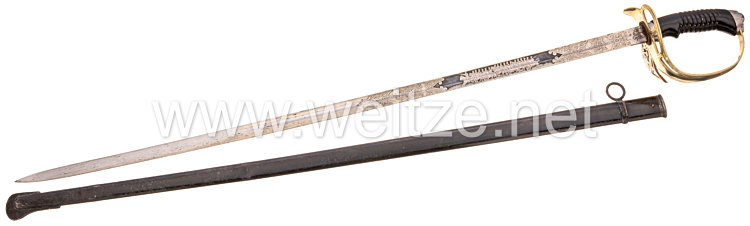
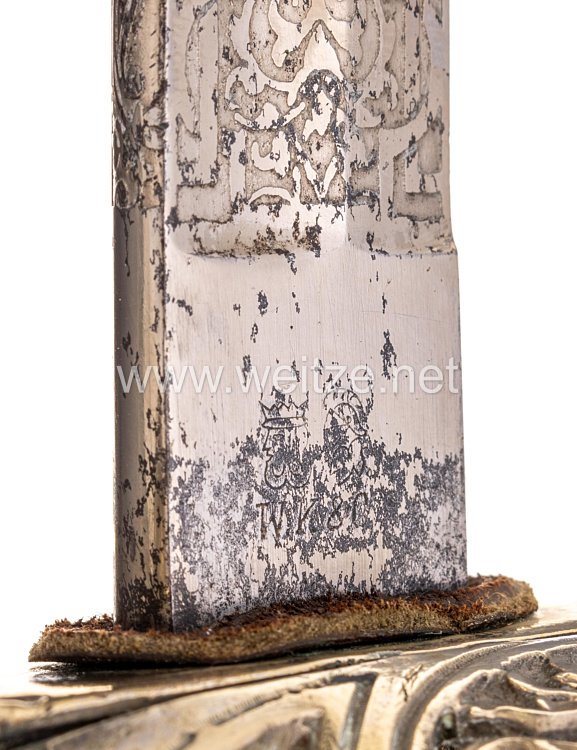
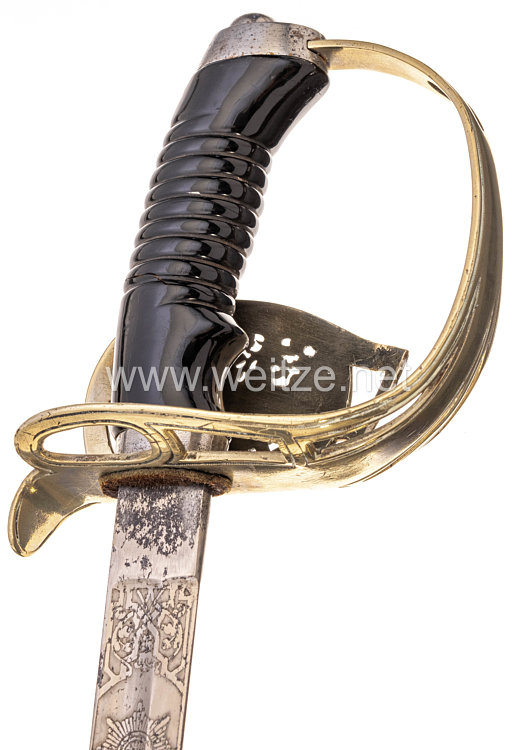
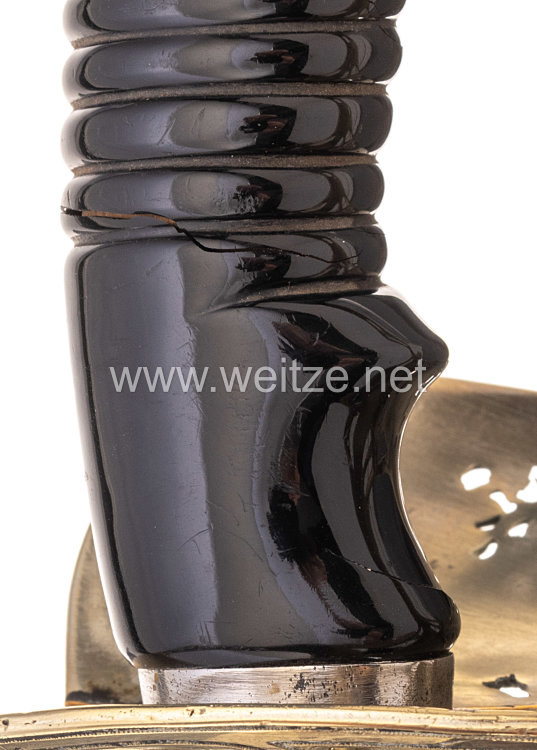
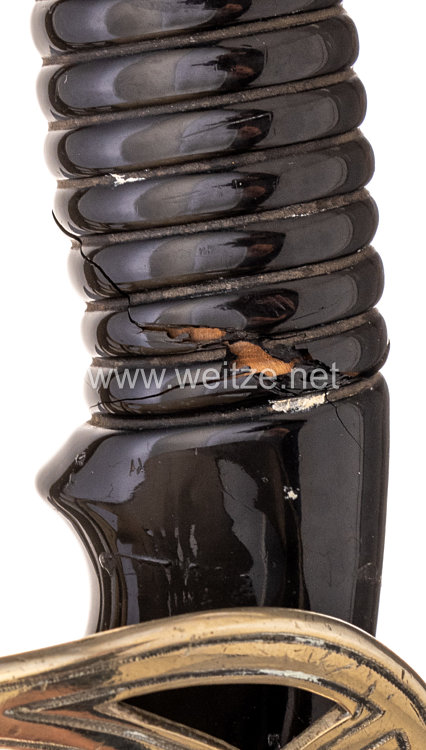
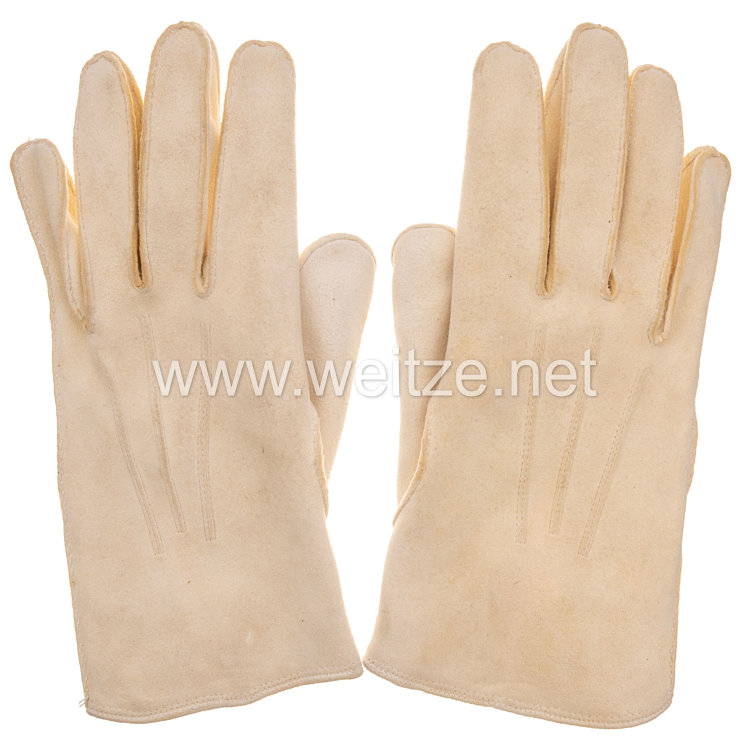
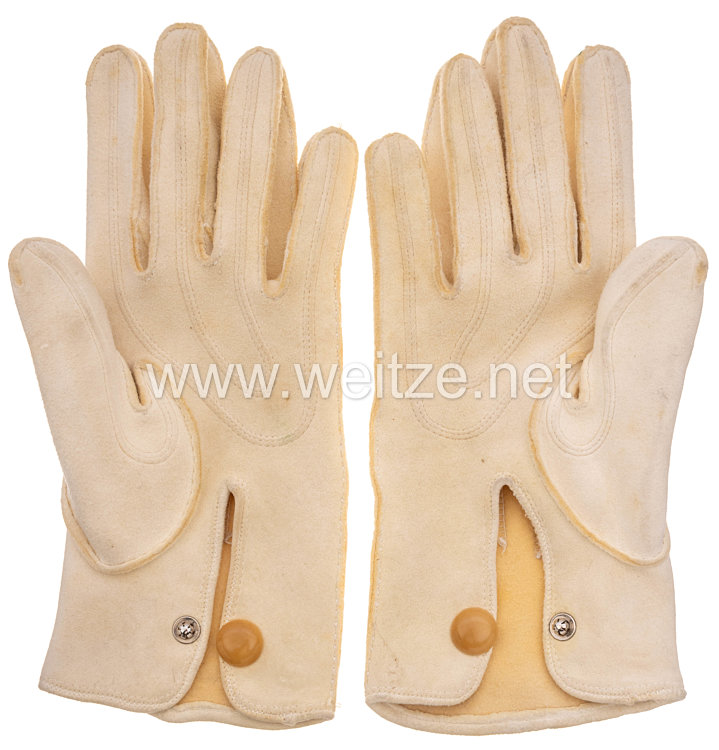
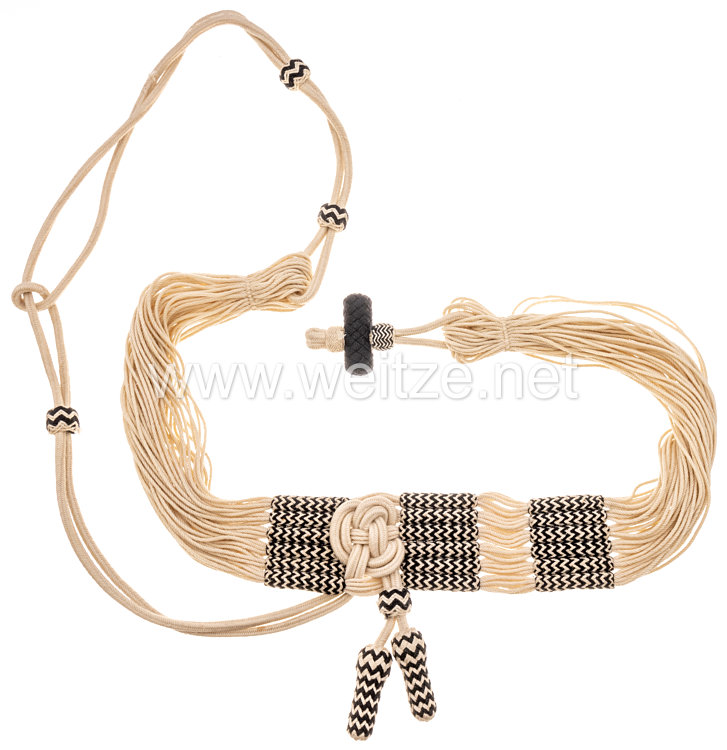
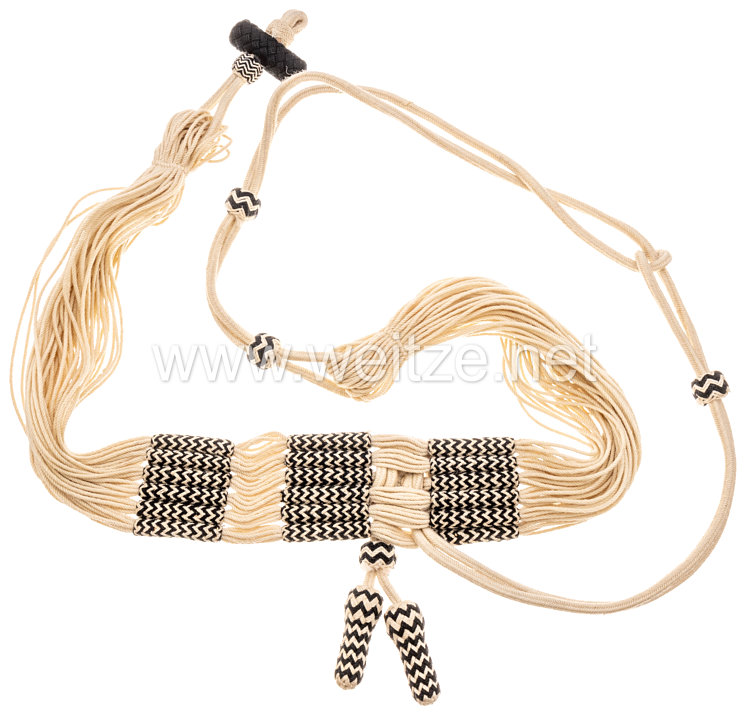
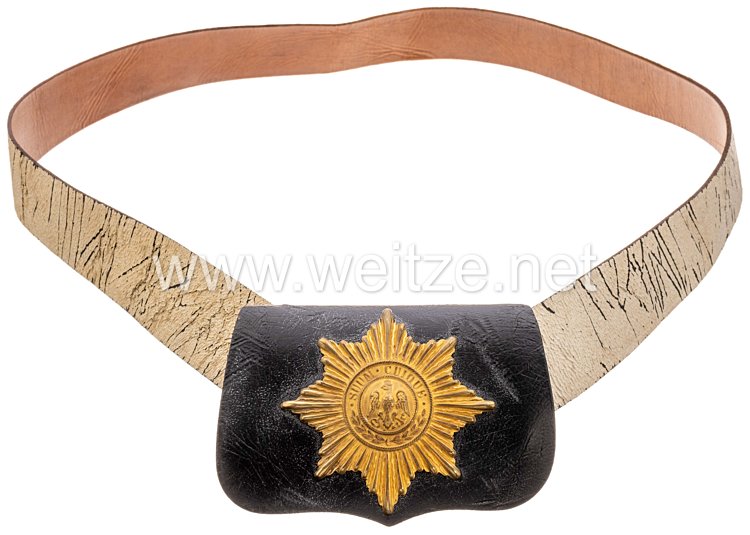
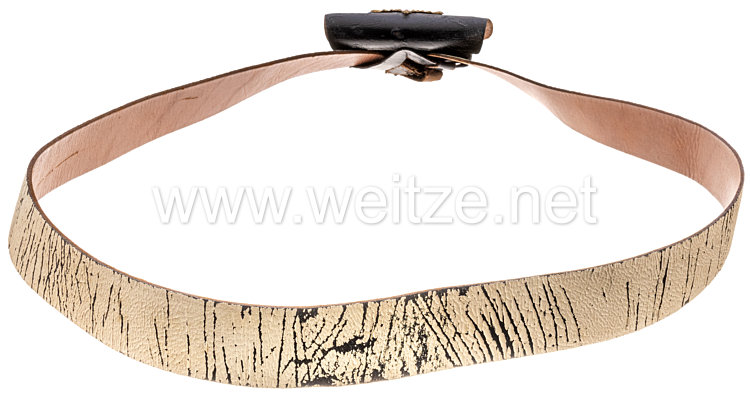
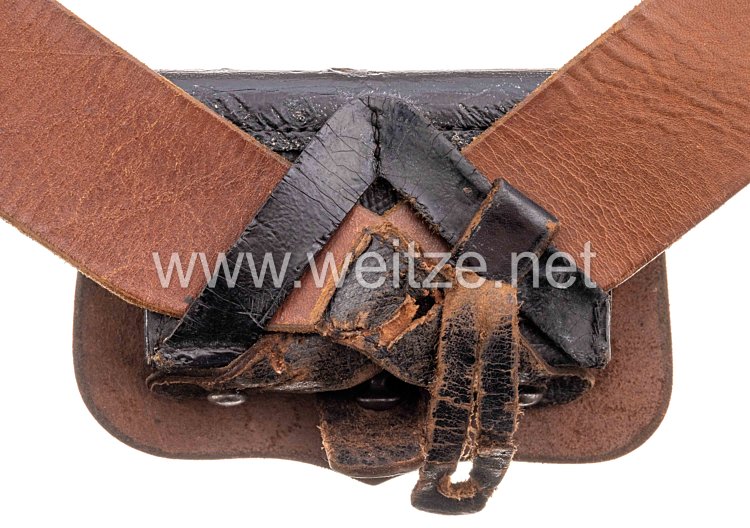
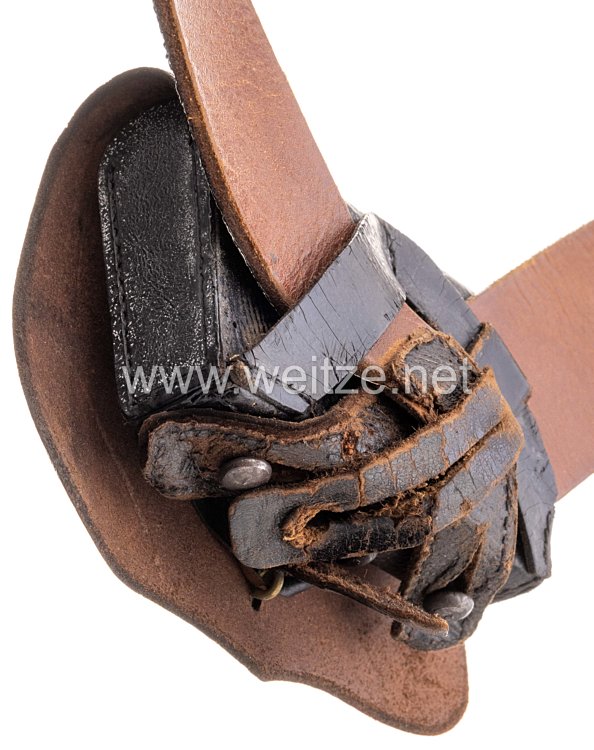
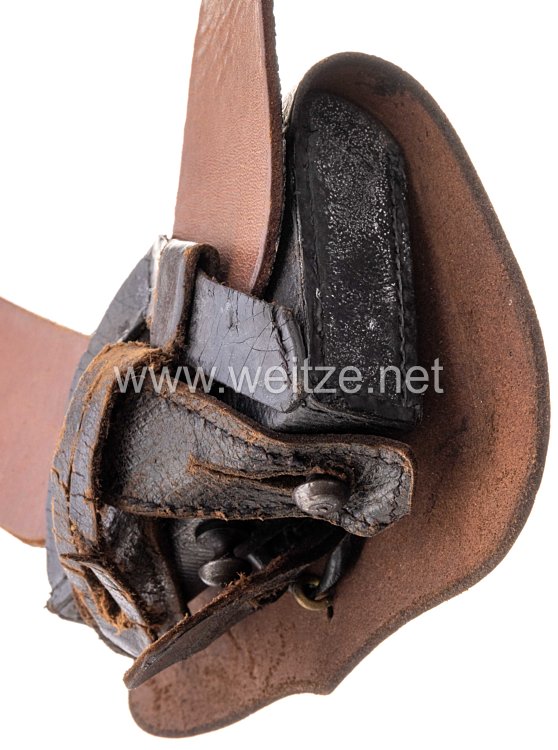
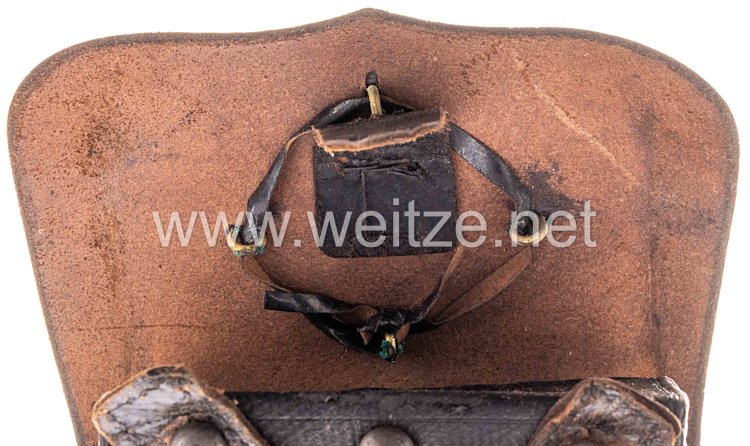
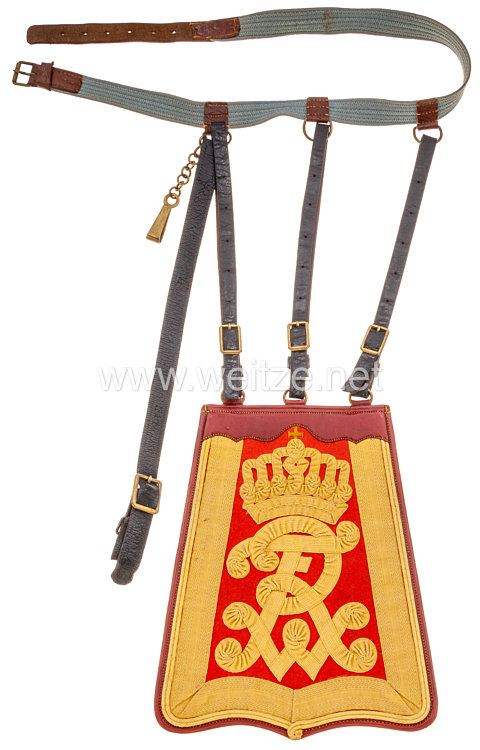
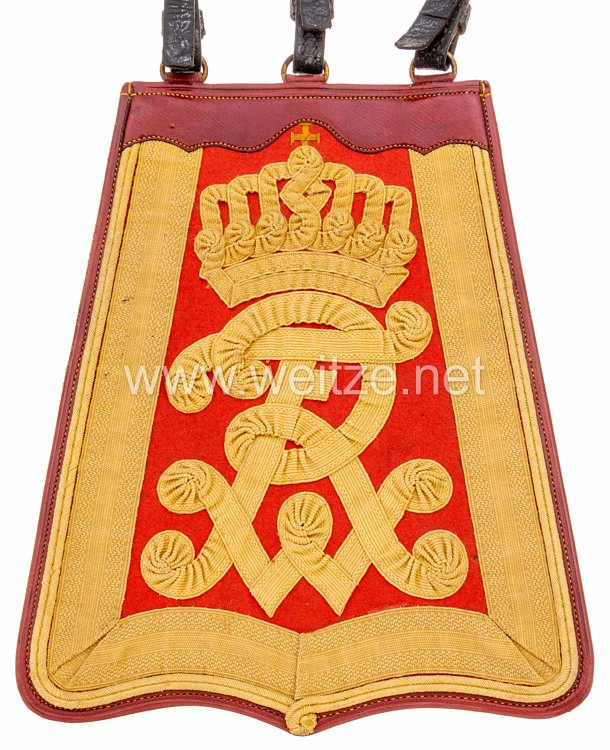
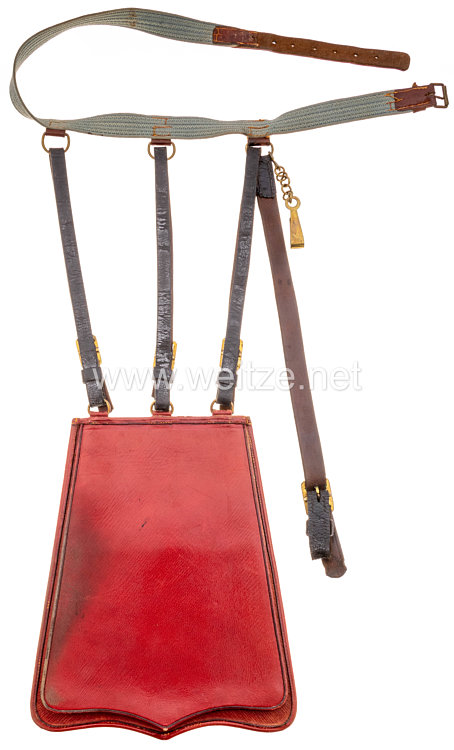
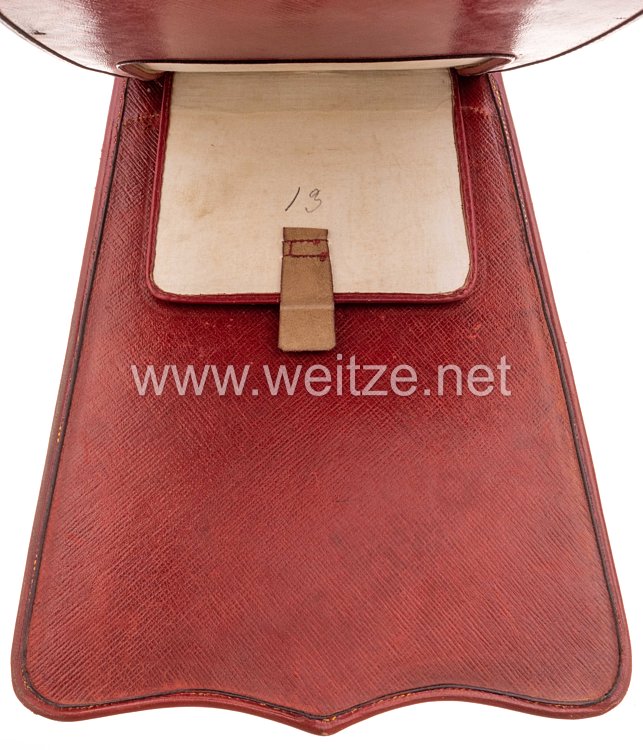
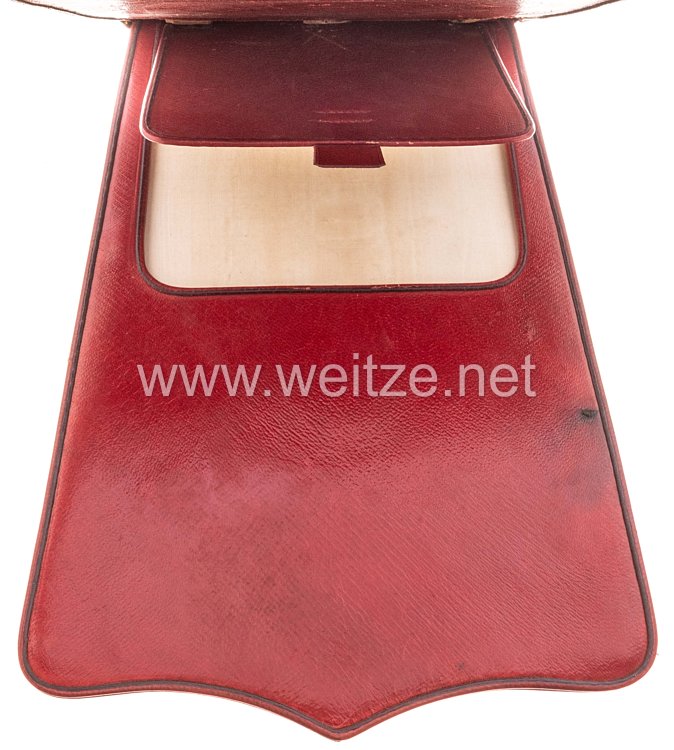
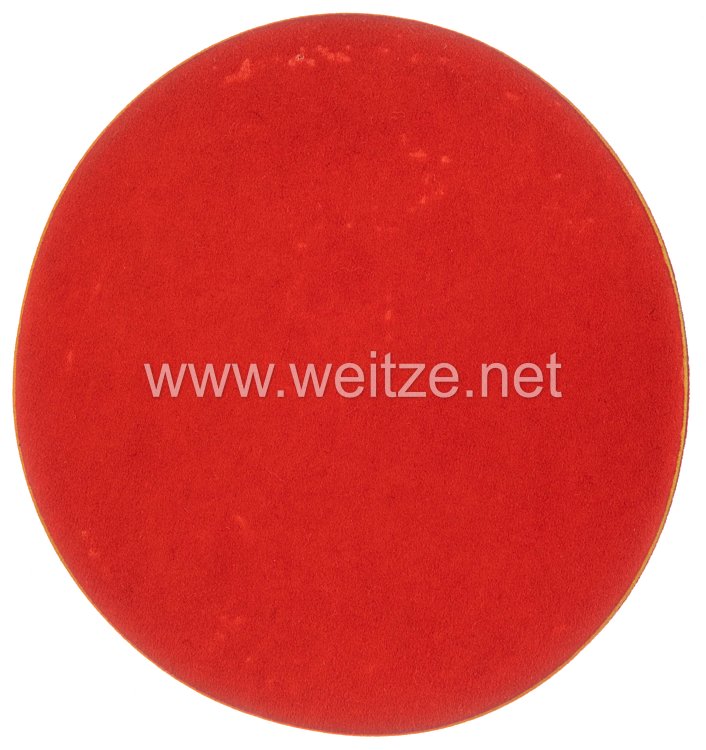
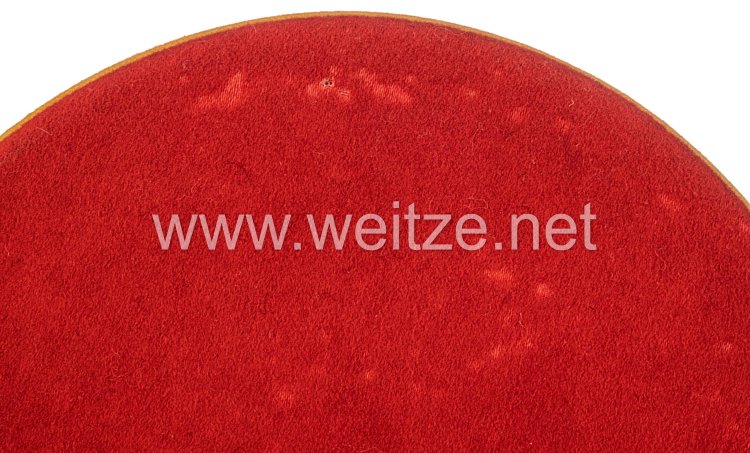
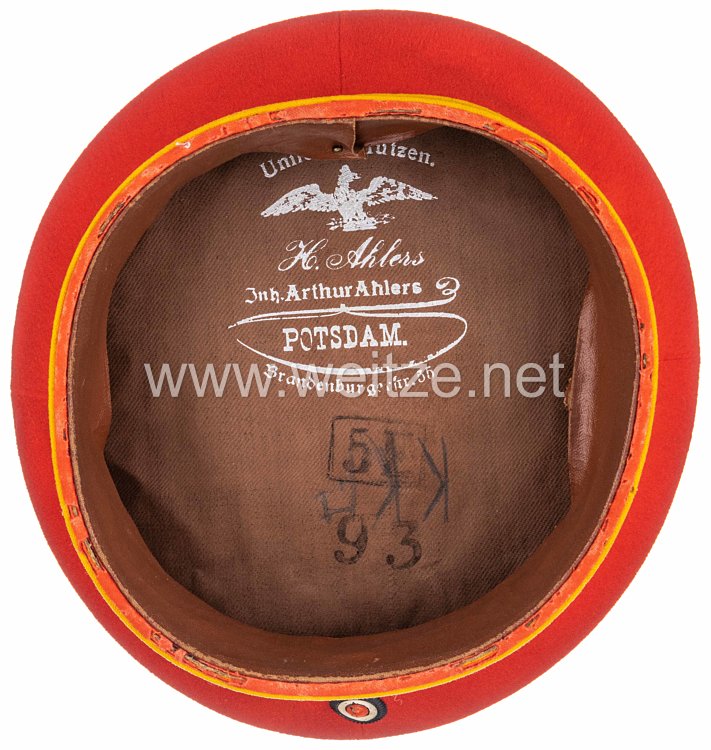
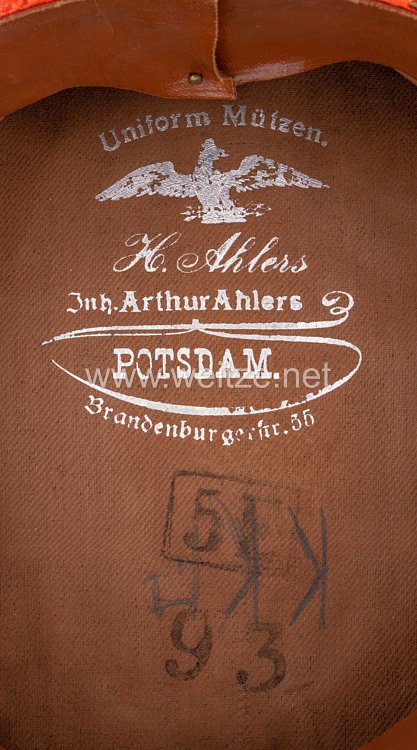
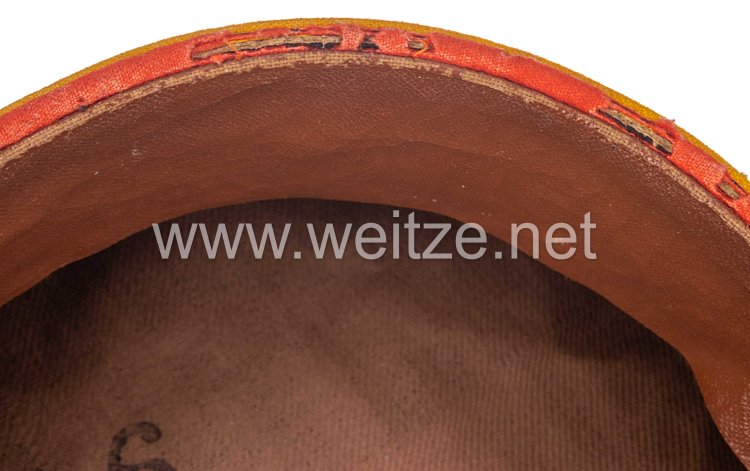
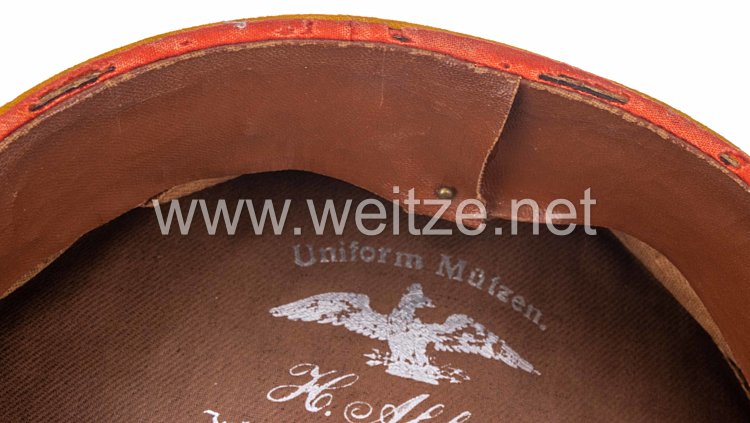
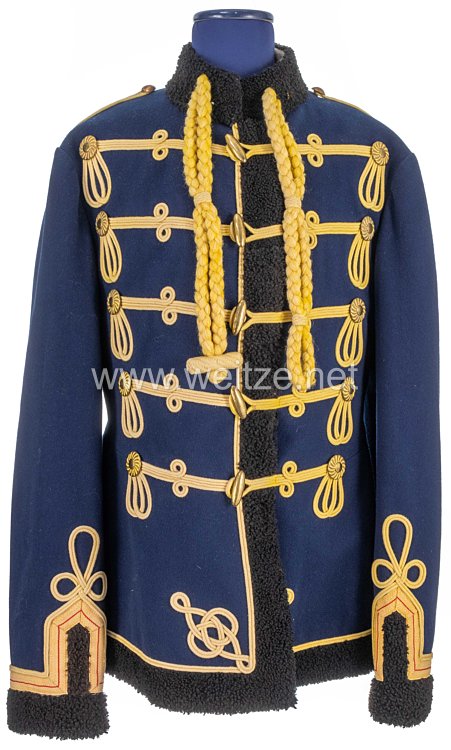
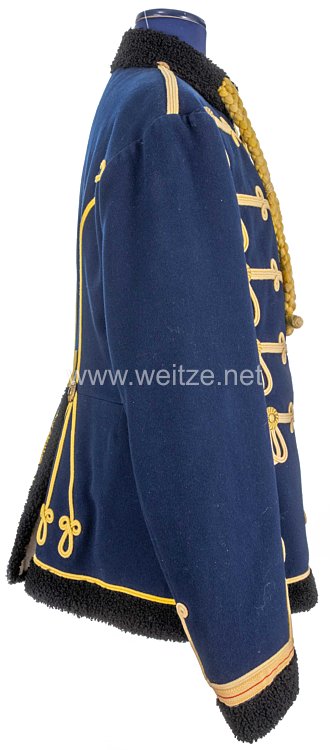
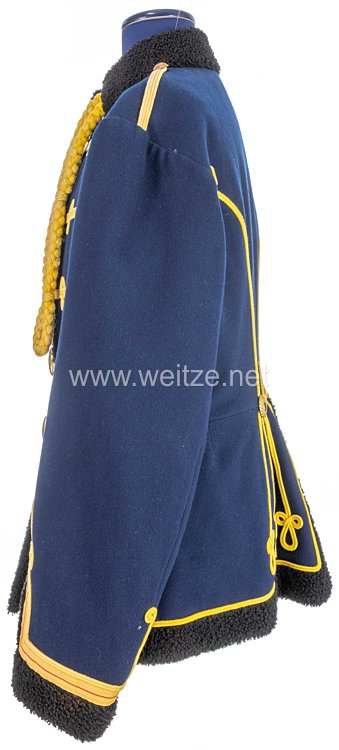
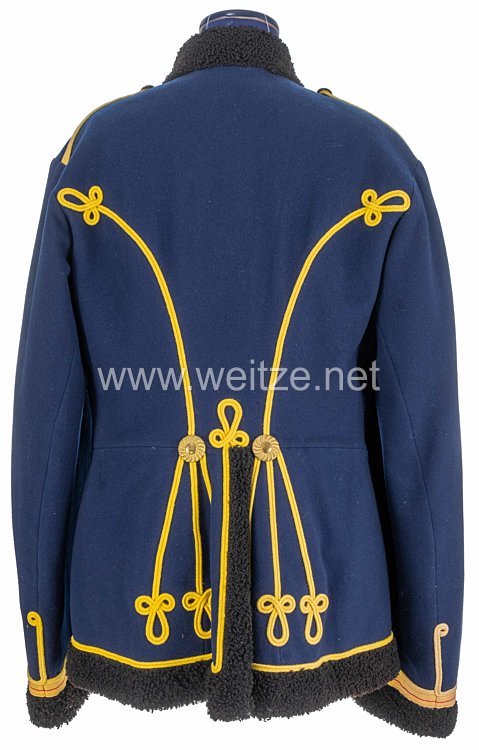
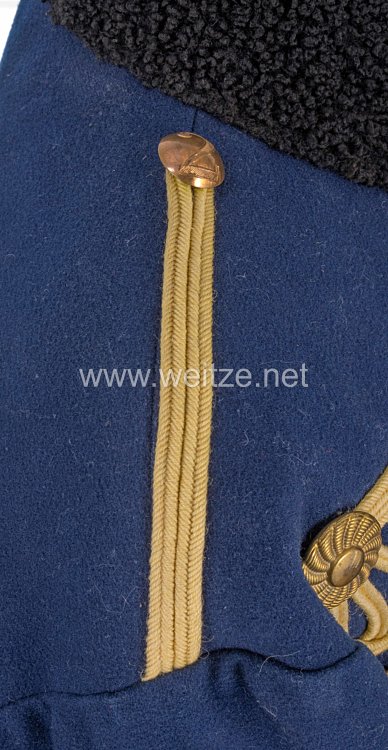
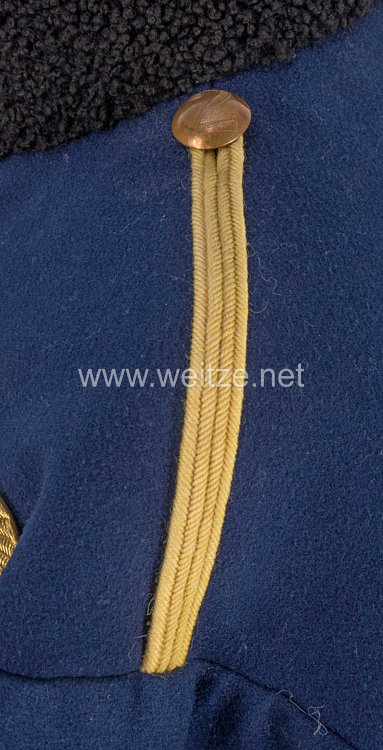
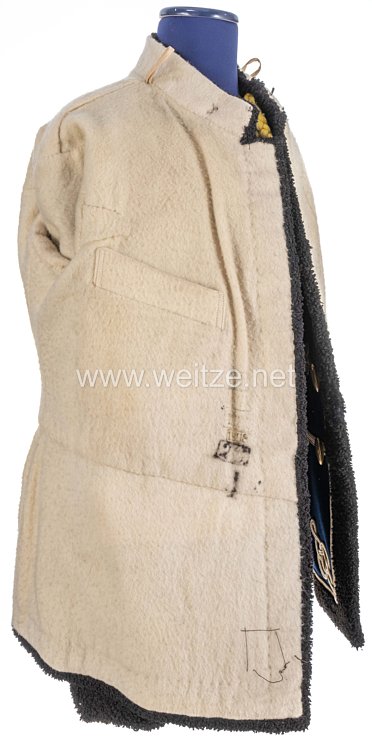
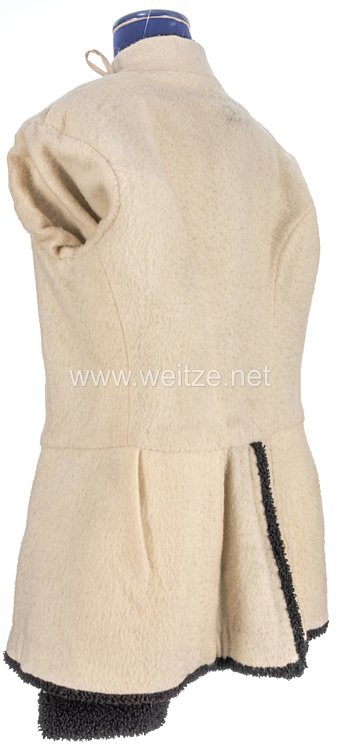
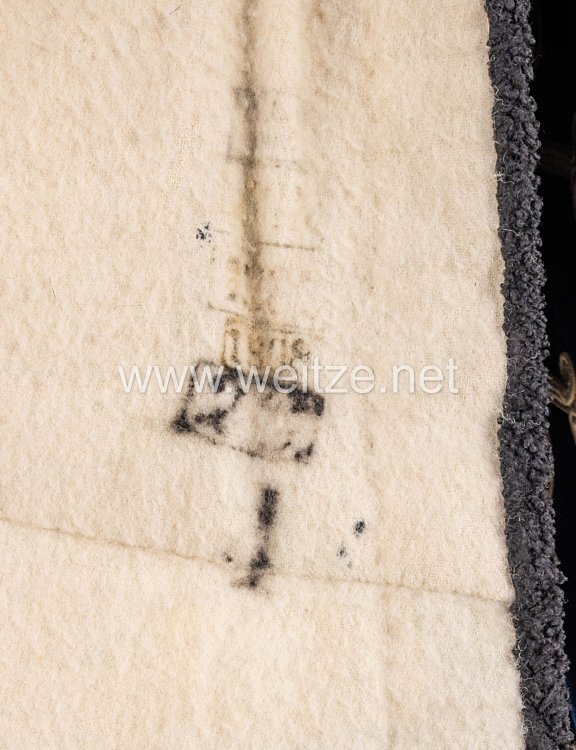
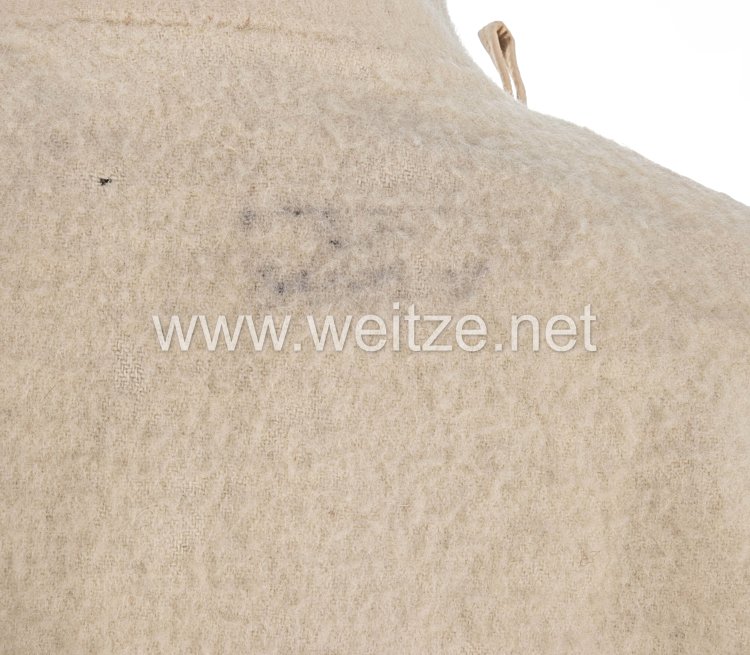
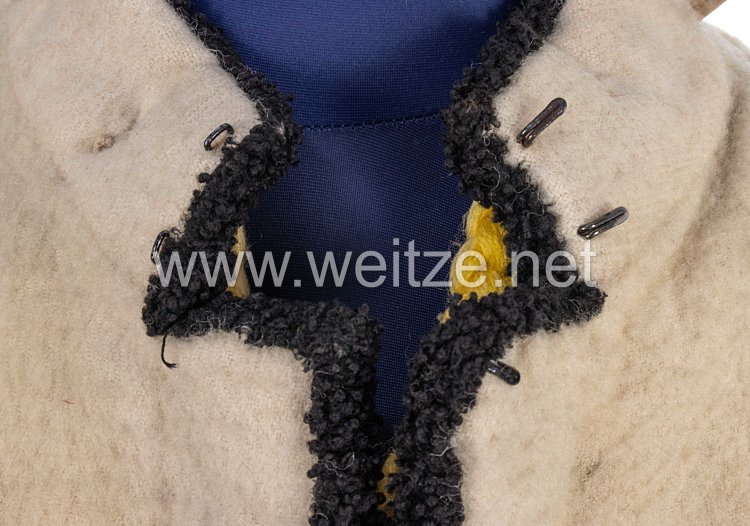
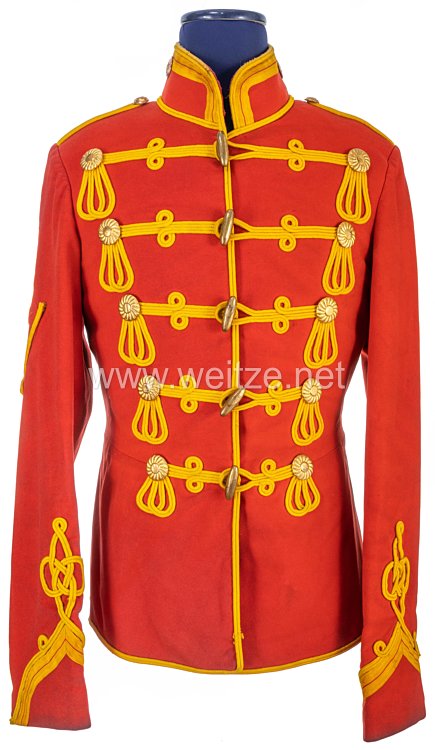
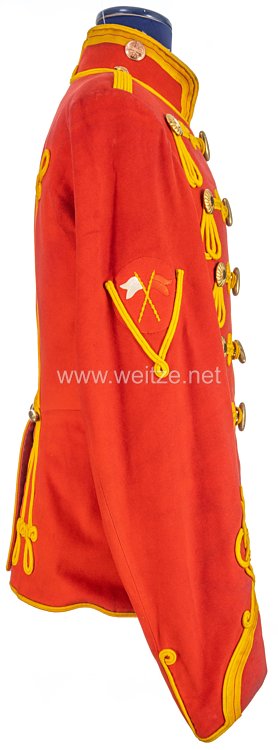
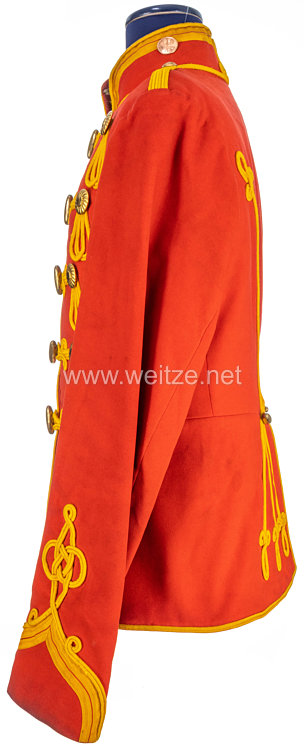
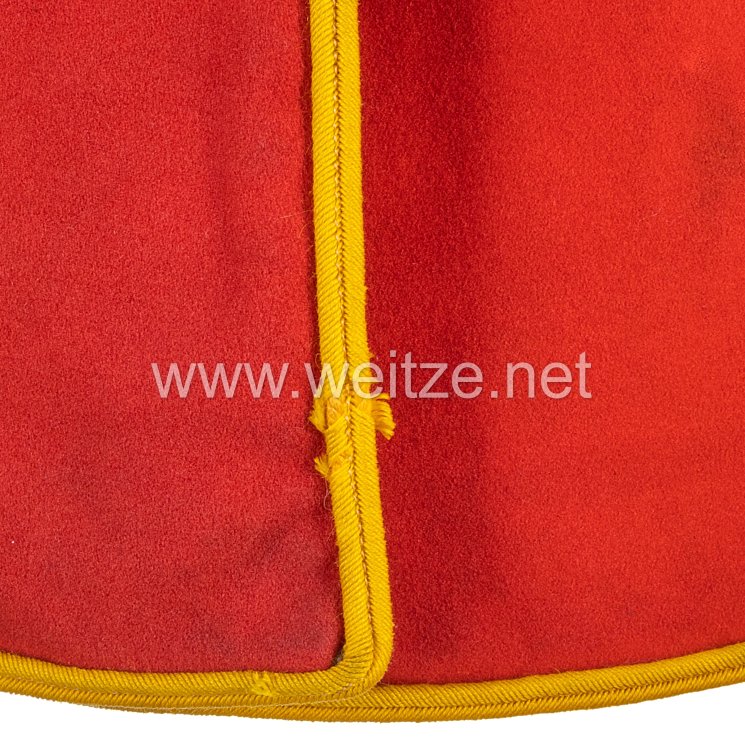
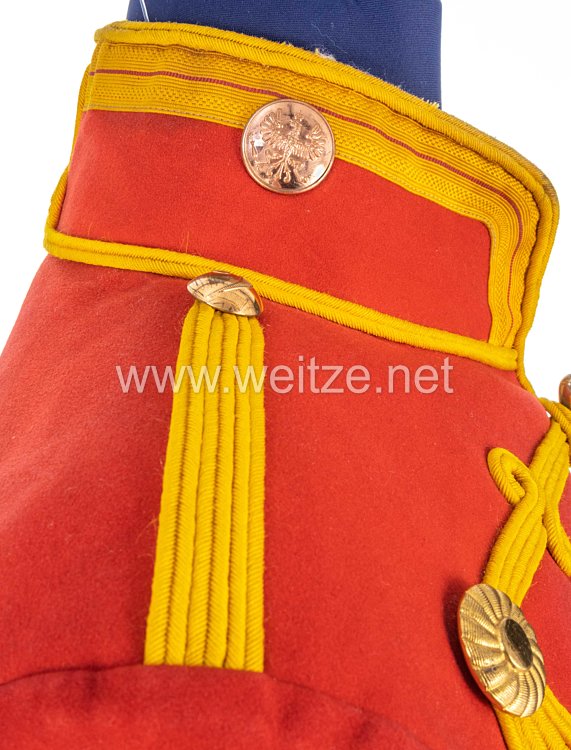
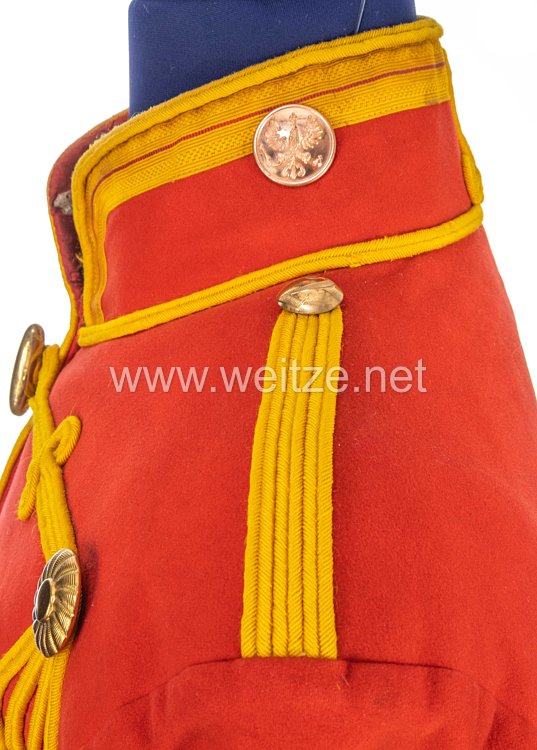
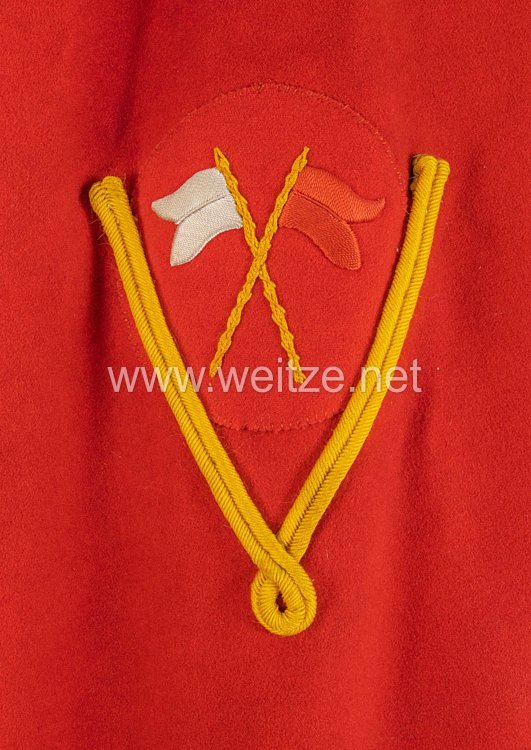
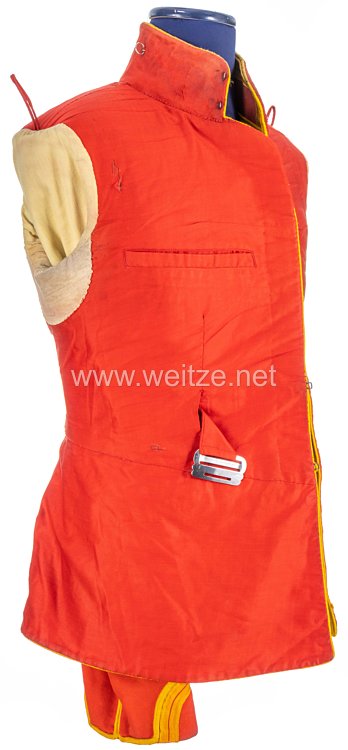
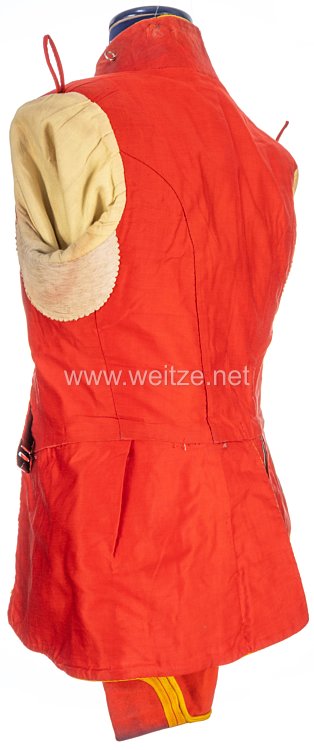
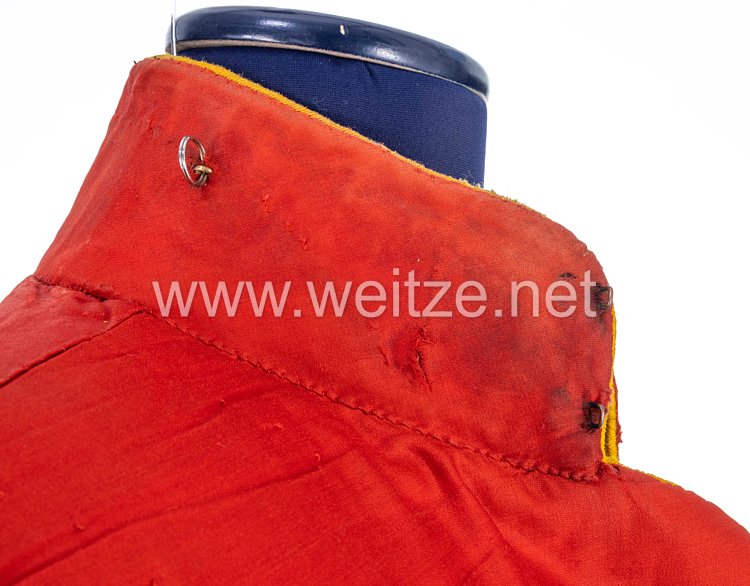
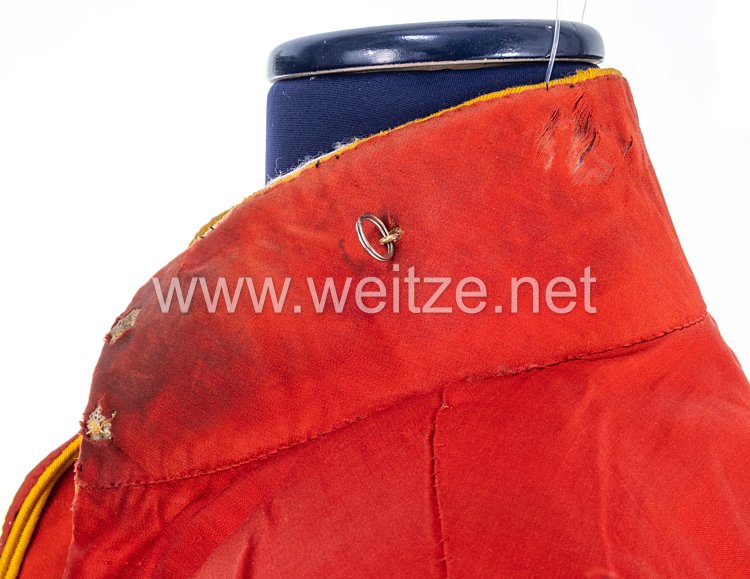
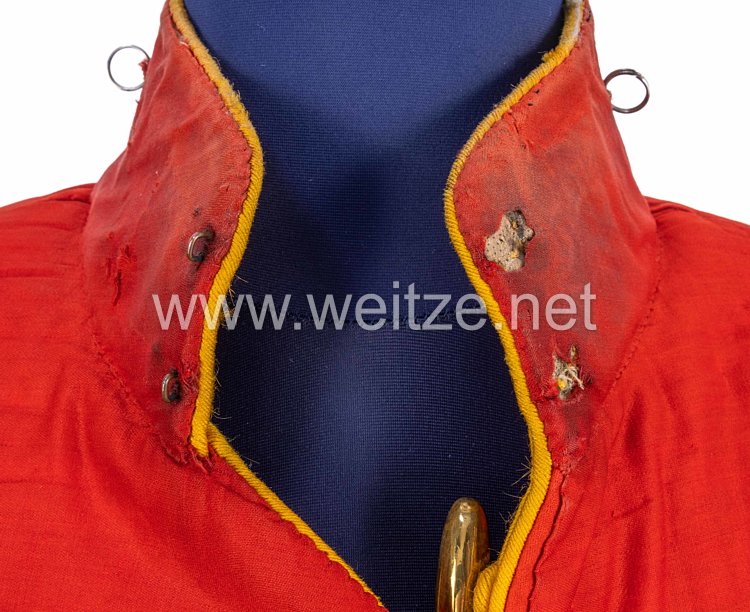
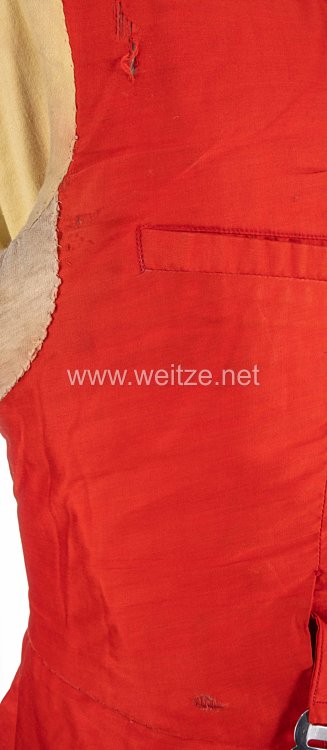
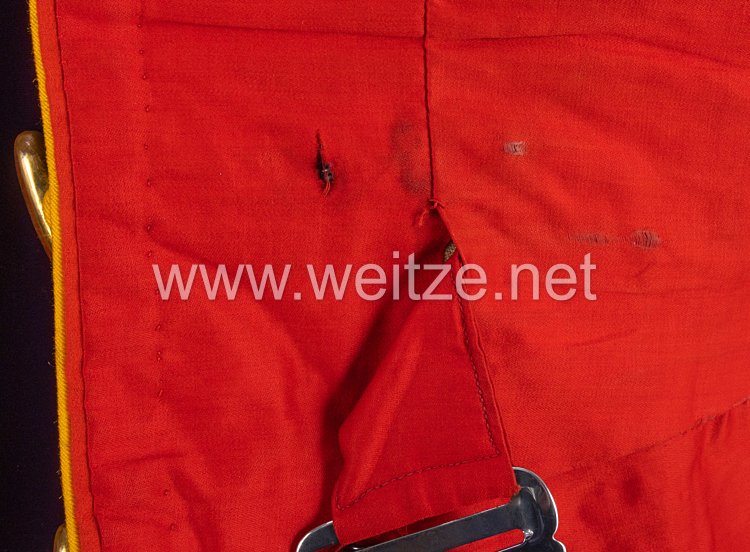
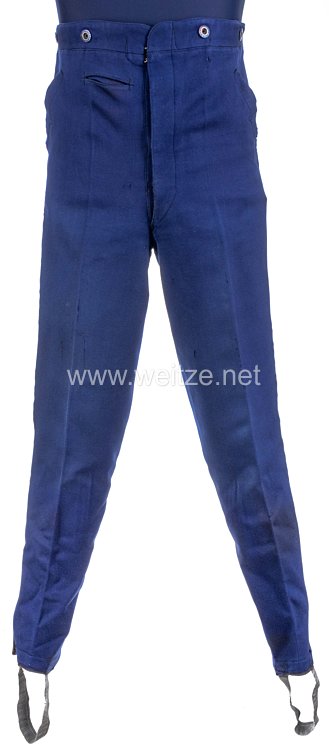
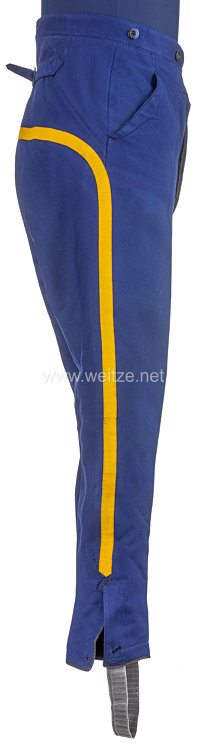
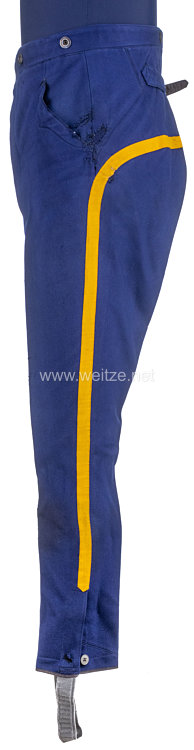
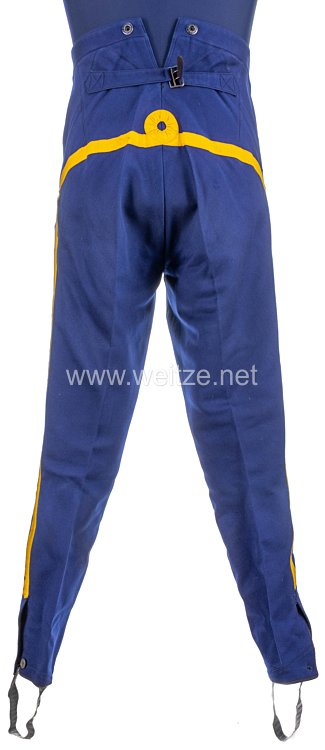
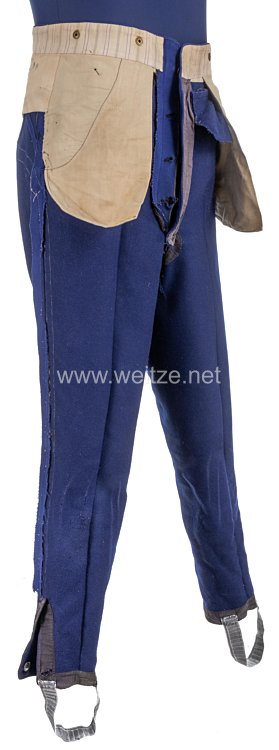
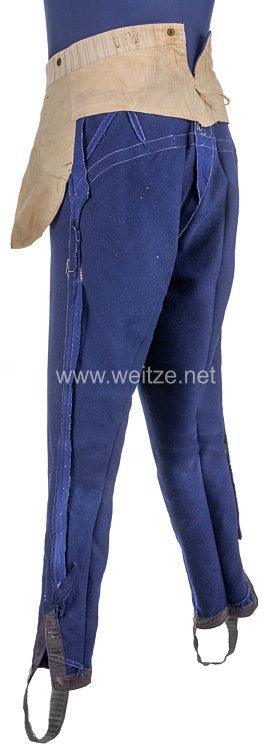
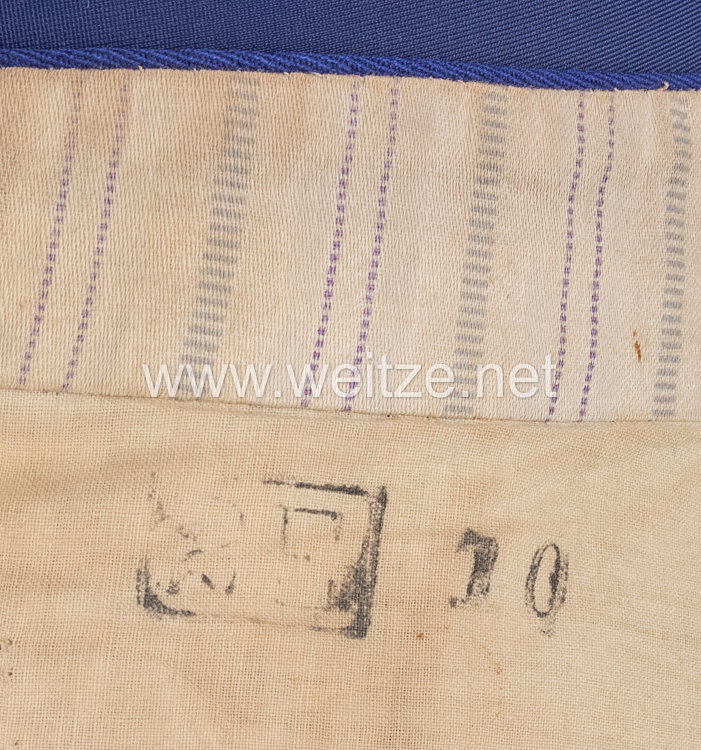
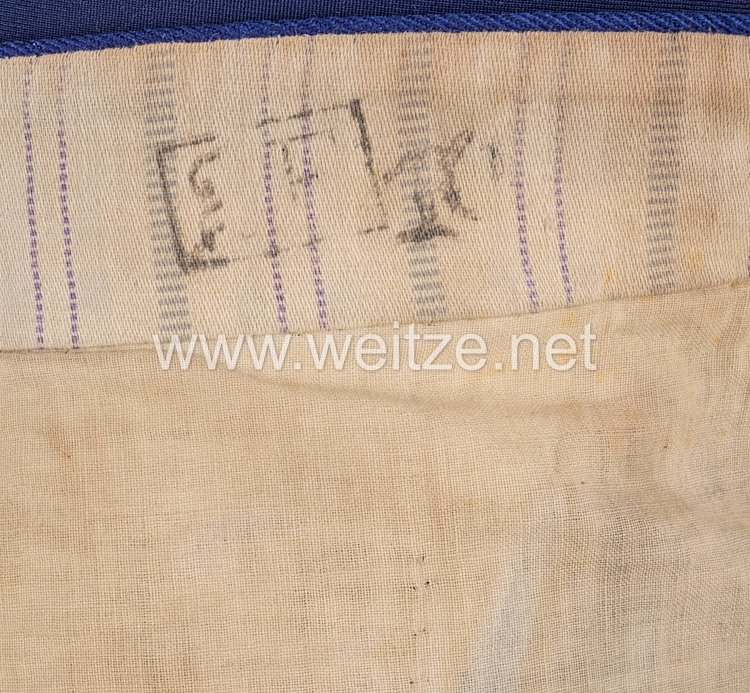
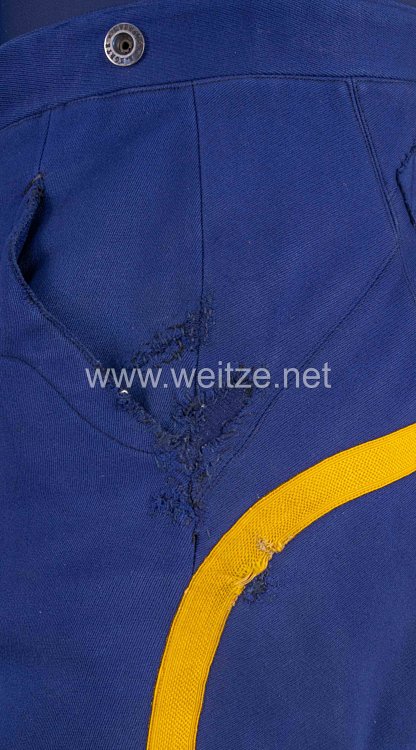
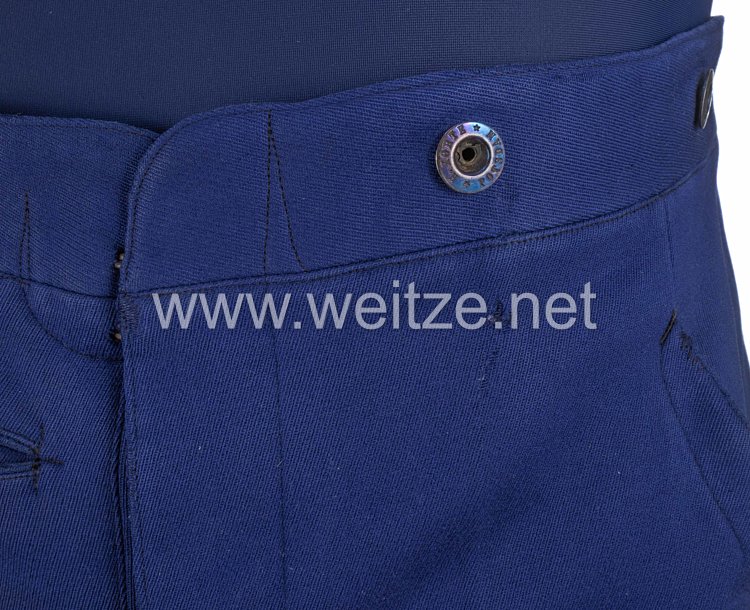
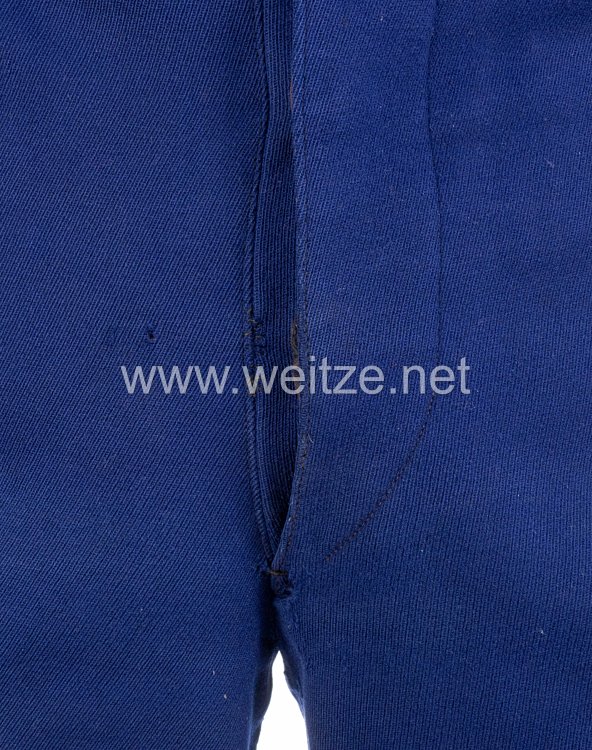
Potsdam, um 1910. Es handelt sich hierbei um ein wunderschönes und zusammengehöriges Ensemble. Alle Teile in eleganter und feinster Eigentumsauführung. Die Pelzmütze aus schwarzem Bärenfell, komplett mit allen Beschlägen. Großer hochgewölbter vergoldeter Gardestern mit umlaufendem Bandeau, gewölbte Schuppenketten an Rosetten, rechts die Reichskokarde in Mannschaftsausführung. Das preußische Feldzeichen in aus weißer Seidenkordel mit schwarzer Samtfüllung, komplett mit der Fangschnur sowie der besonderen Paradefangschnur des Leibgarde-Husaren sowie dem weißen Paradestutz. Das Innenfutter mit braunem Schweißleder, das gelbe Seidenfutter etwas zerschlissen. Größe ca. 55. Dazu die passende Tellermütze, rot mit gelben Vorstößen und dunkelblauem Mützenbund, komplett mit beiden Kokarden, Innen braunes Schweißband, ds braune Futter mit schönem Herstelleraufdruck "Uniform Mützen H. Ahlers, Inh. Arthur Ahlers, Potsdam, Brandenburgerstr. 44" mit Abnahmestempel "5 E 93" (= 5. Eskadron, Waffen-Nr. 93). Dazu der hohe Hutkoffer für die Pelzmütze und die Tellermütze. Parade-Attila, hochrot mit gelber Verschnürung, auf dem Kragen seitlich die preußischen Gefreitenknöpfe, am Kragen und den Ärmelaufschlägen mit der goldgelben Gardelitze. Die Schulterlitzen mit Knöpfen der 2. Eskadron.Auf dem rechten Arm mit einem Winkel für gutes Lanzenfechten sowie dem Ärmelabzeichen für Winker, handgestickt auf rotem Tuch. Innen mit rotem Tuchfutter. Der dunkelblaue Dolman mit gelber Verschnürung, vergoldete Knöpfe, die Schulterlitzen natürlich auch mit Knöpfen der 2. Eskadron. Kragen, Knopfleiste und Ärmelaufschläge mit schwarzem Wollpelz. Innen steingraues Futter, die Kammerstempel noch erkennbar mit Jahreszahl 1908. Dunkelblaue Stiefelhose für Husaren mit gelber Litze, innen mit Abnahmestempel der 2. Eskadron. Säbeltasche für Mannschaften. Eigentumstück aus rotem Saffianleder, die Tasche in rot mit gelber Wolllitze, komplett mit dem schwarzen Lackgehänge, dem Säbelhänger und dem Unterschnallgurt. Husarenschärpe mit schwarzen Durchzügen und schwarzen Knebeln. Weißes Paradebandolier aus Lackleder, komplett mit dem Kartuschkasten aus schwarzem Lackleder mit aufgelegtem goldenen Gardestern. Kavalleriedegen KD 89, Eigentumstück mit vergickeltem Gefäß die Klinge beidseitig geäzt, auf der Vorderseite in der Kartusche "Leib Garde Hus. Regt.", , rückseitig mit Reiterszene, Gardestern und Waffenzier, schwarz lackierte Stahlscheide mit starrem Ring. Ein paar weiße Handschuhe, komplett im Kasten (wahrscheinlich für die Husarenschärpe. Alle Teile in außergewöhnlich gutem Zustand. Eine ganz tolle Gruppe, die so nur ganz selten zu finden ist !
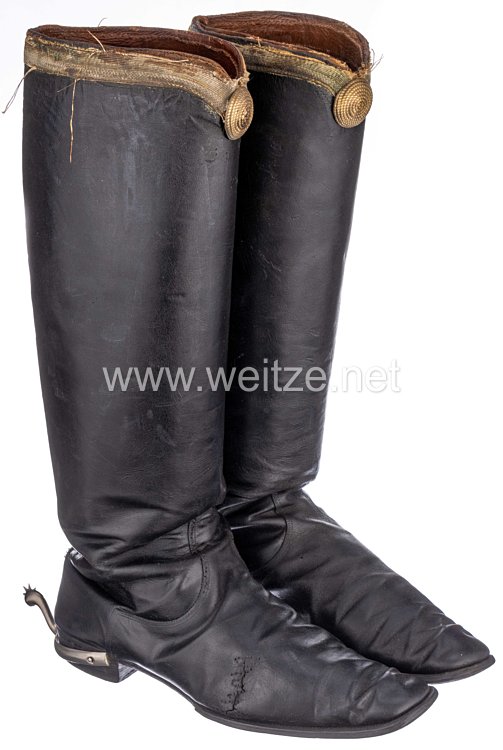
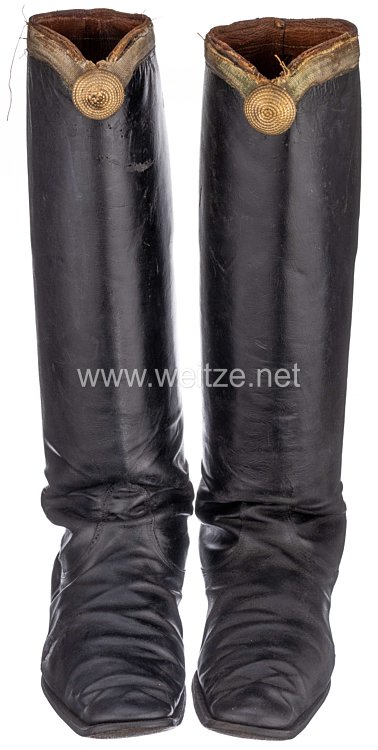
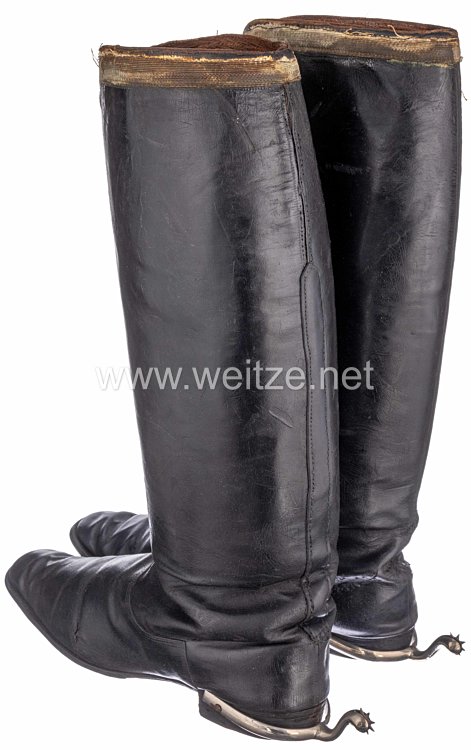
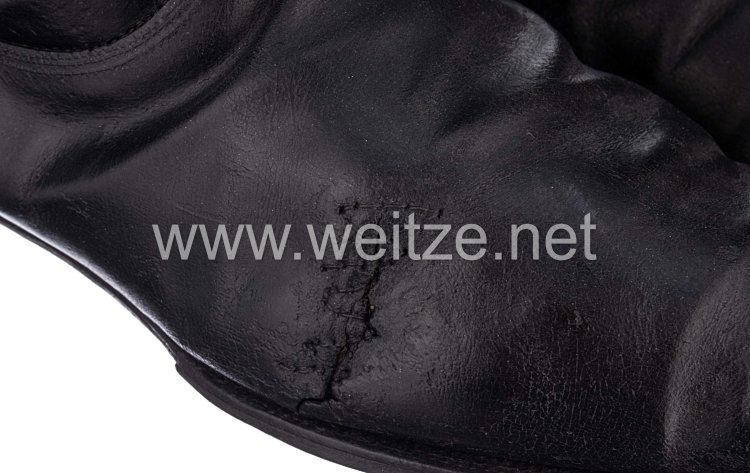
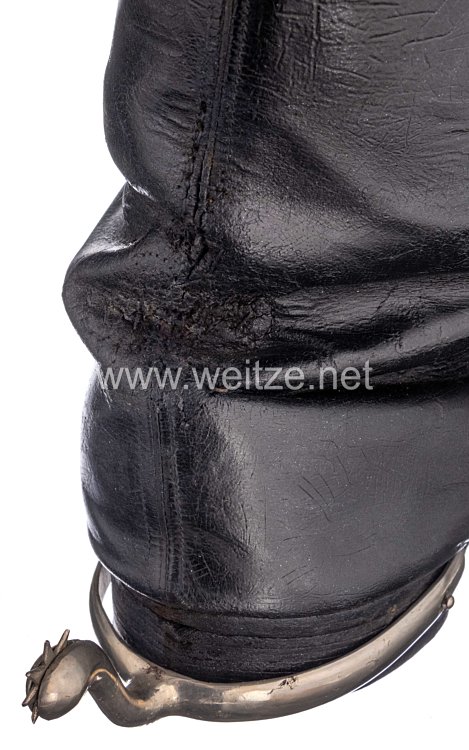
Dazu ein paar Offizierstiefel für Husaren Offiziere mit Sporen, oben umlaufend mit silberner Litze und versilbertem Knebelknopf (für das Leibgarde-Husaren Regiment müsste die Litze und der Knopf in Gold sein).
Dazu ein paar Offizierstiefel für Husaren Offiziere mit Sporen, oben umlaufend mit silberner Litze und versilbertem Knebelknopf (für das Leibgarde-Husaren Regiment müsste die Litze und der Knopf in Gold sein).