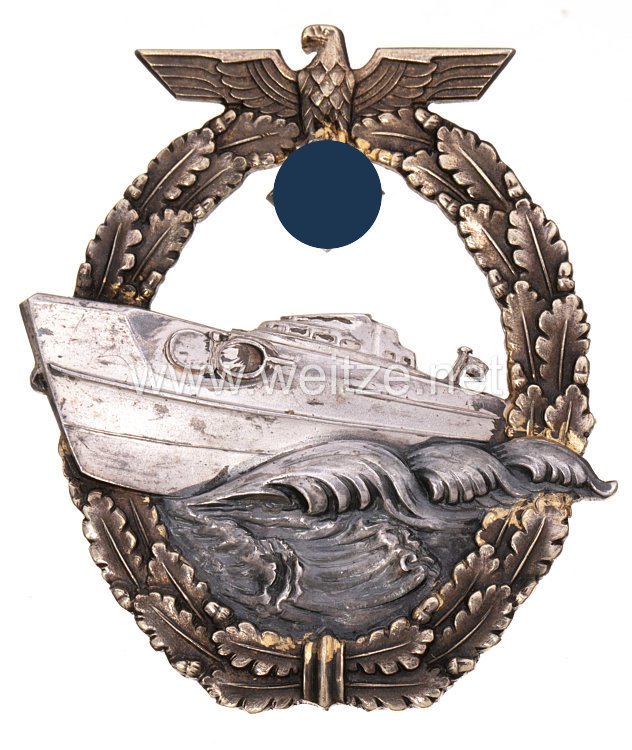
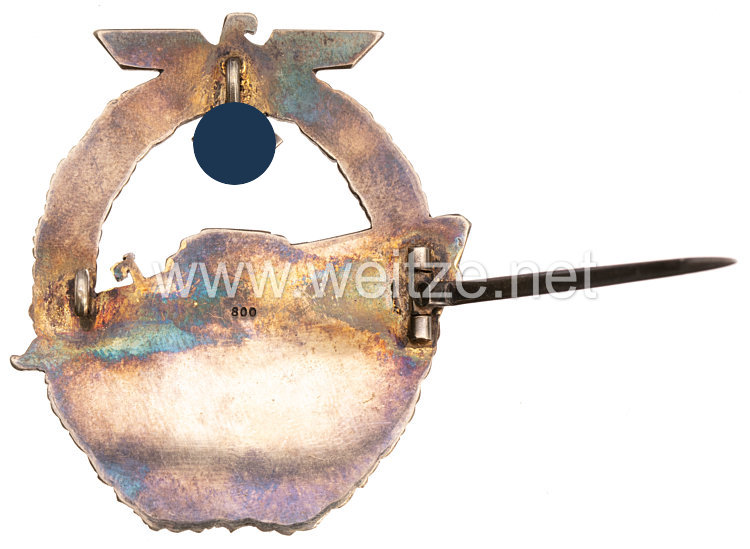
The Schnellboot-Kriegsabzeichen mit Brillanten (Fast Attack Craft War Badge with Diamonds) ranks among the most exceptional and rarest decorations of the German Kriegsmarine during World War II. This special variant of the combat badge represents the highest recognition for leaders of the Schnellbootwaffe, the highly specialized force that operated fast torpedo boats—called “E-Boats” by the Allies—conducting nocturnal attacks against enemy convoys and coastal targets.
The Schnellbootwaffe operated primarily in the North Sea, Baltic Sea, and English Channel throughout the war. Their boats proved highly effective, particularly during the early war years and during operations around the Allied invasion of Normandy in 1944. The standard Schnellboot-Kriegsabzeichen was instituted on May 30, 1941, by Grand Admiral Erich Raeder, Commander-in-Chief of the Kriegsmarine, and was worn on the left breast of the uniform. Award criteria for the base badge included twelve operational sorties against enemy vessels or installations, one outstandingly successful sortie, being wounded in action, or outstanding leadership.
The variant with diamonds followed an established practice within the Kriegsmarine: recipients of the Ritterkreuz des Eisernen Kreuzes mit Eichenlaub (Knight's Cross of the Iron Cross with Oak Leaves) who had previously received the corresponding combat badge received that badge upgraded with diamonds. Between May 1940 and May 1945, a total of 23 members of the Schnellbootwaffe received the Ritterkreuz des Eisernen Kreuzes, of which eight went on to receive the Eichenlaub, thereby qualifying for the badge with diamonds.
The first award of the Schnellboot-Kriegsabzeichen mit Brillanten was made on November 13, 1942. All eight documented recipients were commanders in the Schnellbootwaffe: Kapitänleutnant Werner Töniges (November 13, 1942), Kapitänleutnant Siegfried Wuppermann (April 14, 1943), Korvettenkapitän Friedrich Kemnade (May 27, 1943), Korvettenkapitän Georg-Stuhr Christiansen (November 13, 1943), Korvettenkapitän Bernd Klug (January 1, 1944), Korvettenkapitän Klaus Feldt (January 1, 1944), Kapitän zur See Rudolf Petersen (June 13, 1944), and Kapitänleutnant Götz Freiherr von Mirbach (June 14, 1944).
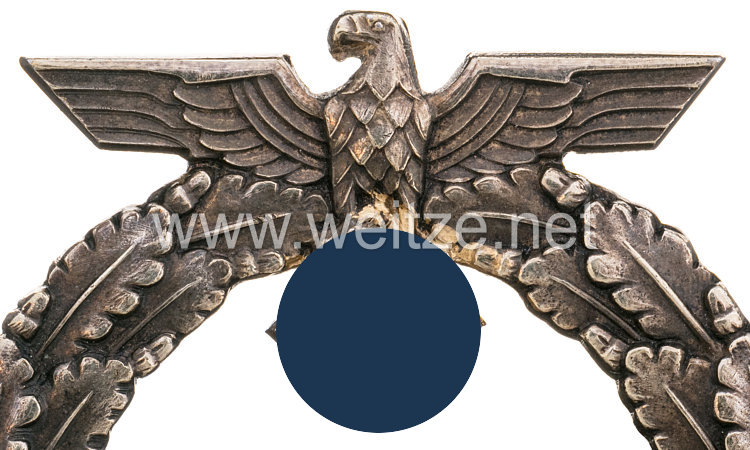
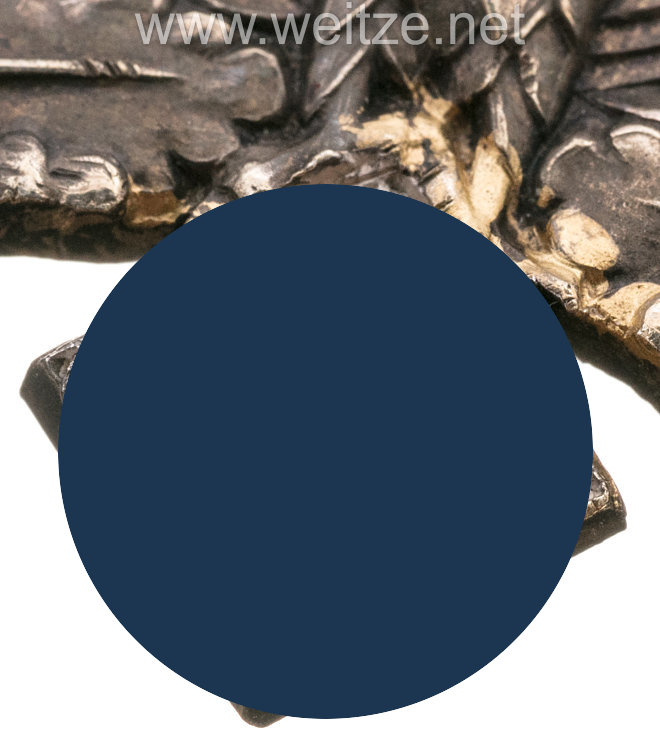
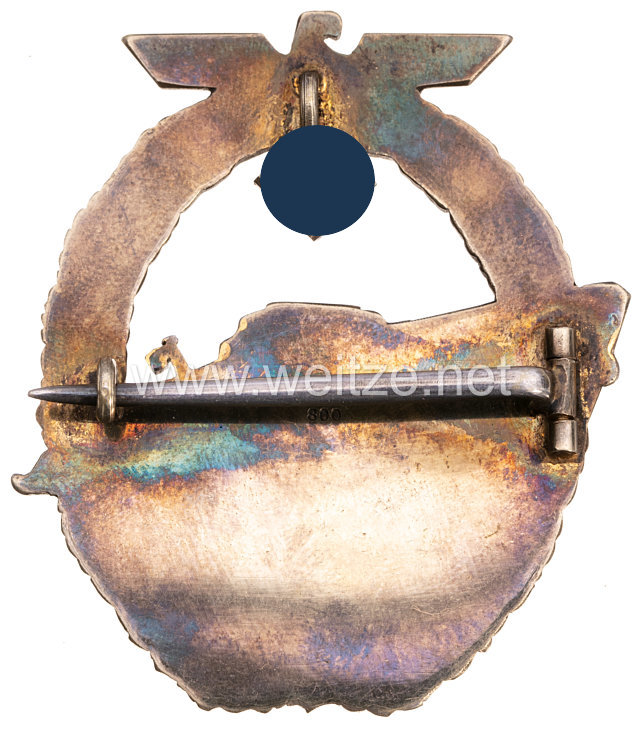
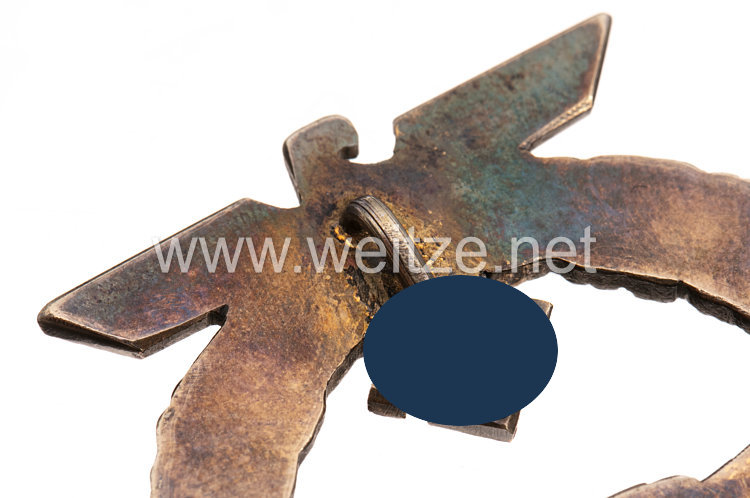
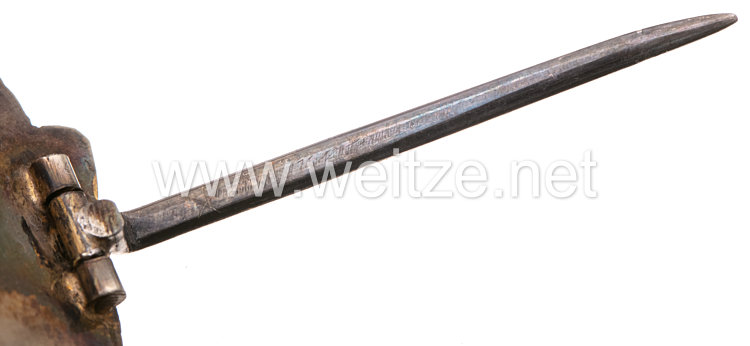
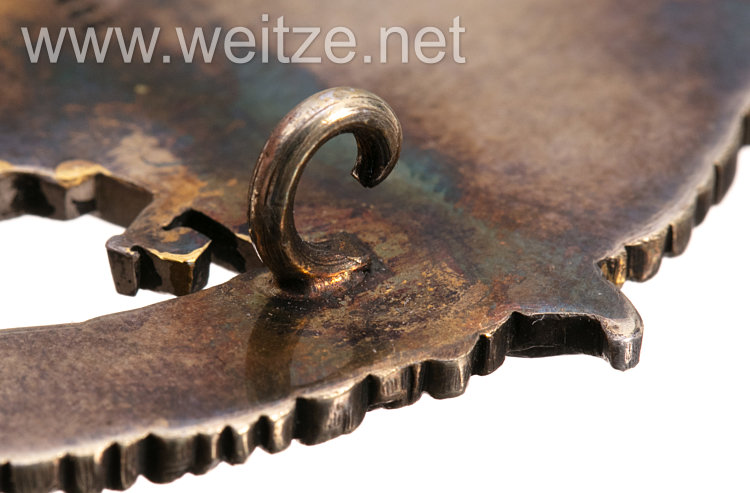
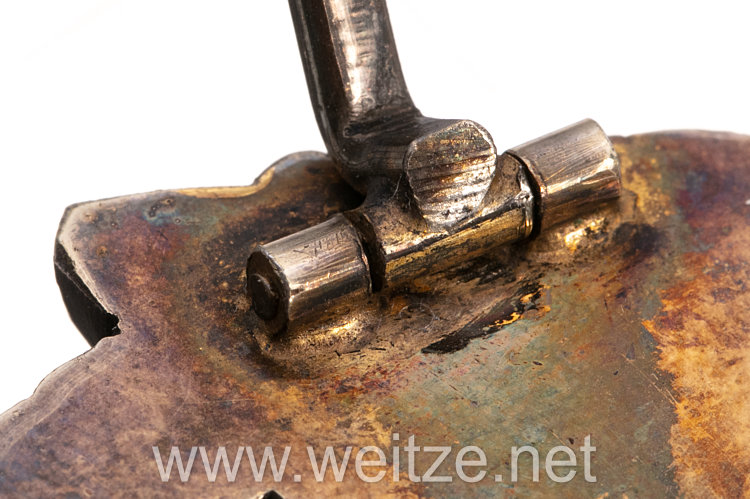
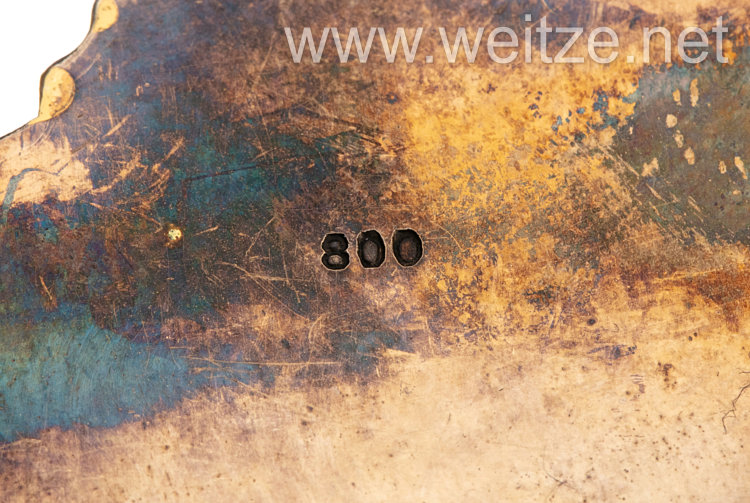
The badge takes the form of an oval depicting a fast attack craft (Schnellboot) surrounded by an oak leaf wreath, surmounted by a Kriegsmarine eagle clutching a swastika. Known specimens measure 57.95mm in height by 50.85mm in width and weigh 40.3 grams, with the eagle spanning 32.75mm. Construction was in silver with partially gilded elements, with nine diamonds embedded in the swastika. The officially awarded pieces were manufactured by the firm Schwerin-Berlin.
In addition to the official award pieces, contemporary jeweler's versions also existed, crafted in the finest workmanship for recipients. These may have differed in details such as silver alloy composition or maker's markings from the official examples, but shared the fundamental design concept and the use of genuine diamonds.
The standard Schnellboot-Kriegsabzeichen existed in two pattern versions: the first pattern was instituted on May 30, 1941, while a second pattern with a more streamlined design was introduced on January 28, 1943, following complaints about the original depiction. The version with diamonds was based on the second pattern design.
After 1945, wearing the badge with the swastika, like all Nazi decorations featuring that symbol, was prohibited in Germany. According to the Gesetz über Titel, Orden und Ehrenzeichen (Law on Titles, Orders and Decorations) of July 26, 1957, wearing of the decoration in the Federal Republic of Germany is permitted only without National Socialist emblems. The extreme rarity of this decoration—with only eight documented awards—makes it one of the most sought-after collectibles in the field of Kriegsmarine decorations.