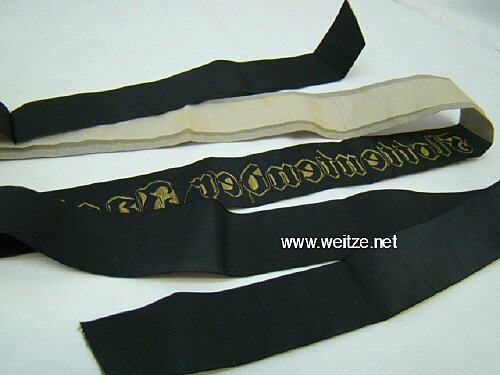
Kriegsmarine Cap Tally "Flottentender Jagd"

mint condition, metal thread woven. Condition 1
203787
85,00

Kriegsmarine Cap Tally "Flottentender Jagd"

The Kriegsmarine cap tally "Flottentender Jagd" represents a significant artifact from the Second World War era, embodying the maritime traditions of the German naval forces. These cap tallies, woven with metal thread, were an essential component of German naval uniforms and served to identify the specific unit or ship to which a sailor was assigned.

The Flottentender (fleet tenders) were specialized supply vessels of the Kriegsmarine that played an indispensable role in maritime logistics. The fleet tender "Jagd" belonged to this category of auxiliary vessels designed to support the war fleet. These ships supplied other units with fuel, ammunition, provisions, and performed minor repairs, underlining their operational significance during wartime.

The tradition of cap tallies (also called Mützenbänder or cap ribbons) in the German Navy dates back to the 19th century. Following the Imperial Navy, the Kriegsmarine, officially founded in 1935, continued this tradition. According to the uniform regulations of the Kriegsmarine, enlisted ranks and petty officers without sword knots wore the traditional sailor's cap with a black band bearing the ship or unit name in golden letters. The inscription was executed in the characteristic German Fraktur script or Latin block letters.

The production of these cap tallies was carried out by specialized textile manufacturers under strict quality control. The use of metal thread – typically gold or silver-plated wire wrapped around a textile core – attests to the high-quality workmanship. This technique of weaving with metal thread was elaborate and required special craftsmanship. The golden lettering on a black background conformed to official specifications and made the bands both functional and aesthetically pleasing.

The Flottentender "Jagd" was part of the logistical infrastructure of the Kriegsmarine. Fleet tenders typically displaced between 2,000 and 6,000 tons and possessed extensive storage capacities. They operated in both home waters and occupied ports and were crucial for maintaining the operational capability of the war fleet. The crews of these ships consisted of specialists from various fields: mechanics, warehouse management, nautical personnel, and weapons experts.

Wearing the cap tally was not merely a matter of uniform, but also of honor and belonging. For the crews, the band symbolized their connection to their ship and their camaraderie. Upon transfers or the decommissioning of a ship, cap tallies were often kept as mementos, underscoring their emotional significance for crew members.

The excellent condition of this specimen – described as mint – is remarkable. Many of these cap tallies were worn during the war and show corresponding signs of use. A cap tally in this condition suggests that it was either not worn or worn only very briefly, possibly as a spare band or because the ship never entered service or the crew was replaced.

The fleet tenders played an especially important role in the later war years, as the supply lines of the Kriegsmarine came under increasing pressure. Allied air raids and the growing control of sea routes by British and American forces made flexible supply through tenders increasingly important, but also more dangerous.

From a collector's and historical perspective, cap tallies from smaller units and auxiliary ships such as the Flottentender "Jagd" are particularly interesting, as they were often produced in smaller quantities than bands from large battleships or cruisers. This makes them sought-after collectibles for militaria enthusiasts and naval historians.

The study of such objects contributes to understanding the organization, logistics, and daily life in the Kriegsmarine. They are material witnesses of a historical epoch and help to understand history not only from the perspective of great battles, but also from the viewpoint of logistical support and the individual experiences of crew members.

These artifacts serve as tangible links to the past, allowing researchers and collectors to connect with the human stories behind the grand narrative of naval warfare. Each cap tally represents the pride, service, and sacrifice of individuals who served aboard vessels that, while not as celebrated as capital ships, were nonetheless vital to naval operations. The preservation of such items in excellent condition ensures that future generations can study and appreciate these important historical objects.

r