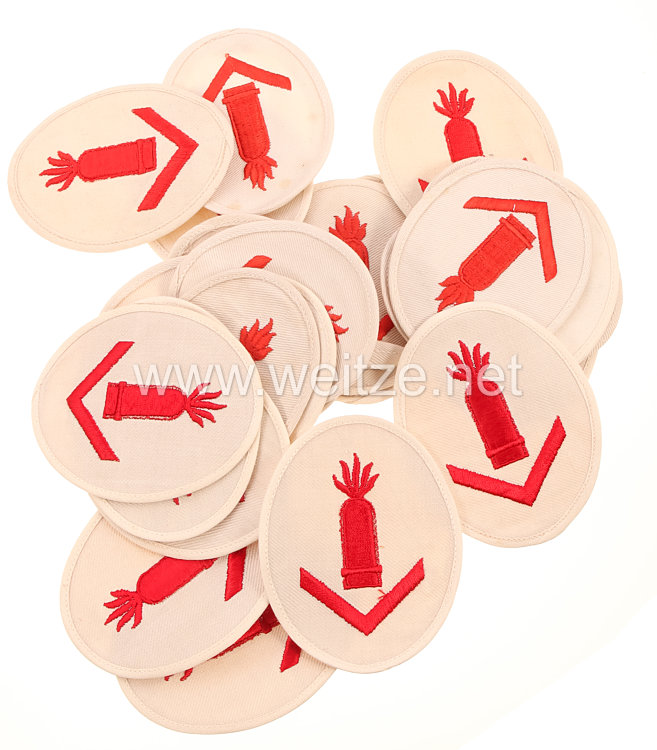
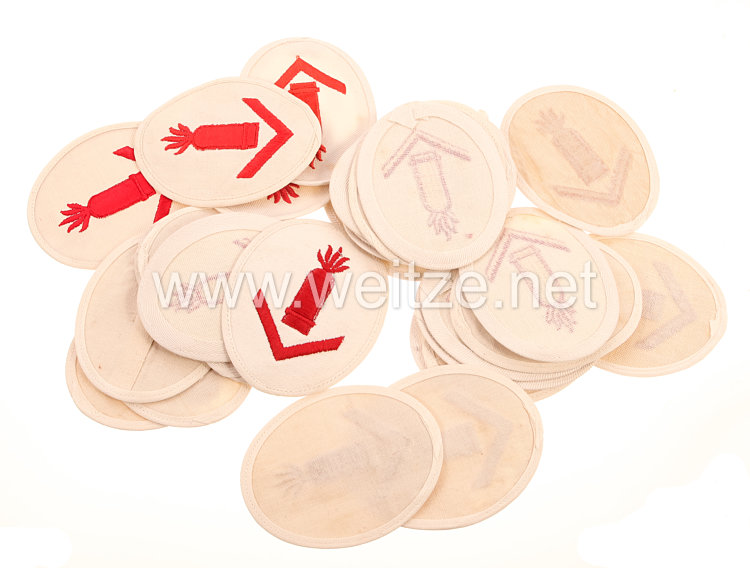
Kriegsmarine Sleeve Insignia Special Training Gun Commander (GF. III)

For the white tunic, Condition 2.

Price per piece: 18 Euro.

Condition may vary.
440986
18,00

Kriegsmarine Sleeve Insignia Special Training Gun Commander (GF. III)

The Kriegsmarine Sleeve Badge for Special Training Gunnery Leader (GF. III) represents an important aspect of the training and qualification system of the German Kriegsmarine during World War II. These badges were part of a comprehensive system for identifying specialized skills and training levels within the maritime forces of the Third Reich.

The Kriegsmarine, officially established on June 1, 1935, as the successor to the Reichsmarine, developed a complex system of sleeve badges to identify the various specializations and qualification levels of its personnel. These badges served not only to identify expertise but also to promote pride and motivation among the ranks.

The badge described here identifies the qualification as a Gunnery Leader Level III. Gunnery leaders were responsible for operating and commanding ship artillery, a critical function in naval warfare. The Roman numeral III indicates a specific qualification level within the multi-tiered training system. The Kriegsmarine distinguished various grades of artillery training, with higher levels representing more comprehensive knowledge and areas of responsibility.

Training to become a gunnery leader was intensive and comprehensive. It included theoretical knowledge of ballistics, target acquisition, range calculation, as well as practical exercises on various gun types. From light anti-aircraft guns to heavy naval cannons, gunnery leaders had to be familiar with a wide variety of weapons systems. Level III typically designated an intermediate qualification that went beyond basic training but did not yet represent the highest level of mastery.

The badge itself was worn on the white blouse, the summer uniform of the Kriegsmarine. The white uniform was intended for warmer climates and seasons and differed in material and cut from the darker winter uniform. The placement of sleeve badges followed strict regulations detailed in the Kriegsmarine's dress codes. Typically, such specialization badges were worn on the left upper arm.

The manufacture of these badges followed standardized specifications. They were usually made from cloth, with machine or hand-embroidered execution. The coloring and design followed precise regulations that ensured the badges were recognizable and readable on different uniform parts. Quality could vary depending on the manufacturer and production period, especially in the later war years when material shortages increased.

The Kriegsmarine's system of career badges and specialization badges was part of a longer German naval tradition. The Imperial Navy had already used similar systems, which were adopted and modified by the Reichsmarine after World War I. The Kriegsmarine expanded and refined this system considerably to meet the increased technical requirements of modern naval warfare.

The importance of gunnery leaders cannot be underestimated. At a time when naval battles were decided by artillery fire, before aircraft carriers and submarines fundamentally changed naval warfare, well-trained gun crews were of crucial importance. The precision and speed with which a gun was operated could mean the difference between victory and defeat.

After 1945, all badges and insignia of the Kriegsmarine became obsolete. The new Bundesmarine, founded in 1956, developed a completely new system of rank insignia and qualification markings that deliberately distanced itself from the National Socialist past. Today, original Kriegsmarine badges are historical artifacts preserved in museums and private collections as testimonies of a bygone era.

For collectors and historians, such badges are important sources for understanding the organizational structure and training system of the Kriegsmarine. They provide insights into the technical specializations and hierarchies within the maritime forces. The preservation and scientific documentation of these objects contributes to historical research without glorifying the problematic history associated with them.