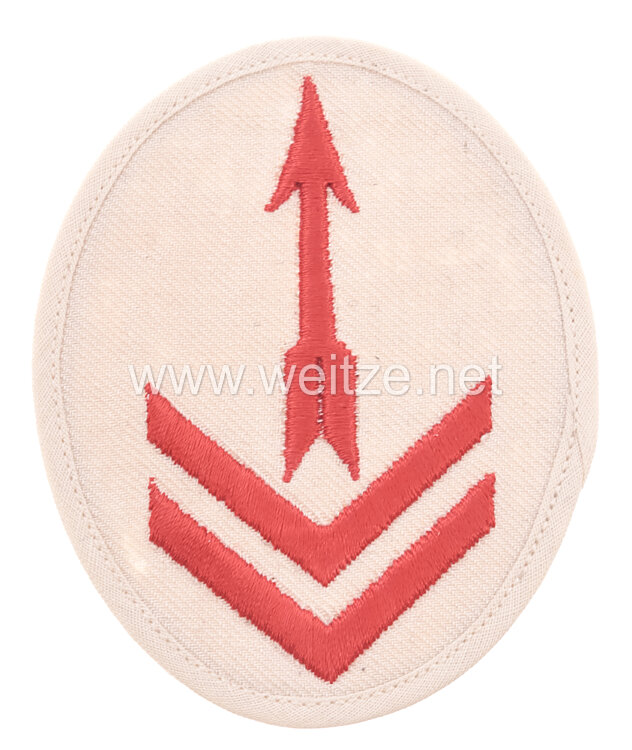
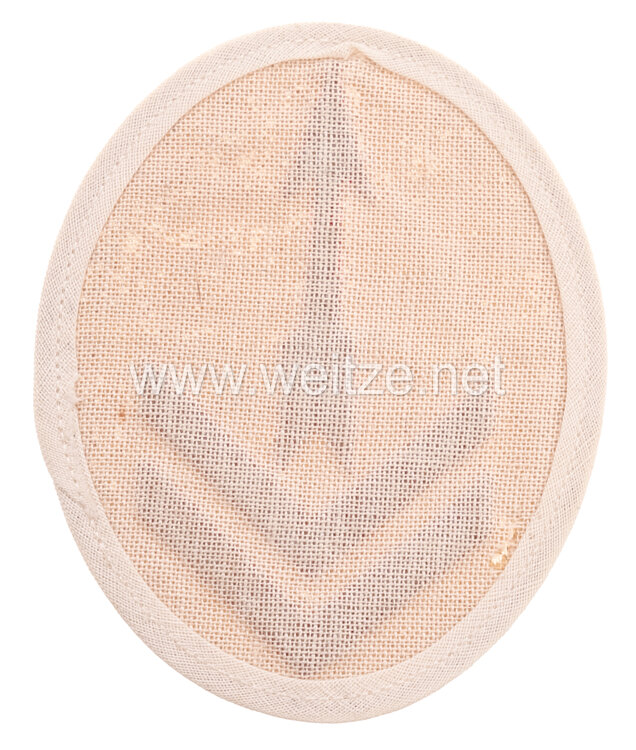
Kriegsmarine Sleeve Insignia Special Training Flak Searchlight Operator

Machine-embroidered version for the white blouse. Condition 2.
466386
30,00

Kriegsmarine Sleeve Insignia Special Training Flak Searchlight Operator

The Kriegsmarine sleeve badge for special training as Flak Searchlight Operator represents a fascinating testimony to the complex training and specialization system of the German Navy during World War II. This machine-embroidered version for the white blouse exemplifies the high importance placed on anti-aircraft defense and particularly searchlight operation in the maritime context.

The Kriegsmarine, as part of the Wehrmacht from 1935 to 1945, developed a sophisticated system of awards and badges to identify various qualifications and specializations of its personnel. Sleeve badges for special training were typically worn on the left forearm and provided immediate visual indication of the wearer's acquired skills.

The Flak Searchlight Operator played a critical role in the air defense of warships and naval installations. Anti-aircraft guns (Flak) were only as effective as their ability to detect and track enemy aircraft. During World War II, particularly from 1940 onwards as Allied air attacks intensified, air defense became a vital component of naval warfare. High-intensity searchlights enabled defense against night attacks by illuminating enemy bombers and allowing Flak guns to acquire targets.

Training as a searchlight operator required comprehensive technical knowledge. Naval Flak searchlights were complex devices with diameters ranging from 60 to 150 centimeters, employing precise optics and powerful carbon arc lamps. The searchlight operator had to master not only the operation of these devices but also possess knowledge of aircraft recognition, ballistic calculations, and coordination with Flak batteries.

The present badge in machine-embroidered execution for the white blouse is typical of the high-quality textile work used for naval uniforms. The white blouse, also known as white drill or summer clothing, was primarily worn in warmer climates or during summer months. This indicates that such specialization badges had to be available for different uniform variants.

Machine embroidery, which increasingly replaced the more elaborate hand embroidery from the late 1930s onwards, enabled standardized production while maintaining a high qualitative standard. These badges were typically embroidered on dark backgrounds (usually blue or black for regular uniforms) with white or silver thread, with appropriately adapted color combinations for white uniforms.

The introduction of such specialization badges followed the Army Regulations (Heeresverordnung) and corresponding naval service regulations. The Kriegsmarine developed an extensive system of approximately 30 different special training badges covering specializations from divers to mine divers to various technical fields.

The historical context of these badges is closely linked to the increasing technological sophistication of naval warfare. During the war, German warships increasingly became targets of Allied air attacks. The Battle of the Bay of Biscay, the sinking of the Bismarck in 1941, and numerous other incidents demonstrated the vulnerability of even large warships to air attacks. This led to continuous strengthening of Flak armament on German ships and a corresponding elevation in status of Flak specialists.

The growing threat from the air necessitated not only more weapons but also better-trained personnel. Searchlight operators had to work in close coordination with gun crews, radar operators, and fire control personnel. Night operations were particularly demanding, as searchlights could betray the ship's position to enemy forces. The decision when to illuminate a target required tactical judgment and experience.

These specialization badges also served an important function within the military hierarchy. They identified expertise and completed training courses, which could influence assignment to specific ships or units. Particularly qualified specialists were often assigned to capital ships or important coastal installations where their skills were most needed.

Collectors and military historians today value such sleeve badges as important documents of military history. They provide insights into organizational structure, technical requirements, and specialization within the Kriegsmarine. The stated condition 2 indicates a well-preserved example showing typical signs of wear from a worn uniform but retaining all essential details.

These badges must be understood today in the context of their time: as part of a military system that visualized both technical competence and hierarchical structures. Their preservation serves historical research and understanding of military organization and technology during World War II.