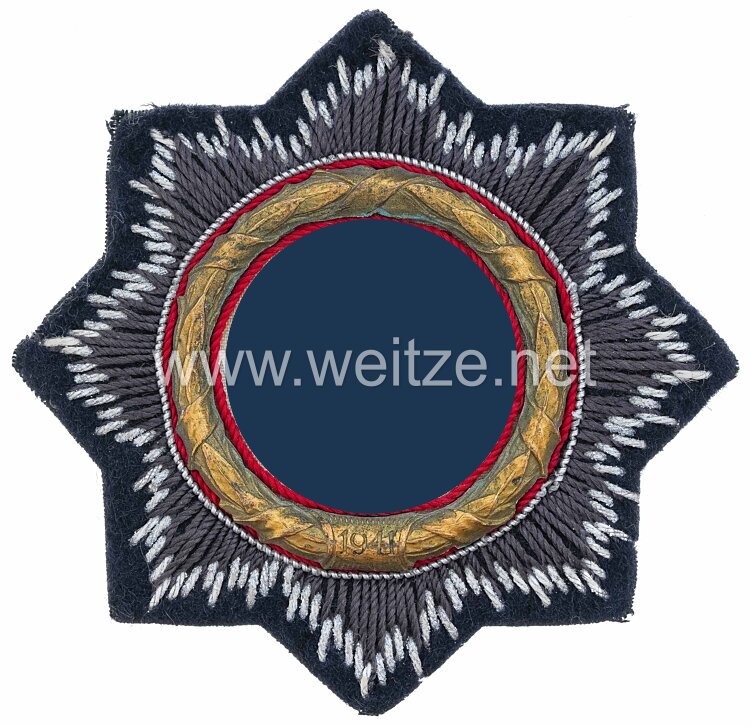
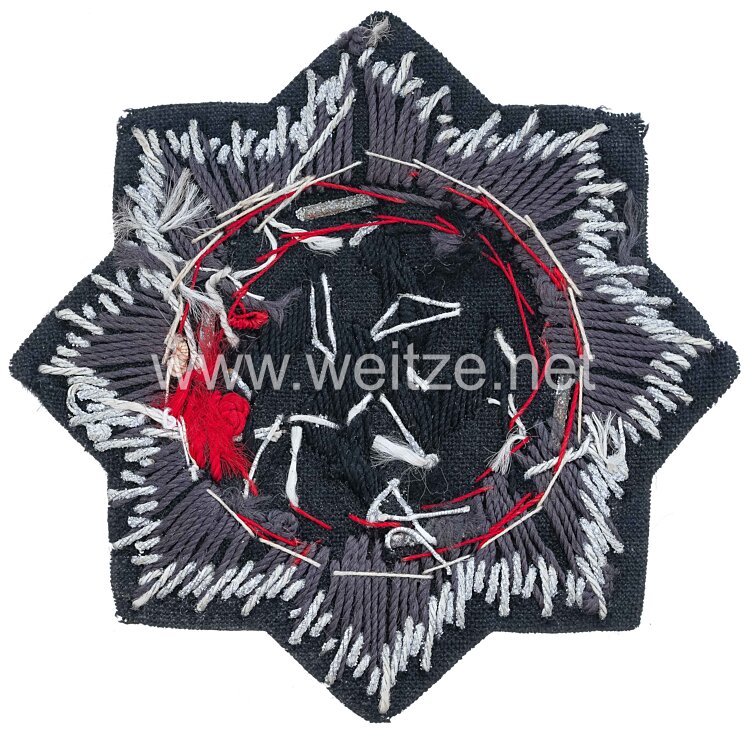
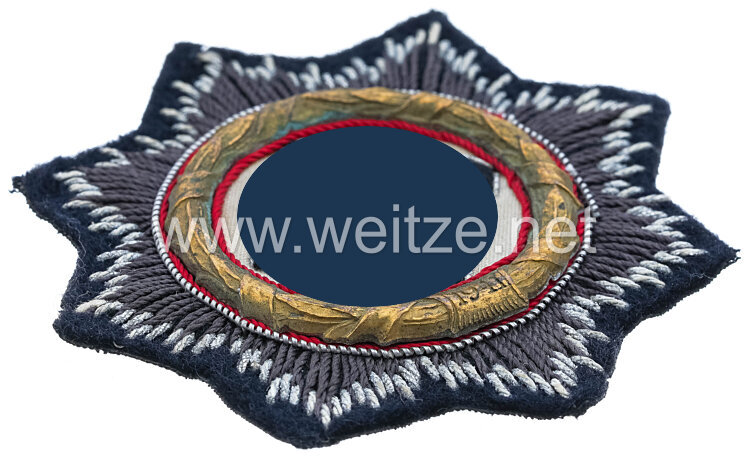
German Cross in Gold, Cloth Version for Panzer Troops

Hand-embroidered version on black cloth. Unworn, condition 2. Very rare.

The German Cross in Gold was awarded to approximately 26,000 soldiers during World War II, with awards to members of the Panzer troops estimated at approximately 2,500.
460786
2.500,00

German Cross in Gold, Cloth Version for Panzer Troops

The German Cross in Gold represents a significant decoration of National Socialist Germany during World War II. This award was instituted on September 28, 1941 by Adolf Hitler and was intended to bridge the gap between the Iron Cross First Class and the Knight's Cross of the Iron Cross. The decoration was awarded for repeated acts of bravery in combat or outstanding military leadership achievements.

The present cloth version for the Panzer troops represents a special variant of this award. While the German Cross was originally worn as a metal pin badge, textile versions also existed that could be sewn onto the uniform. These cloth versions were particularly popular among tank crews, as they were more practical than the bulky metal versions when entering and exiting the cramped tank hatches.

The hand-embroidered execution on black cloth is characteristic of the Panzer troops, whose branch color was black. The black Panzer uniform was introduced in 1934 and was specifically designed for the needs of tank crews. Applying decorations to this dark fabric required special craftsmanship, which is why hand-embroidered examples were of high quality.

Throughout the war, approximately 26,000 German Crosses in Gold were awarded, underscoring the rarity of this decoration. Awards to members of the Panzer troops are estimated at around 2,500, meaning only about 10 percent of all awards went to tank soldiers. This makes cloth versions for the Panzer troops particularly rare collector's items.

The Panzer troops played a central role in German warfare, particularly in the Blitzkrieg campaigns of the early war years. Famous Panzer commanders such as Heinz Guderian, Erwin Rommel, and Michael Wittmann received the highest decorations for their achievements. The German Cross in Gold was awarded to officers and enlisted men alike, emphasizing its significance as a bravery decoration.

The design of the German Cross was distinctive: at the center was a swastika, surrounded by a silver or in this case embroidered wreath, which in turn was surrounded by a golden sunburst. In cloth versions, these elements were represented through various embroidery techniques, using gold or silver threads to emulate the shine of the metal versions.

The manufacture of cloth versions was carried out by specialized workshops and authorized manufacturers. Quality varied considerably, from simple machine-made versions to elaborately hand-embroidered examples like the one described here. Hand-embroidered versions were often private commissions or made by renowned manufacturers and were considered particularly valuable.

The wearing of the German Cross was strictly regulated. It was worn on the right breast side of the uniform, below the breast pocket. On the Panzer uniform, it was attached accordingly to the black fabric, where it stood out particularly well due to the contrast between the light embroidery and the dark background.

From a military-historical perspective, this decoration documents not only individual courage and military achievement but also the complex hierarchy of the German decorations system during World War II. The relatively small number of awards shows that the German Cross in Gold indeed represented a significant honor.

Today, original cloth versions of the German Cross, particularly unworn hand-embroidered examples for the Panzer troops, are extremely rare military-historical objects. They document not only the material culture of the war but also the craftsmanship of uniform insignia production of that era. For military-historical research and collections, such objects are of considerable documentary value.