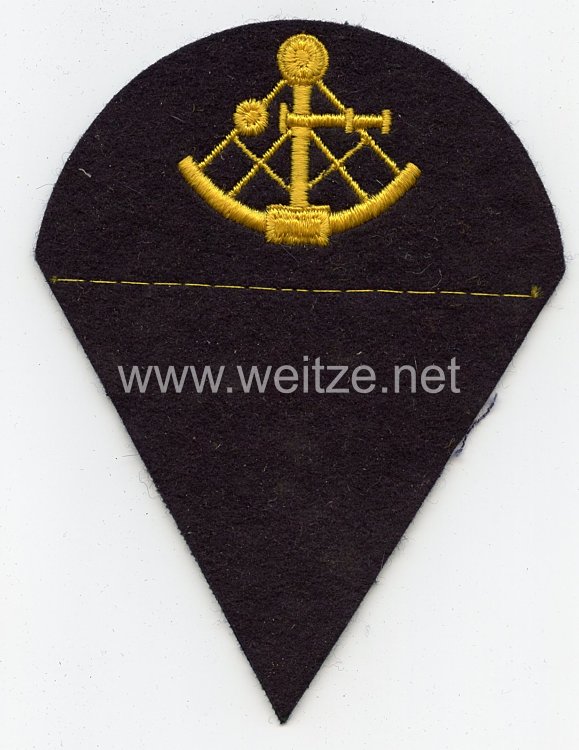
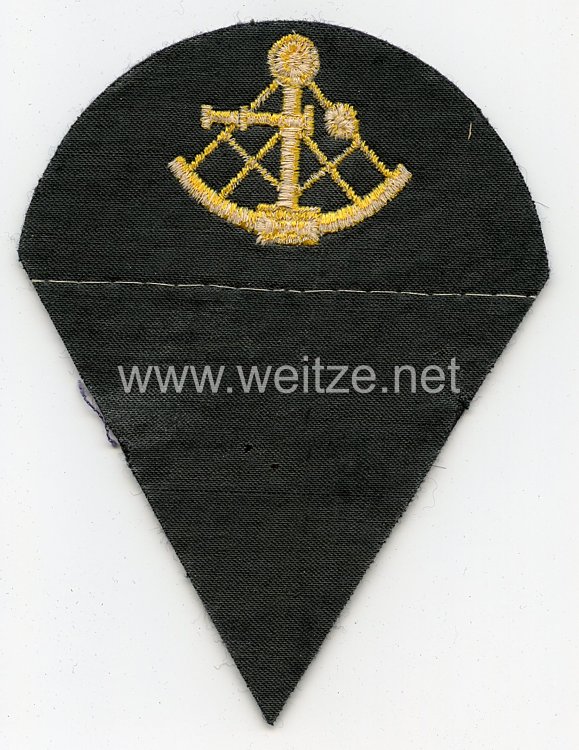
Kriegsmarine Enlisted Ranks Sleeve Insignia for Survey Career Path
Kriegsmarine Sleeve Badge for Enlisted Personnel of the Survey Career Track
The Kriegsmarine, the naval force of the German Reich from 1935 to 1945, developed a complex system of rank insignia and career identification badges to distinguish the various specializations within its enlisted ranks. The sleeve badge for the survey career track represents a particularly interesting example of this system, as it identified a highly specialized technical function that was of considerable importance for navigation and naval warfare.
Historical Background and Development
After the re-establishment of the German Kriegsmarine in 1935, which effectively nullified the Treaty of Versailles, a comprehensive system was established to identify different career tracks. The Vermessungslaufbahn (survey career track) belonged to the technical career paths and was responsible for nautical surveying, cartography, and hydrographic services. These activities were essential for creating and updating nautical charts, determining water depths, and identifying navigational hazards.
Sleeve badges for enlisted personnel were typically worn on the left upper arm and differed distinctly from sword knots and other rank insignia. They served the purpose of quick visual identification of a sailor's specialization aboard ship or in shore installations.
Construction and Design
The Kriegsmarine's sleeve badges for enlisted personnel were manufactured according to strict specifications. The version for the Kollani (colonial cloth uniform) refers to the tropical uniform variant, which was made from lighter, beige-colored fabric. This uniform variant was worn in warmer climates or aboard ships operating in southern waters.
The survey career track badge typically displayed symbols associated with surveying activities. Embroidery was usually executed on dark blue base material for the standard uniform and on appropriately adapted material for the tropical version. The quality of manufacture varied depending on the time of production and manufacturer, with early war years generally showing higher quality workmanship than later war years.
The Survey Career Track in the Kriegsmarine
Members of the survey career track had specific duties that went beyond normal seamanship. They were responsible for:
- Conducting hydrographic surveys
- Maintaining and calibrating survey instruments
- Creating and correcting nautical charts
- Performing soundings and depth measurements
- Supporting navigation through precise geographic data
These activities required specialized training that exceeded the basic training of an ordinary seaman. Survey personnel were often deployed on special survey vessels or in hydrographic institutes.
Production and Variants
The manufacture of sleeve badges was carried out by various suppliers, both state-run and private manufacturers. Quality standards were established by the Oberkommando der Kriegsmarine (OKM - Supreme Command of the Navy). During the course of the war, material shortages affected the quality and materials used.
The version for the Kollani differed from the standard version for the dark blue uniform. The lighter base color required adapted embroidery colors to ensure sufficient contrast. These tropical versions are rarer to find today than standard variants, as they were produced in smaller quantities and were only intended for specific deployment areas.
Condition and Collector Aspects
Sleeve badges from the Second World War period are subject to natural aging processes. Foxing stains, as described in this example, are typical occurrences in textile militaria, caused by moisture and organic processes. While they affect the aesthetic appearance, they are not unusual for fabric pieces over 80 years old.
For collectors and historians, such badges are important testimonies to the organizational structure and daily life in the Kriegsmarine. They document the diversity of specializations and the importance attached to technical and scientific activities even in military organizations.
Historical Significance
The survey career track and its identification through specific sleeve badges illustrate the complexity of modern naval warfare in the 20th century. Precise nautical data was crucial for submarine operations, mine-laying, fleet maneuvers, and amphibious landings. The Kriegsmarine maintained several survey vessels and hydrographic offices that continuously collected and analyzed data.
Today, these badges are important study objects for uniform studies and naval history, providing insight into the organizational structure and appreciation of specialized skills within the German Kriegsmarine. They represent a tangible connection to the technical and scientific aspects of naval operations during World War II, reminding us that modern warfare required not only combat personnel but also highly trained specialists in fields such as surveying, cartography, and hydrography.