Hessen-Darmstadt Cavalry Extra Saber (KD) 89 for a Member of the Garde-Dragoner-Regiment (1. Großherzoglich Hessisches) Nr. 23

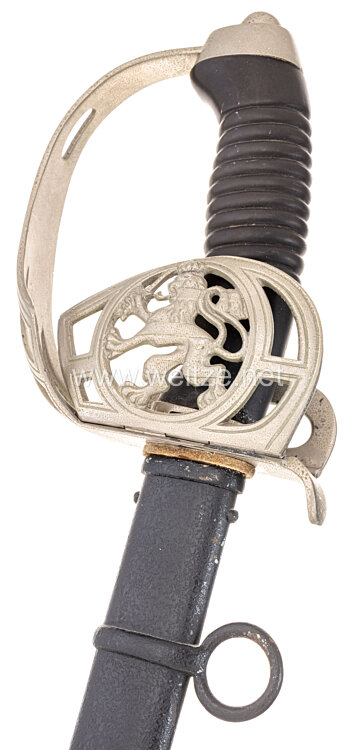
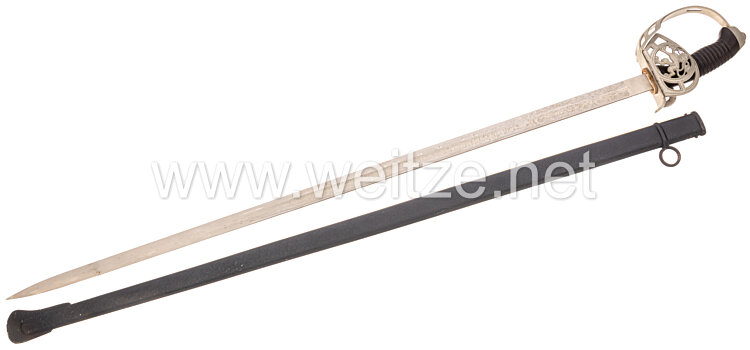
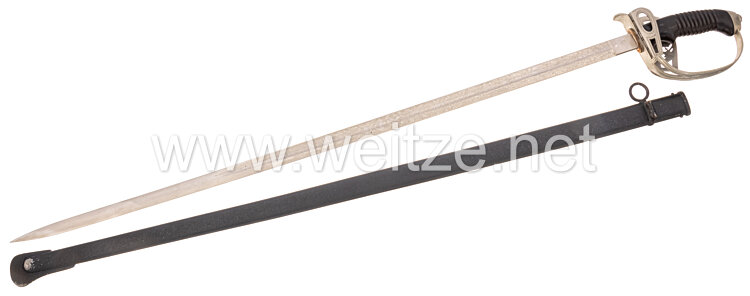
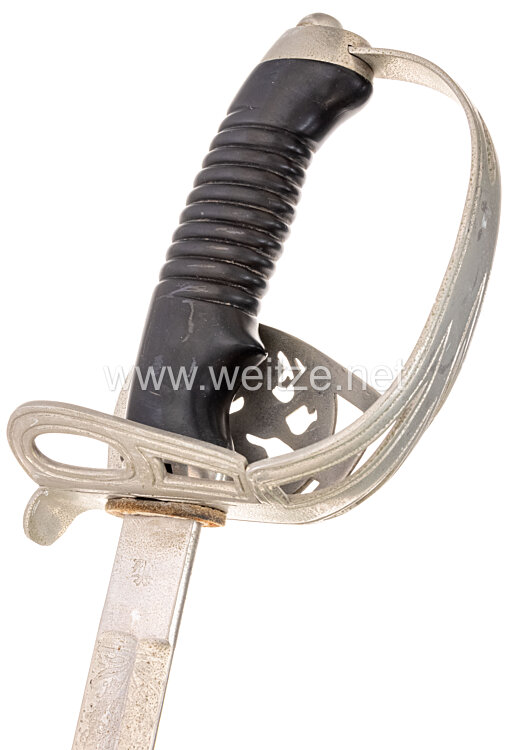
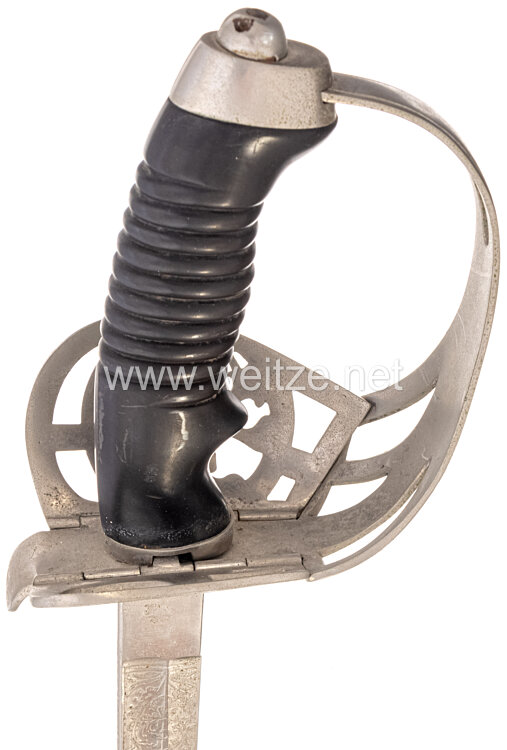
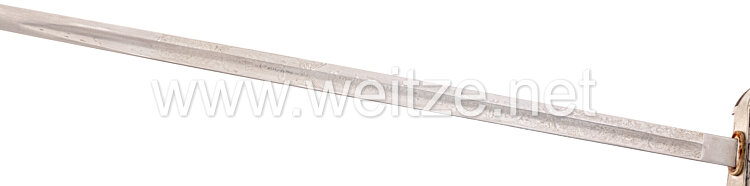
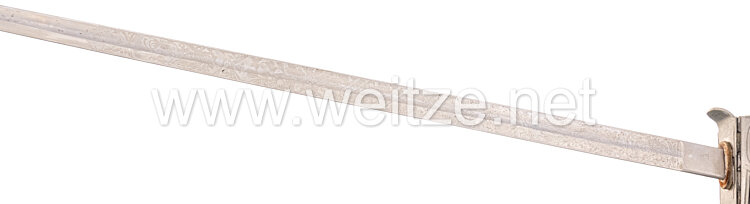
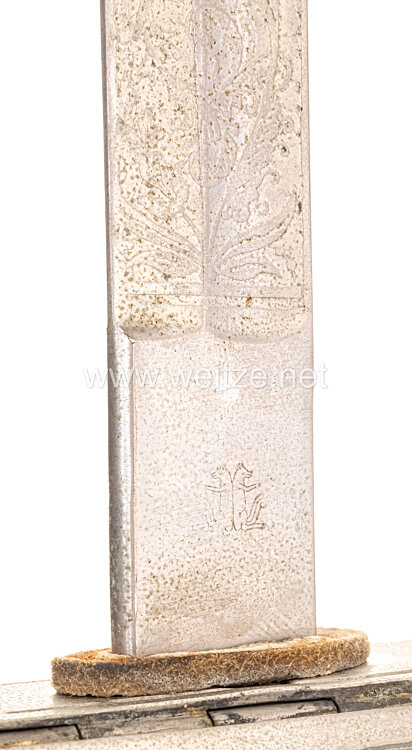
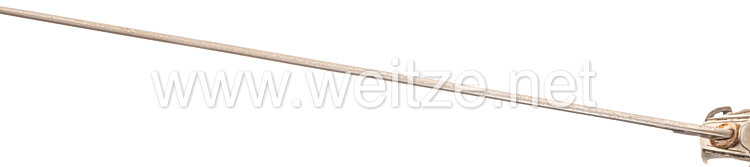
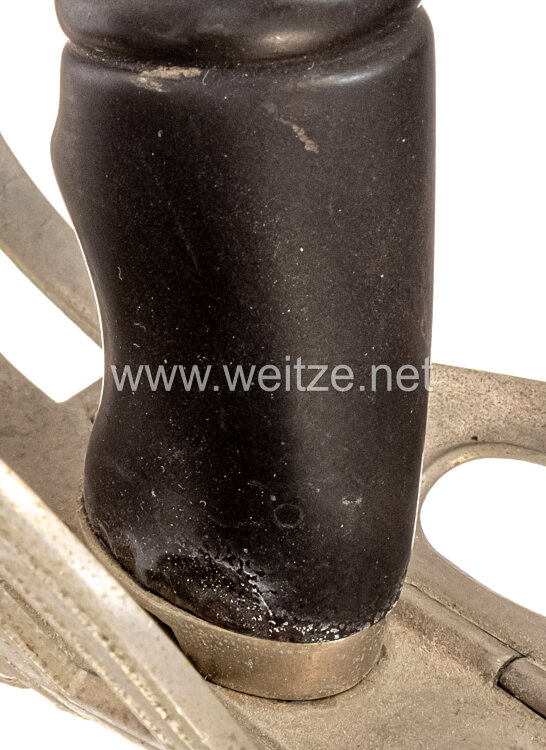
Location Darmstadt circa 1910. Nickel-plated blade with fullers and etching on both sides, width approximately 2.3 cm, length approximately 79.5 cm, on the obverse near the ricasso with maker's mark of Eickhorn in Solingen, on the reverse in the panel the inscription “Garde Drag. Reg. (1. Großh. Hess.) No 23” as well as the cipher “L”, on the obverse in the inscription band “Zur Erinnerung an meine Dienstzeit”. Folding nickel hilt on both sides with the Hessian lion in the guard, with rubber grip, the hilt somewhat dulled, the guard slightly deformed, blade somewhat loose in the hilt. Black lacquered steel scabbard with one suspension ring and fixed carrying ring, the scabbard re-lacquered in earlier times. Condition 2.

Overall length 89 cm.
464485
1.200,00

Hessen-Darmstadt Cavalry Extra Saber (KD) 89 for a Member of the Garde-Dragoner-Regiment (1. Großherzoglich Hessisches) Nr. 23

The Cavalry Extra Saber Model 1889 was a weapon carried by officers and non-commissioned officers of German cavalry regiments in the German Empire. This particular specimen originates from the Garde-Dragoner-Regiment (1st Grand Ducal Hessian) No. 23, a prestigious unit of the Hessian army stationed in Darmstadt around 1910.

Regiment No. 23 held a significant place within Hessian military tradition. Following the foundation of the German Empire in 1871, the various contingents of the federal states were integrated into the imperial army, yet retained their regional identities and traditions. The Grand Duchy of Hesse-Darmstadt provided several regiments, including this distinguished dragoon regiment that bore the honorary designation “Garde” (Guard).

The blade of this extra saber was manufactured by the renowned firm Eickhorn in Solingen, one of the leading producers of edged weapons in the German Reich. The Solingen blade industry enjoyed an excellent reputation worldwide, and companies like Eickhorn supplied both the Prussian and various contingent armies with high-quality weapons. The nickel-plated blade, measuring approximately 79.5 cm in length and 2.3 cm in width, corresponds to the standards of the period and displays the typical double fullers that served both functional and aesthetic purposes.

Particularly noteworthy is the etching on the blade. The tierce side bears the regimental designation “Garde Drag. Reg. (1. Großh. Hess.) No 23” as well as the cipher “L”, which likely refers to Grand Duke Ernst Ludwig of Hesse and by Rhine, who ruled from 1892 to 1918. The quarte side features the inscription “Zur Erinnerung an meine Dienstzeit” (In remembrance of my service time), indicating that this saber was acquired as a personal memento of military service.

The nickel hilt displays the Hessian lion in the guard, the heraldic animal of the Grand Duchy of Hesse-Darmstadt. This heraldic symbol was deeply rooted in Hessian history and was prominently displayed on military equipment to emphasize regional identity. The double-folding hilt with rubber grip was typical for cavalry extra sabers of this period and provided both hand protection and a secure grip while riding.

The black steel scabbard with ring mount and fixed suspension ring conforms to the military regulations of the time. The scabbard was refinished at some point in the past, suggesting an extended history of use or preservation. Such restorations were not uncommon, as these weapons were often passed down through generations as family heirlooms.

The extra saber differed from the regular service saber in that it was privately purchased by the bearer, often upon discharge from active service or as a personal alternative to standard equipment. These sabers were frequently of higher quality and more individually designed than standard weapons. After military service, they served as mementos and symbols of military honor and could be worn on ceremonial occasions.

The period around 1910, from which this saber dates, was a phase of relative stability in the German Empire, but also of growing international tensions that would lead to World War I just a few years later. Cavalry regiments such as the Garde-Dragoner-Regiment No. 23 were considered elite units and were closely associated with court life and the ceremonial obligations of the monarchy.

Such extra sabers are today important military-historical artifacts that not only document the craftsmanship of the German arms industry, but also provide insights into military culture, regional identities within the Empire, and the personal stories of the soldiers who carried these weapons. They represent an era that came to an irrevocable end with the conclusion of World War I and the collapse of the German monarchies in 1918.