Duchy of Braunschweig Infantry Heavy Saber for Officers of the Old Pattern

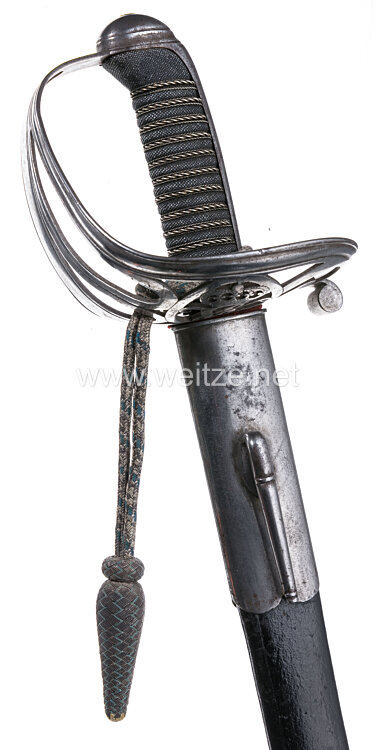
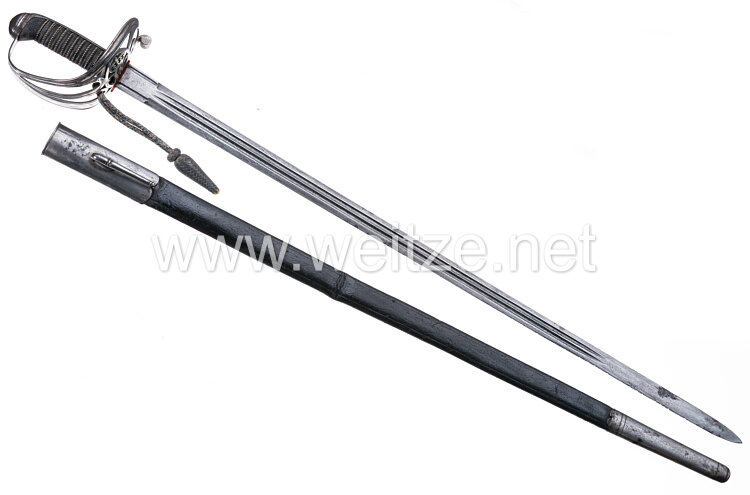
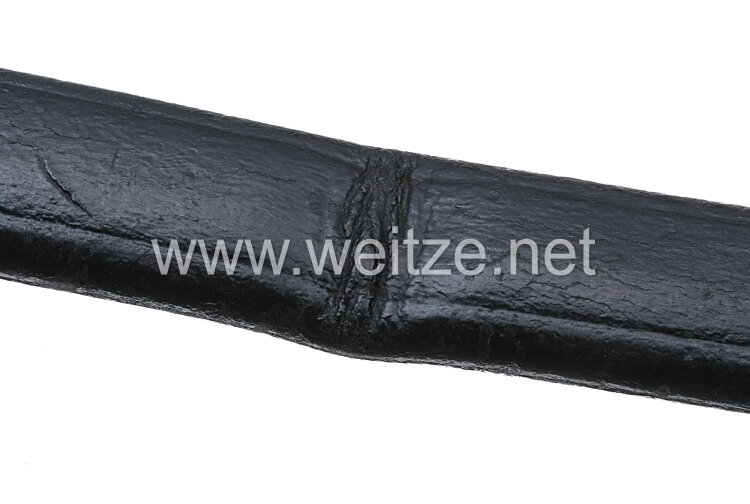
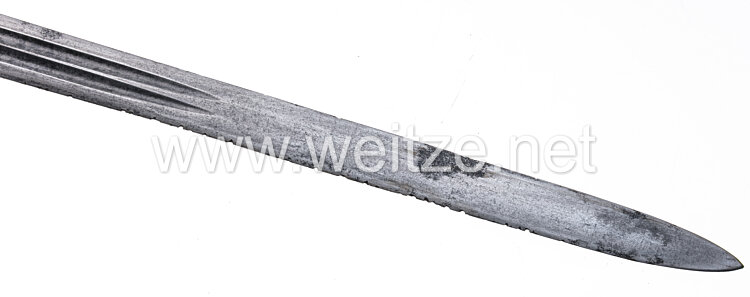
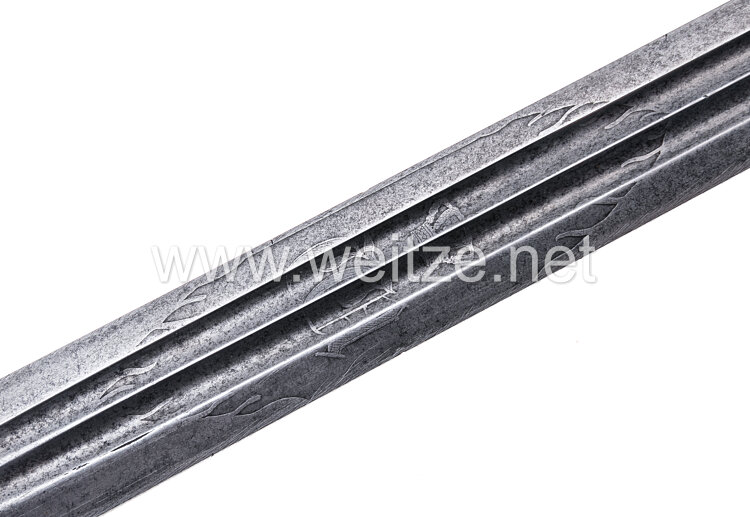
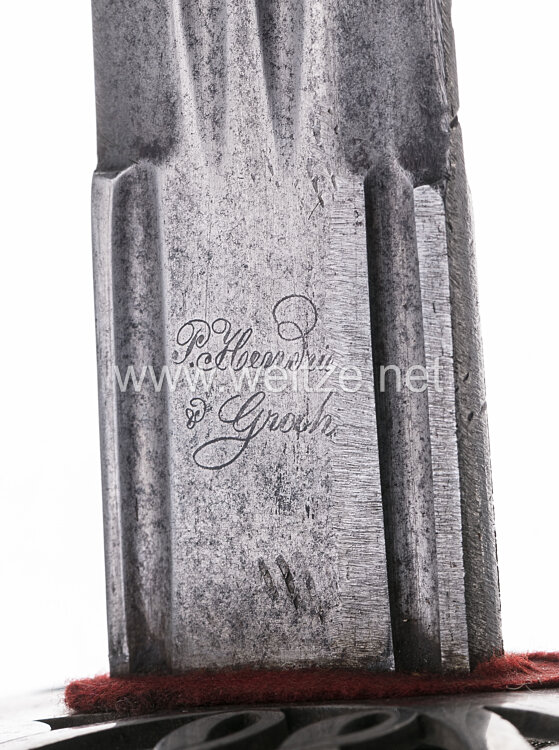
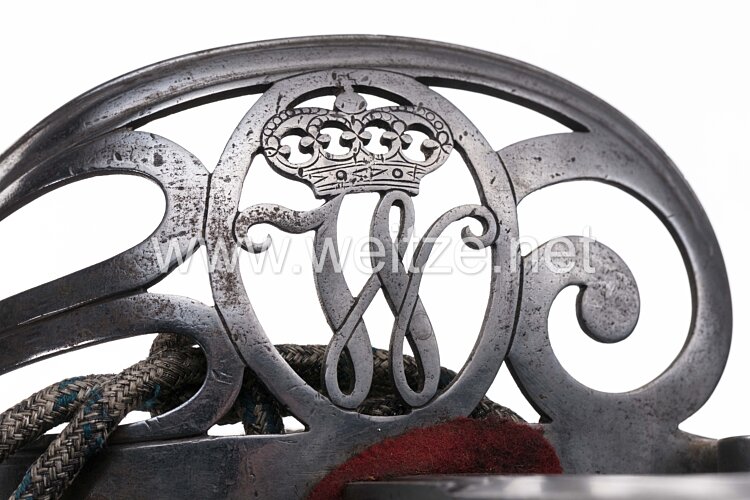
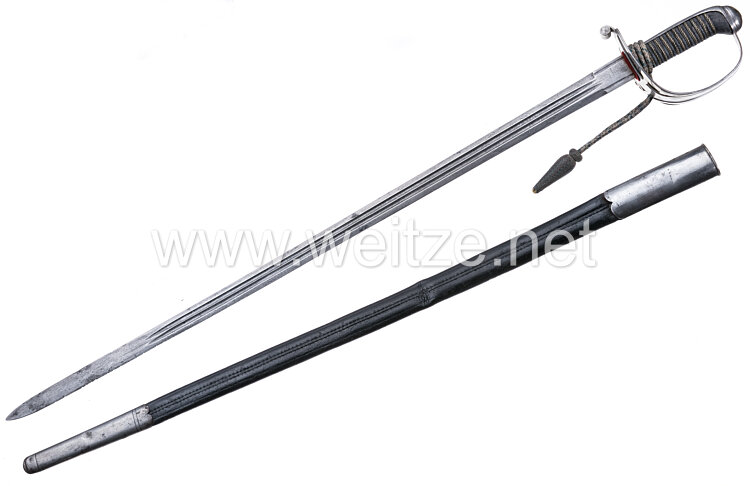
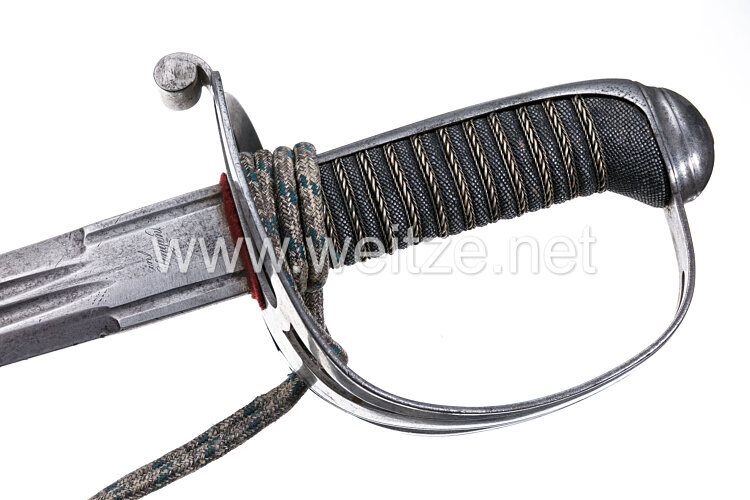
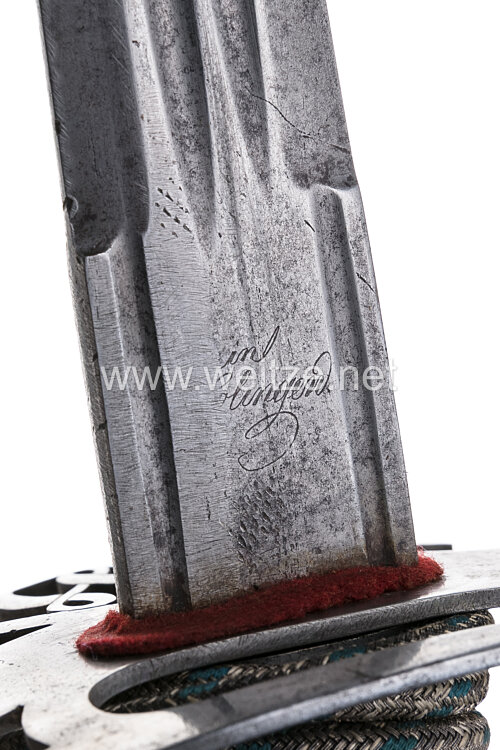
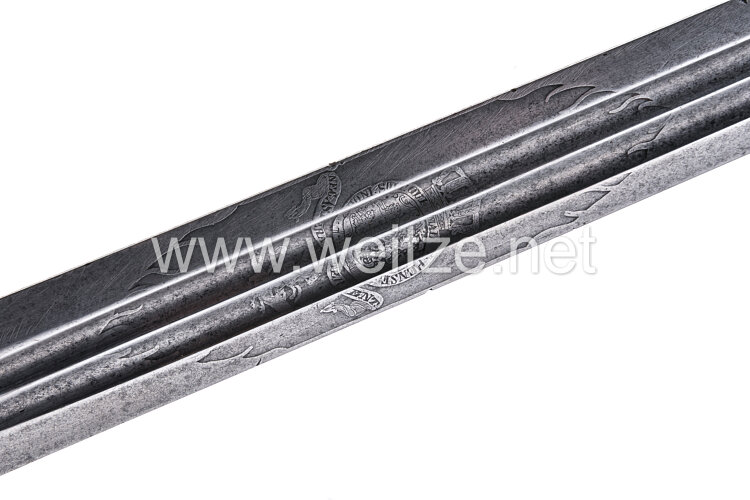
circa 1880. Heavy double-edged blade with central double fullers, the ricasso with two outer fullers, which gives this blade a slight resemblance to Spanish blades, the maker's or supplier's engravings are unfortunately not clearly visible due to grinding, in the first quarter etched with the cipher “Crown W” and on the other side the Braunschweig coat of arms, toward the point various nicks and some rust pitting, steel hilt in the English style, in the guard basket also the cipher “Crown W”, shagreen grip with intact silver wire binding, black leather scabbard with steel mounts, a bend in the middle causing some instability, but the seam is still intact, attached is the Braunschweig officer's sword knot (similar to Hanoverian or English sword knots), a truly worn piece with light traces of age, but otherwise still in very good condition, interesting and rare. Condition 2-

Blade length 820mm
274285
3.000,00

Duchy of Braunschweig Infantry Heavy Saber for Officers of the Old Pattern

This heavy infantry sword for officers of the old type from the Duchy of Brunswick represents a significant transitional phase in German military history during the late 19th century. Dating to approximately 1880, this specimen originates from the reign of Duke Wilhelm (1831-1884), whose cipher “Crown W” is visible both on the blade and in the basket guard.

The Duchy of Brunswick possessed a long military tradition reaching back to the Middle Ages. Following the Napoleonic Wars and the reorganization of Germany through the Congress of Vienna in 1815, the duchy was restored and maintained its independent army, which was affiliated with the X Army Corps of the German Empire. Brunswick troops were renowned for their discipline and distinctive uniforms, particularly the black uniforms that recalled the legendary Black Legion under Duke Friedrich Wilhelm.

This weapon follows the pattern of heavy infantry swords common in the German states between 1850 and 1880, before being replaced by lighter saber forms. The double-edged blade with an impressive length of 820 mm features central double fullers, while the ricasso has two outer fullers. This construction recalls Spanish blade forms and indicates the international exchange of weapon-smithing techniques during this era.

The steel hilt following English design is particularly noteworthy and reflects the close dynastic and military connections between the German states and Great Britain. These connections were especially pronounced in the Duchy of Brunswick, as the Guelph ruling house was related to the British royal family. The basket guard offered the wearer considerable protection for the sword hand and was typical of heavy infantry swords of this period.

The shagreen grip (also known as sharkskin or rayskin) with intact silver wire binding demonstrates the high-quality workmanship characteristic of officers' weapons. Shagreen provided excellent grip even when wet, and the silver wire binding served both functional and decorative purposes. This combination was standard for high-quality officers' swords of the 19th century.

The etchings on the blade display the Brunswick coat of arms - the leaping white horse on a red field - a symbol dating back to the 14th century and belonging to the Guelph dynasty. The presence of the ducal cipher and state arms clearly identifies this weapon as an official service sword of an officer in the Brunswick army.

The attached Brunswick officer's sword knot, which resembles Hanoverian or English sword knots, again emphasizes the Guelph connections. The sword knot served not only as a carrying device but was also an important rank insignia distinguishing officers from non-commissioned officers and enlisted men. The colors and design of the sword knot could indicate regiment, rank, and sometimes even the wearer's specific company.

The black leather scabbard with steel fittings conforms to the military regulations of the time. Leather was the preferred material for scabbards as it was durable and protected the blade from weather, while the steel fittings provided structural reinforcement and attachment points for the carrying device.

Around 1880, the German military was in a phase of transformation. Following the foundation of the Empire in 1871, the armaments of the various contingents were gradually standardized, although individual states like Brunswick still maintained certain peculiarities. Heavy infantry swords were increasingly replaced by lighter sabers, as these were recognized as more practical for modern warfare. Nevertheless, such swords remained in use for several more years for parade and ceremonial purposes, as well as service weapons for certain officer ranks.

The fact that this piece is described as “actually worn” gives it special historical value. The nicks on the blade and signs of use testify that this weapon did not serve only for parade purposes but was part of the active equipment of a Brunswick officer. Such authentic, worn pieces are considerably rarer today than parade weapons used exclusively for ceremonial occasions.

As an exhibit, this sword documents not only weapons development but also the political and military history of the Duchy of Brunswick in the period between the foundation of the Empire and the later complete integration into the Prussian-dominated Imperial Army. It stands as an example of the maintenance of regional identity within the new German nation-state.

The condition of the piece, with its battle scars and patina of age, speaks to authentic military service during a pivotal period in European history. The surviving sword knot and original scabbard make this an exceptionally complete example of Brunswick military equipment from the late 19th century, offering valuable insights into the material culture of German regional armies before full standardization.