Austria-Hungary/K.u.K. Monarchy World War I “Berndorfer” Steel Helmet

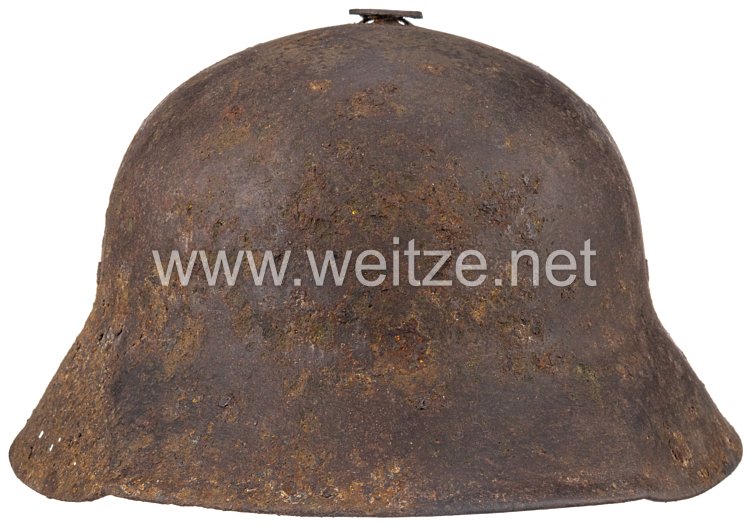
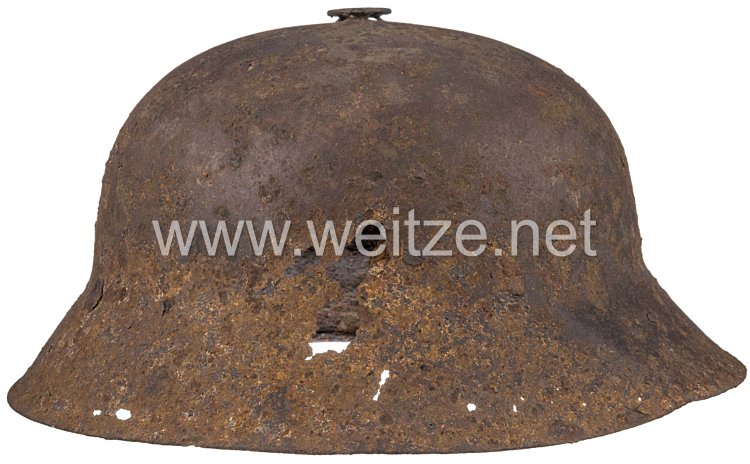
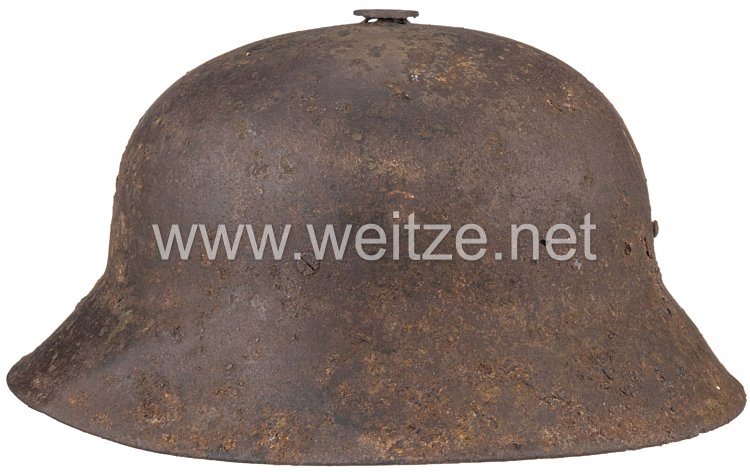
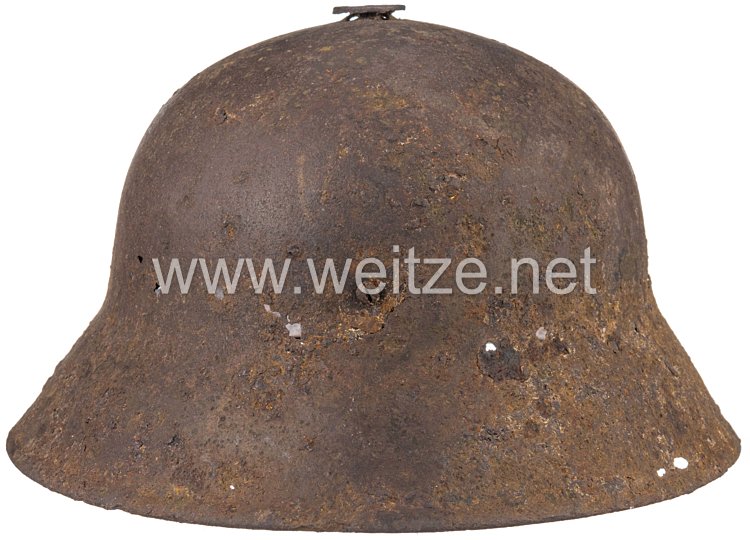
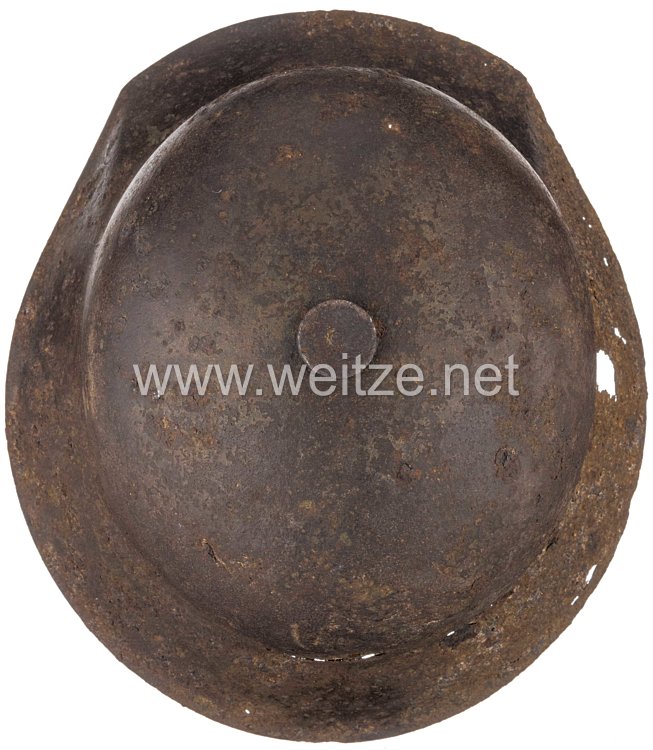
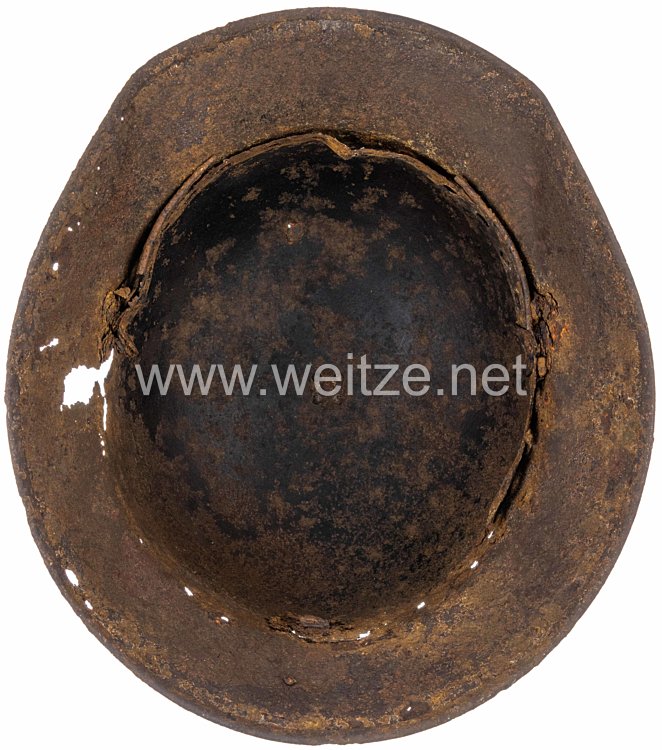
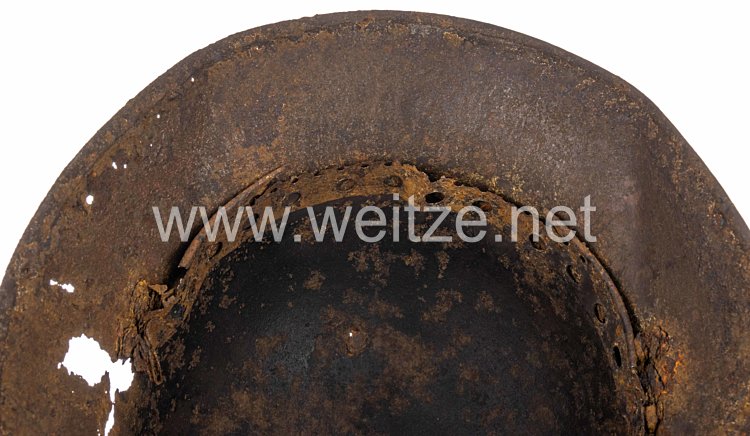
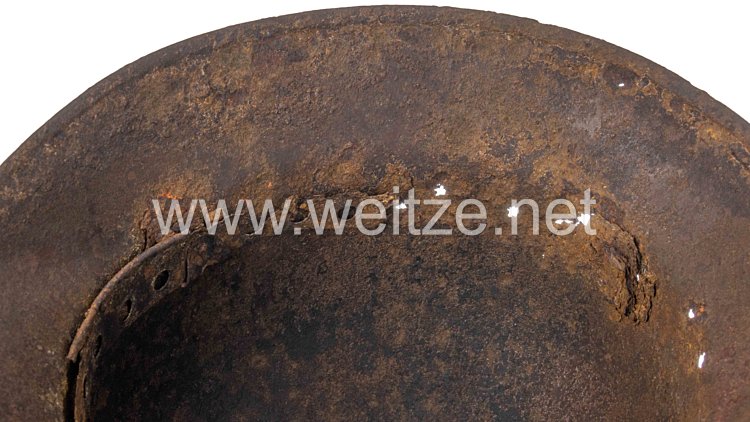
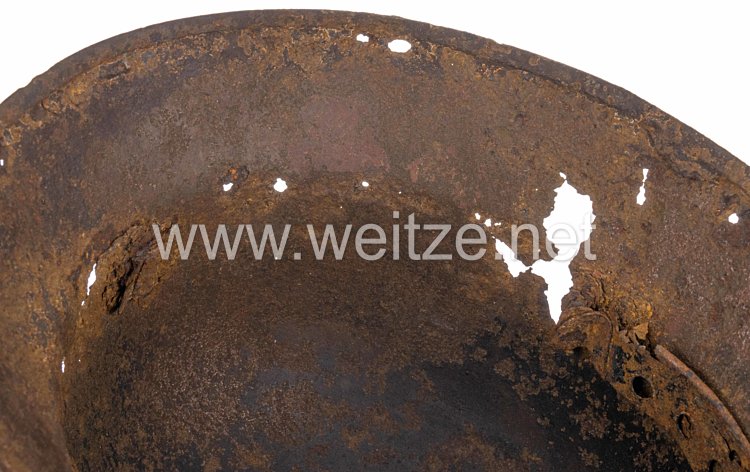
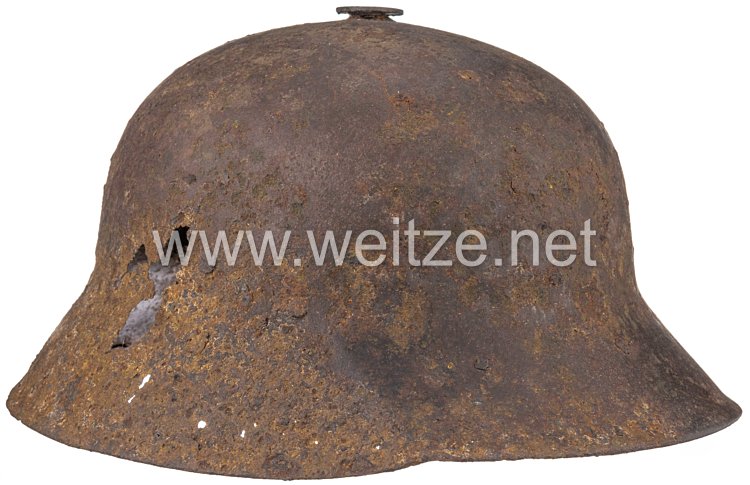
Circa 1917. The steel helmet with the typical ventilation hole on the top of the shell exhibits partially heavy corrosion traces; on the right side there is a larger hole, the liner and chin strap are missing. The paint finish is approximately 50% preserved. Condition 3.
A battlefield recovery from the Italian Alpine Front.

Very rare! An excellent description of the history of this helmet type can be found here: https://blog.hgm.at/2020/08/13/stahlhelme-in-der-k-u-k-armee/
426384
1.500,00

Austria-Hungary/K.u.K. Monarchy World War I “Berndorfer” Steel Helmet

The Berndorfer steel helmet represents one of the rarest and most historically significant pieces of equipment used by the Austro-Hungarian Army during World War I. Developed around 1917, this helmet embodies the desperate efforts of the Imperial and Royal military leadership to equip their troops with modern head protection while the empire was already under enormous military and economic pressure.

The development of steel helmets in the Austro-Hungarian Monarchy began relatively late. While the German Empire had already introduced the legendary M1916 steel helmet in 1916 and France had been using the Adrian helmet since 1915, Austro-Hungarian soldiers continued fighting for an extended period with completely inadequate spiked helmets (Pickelhauben) and shakos. The devastating losses, particularly on the Isonzo Front and in the battles in the Dolomites, made the introduction of effective head protection an urgent necessity.

The Berndorfer helmet was produced at the Krupp-Berndorf Metal Works in Berndorf, Lower Austria. This factory, a subsidiary of the German Krupp concern, was one of the few enterprises in the Dual Monarchy that possessed the technical capacity to manufacture steel helmets. The characteristic feature of this helmet type is the ventilation hole on the top of the helmet shell, which served for air circulation and pressure equalization – a detail that was abandoned in later models.

The construction of the Berndorfer helmet was partially based on the German model but featured its own distinctive characteristics. The helmet shell was pressed from a single piece of steel and subsequently hardened. The material thickness varied depending on the production batch and availability of raw materials, ranging between 0.8 and 1.2 millimeters. As the war progressed, quality deteriorated due to material shortages.

The inner liner typically consisted of leather with padding connected to the helmet shell through a framework. The chinstrap was also made of leather and attached to the sides. These components are almost never preserved in battlefield finds, as organic materials succumb to weathering.

Production of the Berndorfer helmet was extremely limited in numbers. Estimates suggest that only a few thousand examples were manufactured before production ceased. The reasons for this were manifold: material shortages, competing production lines (the Austro-Hungarian Army was simultaneously testing several helmet models), and the deteriorating economic situation of the Monarchy. Many units instead received German M1916 helmets or Italian Adrian helmets captured as war booty.

The helmet described here originates from the battlefields of the Italian Alpine Front, that alpine theater of war which was among the harshest and most costly in terms of casualties during the entire First World War. Between 1915 and 1918, twelve Battles of the Isonzo raged here, along with brutal fighting at extreme altitudes. The conditions were indescribable: soldiers fought on glaciers, in icy mountain caves, and under constant danger from avalanches and rockfall.

The corrosion marks and damage to this helmet – particularly the larger hole on the right side – tell of the extreme conditions to which the object was exposed. Whether this hole was caused by gunfire, shrapnel, or subsequent environmental factors can no longer be determined. The partially preserved paint finish (approximately 50%) is remarkable, as most battlefield finds are completely stripped of paint. The original color was typically field gray or gray-green, similar to German helmets.

The rarity of the Berndorfer helmet makes it a highly prized collector's item today. Unlike the German or French helmets produced in millions, only a few hundred examples exist in museums and private collections worldwide. Every find from the old battlefields – even in damaged condition – is of considerable historical value.

Condition 3 (medium preservation state with significant defects) is quite typical for a battlefield find and hardly diminishes the historical value. Such objects are authentic witnesses to one of the greatest catastrophes in European history and serve as reminders of the suffering of millions of soldiers in a senseless war that ultimately led to the downfall of the centuries-old Habsburg Monarchy.

The Museum of Military History in Vienna maintains a significant collection of Austro-Hungarian steel helmets and extensively documents their development history. For collectors and historians, the Berndorfer helmet remains a fascinating object of study that exemplifies the technical, economic, and military challenges faced by the Dual Monarchy in its final war years.

r