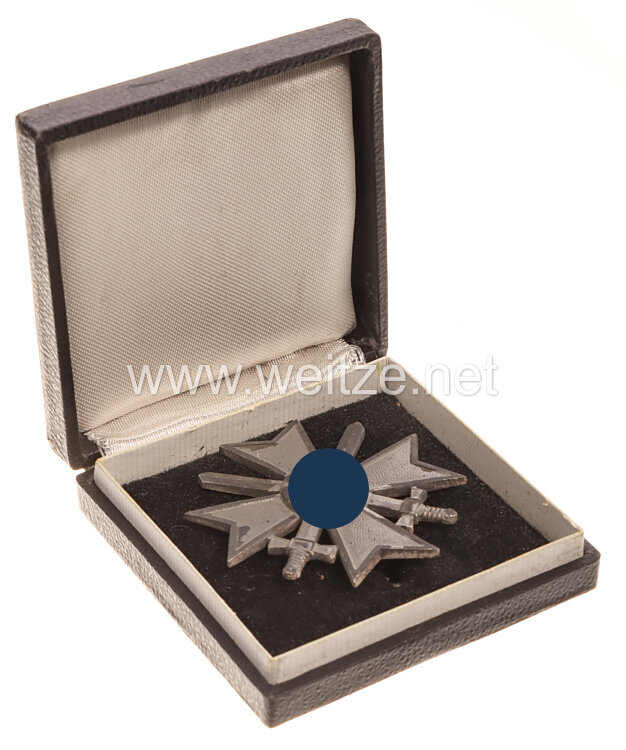
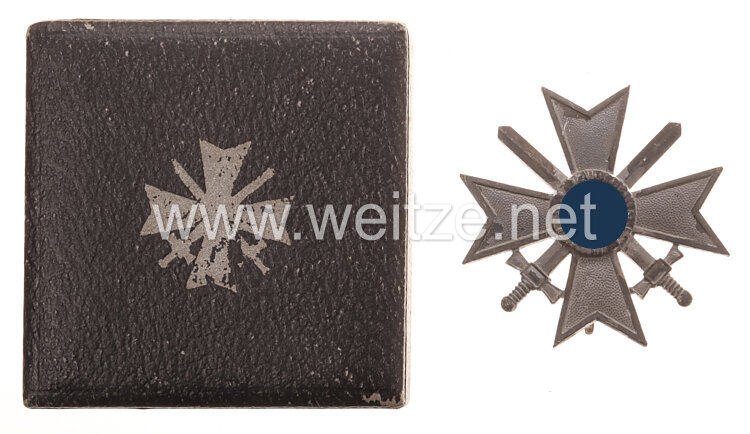
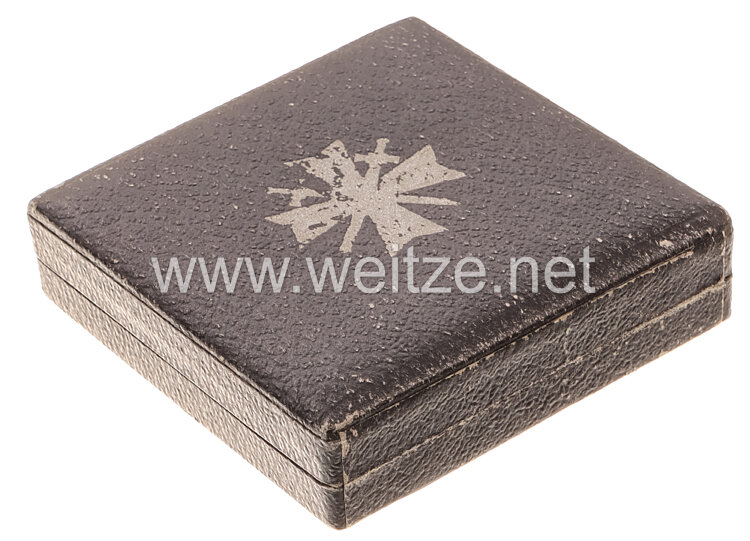
War Merit Cross 1939 1st Class with Swords - Wilhelm Deumer, Lüdenscheid

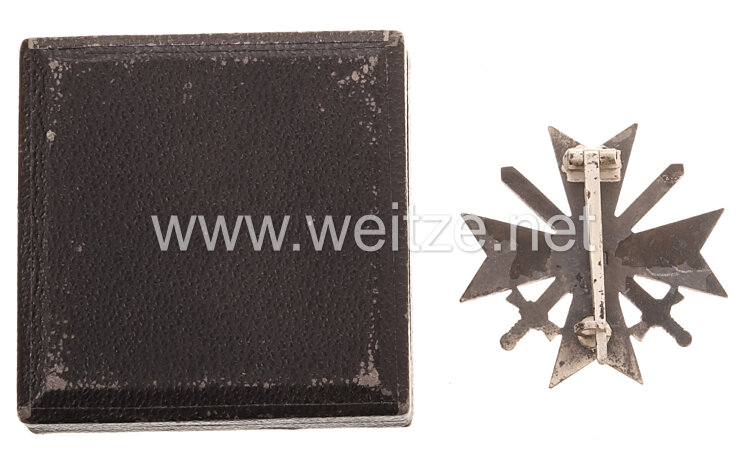
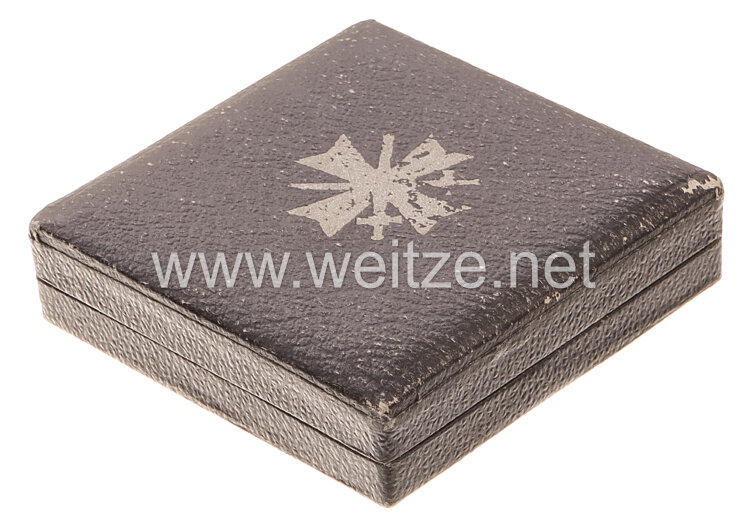
Silver-plated zinc, reverse marked “3”, in presentation case with KVK imprint.
460084
350,00

War Merit Cross 1939 1st Class with Swords - Wilhelm Deumer, Lüdenscheid

The War Merit Cross 1st Class with Swords represents a significant decoration of National Socialist Germany during World War II. This award was instituted on October 18, 1939 by Adolf Hitler and was intended to recognize military and civilian merit in the context of the war effort.

The present example was manufactured by the renowned maker Wilhelm Deumer of Lüdenscheid. The Deumer firm was among the most important producers of orders and decorations in the Third Reich and was known for the high quality of its products. The company received official authorization to manufacture state decorations and supplied both military and civilian agencies.

The material composition of this cross corresponds to the war-related production standards of the later war years. It consists of fine zinc, a material that was increasingly used as strategically important metals such as non-ferrous metals became scarce. The silver-plated surface nevertheless gives the piece a dignified appearance. The reverse marking with the number “3” is characteristic of the manufacturer's production system and quality control.

The War Merit Cross existed in several grades: The 2nd Class was worn on a ribbon, while the 1st Class was attached directly to the uniform as a pin-back cross. The version “with Swords” was exclusively intended for merit directly connected with combat operations. Military personnel who distinguished themselves in battle or under enemy fire received this variant. The version without swords was intended for merit behind the lines or civilian achievements.

The design follows the typical Maltese cross form with slightly broadened arms. In the center is a medallion with a swastika, surrounded by a wreath. The crossed swords between the cross arms identify the military award category. The artistic design was developed by Professor Richard Klein and was based on traditional Prussian order forms.

Particularly noteworthy is the original presentation case in which the cross is housed. These cases were specially made for the ceremonial presentation of the decoration and bear the characteristic KVK imprint (abbreviation for Kriegsverdienstkreuz). Preservation in the original packaging significantly increases the historical and documentary value of the object, as many of these cases were lost or destroyed over time.

The award practice was strictly regulated. The War Merit Cross 1st Class could only be awarded if the recipient already possessed the 2nd Class. The decoration was presented in an official ceremony by a superior officer or official, accompanied by an award document. By the end of the war, millions of these crosses in various classes and variants had been awarded.

The firm Wilhelm Deumer used various manufacturer markings, with numbers and letter combinations serving as identification. The company existed before World War I and continued its tradition of order manufacturing for decades. After 1945, production of National Socialist symbols was discontinued, and the firm concentrated on other metal goods.

From a military-historical perspective, the War Merit Cross documents the comprehensive system of performance recognition in National Socialist Germany. It illustrates both the propaganda efforts of the regime and the practical organization of military decorations under wartime conditions. The use of substitute materials such as fine zinc reflects the increasing scarcity of resources from which Germany suffered, particularly in the later war years.

Today, such objects possess exclusively historical and museum value. They serve as material witnesses to a dark epoch of German history and enable researchers to study the military structures, production methods, and ideological systems of the Third Reich. Scholarly engagement with such artifacts is essential for historical understanding of this period.

The combination of original case and marked cross makes this ensemble particularly valuable for historical documentation. It provides insight into the complete award process, from manufacture through presentation to the recipient. Such complete sets are increasingly rare, as wartime conditions and post-war disposal often resulted in the separation or destruction of components.

r